Richard Riley – författare
564 kr
Skickas inom 5-8 vardagar
678 kr
Läs direkt efter köp
Practical examples, sample reports, best practices and recommendations to help you deter, detect, and prevent financial statement fraud
Financial statement fraud (FSF) continues to be a major challenge for organizations worldwide. Financial Statement Fraud: Prevention and Detection, Second Edition is a superior reference providing you with an up-to-date understanding of financial statement fraud, including its deterrence, prevention, and early detection.
You will find
A clear description of roles and responsibilities of all those involved in corporate governance and the financial reporting process to improve the quality, reliability and transparency of financial information. Sample reports, examples, and documents that promote a real-world understanding of incentives, opportunities, and rationalizations Emerging corporate governance reforms in the post-SOX era, including provisions of the SOX Act, global regulations and best practices, ethical considerations, and corporate governance principles Practical examples and real-world "how did this happen" discussions that provide valuable insight for corporate directors and executives, auditors, managers, supervisory personnel and other professionals saddled with anti-fraud responsibilities Expert advice from the author of Corporate Governance and Ethics and coauthor of the forthcoming Wiley textbook, White Collar Crime, Fraud Examination and Financial ForensicsFinancial Statement Fraud, Second Edition contains recommendations from the SEC Advisory Committee to reduce the complexity of the financial reporting process and improving the quality of financial reports.
678 kr
Läs direkt efter köp
Practical examples, sample reports, best practices and recommendations to help you deter, detect, and prevent financial statement fraud
Financial statement fraud (FSF) continues to be a major challenge for organizations worldwide. Financial Statement Fraud: Prevention and Detection, Second Edition is a superior reference providing you with an up-to-date understanding of financial statement fraud, including its deterrence, prevention, and early detection.
You will find
A clear description of roles and responsibilities of all those involved in corporate governance and the financial reporting process to improve the quality, reliability and transparency of financial information. Sample reports, examples, and documents that promote a real-world understanding of incentives, opportunities, and rationalizations Emerging corporate governance reforms in the post-SOX era, including provisions of the SOX Act, global regulations and best practices, ethical considerations, and corporate governance principles Practical examples and real-world "how did this happen" discussions that provide valuable insight for corporate directors and executives, auditors, managers, supervisory personnel and other professionals saddled with anti-fraud responsibilities Expert advice from the author of Corporate Governance and Ethics and coauthor of the forthcoming Wiley textbook, White Collar Crime, Fraud Examination and Financial ForensicsFinancial Statement Fraud, Second Edition contains recommendations from the SEC Advisory Committee to reduce the complexity of the financial reporting process and improving the quality of financial reports.
239 kr
Skickas inom 3-6 vardagar
676 kr
Läs direkt efter köp
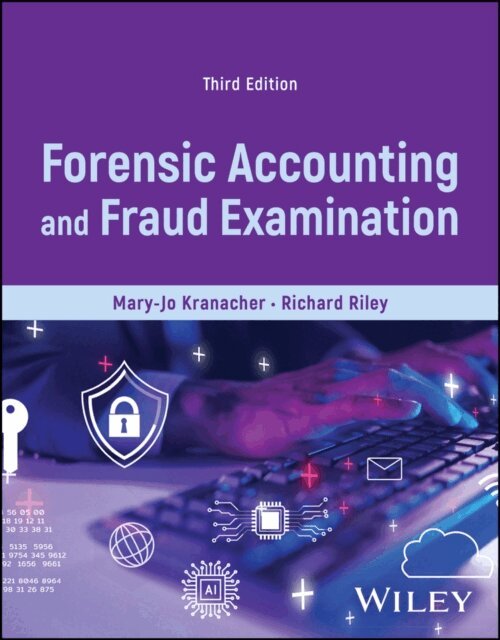
The gold standard in textbooks on forensic accounting, fraud detection, and deterrence
In the newly revised third edition of Forensic Accounting and Fraud Examination, a team of renowned educators provides students and professionals alike with a comprehensive introduction to forensic accounting, fraud detection, and deterrence. Adhering to the model curriculum for education in fraud and forensic accounting funded by the US National Institute of Justice, this leading textbook offers real-world practicality supported by effective learning pedagogies and engaging case studies that bring technical concepts to life.
Covering every key step of the investigative process, Forensic Accounting and Fraud Examination contains 32 integrated IDEA and Tableau software cases that introduce students to the practical tools accounting professionals use to maximize auditing and analytic capabilities, detect fraud, and comply with documentation requirements. Numerous case summaries, “The Fraudster’s Perspective” boxes, and detailed discussions of a wide range of accounting issues provide students and practitioners with the tools they’ll need to successfully investigate, prosecute, research, and resolve forensic accounting issues and financial fraud.
The perfect resource for students of forensic accounting and fraud examination, as well as practitioners in the field, Forensic Accounting and Fraud Examination, Third Edition, will also prove invaluable for academics and researchers with an interest in the subject.
1 618 kr
Skickas inom 5-8 vardagar
379 kr
Skickas inom 5-8 vardagar
157 kr
Skickas inom 5-8 vardagar
53 kr
Läs direkt efter köp
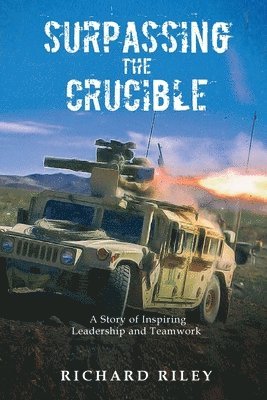
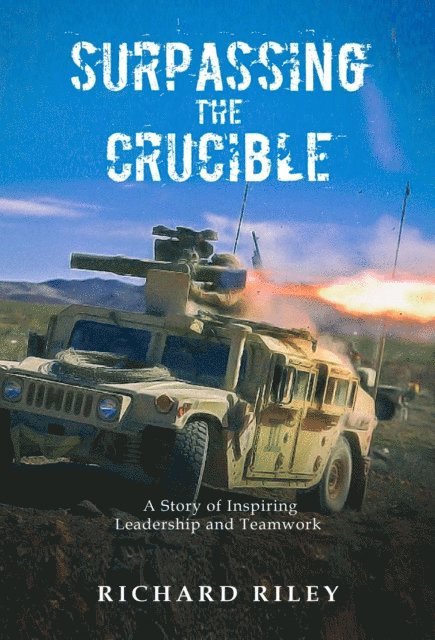
The fight over the "One Army Concept" is at its peak. Some in the
active Army believed the concept would never work. Weekend
warriors couldn''t be reliable enough to be integrated into the Army''s
demanding worldwide missions. In 1989 the National Guard''s 2nd
Battalion 220th Infantry needs to perform well at the prestigious
Joint Readiness Training Center (JRTC) at Fort Chaffee, Arkansas.
The men and officers of the 2nd battalion were going to be tested by
the Army''s best trained professional Opposing Force at the infantry''s
ultimate proving ground. But this wasn''t your average National
Guard unit. Their consistent superior performance during the last
several years prompted the National Guard leadership to select them
to best represent the Guard on this national stage. There are countless
distinct challenges for National Guard units that active-duty units
don''t face. This story describes how the battalion''s exceptional
leadership can overcome these challenges to turn their unique
situation into an advantage. Can the battalion prove to everyone that
the "One Army Concept" works? If so, then what''s next?