Richard S. Surwit – författare
Visar alla böcker från författaren Richard S. Surwit. Handla med fri frakt och snabb leverans.
3 produkter
3 produkter
28 kr
Läs direkt efter köp
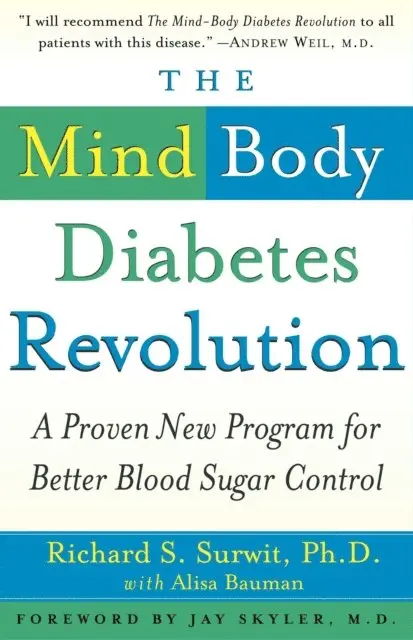
The Mind-Body Diabetes Revolution is the first book to show how stress, depression, and anger affect blood sugar. It''s also the first to provide a proven, step-by-step health program to help the millions of people with diabetes manage their disease. Until now, this life-changing program was available only to patients at Duke University Medical Center, but The Mind-Body Diabetes Revolution makes it available to everyone who needs it -- diabetic people and the millions at risk for developing the disease.Over the past forty years, little has changed in the treatment of type 2 diabetes. Diet, exercise, and medication are still the three primary methods used to control blood sugar. Yet diabetes is reaching epidemic proportions not just in the United States, but also in other countries all over the world. Now, after twenty years of research, Dr. Richard S. Surwit -- a leader in the field of the psychology of diabetes -- adds the vital fourth component to treating diabetes: a revolutionary mind-body program that lowers blood sugar levels and dramatically reduces the disease''s serious, damaging side effects, which can include painful nerve damage, heart disease, impotence, eye problems, and kidney ailments.The Mind-Body Diabetes Revolution explains how thoughts and beliefs influence a person''s emotions and moods and shows how these can translate into chronic anger, cynicism, anxiety, and depression -- all of which increase your blood sugar level. But, with compelling case studies and a powerfully effective step-by-step six-week program, Dr. Surwit demonstrates how you can learn to manage the emotions and stress that lead to elevated hormones and higher blood sugar levels. After he explains the mind-metabolism connection so that you see how it works in your own body, Dr. Surwit provides self-tests and reflective quizzes to test your personality type and decide on the best -- and easiest -- psychological techniques to help you lower your blood sugar level, and keep it low. Then he helps you develop the best long-term mind-body program for your needs and shows how to use the planner to keep track of your progress.An invaluable aid to your overall well-being, The Mind-Body Diabetes Revolution helps you enlist your own mind and body as powerful allies in controlling your diabetes, and enjoy greater general health as a result.
E-bok
PDF, Engelska, 2012687 kr
Läs direkt efter köp
Behavioral Treatment of Disease: A NATO Symposium on Behavioral Medicine was held on June 30th through July 3rd, 1981 at Porto Carras, Neo Marmaras, Greece. It was a multi disciplinary meeting which provided an opportunity for North American and European scientists from ten different NATO member countries to share the emerging principles and technology of behavioral treatment of disease. In addition, it served as a forum whereby continued high level research in the area was stimulated. Financial support for the symposium was initially provided by the Scientific Affairs Division or the North Atlantic Treaty Organization as part of their continuing seri.es of scientific symposia. Funds made available by a grant from the United States Office of Naval Reseach permitted widespread inter national participation in the symposium. We would like to thank each of these organizations for their support in making the symposium possible. In particular, we would like to thank Dr. B. A. Bayraktar of the Scientific Affairs Division of NATO and Dr. Donald Woodward of the U.S. Office of Naval Research. Though both of these men were unable to attend the meeting personally, they provided invaluable assistance in its planning.
Häftad, Engelska, 2011
544 kr
Skickas inom 10-15 vardagar
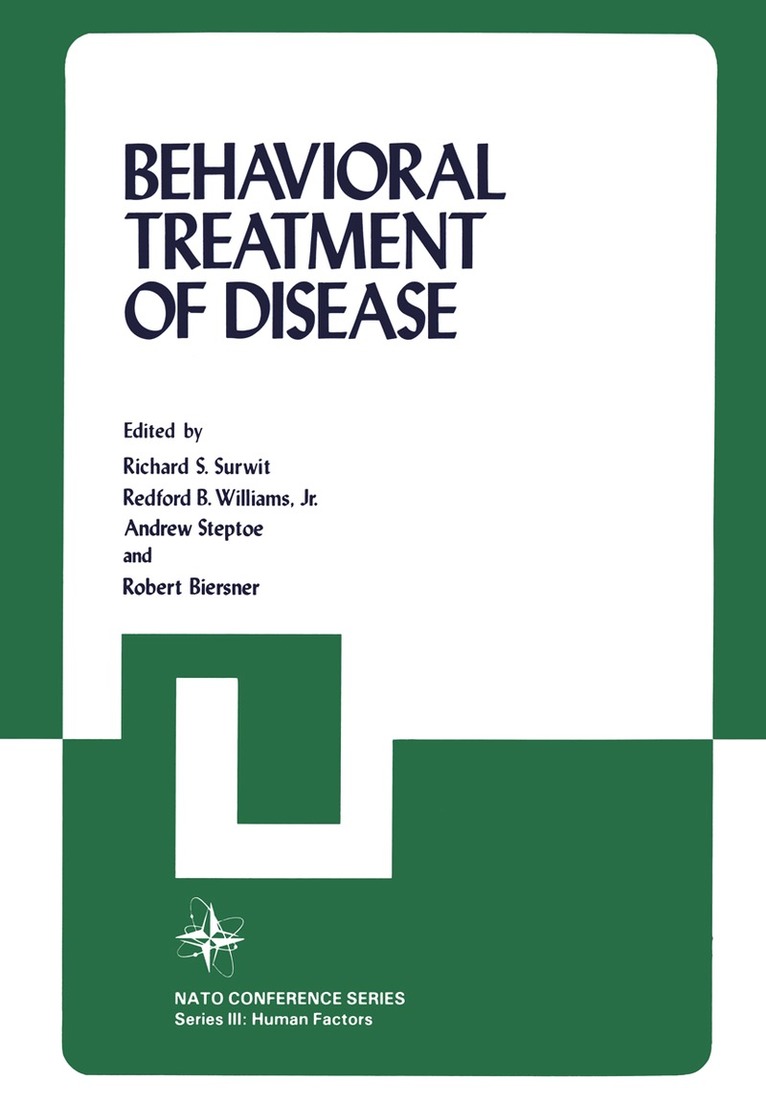
Behavioral Treatment of Disease: A NATO Symposium on Behavioral Medicine was held on June 30th through July 3rd, 1981 at Porto Carras, Neo Marmaras, Greece. It was a multi disciplinary meeting which provided an opportunity for North American and European scientists from ten different NATO member countries to share the emerging principles and technology of behavioral treatment of disease. In addition, it served as a forum whereby continued high level research in the area was stimulated. Financial support for the symposium was initially provided by the Scientific Affairs Division or the North Atlantic Treaty Organization as part of their continuing seri.es of scientific symposia. Funds made available by a grant from the United States Office of Naval Reseach permitted widespread inter national participation in the symposium. We would like to thank each of these organizations for their support in making the symposium possible. In particular, we would like to thank Dr. B. A. Bayraktar of the Scientific Affairs Division of NATO and Dr. Donald Woodward of the U.S. Office of Naval Research. Though both of these men were unable to attend the meeting personally, they provided invaluable assistance in its planning.