Richard Seddon – författare
Visar alla böcker från författaren Richard Seddon. Handla med fri frakt och snabb leverans.
4 produkter
4 produkter
Häftad, Engelska, 2013
156 kr
Skickas
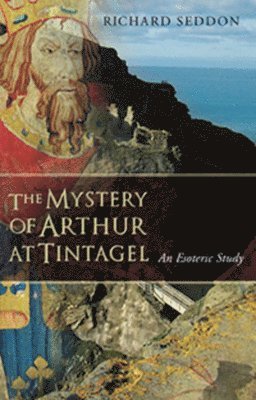
The ancient and dramatic headland of Tintagel and its ruins, on the windswept north Cornish coast, have been linked to the legends of Merlin, King Arthur and his Knights since ancient times. In this well-researched, illustrated book, Richard Seddon reveals the inner spiritual meaning of Tintagel as a centre for the pre-Christian Mysteries. For many centuries its enigmatic site was integral to the evolution of human consciousness as a centre for esoteric wisdom - for the linking of the physical and spiritual worlds, art and religion. Richard Seddon offers new insights into the roles of Arthur, Merlin and the Knights of the Round Table, and looks in detail at how they are linked to the metaphysical truths to be found in the works of Taliesin, the Mabinogion and the legends of Parsifal and the Holy Grail. He brings to light the unifying spiritual tradition that stretches beyond Arthur and Tintagel to the mysteries of modern times, as elucidated by the Austrian-born initiate Rudolf Steiner. Readers of this work will discover many new dimensions to the Arthurian and Celtic legends as well as the historical site at Tintagel.
Häftad, Engelska, 2002
157 kr
Skickas
Häftad, Engelska, 2012
133 kr
Skickas
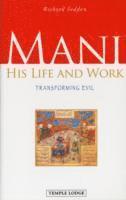
Mani, the founder of the spiritual movement which has come to be known as Manichaeism, established an influential teaching that spread swiftly across Asia, Africa and parts of Europe but was later brutally suppressed. Little was known about this 'Gnostic religion' until archaeological findings in the twentieth century revealed important aspects of Mani's biography and philosophical thought. Many years before these physical discoveries, Rudolf Steiner provided key esoteric insights, based on his personal spiritual-scientific research, into Mani's life and work. Richard Seddon assembles pieces of the academic and esoteric puzzle, offering a lively and colourful picture of Mani and Manichaeism. He gives a succinct outline of Mani's life, the fundamental aspects of his teachings, and a description of Manichaeism's future spiritual role. Seddon creates an image of a mighty Christian initiate leading a movement with the critical task of transforming, and ultimately redeeming, evil.
Häftad, Engelska, 2015
179 kr
Skickas inom 11-20 vardagar
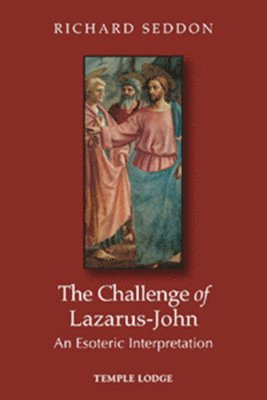
The Gospel of John, distinct from the 'synoptic gospels', is the most esoteric and challenging account of the life, death and resurrection of Jesus Christ. John, whose identity has been much debated, mysteriously refers to himself as 'the disciple whom Jesus loved'. But didn't Jesus love each of the twelve Apostles? Indeed, did he not love all human beings? However, the Gospel says only of Lazarus that Jesus 'loved him'. In this profound study, Richard Seddon brings together essential but often overlooked quotations from the work of the philosopher and scientist Rudolf Steiner. Steiner made no claim to divine inspiration, but described how - through the vigorous discipline of inner development - the capacity for spiritual-scientific research could be acquired. Rudolf Steiner, who founded anthroposophy, undertook research into many of the incidents recorded in John's Gospel, and reported his results in lectures given across Europe. In compiling Steiner's various statements, The Challenge of Lazarus-John reveals that John's Gospel not only gives a historical account, but also represents a path of personal development or initiation.After the prelude characterizing Creation, the Gospel describes how the Christ being descended into the physical and spiritual constitution of Jesus of Nazareth at the Baptism.Crossing the threshold between physical and spiritual worlds, the Gospel writer places emphasis on the development of the higher self in freedom, on the rebirth of the soul, and on the raising of Lazarus. An interlude considers the significance of the seven events referred to as 'signs', and the seven 'I am' statements in relation to higher stages of cognition. The remainder of the Gospel is seen as an expression of the seven stages of Rosicrucian-Christian initiation and their reformulation in the process of human evolution described in anthroposophy. This culminates in an examination of the spiritual processes that take place in the constitution of Jesus during the Crucifixion and Resurrection. It is Lazarus-John's personal witness of these events that enables him to write his unique Gospel.Drawing together such insights and interpretations, Seddon has produced a comprehensive monograph that supplements existing biblical commentaries and illumines John's enigmatic Gospel as a truly Christian path of modern initiation - a challenge to all human beings that will remain for millennia to come.