Richard Shapcott - Böcker
Visar alla böcker från författaren Richard Shapcott. Handla med fri frakt och snabb leverans.
5 produkter
5 produkter
1 653 kr
Skickas inom 5-8 vardagar
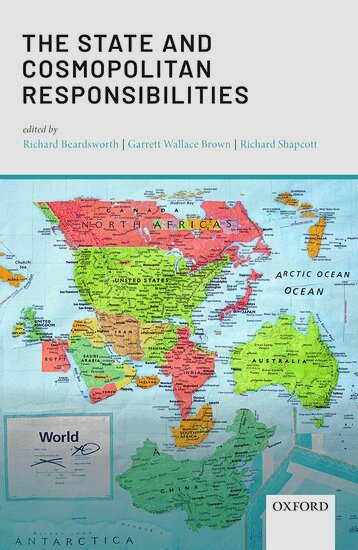
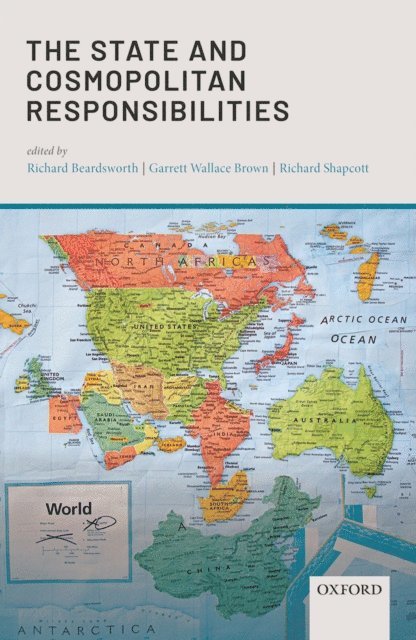
This book explores the role that states might play in promoting a cosmopolitan condition as an agent of cosmopolitanism rather than an obstacle to it. In doing so the book seeks to develop recent arguments in favour of locating cosmopolitan moral and political responsibility at the state level as either an alternative to, or a corollary of, cosmopolitanism as it is more commonly understood qua requiring transnational or global bearers of responsibility. As a result, the contributions in this volume see an on-going role for the state, but also its transformation, perhaps only partially, into a more cosmopolitan-minded institution -- instead of a purely 'national' or particularistic one. It therefore makes the case that the state as a form of political community can be reconciled with various form of cosmopolitan responsibility. In this way the book will address the question of how states, in the present, and in the future, can be better bearers of cosmopolitan responsibilities?
Del 79 - Cambridge Studies in International Relations
Justice, Community and Dialogue in International Relations
Inbunden, Engelska, 2001
1 192 kr
Skickas inom 7-10 vardagar
Shapcott investigates the question of justice in a culturally diverse world, asking if it is possible to conceive of a universal or cosmopolitan community in which justice to difference is achieved. Justice to difference is possible, according to Shapcott, by recognising the particular manner in which different humans identify themselves. Such recognition is most successfully accomplished through acts of communication, and in particular, conversation. The accounts of understanding developed by H. G. Gadamer provide a valuable way forward in this field. The philosophical hermeneutic account of conversation allows for the development of a level of cosmopolitan solidarity that is both 'thin' and universal, and which helps to provide a more just resolution of the tension between the values of community and difference. Students and scholars of international relations, international ethics and philosophy will be interested in this original study.
Del 79 - Cambridge Studies in International Relations
Justice, Community and Dialogue in International Relations
Häftad, Engelska, 2001
428 kr
Skickas inom 7-10 vardagar
Shapcott investigates the question of justice in a culturally diverse world, asking if it is possible to conceive of a universal or cosmopolitan community in which justice to difference is achieved. Justice to difference is possible, according to Shapcott, by recognising the particular manner in which different humans identify themselves. Such recognition is most successfully accomplished through acts of communication, and in particular, conversation. The accounts of understanding developed by H. G. Gadamer provide a valuable way forward in this field. The philosophical hermeneutic account of conversation allows for the development of a level of cosmopolitan solidarity that is both 'thin' and universal, and which helps to provide a more just resolution of the tension between the values of community and difference. Students and scholars of international relations, international ethics and philosophy will be interested in this original study.
715 kr
Skickas inom 7-10 vardagar
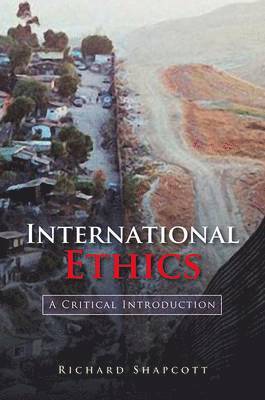
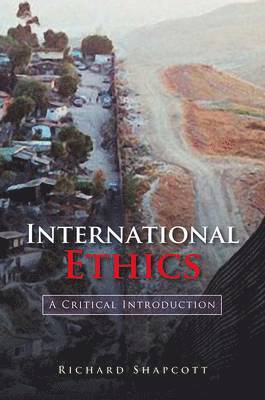
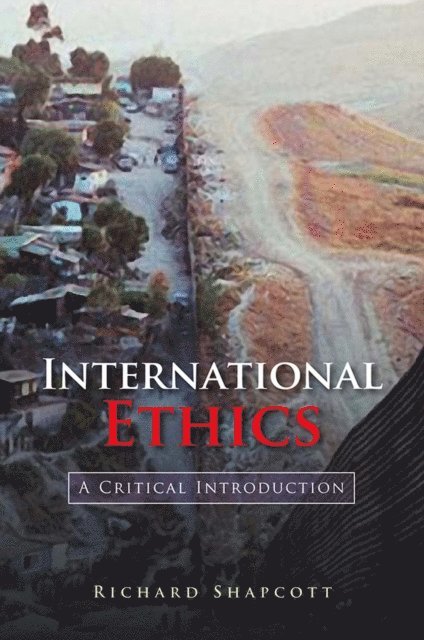
Is it is justifiable to make any basic moral distinction between 'insiders and outsiders'? Do we have substantive duties of 'justice' to all human beings or merely Humanitarian duties of aid and assistance? These are two of the most crucial questions confronting world politics and the field of international ethics today. International Ethics: A Critical Introduction provides an engaging and accessible introduction to these foundational questions. In a cogent and carefully argued analysis, Richard Shapcott critically examines the theories of cosmopolitanism, communitarianism, realism and pluralism and scrutinises their approaches to the various obligations which members of 'bounded' communities, primarily nation-states, have to 'outsiders' and 'foreigners'. He then takes the theoretical approaches in context by discussing the ethics of hospitality and membership of political communities, issues of mutual aid and humanitarianism abroad, the ethics of harm related to interstate international violence, and the challenge of severe global poverty. The book concludes by suggesting that the terms of international ethical life in the 21st century require reframing in a way that focuses more intently on the nature of harm between communities and individuals.This book provides students and scholars with a conceptual framework with which to analyse the policies, actions and philosophy of governments, NGOs and international corporations. Above all, it offers the means whereby individuals can assess their own positions on contemporary ethical issues such as global poverty, humanitarian intervention, migration and refugees and global warming.
265 kr
Skickas
Is it is justifiable to make any basic moral distinction between 'insiders and outsiders'? Do we have substantive duties of 'justice' to all human beings or merely Humanitarian duties of aid and assistance? These are two of the most crucial questions confronting world politics and the field of international ethics today. International Ethics: A Critical Introduction provides an engaging and accessible introduction to these foundational questions. In a cogent and carefully argued analysis, Richard Shapcott critically examines the theories of cosmopolitanism, communitarianism, realism and pluralism and scrutinises their approaches to the various obligations which members of 'bounded' communities, primarily nation-states, have to 'outsiders' and 'foreigners'. He then takes the theoretical approaches in context by discussing the ethics of hospitality and membership of political communities, issues of mutual aid and humanitarianism abroad, the ethics of harm related to interstate international violence, and the challenge of severe global poverty. The book concludes by suggesting that the terms of international ethical life in the 21st century require reframing in a way that focuses more intently on the nature of harm between communities and individuals.This book provides students and scholars with a conceptual framework with which to analyse the policies, actions and philosophy of governments, NGOs and international corporations. Above all, it offers the means whereby individuals can assess their own positions on contemporary ethical issues such as global poverty, humanitarian intervention, migration and refugees and global warming.