Richard Steyn - Böcker
Visar alla böcker från författaren Richard Steyn. Handla med fri frakt och snabb leverans.
6 produkter
6 produkter
125 kr
Skickas inom 7-10 vardagar
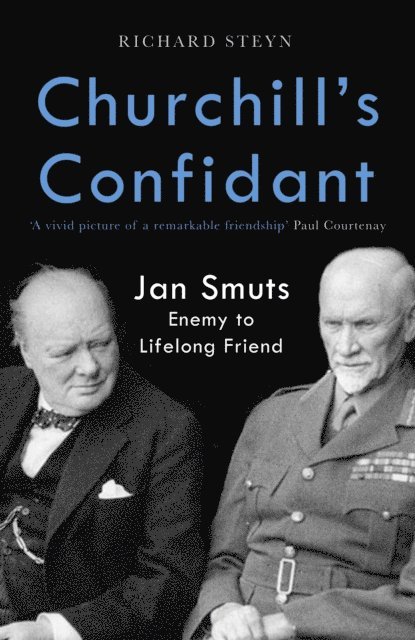
Brought together first as enemies in the Anglo-Boer War, and later as allies in the First World War, the remarkable, and often touching, friendship between Winston Churchill and Jan Smuts is a rich study in contrasts. In youth they occupied very different worlds: Churchill, the rambunctious and thrusting young aristocrat; Smuts, the aesthetic, philosophical Cape farm boy who would go on to Cambridge. Both were men of exceptional talents and achievements and, between them, the pair had to grapple with some of the twentieth century's most intractable issues, not least of which the task of restoring peace and prosperity to Europe after two of mankind's bloodiest wars.Drawing on a maze of archival and secondary sources including letters, telegrams and the voluminous books written about both men, Richard Steyn presents a fascinating account of two remarkable men in war and peace: one the leader of the Empire, the other the leader of a small fractious member of that Empire who nevertheless rose to global prominence.
239 kr
Skickas inom 5-8 vardagar
If a mere seven more MPs had voted with Prime Minister JBM Hertzog in favour of neutrality, South Africa’s history would have been quite different. Parliament’s narrow decision to go to war in 1939 led to a seismic upheaval throughout the 1940s: black people streamed in their thousands from rural areas to the cities in search of jobs; volunteers of all races answered the call to go ‘up north’ to fight; and opponents of the Smuts government actively hindered the war effort by attacking soldiers and committing acts of sabotage. World War Two upended South Africa’s politics, ruining attempts to forge white unity and galvanising opposition to segregation among African, Indian and coloured communities. It also sparked debates among nationalists, socialists, liberals and communists such as the country had never previously experienced. As Richard Steyn recounts so compellingly in 7 Votes, the war’s unforeseen consequence was the boost it gave to nationalism, both Afrikaner and African, that went on to transform the country in the second half of the 20th century. The book brings to life an extraordinary cast of characters, including wartime leader Jan Smuts, DF Malan and his National Party colleagues, African nationalists from Anton Lembede and AB Xuma to Walter Sisulu and Nelson Mandela, the influential Indian activists Yusuf Dadoo and Monty Naicker, and many others.
121 kr
Skickas
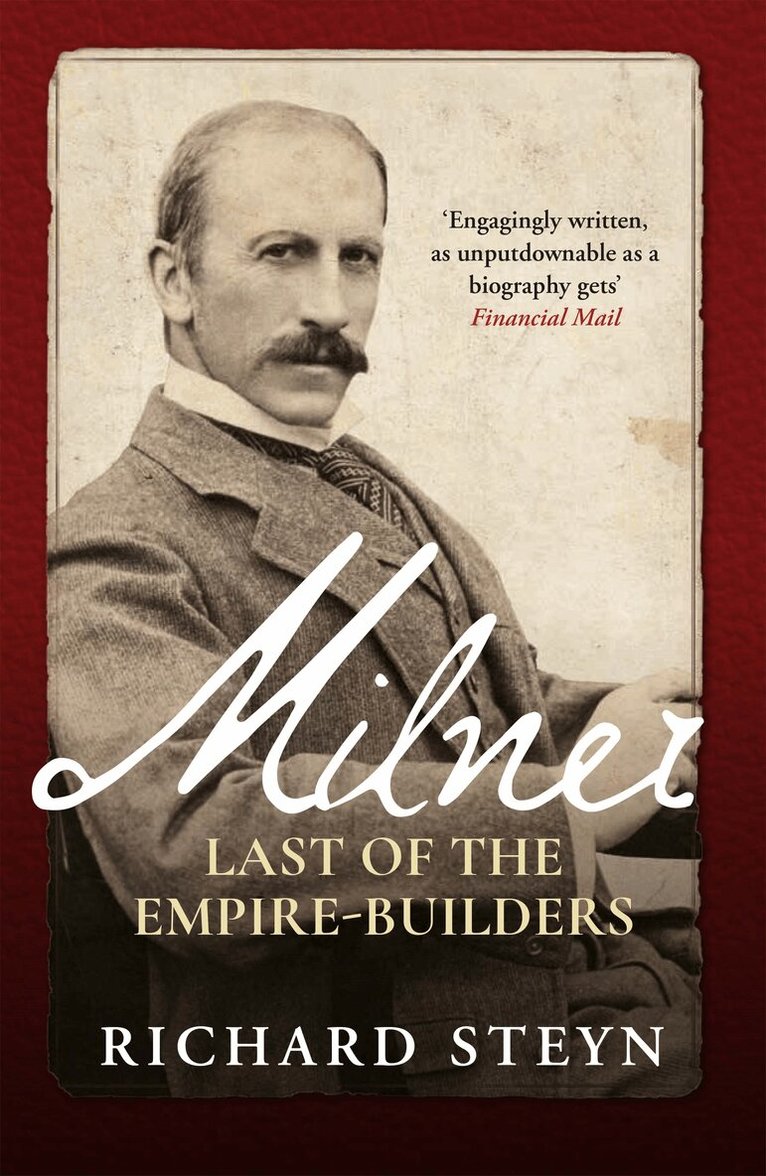
'Engagingly written, as unputdownable as a biography gets' Financial Mail'A rich and beautifully nuanced portrait of Milner ... a great feat, given all the paradoxical complexities of the man's life and character.' Duncan Campbell-Smith, former Financial Times and Economist journalistFrom the acclaimed biographer of Jan Smuts, a revealing new account of Empire-builder and First World War Cabinet minister Lord Alfred Milner.Alfred Milner was one of Britain's most famous empire builders who both contributed to the Allied victory in the First World War and left an indelible imprint on the history of South Africa. Yet his legacy is contested and little understood.Largely responsible for the Boer War - a conflict marking the beginning of the end of the British Empire - afterwards Milner helped to unify South Africa, but brewed resentment among Afrikaners. In Britain, from 1916, Milner was part of Lloyd George's five-man War Cabinet, and the driving force behind the Imperial War Cabinet which increased the status of Britain's Dominions.In this comprehensively researched, first full-length biography by a South African, Richard Steyn argues that Milner's reputation should not be solely defined by his eight years' service in South Africa. If he was the wrong man to send to that country, he was the right person in a far greater international conflict.
224 kr
Skickas inom 5-8 vardagar
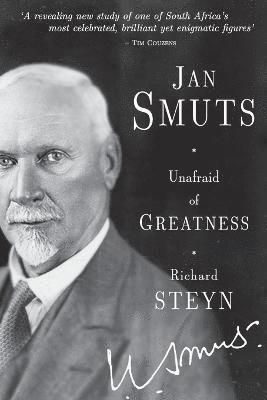
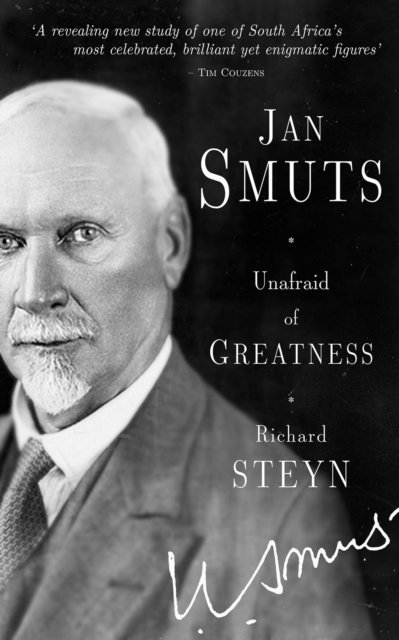
Jan Christian Smuts was soldier, statesman and intellectual, one of South Africa's greatest leaders. Yet little is said about him today even as we appear to live in a leadership vacuum. This is a re-examination of the life and thought of Jan Smuts. It is intended to remind a contemporary readership of the remarkable achievements of this impressive soldier-statesman. The author argues that there is a need to bring Smuts back into the present, that Smuts' legacy still has much to instruct. He draws several parallels between Smuts and President Thabo Mbeki, both intellectuals much lionised abroad and yet often distrusted at home. This book is a highly readable account of Smuts' life. It also examines a number of overarching themes: his relationships with women, spiritual life, intellectual life and his role as advisor to world leaders. Politics and international affairs receive the lion's share, but Smuts' unique contributions to other fields -- for example, botany -- are not neglected. This book does not shy away from the contradictions of its subject. Smuts was one of the architects of the United Nations, and a great champion of human rights, yet he could not see the need to reform the condition of the African majority in his own country.
275 kr
Skickas inom 5-8 vardagar
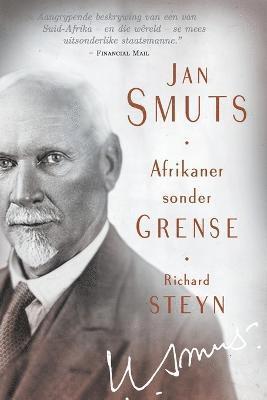
Jan Christiaan Smuts was 'n soldaat, staatsman, intellektueel en een van Suid-Afrika se grootste leiers. Tog word daar vandag min oor hom gepraat of geskryf, al beleef ons tans skynbaar 'n leierskapsvakuum. In Afrikaner sonder grense voer Richard Steyn aan dat ons hierdie indrukwekkende kryger-staatsman se lewe en denke moet herbesoek, omdat daar soveel te leer is uit sy merkwaardige prestasies. Die hoogs leesbare verslag ondersoek onder meer Smuts se rol as politieke leier, as adviseur van wereldleiers, sy spirituele en intellektuele lewe en sy verhoudings met vroue. Sy unieke bydraes op 'n verskeidenheid ander terreine, insluitend botanie, bewaring en filosofie, word ook bespreek. Afrikaner sonder grense skram egter nie weg van die paradoksale in Smuts nie. Hoewel hy een van die argitekte van die Verenigde Nasies en 'n groot kampvegter vir menseregte was, kon hy nie so ver kom om die plaaslike swart meerderheid politieke regte te gun nie.
253 kr
Skickas inom 5-8 vardagar
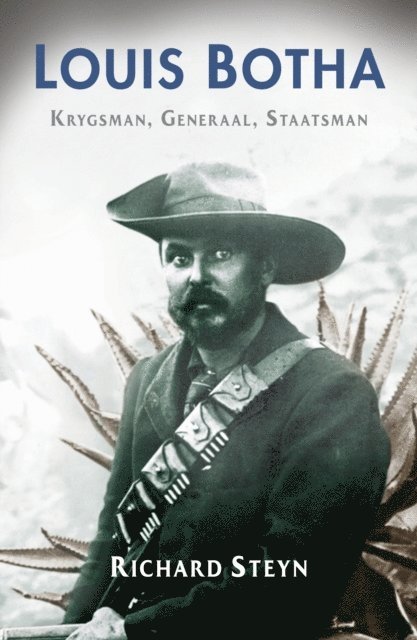
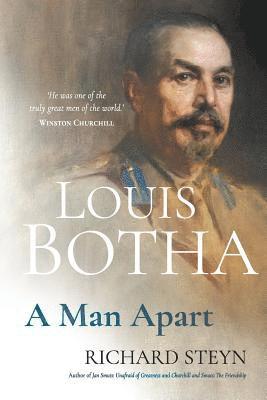
In A Man Apart Richard Steyn once again brings to life a South African icon. Louis Botha was the first Prime Minister of the Union of South Africa, a union he did much to create in the decade after the devastation of the Anglo-Boer War. During the war Botha was a brilliant young Boer general who through his battlefield strategy won significant victories over the British in the early stages of the war. When the weight of British arms overhelmed the Boers, Botha along with Smuts did much to encourage peace between English and Afrikaner and led the country to Union in 1910 and dominion status. Botha was a big-hearted and generous man who showed magnanimity in his dealings with all, including former enemies. He led the South African troops to victory and the capture of German South West Africa prior to this he had to put down a revolt of pro-German Afrikaners. At the Peace of Versailles, representing South Africa, he pleaded unsuccessfully for magnanimity towards the Germans. Botha was a globally respected figure he and Smuts effectively operated as a double act in South Africa and on the international stage before Bothas untimely death in August 1919 at only 57. In A Man Apart this tragically short life is illuminated in full.