Richard T. Carson – författare
Visar alla böcker från författaren Richard T. Carson. Handla med fri frakt och snabb leverans.
15 produkter
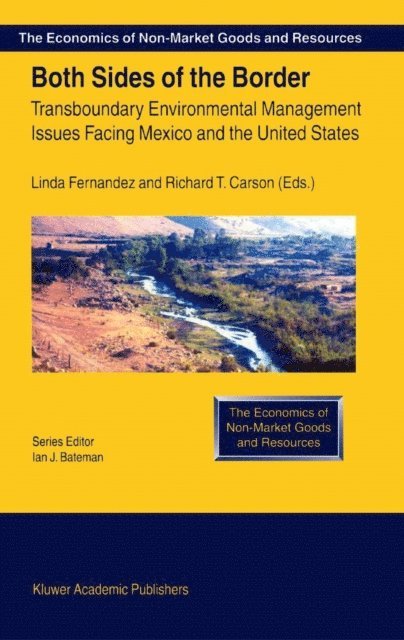
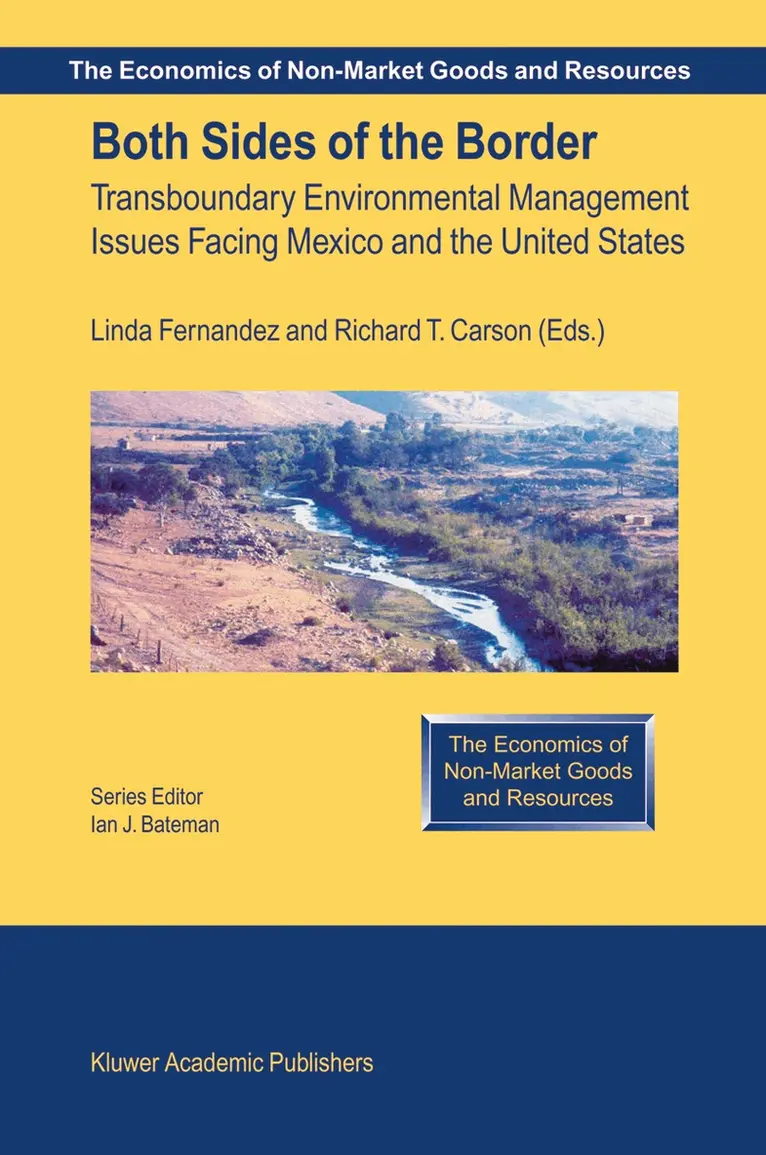
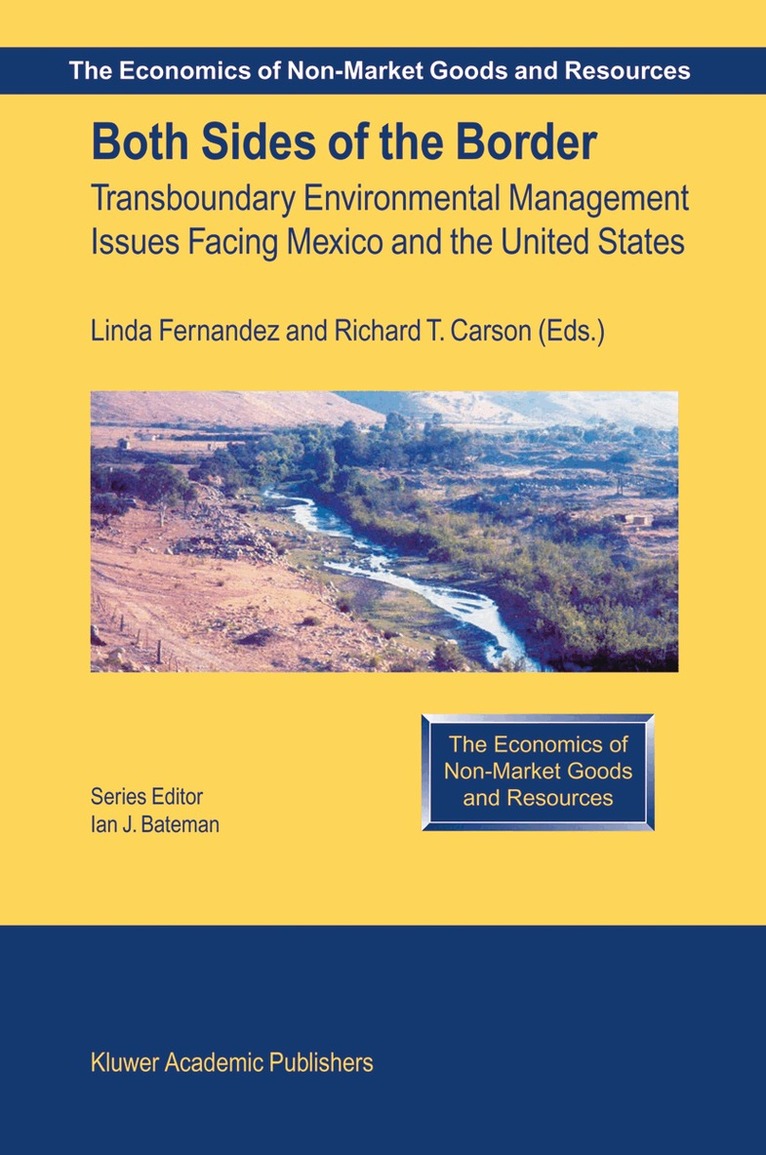
Both Sides of the Border
Transboundary Environmental Management Issues Facing Mexico and the United States
Av Richard T. Carson, Linda Fernandez
E-bok, 2005
2925 kr
Lägg i varukorg
The Mexican -- United States border represents much more than the meeting place of two nations. Our border communities are often a line of first defense -- absorbing the complex economic, environmental and social impacts of globalization that ripple through the region. In many ways, our success or …
Stated Preference Approach to Environmental Valuation, Volumes I, II and III
Volume I: Foundations, Initial Development, Statistical Approaches Volume II:Conceptual and Empirical Issues Volume III: Applications: Benefit-Cost Analysis and Natural Resource Damage Assessment
2007
15462 kr
Lägg i varukorg
There is a truly enormous literature on using stated preference information to place a monetary value on environmental amenities. This three volume set provides the key papers for understanding the historical development of contingent valuation, its theoretical and statistical foundations, and the …
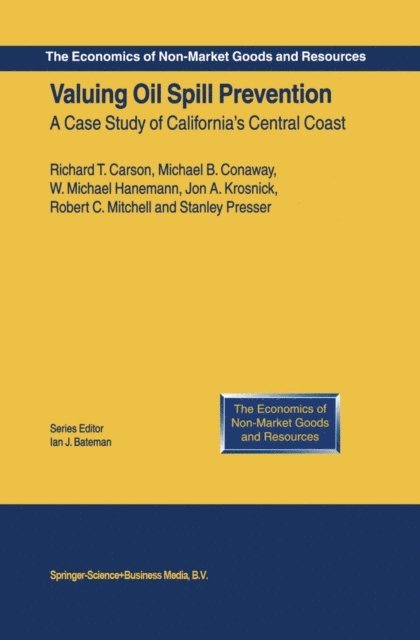
Valuing Oil Spill Prevention
A Case Study of California’s Central Coast
Av Richard T. Carson, Michael B. Conaway m. fl.
Inbunden, 2004
1641 kr
Lägg i varukorg
On April 22-23, 1988, approximately 432,000 gallons of San Joaquin Valley crude oil spilled from an aboveground storage tank at a Shell Oil Company refinery into the surrounding environment, including the northern reaches of San Francisco Bay (the Martinez spill). Pursuant to the settlement of the …
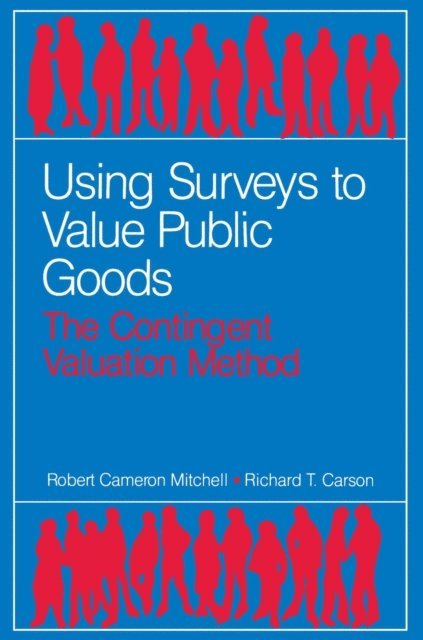
Using Surveys to Value Public Goods
The Contingent Valuation Method
Av Robert Cameron Mitchell, Richard T. Carson
Inbunden, 1989
2515 kr
Lägg i varukorg
Economists and others have long believed that by balancing the costs of such public goods as air quality and wilderness areas against their benefits, informed policy choices can be made. But the problem of putting a dollar value on cleaner air or water and other goods not sold in the marketplace …
Using Surveys to Value Public Goods
The Contingent Valuation Method
Av Richard T. Carson, Robert Cameron Mitchell
E-bok, 2013
5,0 utav 5 stjärnor. Totalt antal röster: (1)
2634 kr
Lägg i varukorg
Economists and others have long believed that by balancing the costs of such public goods as air quality and wilderness areas against their benefits, informed policy choices can be made. But the problem of putting a dollar value on cleaner air or water and other goods not sold in the marketplace …
Using Surveys to Value Public Goods
The Contingent Valuation Method
Av Richard T. Carson, Robert Cameron Mitchell
E-bok, 2013
2693 kr
Lägg i varukorg
Economists and others have long believed that by balancing the costs of such public goods as air quality and wilderness areas against their benefits, informed policy choices can be made. But the problem of putting a dollar value on cleaner air or water and other goods not sold in the marketplace …
Stated Preference Approach to Environmental Valuation, Volumes I, II and III
Volume I: Foundations, Initial Development, Statistical Approaches Volume II:Conceptual and Empirical Issues Volume III: Applications: Benefit-Cost Analysis and Natural Resource Damage Assessment
E-bok, 2018
11862 kr
Lägg i varukorg
There is a truly enormous literature on using stated preference information to place a monetary value on environmental amenities. This three volume set provides the key papers for understanding the historical development of contingent valuation, its theoretical and statistical foundations, and the …
Stated Preference Approach to Environmental Valuation, Volumes I, II and III
Volume I: Foundations, Initial Development, Statistical Approaches Volume II:Conceptual and Empirical Issues Volume III: Applications: Benefit-Cost Analysis and Natural Resource Damage Assessment
E-bok, 2018
12125 kr
Lägg i varukorg
There is a truly enormous literature on using stated preference information to place a monetary value on environmental amenities. This three volume set provides the key papers for understanding the historical development of contingent valuation, its theoretical and statistical foundations, and the …
Valuing Oil Spill Prevention
A Case Study of California’s Central Coast
Av Stanley Presser, Robert C. Mitchell m. fl.
E-bok, 2013
1942 kr
Lägg i varukorg
On April 22-23, 1988, approximately 432,000 gallons of San Joaquin Valley crude oil spilled from an aboveground storage tank at a Shell Oil Company refinery into the surrounding environment, including the northern reaches of San Francisco Bay (the Martinez spill). Pursuant to the settlement of the …
Both Sides of the Border
Transboundary Environmental Management Issues Facing Mexico and the United States
Av R. Dean Adams, Bateman m. fl.
Inbunden, 2002
2185 kr
Lägg i varukorg
The Mexican -- United States border represents much more than the meeting place of two nations. Our border communities are often a line of first defense -- absorbing the complex economic, environmental and social impacts of globalization that ripple through the region. In many ways, our success or …
Contingent Valuation
A Comprehensive Bibliography and History
Inbunden, 2011
3496 kr
Lägg i varukorg
This major reference work - the first of its kind - provides a comprehensive and authoritative introduction to the large and growing literature on contingent valuation. It includes annotated entries on over 7,500 contingent valuation papers and studies from over 130 countries covering both the …
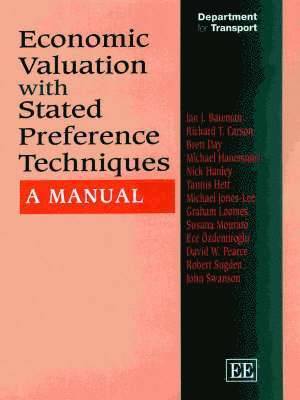
Economic Valuation with Stated Preference Techniques
A Manual
Av Ian J. Bateman, Richard T. Carson m. fl.
Inbunden, 2002
2804 kr
Lägg i varukorg
This manual offers a detailed, up-to-date explanation of how to carry out economic valuation using stated preference techniques. It is relevant for the application of these techniques to all non-market goods and services including air and water quality; provision of public open space; health care …
Economic Valuation with Stated Preference Techniques
A Manual
Av Ian J. Bateman, Richard T. Carson m. fl.
Häftad, 2004
5,0 utav 5 stjärnor. Totalt antal röster: (1)
1044 kr
Lägg i varukorg
This manual offers a detailed, up-to-date explanation of how to carry out economic valuation using stated preference techniques. It is relevant for the application of these techniques to all non-market goods and services including air and water quality; provision of public open space; health care …
Both Sides of the Border
Transboundary Environmental Management Issues Facing Mexico and the United States
Av Linda Fernandez, Richard T. Carson
Häftad, 2010
2185 kr
Lägg i varukorg
The Mexican -- United States border represents much more than the meeting place of two nations. Our border communities are often a line of first defense -- absorbing the complex economic, environmental and social impacts of globalization that ripple through the region. In many ways, our success or …
Valuing Oil Spill Prevention
A Case Study of California’s Central Coast
Av Richard T. Carson, Michael B. Conaway m. fl.
Häftad, 2014
1509 kr
Lägg i varukorg
On April 22-23, 1988, approximately 432,000 gallons of San Joaquin Valley crude oil spilled from an aboveground storage tank at a Shell Oil Company refinery into the surrounding environment, including the northern reaches of San Francisco Bay (the Martinez spill). Pursuant to the settlement of the …