Richard Tarasofsky – författare
Visar alla böcker från författaren Richard Tarasofsky. Handla med fri frakt och snabb leverans.
4 produkter
4 produkter
E-bok
PDF, Engelska, 20161 944 kr
Läs direkt efter köp
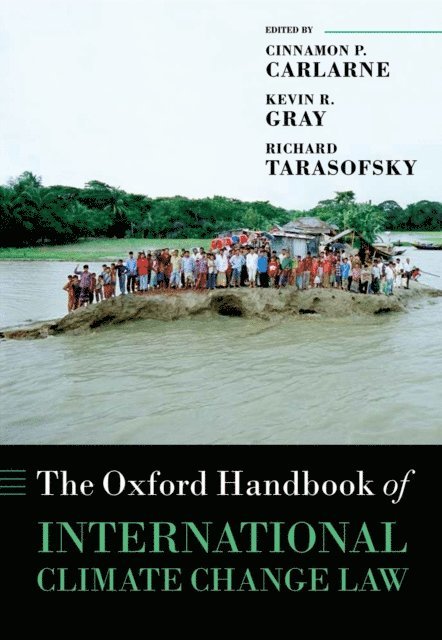
Climate change presents one of the greatest challenges of our time, and has become one of the defining issues of the twenty-first century. The radical changes which both developed and developing countries will need to make, in economic and in legal terms, to respond to climate change are unprecedented. International law, including treaty regimes, institutions, and customary international law, needs to address the myriad challenges and consequences of climate change,including variations in the weather patterns, sea level rise, and the resulting migration of peoples.The Oxford Handbook of International Climate Change Law provides an unprecedented and authoritative overview of all aspects of international climate change law as it currently stands, with guidance for how it should develop in the future. Over forty leading scholars and practitioners set out a comprehensive understanding of the legal issues that surround this vitally important but still emerging area of international law. This book addresses the major legal dimensions of the problemscaused by climate change: not only in the content and nature of the international legal frameworks, which need implementation at the national level, but also the development of carbon trading systems as a means of reducing the costs of meeting emission reduction targets. After an introduction to the field, theHandbook assesses the relevant institutions, the key applicable principles of international law, the international mitigation regime and its consequences, and climate change litigation, before providing perspectives focused upon specific countries or regions.The Handbook will be an invaluable resource for scholars, students, and practitioners of international climate change law. It provides readers with diverse perspectives, bringing together interpretations from different disciplines, countries, and cultures.
E-bok
Engelska, 20161 944 kr
Läs direkt efter köp
Climate change presents one of the greatest challenges of our time, and has become one of the defining issues of the twenty-first century. The radical changes which both developed and developing countries will need to make, in economic and in legal terms, to respond to climate change are unprecedented. International law, including treaty regimes, institutions, and customary international law, needs to address the myriad challenges and consequences of climate change,including variations in the weather patterns, sea level rise, and the resulting migration of peoples.The Oxford Handbook of International Climate Change Law provides an unprecedented and authoritative overview of all aspects of international climate change law as it currently stands, with guidance for how it should develop in the future. Over forty leading scholars and practitioners set out a comprehensive understanding of the legal issues that surround this vitally important but still emerging area of international law. This book addresses the major legal dimensions of the problemscaused by climate change: not only in the content and nature of the international legal frameworks, which need implementation at the national level, but also the development of carbon trading systems as a means of reducing the costs of meeting emission reduction targets. After an introduction to the field, theHandbook assesses the relevant institutions, the key applicable principles of international law, the international mitigation regime and its consequences, and climate change litigation, before providing perspectives focused upon specific countries or regions.The Handbook will be an invaluable resource for scholars, students, and practitioners of international climate change law. It provides readers with diverse perspectives, bringing together interpretations from different disciplines, countries, and cultures.
Inbunden, Engelska, 2016
2 359 kr
Skickas inom 7-10 vardagar
Climate change presents one of the greatest challenges of our time, and has become one of the defining issues of the twenty-first century. The radical changes which both developed and developing countries will need to make, in economic and in legal terms, to respond to climate change are unprecedented. International law, including treaty regimes, institutions, and customary international law, needs to address the myriad challenges and consequences of climate change, including variations in the weather patterns, sea level rise, and the resulting migration of peoples.The Oxford Handbook of International Climate Change Law provides an unprecedented and authoritative overview of all aspects of international climate change law as it currently stands, with guidance for how it should develop in the future. Over forty leading scholars and practitioners set out a comprehensive understanding of the legal issues that surround this vitally important but still emerging area of international law. This book addresses the major legal dimensions of the problems caused by climate change: not only in the content and nature of the international legal frameworks, which need implementation at the national level, but also the development of carbon trading systems as a means of reducing the costs of meeting emission reduction targets. After an introduction to the field, the Handbook assesses the relevant institutions, the key applicable principles of international law, the international mitigation regime and its consequences, and climate change litigation, before providing perspectives focused upon specific countries or regions.The Handbook will be an invaluable resource for scholars, students, and practitioners of international climate change law. It provides readers with diverse perspectives, bringing together interpretations from different disciplines, countries, and cultures.
E-bok
Engelska, 1997884 kr
Läs direkt efter köp
Class insecta is numerically the largest class of the largest phylum outnumbering the total number of all the other known species of the rest of the animal kingdom. The book presents an interesting account of the knowledge of Science of Entomology in ancient India as is evident from references in our scriptures. Man has been trying his level best to deal with the insect pest menace but has not yet been able to win the battle against these and they continue to dominate. The book gives a vivid account of the factors responsible for the dominance of insects. How intensification of agriculture has led to intensification of pest problem has been dealt with in detail. Insect pests of crops, stored grain and household pests and their latest methods of management have been dealt with adequately. While on the one hand, a number of insects play definite negative role in human welfare, there are also insects which play vital positive role by supplying us useful products, increasing crop production through cross-pollination, acting as enemies of harmful insects and weeds, forming a part of human diet and medicine and are helpful to man in many other ways. All these have been dealt with adequately and can be considered as special features of this book, not available elsewhere in a consolidated form.