Richard W. McCormick - Böcker
Visar alla böcker från författaren Richard W. McCormick. Handla med fri frakt och snabb leverans.
5 produkter
5 produkter
1 062 kr
Skickas inom 7-10 vardagar
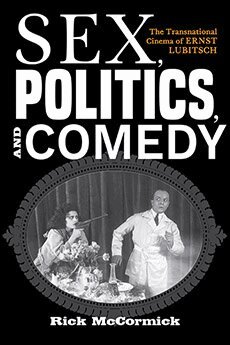
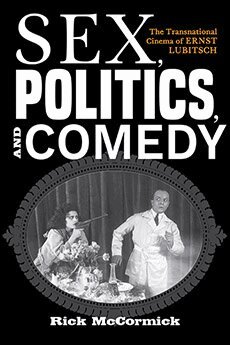
Ernst Lubitsch (1982–1947) was one of the most successful and influential German filmmakers in American film comedy. In this volume, Rick McCormick argues for a more transnational view of Lubitsch's career and films with respect to nationality, ethnicity, migration, class, sexuality, and gender. McCormick focuses on Lubitsch's Jewishness, which is inseparable from the distinct transnational character of the director, categorizing his early films as "Jewish comedies" where Lubitsch strikes a tenuous balance between Jewish humor, antisemitic jokes, stereotypes, and the incorporation of antifascist subjects into his popular films. Above all, the larger political issues at stake in Lubitsch's work are brought forward: German-Jewish perspectives and experiences, the subtle treatment of covert political and social messages, and the relationship of comedy, especially sexual comedy, to emancipatory politics and, in particular, to the turbulent politics of Europe and the United States in the first half of the twentieth century.The book discusses in depth the following films by Lubitsch: The Pride of the Firm (1914), Shoe Palace Pinkus (1916), Meyer From Berlin (1918), I Don't Want to Be a Man (1918), The Oyster Princess (1919), Madame Dubarry (1919), The Doll (1919), Sumurun (1920), The Wildcat (1921), The Marriage Circle (1924), The Student Prince in Old Heidelberg (1927), The Love Parade (1929), The Man I Killed (1932), Trouble in Paradise (1932), Design for Living (1933), Ninotchka (1939), The Shop Around the Corner (1940), and To Be or Not to Be (1942).
521 kr
Skickas inom 7-10 vardagar
Ernst Lubitsch (1982–1947) was one of the most successful and influential German filmmakers in American film comedy. In this volume, Rick McCormick argues for a more transnational view of Lubitsch's career and films with respect to nationality, ethnicity, migration, class, sexuality, and gender. McCormick focuses on Lubitsch's Jewishness, which is inseparable from the distinct transnational character of the director, categorizing his early films as "Jewish comedies" where Lubitsch strikes a tenuous balance between Jewish humor, antisemitic jokes, stereotypes, and the incorporation of antifascist subjects into his popular films. Above all, the larger political issues at stake in Lubitsch's work are brought forward: German-Jewish perspectives and experiences, the subtle treatment of covert political and social messages, and the relationship of comedy, especially sexual comedy, to emancipatory politics and, in particular, to the turbulent politics of Europe and the United States in the first half of the twentieth century.The book discusses in depth the following films by Lubitsch: The Pride of the Firm (1914), Shoe Palace Pinkus (1916), Meyer From Berlin (1918), I Don't Want to Be a Man (1918), The Oyster Princess (1919), Madame Dubarry (1919), The Doll (1919), Sumurun (1920), The Wildcat (1921), The Marriage Circle (1924), The Student Prince in Old Heidelberg (1927), The Love Parade (1929), The Man I Killed (1932), Trouble in Paradise (1932), Design for Living (1933), Ninotchka (1939), The Shop Around the Corner (1940), and To Be or Not to Be (1942).
Politics of the Self
Feminism and the Postmodern in West German Literature and Film
Häftad, Engelska, 2014
907 kr
Skickas inom 3-6 vardagar
Richard McCormick examines the concepts of postmodernity and postmodernism as they apply to West Germany, discussing them against the background of cultural and political upheaval in that country since the 1960s, rather than exclusively in the more familiar setting of intellectual history. Considering six literary and cinematic texts that are marked by a preoccupation with the self and subjectivity, he underscores the crucial influence of feminism on writers and filmmakers--and on the "postmodern." In a broad international context he describes the conflicting forces that affected the West German student movementthe rationalistic tradition of the Weimar Left and more "irrational" influences such as French existentialism and surrealism (as well as the American "Beat" movement and rock & roll)--and shows how these forces played themselves out so that dogmatic Marxist Leninism was repudiated in favor of a "New Subjectivity.".At the center of the discussion are the novels Lenz by Peter Schneider, Class Love (Klassenliebe) by Karin Struck, and Devotion by Botho Strauss, and the films Wrong Move written by Peter Handke and directed by Wim Wenders, Germany, Pale Mother by Helma Sanders-Brahms, and The Subjective Factor by Helke Sander. The author shows how ongoing attempts to attack the separation of emotion from reason, life from art, the private from the public, and the personal from the political brought about changes in outlook, from the 1960s to the early 1980s, that are related to the rise of new political movements--ecology, nuclear disarmament, and feminism. Originally published in 1991. The Princeton Legacy Library uses the latest print-on-demand technology to again make available previously out-of-print books from the distinguished backlist of Princeton University Press. These editions preserve the original texts of these important books while presenting them in durable paperback and hardcover editions.The goal of the Princeton Legacy Library is to vastly increase access to the rich scholarly heritage found in the thousands of books published by Princeton University Press since its founding in 1905.
Politics of the Self
Feminism and the Postmodern in West German Literature and Film
Inbunden, Engelska, 2016
2 089 kr
Skickas inom 3-6 vardagar
Richard McCormick examines the concepts of postmodernity and postmodernism as they apply to West Germany, discussing them against the background of cultural and political upheaval in that country since the 1960s, rather than exclusively in the more familiar setting of intellectual history. Considering six literary and cinematic texts that are marked by a preoccupation with the self and subjectivity, he underscores the crucial influence of feminism on writers and filmmakers--and on the "postmodern." In a broad international context he describes the conflicting forces that affected the West German student movementthe rationalistic tradition of the Weimar Left and more "irrational" influences such as French existentialism and surrealism (as well as the American "Beat" movement and rock & roll)--and shows how these forces played themselves out so that dogmatic Marxist Leninism was repudiated in favor of a "New Subjectivity.".At the center of the discussion are the novels Lenz by Peter Schneider, Class Love (Klassenliebe) by Karin Struck, and Devotion by Botho Strauss, and the films Wrong Move written by Peter Handke and directed by Wim Wenders, Germany, Pale Mother by Helma Sanders-Brahms, and The Subjective Factor by Helke Sander. The author shows how ongoing attempts to attack the separation of emotion from reason, life from art, the private from the public, and the personal from the political brought about changes in outlook, from the 1960s to the early 1980s, that are related to the rise of new political movements--ecology, nuclear disarmament, and feminism. Originally published in 1991. The Princeton Legacy Library uses the latest print-on-demand technology to again make available previously out-of-print books from the distinguished backlist of Princeton University Press. These editions preserve the original texts of these important books while presenting them in durable paperback and hardcover editions.The goal of the Princeton Legacy Library is to vastly increase access to the rich scholarly heritage found in the thousands of books published by Princeton University Press since its founding in 1905.
560 kr
Skickas inom 10-15 vardagar
This fascinating volume is for all serious students of European cinema as well as historians of Germany in the 20th century. "German Essays on Film" is divided into five parts: Late Wilhelmine Germany; Weimar Republic (1918-33); Inside the "Third Reich" (1933-45); Intellectuals in Exile; and Postwar Germany: since 1945. Among the writers, thinkers, filmmakers, and scholars anthologized are: Alfred D blin, Georg Luk cs, Claire Goll, Hugo von Hofmannsthal, Fritz Lang, F. W. Murnau, Joseph Goebbels, Leni Riefenstahl, Walter Benjamin, Max Horkheimer, Theodor W. Adorno, Siegfried Kracauer, R. W. Fassbinder, Wim Wenders, Gertrud Koch, and many others. The introduction by McCormick and Guenther-Pal along with generous headnotes help to put all these essays into historic perspective.