Richard Werbner – författare
931 kr
Skickas inom 5-8 vardagar
338 kr
Skickas inom 10-15 vardagar
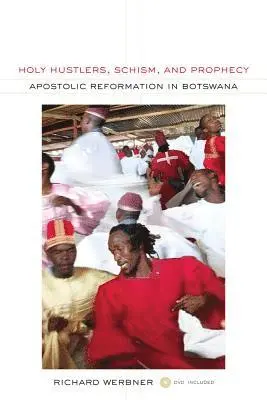
Holy Hustlers, Schism, and Prophecy
Apostolic Reformation in Botswana
361 kr
Skickas inom 5-8 vardagar
421 kr
Läs direkt efter köp
727 kr
Läs direkt efter köp
This book presents an important ethnographic and theoretical advance in legal anthropological scholarship by interrogating customary law, customary courts and legal pluralism in sub-Saharan Africa. It highlights the vitality and continued relevance of customary justice at a time when customary courts have waned or even disappeared in many postcolonial African nations.
Taking Botswana as a casestudy from in-depth fieldwork over a fifty-year period, the book shows, the ‘customary’ is robustly enduring, central to settling interpersonal disputes and constitutive of the local as well as the national public ethics. Customary law continues to be constitutionally protected, authorised by the country’s past as an authentic, viable legacy, from the British colonial period of indirect rule to the postcolonial state’s present development as a highly bureaucratised democracy. Along with a theoretical overview of the underlying issues for the anthropology and sociology of law, the book documents customary law as living law in the context of legal pluralism. It takes a legal realist approach and highlights the need to pay close attention to the lived experience of justice and its role in the production of legal subjectivities.
The book will be valuable to Africanists but also, more broadly, to social scientists, social historians and socio-legal scholars with interests in law and social change, public ethics and personal morality, and the intersection of politics and judicial decision making.
727 kr
Läs direkt efter köp
This book presents an important ethnographic and theoretical advance in legal anthropological scholarship by interrogating customary law, customary courts and legal pluralism in sub-Saharan Africa. It highlights the vitality and continued relevance of customary justice at a time when customary courts have waned or even disappeared in many postcolonial African nations.
Taking Botswana as a casestudy from in-depth fieldwork over a fifty-year period, the book shows, the ‘customary’ is robustly enduring, central to settling interpersonal disputes and constitutive of the local as well as the national public ethics. Customary law continues to be constitutionally protected, authorised by the country’s past as an authentic, viable legacy, from the British colonial period of indirect rule to the postcolonial state’s present development as a highly bureaucratised democracy. Along with a theoretical overview of the underlying issues for the anthropology and sociology of law, the book documents customary law as living law in the context of legal pluralism. It takes a legal realist approach and highlights the need to pay close attention to the lived experience of justice and its role in the production of legal subjectivities.
The book will be valuable to Africanists but also, more broadly, to social scientists, social historians and socio-legal scholars with interests in law and social change, public ethics and personal morality, and the intersection of politics and judicial decision making.
2 213 kr
Skickas inom 10-15 vardagar
609 kr
Skickas inom 10-15 vardagar
1 192 kr
Skickas inom 5-8 vardagar
361 kr
Skickas inom 5-8 vardagar
238 kr
Skickas inom 5-8 vardagar
518 kr
Skickas inom 10-15 vardagar
518 kr
Skickas inom 10-15 vardagar
448 kr
Skickas inom 10-15 vardagar