Rienk van Grondelle - Böcker
Visar alla böcker från författaren Rienk van Grondelle. Handla med fri frakt och snabb leverans.
6 produkter
6 produkter
727 kr
Skickas inom 10-15 vardagar
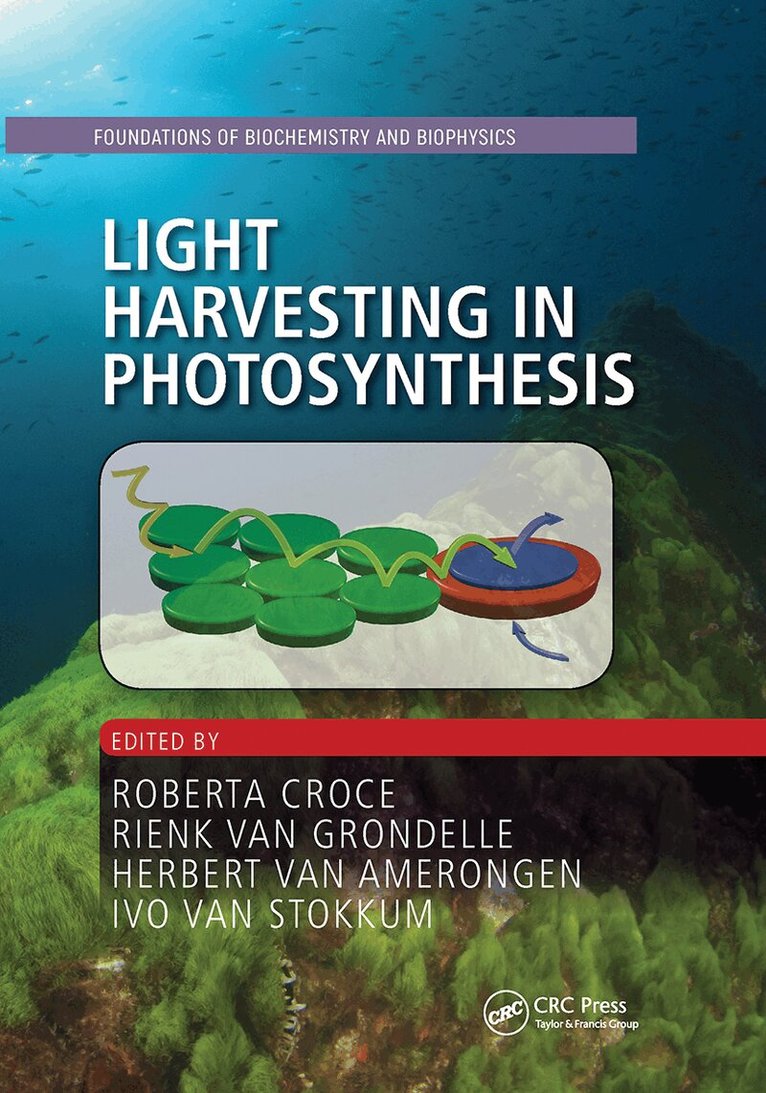
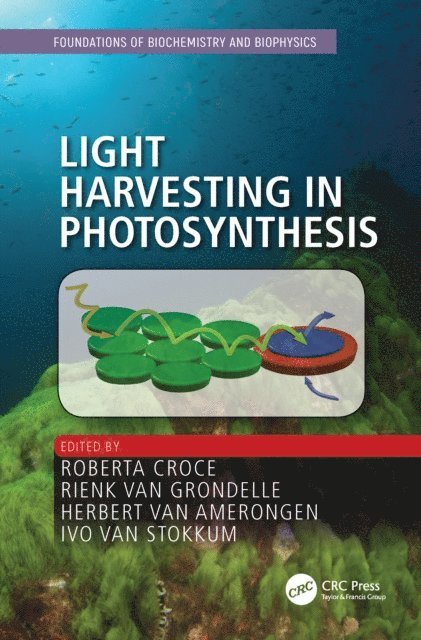
This landmark collective work introduces the physical, chemical, and biological principles underlying photosynthesis: light absorption, excitation energy transfer, and charge separation. It begins with an introduction to properties of various pigments, and the pigment proteins in plant, algae, and bacterial systems. It addresses the underlying physics of light harvesting and key spectroscopic methods, including data analysis. It discusses assembly of the natural system, its energy transfer properties, and regulatory mechanisms. It also addresses light-harvesting in artificial systems and the impact of photosynthesis on our environment. The chapter authors are amongst the field’s world recognized experts.Chapters are divided into five main parts, the first focused on pigments, their properties and biosynthesis, and the second section looking at photosynthetic proteins, including light harvesting in higher plants, algae, cyanobacteria, and green bacteria. The third part turns to energy transfer and electron transport, discussing modeling approaches, quantum aspects, photoinduced electron transfer, and redox potential modulation, followed by a section on experimental spectroscopy in light harvesting research. The concluding final section includes chapters on artificial photosynthesis, with topics such as use of cyanobacteria and algae for sustainable energy production.Robert Croce is Head of the Biophysics Group and full professor in biophysics of photosynthesis/energy at Vrije Universiteit, Amsterdam. Rienk van Grondelle is full professor at Vrije Universiteit, Amsterdam.Herbert van Amerongen is full professor of biophysics in the Department of Agrotechnology and Food Sciences at Wageningen University, where he is also director of the MicroSpectroscopy Research Facility.Ivo van Stokkum is associate professor in the Department of Physics and Astronomy, Faculty of Sciences, at Vrije Universiteit, Amsterdam.
665 kr
Skickas inom 7-10 vardagar
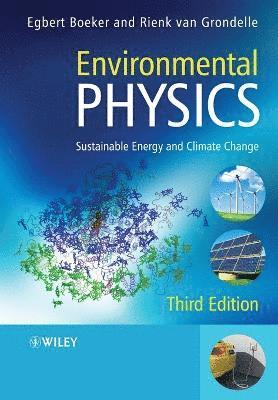
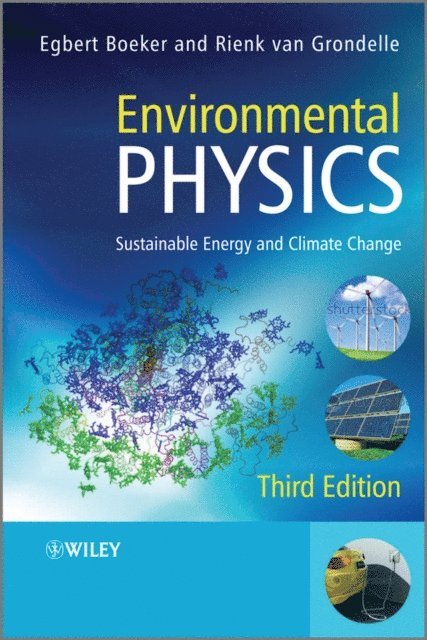
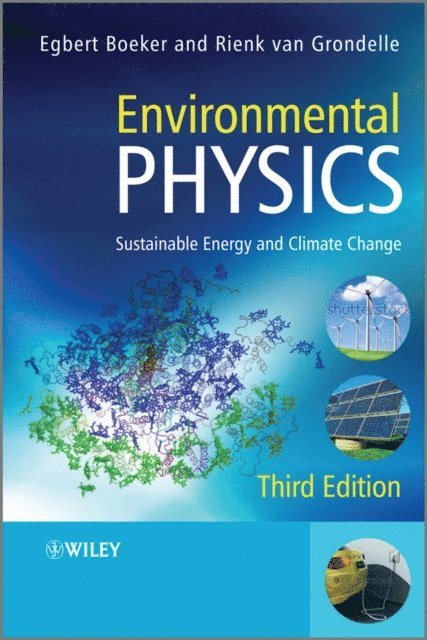
This thoroughly revised and updated third edition focuses on the utilization of sustainable energy and mitigating climate change, serving as an introduction to physics in the context of societal problems. A distinguishing feature of the text is the discussion of spectroscopy and spectroscopic methods as a crucial means to quantitatively analyze and monitor the condition of the environment, the factors determining climate change, and all aspects of energy conversion.This textbook will be invaluable to students in physics and related subjects, and supplementary materials are available on a companion website: http://www.nat.vu.nl/environmentalphysicsInstructor support material is available at: http://booksupport.wiley.com
721 kr
Skickas inom 7-10 vardagar
Aimed at a first course in environmental physics, environmentalscience, environmental analysis, or environmental monitoring. Thistext can be used by first year students and above, and takes ascientific approach as opposed to a social or political one.Mathematics is kept to a minimum, although some background (school)knowledge of science is assumed. Courses would be taught inphysics, environmental science and physical sciencedepartments. Comprehensively covering the field, this book brings together thelatest developments, theories, research and concerns, from both thescientific and social sides. Placing the environment firmly at thecentre of the scientific agenda, it provides all the backgroundneeded by readers to fully understand this important and often'hype-driven' subject. Whilst mathematics is introduced wherenecessary, it is carefully explained and kept simple, withderivations generally being avoided. Wherever possible, topics ofcurrent concern and relevance are included, and many examples,features and appetisers or mini-case studies are included,frequently drawn from publications such as New Scientist, Nature,Science, Physics Today and Scientific American. The book startswith a general overview of the subject, and then moves on to coverclimate, energy, pollutants, noise, measurements and socialaspects.
3 743 kr
Skickas inom 10-15 vardagar
This landmark collective work introduces the physical, chemical, and biological principles underlying photosynthesis: light absorption, excitation energy transfer, and charge separation. It begins with an introduction to properties of various pigments, and the pigment proteins in plant, algae, and bacterial systems. It addresses the underlying physics of light harvesting and key spectroscopic methods, including data analysis. It discusses assembly of the natural system, its energy transfer properties, and regulatory mechanisms. It also addresses light-harvesting in artificial systems and the impact of photosynthesis on our environment. The chapter authors are amongst the field’s world recognized experts.Chapters are divided into five main parts, the first focused on pigments, their properties and biosynthesis, and the second section looking at photosynthetic proteins, including light harvesting in higher plants, algae, cyanobacteria, and green bacteria. The third part turns to energy transfer and electron transport, discussing modeling approaches, quantum aspects, photoinduced electron transfer, and redox potential modulation, followed by a section on experimental spectroscopy in light harvesting research. The concluding final section includes chapters on artificial photosynthesis, with topics such as use of cyanobacteria and algae for sustainable energy production.
796 kr
Skickas inom 10-15 vardagar
Dass der Mensch mit der Technik und ihren Folgen die Umwelt stark verandert, ist uns spatestens seit Tschernobyl und dem Auftreten des Ozonlochs bewusst. Taglich werden wir mit physikalischen Messungen von Umwelteigenschaften konfrontiert, deren physikalische Prinzipien und Aussage wir zumeist glauben mussen. "Physik und Umwelt" schliesst nun die Lucke fur den physikalisch vorgebildeten Nichtfachmann, der keine spezielle Literatur zu Rate ziehen mochte. Entstanden aus Vorlesungen der Autoren an der Universitat Amsterdam ist es auch fur Vorlesungen des Hauptstudiums fur Ingenieure und Physiker geeignet. Damit bietet das Buch in Thema und Niveau eine ideale Erganzung zu dem bewahrten Vieweg-Titel "Chemie und Umwelt" von Andreas Heintz und Guido Reinhardt.
2 494 kr
Tillfälligt slut
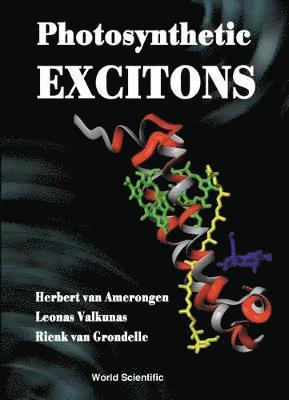
Excitons are considered as the basic concept used by describing the spectral properties of photosynthetic pigment-protein complexes and excitation dynamics in photosynthetic light-harvesting antenna and reaction centers. Following the recently obtained structures of a variety of photosynthetic pigment-protein complexes from plants and bacteria our interest in understanding the relation between structure, function and spectroscopy has strongly increased. These data demonstrate a short interpigment distance (of the order of 1 nm or even smaller) and/or a highly symmetric (ring-like) arrangement of pigment molecules in peripheral light-harvesting complexes of photosynthetic bacteria. Books which were devoted to the exciton problem so far mainly considered the spectral properties of molecular crystals. However, the small size of these pigment aggregates in the pigment-protein complexes as well as the role of the protein, which is responsible for the structural arrangement of the complex, clearly will have a dramatic influence on the pigment spectra and exciton dynamics. All these aspects of the problem are considered in this book. Exciton theory is mainly considered for small molecular aggregates (dimers, ring-like structures etc.). Together with the theoretical description of the classical conceptual approach, which mainly deals with polarization properties of the absorption and fluorescence spectra, the nonlinear femtosecond spectroscopy which is widely used for investigations now is also discussed. A large part of the book demonstrates the excitonic effects in a multitude of photosynthetic pigment-protein complexes and how we can understand these properties on the basis of the exciton concept.