Rita Gorawara-Bhat – författare
Visar alla böcker från författaren Rita Gorawara-Bhat. Handla med fri frakt och snabb leverans.
3 produkter
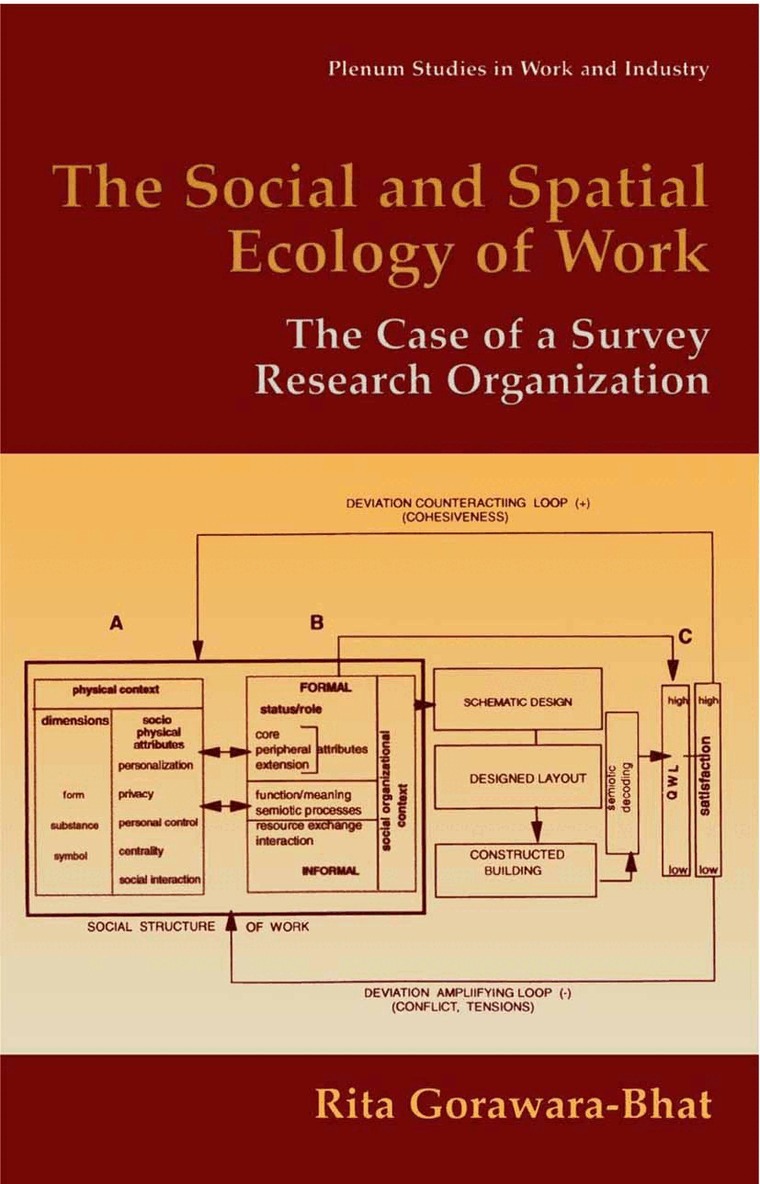
Social and Spatial Ecology of Work
The Case of a Survey Research Organization
Inbunden, 2000
552 kr
Lägg i varukorg
This work studies both the social organizational specifics and the interior spatial setting of a survey research organization through a combination of social science and architectural research. The author analyzes how social organizational dimensions are related to the spatial ecology of the …
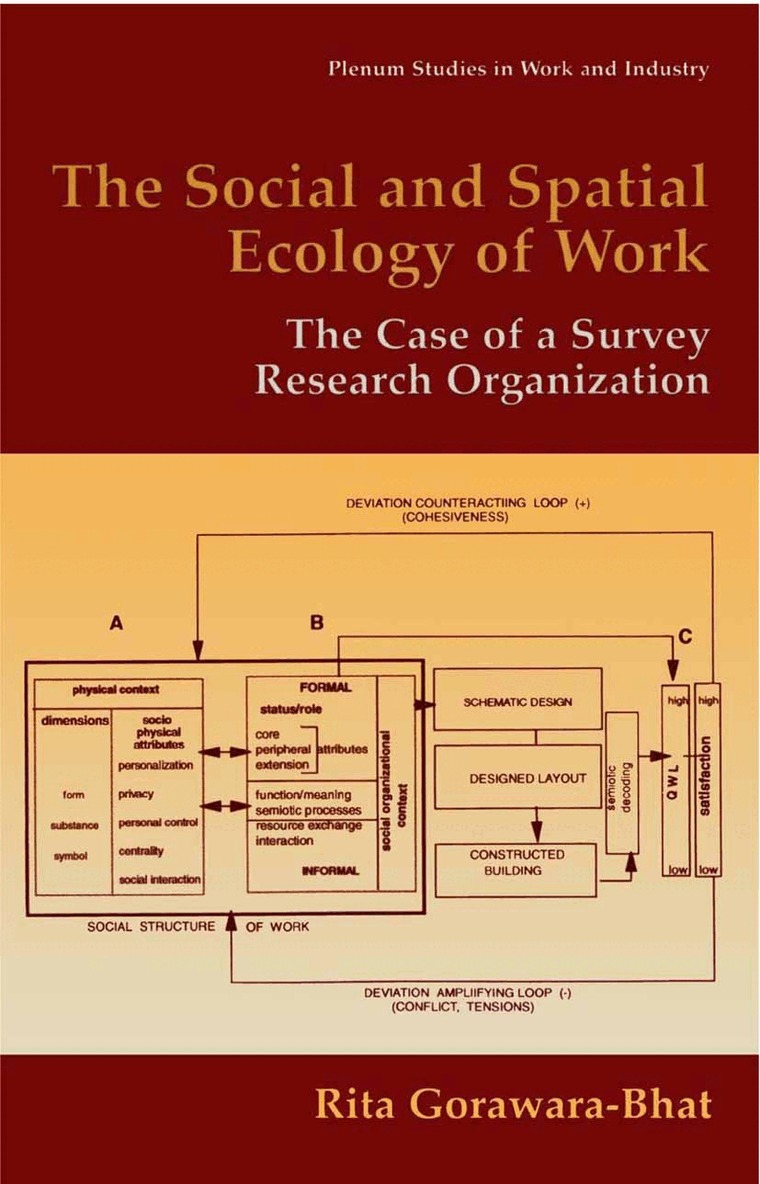
Social and Spatial Ecology of Work
The Case of a Survey Research Organization
E-bok, 2005
713 kr
Lägg i varukorg
The Social and Spatial Ecology of Work is an important contribution to the P- num Studies in Work and Industry. It is a theoretically informed case study, unique in that it takes full measure of the importance of physical space and the built environment for the quality of people’s daily working …
Social and Spatial Ecology of Work
The Case of a Survey Research Organization
Häftad, 2013
538 kr
Lägg i varukorg
The Social and Spatial Ecology of Work is an important contribution to the P- num Studies in Work and Industry. It is a theoretically informed case study, unique in that it takes full measure of the importance of physical space and the built environment for the quality of people’s daily working …