375 kr
Skickas inom 11-20 vardagar
375 kr
Skickas inom 11-20 vardagar
2 466 kr
Skickas inom 10-15 vardagar
768 kr
Läs direkt efter köp
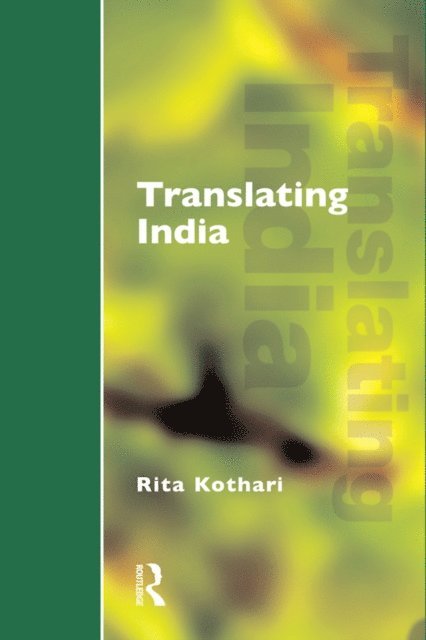
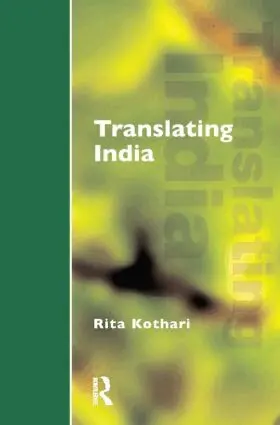
The cultural universe of urban, English-speaking middle class in India shows signs of growing inclusiveness as far as English is concerned. This phenomenon manifests itself in increasing forms of bilingualism (combination of English and one Indian language) in everyday forms of speech - advertisement jingles, bilingual movies, signboards, and of course conversations. It is also evident in the startling prominence of Indian Writing in English and somewhat less visibly, but steadily rising, activity of English translation from Indian languages. Since the eighties this has led to a frenetic activity around English translation in India''s academic and literary circles. Kothari makes this very current phenomenon her chief concern in Translating India.
The study covers aspects such as the production, reception and marketability of English translation. Through an unusually multi-disciplinary approach, this study situates English translation in India amidst local and global debates on translation, representation and authenticity. The case of Gujarati - a case study of a relatively marginalized language - is a unique addition that demonstrates the micro-issues involved in translation and the politics of language.
Rita Kothari teaches English at St. Xavier''s College, Ahmedabad (Gujarat), where she runs a translation research centre on behalf of Katha. She has published widely on literary sociology, postcolonialism and translation issues. Kothari is one of the leading translators from Gujarat. Her first book (a collaboration with Suguna Ramanathan) was on English translation of Gujarati poetry (Modern Gujarati Poetry: A Selection, Sahitya Akademi, New Delhi, 1998). Her English translation of the path-breaking Gujarati Dalit novel Angaliyat is in press (The Stepchild, Oxford University Press). She is currently working on an English translation of Gujarati short stories by women of Gujarat, a study of the nineteenth-century narratives of Gujarat, and is also engaged in a project on the Sindhi identity in India.
768 kr
Läs direkt efter köp
The cultural universe of urban, English-speaking middle class in India shows signs of growing inclusiveness as far as English is concerned. This phenomenon manifests itself in increasing forms of bilingualism (combination of English and one Indian language) in everyday forms of speech - advertisement jingles, bilingual movies, signboards, and of course conversations. It is also evident in the startling prominence of Indian Writing in English and somewhat less visibly, but steadily rising, activity of English translation from Indian languages. Since the eighties this has led to a frenetic activity around English translation in India''s academic and literary circles. Kothari makes this very current phenomenon her chief concern in Translating India.
The study covers aspects such as the production, reception and marketability of English translation. Through an unusually multi-disciplinary approach, this study situates English translation in India amidst local and global debates on translation, representation and authenticity. The case of Gujarati - a case study of a relatively marginalized language - is a unique addition that demonstrates the micro-issues involved in translation and the politics of language.
Rita Kothari teaches English at St. Xavier''s College, Ahmedabad (Gujarat), where she runs a translation research centre on behalf of Katha. She has published widely on literary sociology, postcolonialism and translation issues. Kothari is one of the leading translators from Gujarat. Her first book (a collaboration with Suguna Ramanathan) was on English translation of Gujarati poetry (Modern Gujarati Poetry: A Selection, Sahitya Akademi, New Delhi, 1998). Her English translation of the path-breaking Gujarati Dalit novel Angaliyat is in press (The Stepchild, Oxford University Press). She is currently working on an English translation of Gujarati short stories by women of Gujarat, a study of the nineteenth-century narratives of Gujarat, and is also engaged in a project on the Sindhi identity in India.
731 kr
Skickas inom 10-15 vardagar
1 299 kr
Skickas inom 5-8 vardagar
1 335 kr
Läs direkt efter köp
1 420 kr
Läs direkt efter köp
401 kr
Skickas
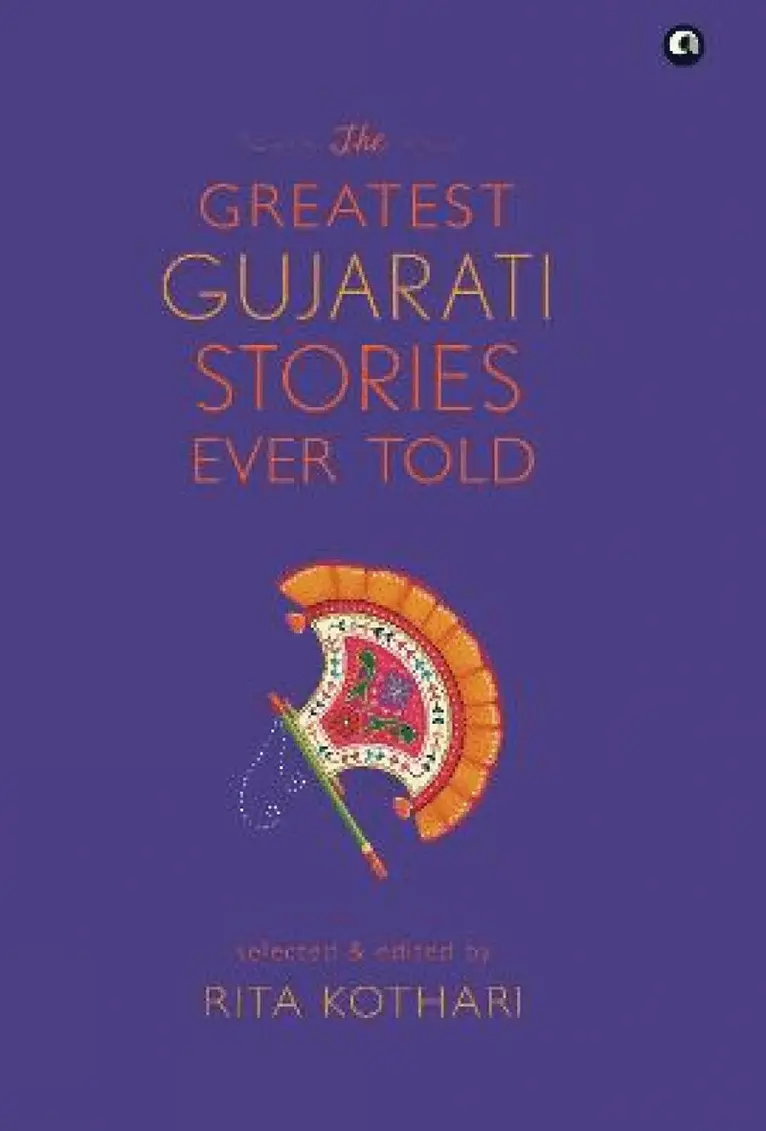
The twenty-three stories in The Greatest Gujarati Stories Ever Told represent some of the finest short fiction
in Gujarati literature. Selected and edited by translator and writer Rita Kothari, this collection features
established literary masters such as K. M. Munshi, Dhumketu, Himanshi Shelat, Dalpat Chauhan, Nazir
Mansuri, and Mona Patrawalla, as well as accomplished new voices such as Panna Trivedi, Abhimanyu
Acharya, Raam Mori, and others.
In K. M. Munshi's epistolary 'A Letter', a childbride is worked to her death as she yearns for her husband's
affection; in Neerav Patel's 'Creamy Layer', the politicized, urban, and upwardly mobile Mr and Mrs
Vaghela must confront the deep chasm that has grown between them and their family in the village;
in Panna Trivedi's 'Maajo', the story's eponymous young narrator longs for butter-soft skin and a Shah
Rukh-like glance from a young man on the train; in 'Saubhagyavati: The Fortunate Wife', Dwiref explores
the selfish and oppressive nature of marital sex; in 'A Drop of Blood' Jayant Khatri looks at how violent
acts engender more violence; Mona Patrawalla explores the tribal region of the Dangs and paints a hair raising picture of the violent forms of power wielded by the Parsi landlords there in 'The Black Horse'; in
Dashrath Parmar's 'Nandu', the narrator struggles to hide his caste in the face of insistent questions; in
'Jumo Bhishti' by Dhumketu, we see the wonderful bond between Jumo and his beloved buffalo, Venu;
and in Abhimanyu Acharya's 'Chunni', a young woman, Shaili, navigates the world of dating in a city
far away from home-these and other stories in the collection are passionate, profound, and timeless,
showcasing a range of styles and offering a variegated and singular picture of Gujarat.

375 kr
Skickas inom 11-20 vardagar
2 466 kr
Skickas inom 10-15 vardagar
768 kr
Läs direkt efter köp
The cultural universe of urban, English-speaking middle class in India shows signs of growing inclusiveness as far as English is concerned. This phenomenon manifests itself in increasing forms of bilingualism (combination of English and one Indian language) in everyday forms of speech - advertisement jingles, bilingual movies, signboards, and of course conversations. It is also evident in the startling prominence of Indian Writing in English and somewhat less visibly, but steadily rising, activity of English translation from Indian languages. Since the eighties this has led to a frenetic activity around English translation in India''s academic and literary circles. Kothari makes this very current phenomenon her chief concern in Translating India.
The study covers aspects such as the production, reception and marketability of English translation. Through an unusually multi-disciplinary approach, this study situates English translation in India amidst local and global debates on translation, representation and authenticity. The case of Gujarati - a case study of a relatively marginalized language - is a unique addition that demonstrates the micro-issues involved in translation and the politics of language.
Rita Kothari teaches English at St. Xavier''s College, Ahmedabad (Gujarat), where she runs a translation research centre on behalf of Katha. She has published widely on literary sociology, postcolonialism and translation issues. Kothari is one of the leading translators from Gujarat. Her first book (a collaboration with Suguna Ramanathan) was on English translation of Gujarati poetry (Modern Gujarati Poetry: A Selection, Sahitya Akademi, New Delhi, 1998). Her English translation of the path-breaking Gujarati Dalit novel Angaliyat is in press (The Stepchild, Oxford University Press). She is currently working on an English translation of Gujarati short stories by women of Gujarat, a study of the nineteenth-century narratives of Gujarat, and is also engaged in a project on the Sindhi identity in India.
768 kr
Läs direkt efter köp
The cultural universe of urban, English-speaking middle class in India shows signs of growing inclusiveness as far as English is concerned. This phenomenon manifests itself in increasing forms of bilingualism (combination of English and one Indian language) in everyday forms of speech - advertisement jingles, bilingual movies, signboards, and of course conversations. It is also evident in the startling prominence of Indian Writing in English and somewhat less visibly, but steadily rising, activity of English translation from Indian languages. Since the eighties this has led to a frenetic activity around English translation in India''s academic and literary circles. Kothari makes this very current phenomenon her chief concern in Translating India.
The study covers aspects such as the production, reception and marketability of English translation. Through an unusually multi-disciplinary approach, this study situates English translation in India amidst local and global debates on translation, representation and authenticity. The case of Gujarati - a case study of a relatively marginalized language - is a unique addition that demonstrates the micro-issues involved in translation and the politics of language.
Rita Kothari teaches English at St. Xavier''s College, Ahmedabad (Gujarat), where she runs a translation research centre on behalf of Katha. She has published widely on literary sociology, postcolonialism and translation issues. Kothari is one of the leading translators from Gujarat. Her first book (a collaboration with Suguna Ramanathan) was on English translation of Gujarati poetry (Modern Gujarati Poetry: A Selection, Sahitya Akademi, New Delhi, 1998). Her English translation of the path-breaking Gujarati Dalit novel Angaliyat is in press (The Stepchild, Oxford University Press). She is currently working on an English translation of Gujarati short stories by women of Gujarat, a study of the nineteenth-century narratives of Gujarat, and is also engaged in a project on the Sindhi identity in India.
731 kr
Skickas inom 10-15 vardagar
1 299 kr
Skickas inom 5-8 vardagar
1 335 kr
Läs direkt efter köp
1 420 kr
Läs direkt efter köp
401 kr
Skickas
The twenty-three stories in The Greatest Gujarati Stories Ever Told represent some of the finest short fiction
in Gujarati literature. Selected and edited by translator and writer Rita Kothari, this collection features
established literary masters such as K. M. Munshi, Dhumketu, Himanshi Shelat, Dalpat Chauhan, Nazir
Mansuri, and Mona Patrawalla, as well as accomplished new voices such as Panna Trivedi, Abhimanyu
Acharya, Raam Mori, and others.
In K. M. Munshi's epistolary 'A Letter', a childbride is worked to her death as she yearns for her husband's
affection; in Neerav Patel's 'Creamy Layer', the politicized, urban, and upwardly mobile Mr and Mrs
Vaghela must confront the deep chasm that has grown between them and their family in the village;
in Panna Trivedi's 'Maajo', the story's eponymous young narrator longs for butter-soft skin and a Shah
Rukh-like glance from a young man on the train; in 'Saubhagyavati: The Fortunate Wife', Dwiref explores
the selfish and oppressive nature of marital sex; in 'A Drop of Blood' Jayant Khatri looks at how violent
acts engender more violence; Mona Patrawalla explores the tribal region of the Dangs and paints a hair raising picture of the violent forms of power wielded by the Parsi landlords there in 'The Black Horse'; in
Dashrath Parmar's 'Nandu', the narrator struggles to hide his caste in the face of insistent questions; in
'Jumo Bhishti' by Dhumketu, we see the wonderful bond between Jumo and his beloved buffalo, Venu;
and in Abhimanyu Acharya's 'Chunni', a young woman, Shaili, navigates the world of dating in a city
far away from home-these and other stories in the collection are passionate, profound, and timeless,
showcasing a range of styles and offering a variegated and singular picture of Gujarat.