Rob Hui - Böcker
Visar alla böcker från författaren Rob Hui. Handla med fri frakt och snabb leverans.
3 produkter
3 produkter
956 kr
Skickas inom 10-15 vardagar
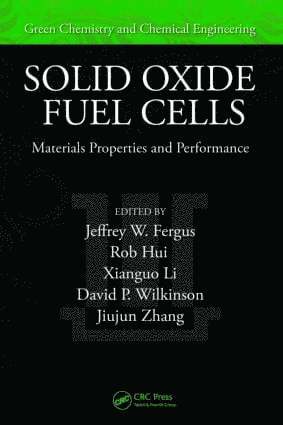
The First Book Centered on Materials Issues of SOFCsAlthough the high operating temperature of solid oxide fuel cells (SOFCs) creates opportunities for using a variety of fuels, including low-grade hydrogen and those derived from biomass, it also produces difficulties in materials performance and often leads to materials degradation during operation. These obstacles have proven to be challenges in the path to greater commercialization. Focusing on materials-related issues, Solid Oxide Fuel Cells: Materials Properties and Performance provides state-of-the-art information for the selection and development of materials for improved SOFC performance.The Materials behind the Development of SOFCsSummarizing progress in the field thus far, the book describes current materials, future advances in materials, and significant technical problems that remain unresolved. The first three chapters explore materials for the electrochemical cell: electrolytes, anodes, and cathodes. The next two chapters discuss interconnects and sealants, which are two supporting components of the fuel cell stack. The final chapter addresses the various issues involved in materials processing for SOFC applications, such as the microstructure of the component layers and the processing methods used to fabricate the microstructure.An Important Enabling Technology for Future Sustainable Energy SystemsThis volume shows how the performance of SOFCs can be improved through novel materials and methods, thereby, bringing them closer to commercialization.
2 692 kr
Skickas inom 10-15 vardagar
The First Book Centered on Materials Issues of SOFCsAlthough the high operating temperature of solid oxide fuel cells (SOFCs) creates opportunities for using a variety of fuels, including low-grade hydrogen and those derived from biomass, it also produces difficulties in materials performance and often leads to materials degradation during operation. These obstacles have proven to be challenges in the path to greater commercialization. Focusing on materials-related issues, Solid Oxide Fuel Cells: Materials Properties and Performance provides state-of-the-art information for the selection and development of materials for improved SOFC performance.The Materials behind the Development of SOFCsSummarizing progress in the field thus far, the book describes current materials, future advances in materials, and significant technical problems that remain unresolved. The first three chapters explore materials for the electrochemical cell: electrolytes, anodes, and cathodes. The next two chapters discuss interconnects and sealants, which are two supporting components of the fuel cell stack. The final chapter addresses the various issues involved in materials processing for SOFC applications, such as the microstructure of the component layers and the processing methods used to fabricate the microstructure.An Important Enabling Technology for Future Sustainable Energy SystemsThis volume shows how the performance of SOFCs can be improved through novel materials and methods, thereby, bringing them closer to commercialization.
2 490 kr
Skickas inom 10-15 vardagar
A Detailed, Up-to-Date Treatment of Key Developments in PEMFC MaterialsThe potential to revolutionize the way we power our worldBecause of its lower temperature and special polymer electrolyte membrane, the proton exchange membrane fuel cell (PEMFC) is well-suited for transportation, portable, and micro fuel cell applications. But the performance of these fuel cells critically depends on the materials used for the various cell components. Durability, water management, and reducing catalyst poisoning are important factors when selecting PEMFC materials.Written by international PEMFC scientists and engineers from top-level organizations, Proton Exchange Membrane Fuel Cells: Materials Properties and Performance provides a single resource of information for understanding how to select and develop materials for improved PEMFC performance. The book focuses on the major components of the fuel cell unit, along with design and modeling aspects. It covers catalysts and catalyst layers, before discussing the key components of membranes, diffusion layers, and bipolar plates. The book also explores materials modeling for the PEMFC.This volume assesses the current status of PEMFC fuel cell technology, research and development directions, and the scientific and engineering challenges facing the fuel cell community. It demonstrates how the production of a commercially viable PEMFC requires a compromise of materials with adequate properties, design interaction, and manufacturability.