
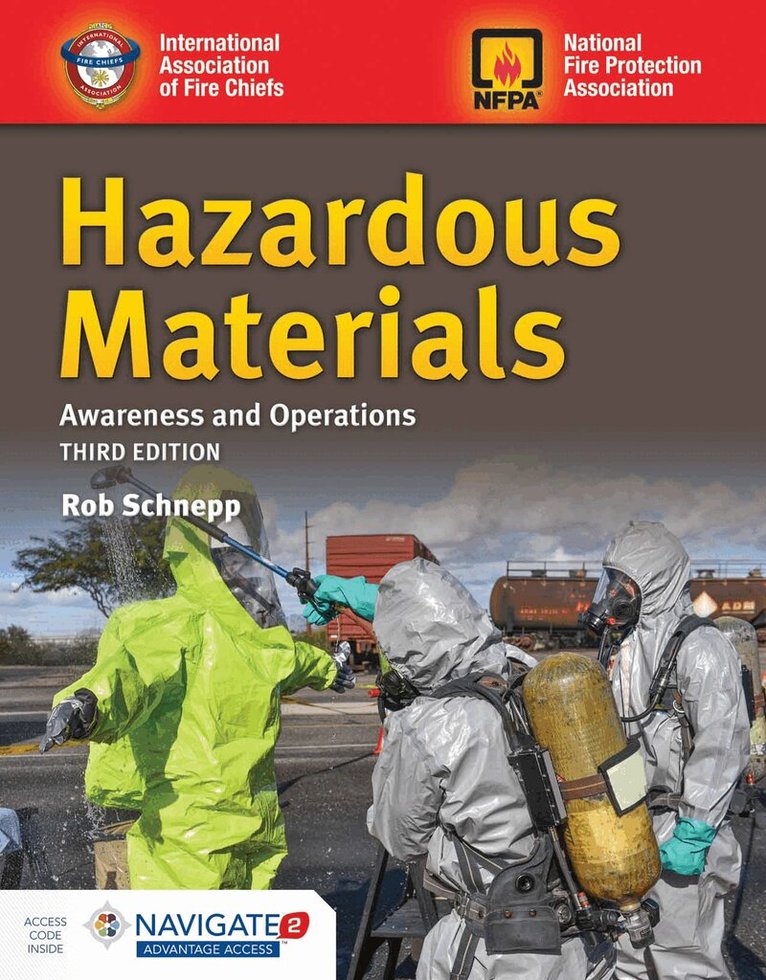
A fire fighter's ability to recognize an incident involving hazardous materials or weapons of mass destruction (WMD) is critical. They must possess the knowledge required to identify the presence of hazardous materials and WMD, and have an understanding of what their role is within the response plan. The Third Edition of Hazardous Materials Awareness and Operations provides fire fighters and first responders with these skills and enable them to keep themselves and others safe while mitigating these potentially deadly incidents.The structure of the Third Edition has also been enhanced to accommodate your exact needs with three distinct sections:- The Awareness section encompasses two chapters for awareness level personnel- The Operations section covers five chapters for operational responders- The Mission Specific section concludes with eight chapters.Can’t find the digital product you are looking for? Please contact us directly at jbl@mare-nostrum.co.uk to purchase eBooks and Instructor Resources. We’d be happy to help.
Are you satisfied with the way your company responds to IT incidents? How prepared is your response team to handle critical, time-sensitive events such as service disruptions and security breaches? IT professionals looking for effective response models have successfully adopted the Incident Management System (IMS) used by firefighters throughout the US. This practical book shows you how to apply the same response methodology to your own IT operation. You'll learn how IMS best practices for leading people and managing time apply directly to IT incidents where the stakes are high and outcomes are uncertain. This book provides use cases of some of the largest (and smallest) IT operations teams in the world. There is a better way to respond. You just found it. Assess your IT incident response with the PROCESS programmatic evaluation tool Get an overview of the IMS all-hazard, all-risk framework Understand the responsibilities of the Incident Commander Form a unified command structure for events that affect multiple business units Systematically evaluate what broke and how the incident team responded
A fire fighter's ability to recognize an incident involving hazardous materials or weapons of mass destruction (WMD) is critical. They must possess the knowledge required to identify the presence of hazardous materials and WMD, and have an understanding of what their role is within the response plan. The Third Edition of Hazardous Materials Awareness and Operations provides fire fighters and first responders with these skills and enable them to keep themselves and others safe while mitigating these potentially deadly incidents.The structure of the Third Edition has also been enhanced to accommodate your exact needs with three distinct sections:- The Awareness section encompasses two chapters for awareness level personnel- The Operations section covers five chapters for operational responders- The Mission Specific section concludes with eight chapters.Can’t find the digital product you are looking for? Please contact us directly at jbl@mare-nostrum.co.uk to purchase eBooks and Instructor Resources. We’d be happy to help.
Are you satisfied with the way your company responds to IT incidents? How prepared is your response team to handle critical, time-sensitive events such as service disruptions and security breaches? IT professionals looking for effective response models have successfully adopted the Incident Management System (IMS) used by firefighters throughout the US. This practical book shows you how to apply the same response methodology to your own IT operation. You'll learn how IMS best practices for leading people and managing time apply directly to IT incidents where the stakes are high and outcomes are uncertain. This book provides use cases of some of the largest (and smallest) IT operations teams in the world. There is a better way to respond. You just found it. Assess your IT incident response with the PROCESS programmatic evaluation tool Get an overview of the IMS all-hazard, all-risk framework Understand the responsibilities of the Incident Commander Form a unified command structure for events that affect multiple business units Systematically evaluate what broke and how the incident team responded