Robbeets Martine Robbeets – författare
Visar alla böcker från författaren Robbeets Martine Robbeets. Handla med fri frakt och snabb leverans.
2 produkter
2 produkter
E-bok
PDF, Engelska, 20141 305 kr
Läs direkt efter köp
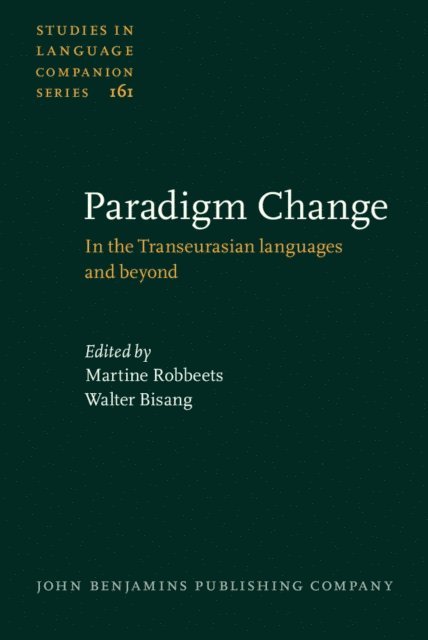
This book is concerned with comparing morphological paradigms between languages in order to establish areal and genealogical relationships. The languages in focus are the Transeurasian languages: Japanese, Korean, Tungusic, Mongolic, and Turkic languages. World-eminent experts in diachronic morphology and typology interact with specialists on Transeurasian languages, presenting innovative theoretical analyses and new empirical facts. The stress on the importance of paradigmatic morphology in historical linguistics contrasts sharply with the paucity of existing literature on the topic. This volume partially fills this gap, by shifting focus from Indo-European to other language families. “Paradigm change” will appeal to scholars and advanced students concerned with linguistic reconstruction, language contact, morphology and typology, and to anyone interested in the Transeurasian languages.
E-bok
PDF, Engelska, 20131 305 kr
Läs direkt efter köp
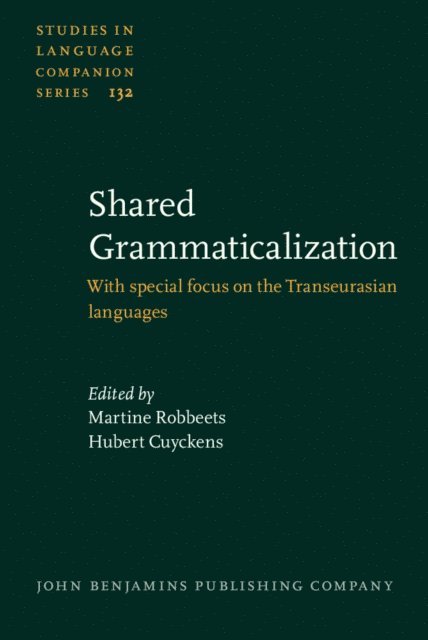
This book offers fresh perspectives on “shared grammaticalization”, a state whereby two or more languages have the source and the target of a grammaticalization process in common. While contact-induced grammaticalization has generated great interest in recent years, far less attention has been paid to other factors that may give rise to shared grammaticalization. This book intends to put this situation right by approaching shared grammaticalization from an integrated perspective, including areal as well as genealogical and universal motivations and by searching for ways to distinguish between these factors. The volume offers a wealth of empirical facts, presented by internationally renowned specialists, on the Transeurasian languages (i.e. Japonic, Koreanic, Tungusic, Mongolic, and Turkic) — the languages in focus —as well as on various other languages. Shared Grammaticalization will appeal to scholars and advanced students concerned with linguistic reconstruction, language contact and linguistic typology, and to anyone interested in grammaticalization theory.