
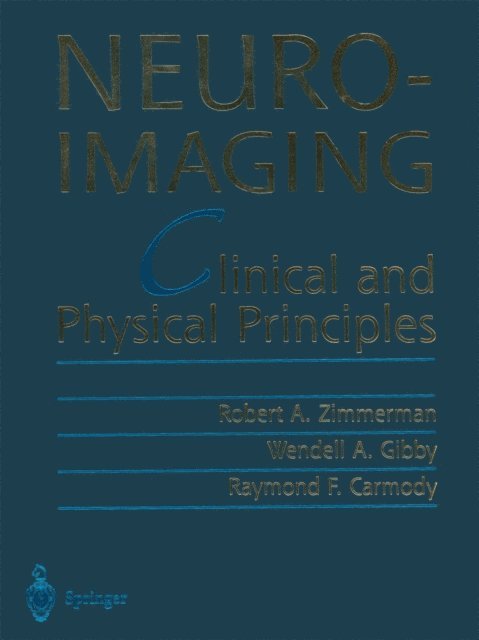
Neuroimaging: Clinical and Physical Principles is destined to be the new benchmark among text/reference books for neuroradiology. Unique among all similar titles is this book''s complete coverage of ALL imaging modalities and techniques used in modern neuroimaging, from MR (including up-to-the minute developments in fast MR, MRA, and FLAIR), to CT, ultrasonography, angiography, plain film, and myelography. Many topics that are covered little if at all in standard neuroimaging texts are given complete, state-of-the-art descriptions in this book, including: imaging of the head, neck, temporal bone, orbit, and sinuses; normal variants; imaging of pediatric neurologic diseases and developmental anomalies; imaging of trauma to the head, brain, and spine; interventional techniques, both intracranial and spinal; and sedation of both adult and pediatric patients. The book is rounded out with complete coverage of the Physical Principles that underlie modern Computed Tomography and Magnetic Resonance Imaging. The ten chapters in this section provide everything the radiologist must know such as; the physical basics of MR and CT; MR and CT contrast agents and their applications; hardware and safety issues; image acquisition and artifacts; and more! Each chapter is organized to provide fast answers to everyday clinical problems. Numerous tables and lists summarize imaging protocols and differential diagnoses for rapid reference, while the text of each chapter provides a thorough review of the state of the art neuroimaging procedures. Chapters reveal potential imaging findings for numerous conditions and direct the reader towards the imaging technique that will reveal the most informative results under each circumstance.
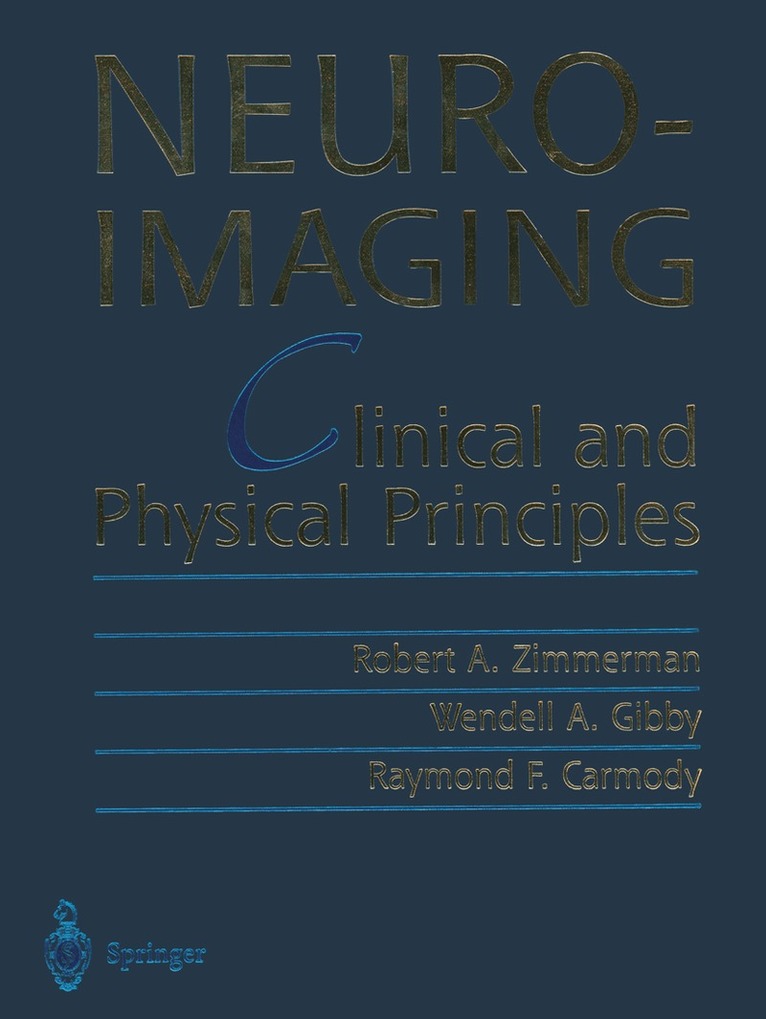
Neuroimaging: Clinical and Physical Principles is destined to be the new benchmark among text/reference books for neuroradiology. Unique among all similar titles is this book's complete coverage of ALL imaging modalities and techniques used in modern neuroimaging, from MR (including up-to-the minute developments in fast MR, MRA, and FLAIR), to CT, ultrasonography, angiography, plain film, and myelography. Many topics that are covered little if at all in standard neuroimaging texts are given complete, state-of-the-art descriptions in this book, including: imaging of the head, neck, temporal bone, orbit, and sinuses; normal variants; imaging of pediatric neurologic diseases and developmental anomalies; imaging of trauma to the head, brain, and spine; interventional techniques, both intracranial and spinal; and sedation of both adult and pediatric patients. The book is rounded out with complete coverage of the Physical Principles that underlie modern Computed Tomography and Magnetic Resonance Imaging. The ten chapters in this section provide everything the radiologist must know such as; the physical basics of MR and CT; MR and CT contrast agents and their applications; hardware and safety issues; image acquisition and artifacts; and more! Each chapter is organized to provide fast answers to everyday clinical problems. Numerous tables and lists summarize imaging protocols and differential diagnoses for rapid reference, while the text of each chapter provides a thorough review of the state of the art neuroimaging procedures. Chapters reveal potential imaging findings for numerous conditions and direct the reader towards the imaging technique that will reveal the most informative results under each circumstance.
Nitrification kinetics were evaluated in bench-scale batch reactors fed with a synthetic wastewater containing approximately 1,000 mg ammonia-nitrogen (NH3-N)/L operated at 5, 10, and 20 day solids retention times (SRTs) and with dewatered biosolids supernatant (1,126 to 1,680 mg NH3-N/L) operated at a 20-day SRT. For the 5- and 10-day SRTs, complete nitrification appeared to be inhibited by the presence of un-ionized ammonia and un-ionized nitrous acid. For the 20-day SRT, near complete nitrification was observed for both substrates. Observed ammonium oxidation rates decreased with increasing SRT. Observed yield coefficients were similar for all SRTs and substrates. Fully established steady-state conditions were observed at higher SRTs despite process start-up and operational considerations. Although it may be possible to culture a nitrifier population capable of near-complete nitrification at lower SRTs, the design configuration and operational strategy must mitigate the potential for un-ionized ammonia and un-ionized nitrous acid inhibition (e.g. process start-up at lower concentration with gradual increase to higher concentration, continuous feed operation, etc). Batch bioaugmentation analyses were conducted in the mixed liquor suspended solids and final clarifier effluent from a non-nitrifying activated sludge with seed nitrifiers developed from the 20-day SRT reactors and with biomass from a nitrifying trickling filter facility. Ammonia removal was observed in all bioaugmentation analyses with no apparent lag or acclimation period. Observed ammonium oxidation rates were not significantly different between the seed and batch bioaugmentation reactors. Acclimation does not appear to be a critical obstacle for nitrifier bioaugmentation when environmental conditions (e.g. temperature, pH, etc.) between the seed and bioaugmentation processes are not significantly different.
Neuroimaging: Clinical and Physical Principles is destined to be the new benchmark among text/reference books for neuroradiology. Unique among all similar titles is this book''s complete coverage of ALL imaging modalities and techniques used in modern neuroimaging, from MR (including up-to-the minute developments in fast MR, MRA, and FLAIR), to CT, ultrasonography, angiography, plain film, and myelography. Many topics that are covered little if at all in standard neuroimaging texts are given complete, state-of-the-art descriptions in this book, including: imaging of the head, neck, temporal bone, orbit, and sinuses; normal variants; imaging of pediatric neurologic diseases and developmental anomalies; imaging of trauma to the head, brain, and spine; interventional techniques, both intracranial and spinal; and sedation of both adult and pediatric patients. The book is rounded out with complete coverage of the Physical Principles that underlie modern Computed Tomography and Magnetic Resonance Imaging. The ten chapters in this section provide everything the radiologist must know such as; the physical basics of MR and CT; MR and CT contrast agents and their applications; hardware and safety issues; image acquisition and artifacts; and more! Each chapter is organized to provide fast answers to everyday clinical problems. Numerous tables and lists summarize imaging protocols and differential diagnoses for rapid reference, while the text of each chapter provides a thorough review of the state of the art neuroimaging procedures. Chapters reveal potential imaging findings for numerous conditions and direct the reader towards the imaging technique that will reveal the most informative results under each circumstance.
Neuroimaging: Clinical and Physical Principles is destined to be the new benchmark among text/reference books for neuroradiology. Unique among all similar titles is this book's complete coverage of ALL imaging modalities and techniques used in modern neuroimaging, from MR (including up-to-the minute developments in fast MR, MRA, and FLAIR), to CT, ultrasonography, angiography, plain film, and myelography. Many topics that are covered little if at all in standard neuroimaging texts are given complete, state-of-the-art descriptions in this book, including: imaging of the head, neck, temporal bone, orbit, and sinuses; normal variants; imaging of pediatric neurologic diseases and developmental anomalies; imaging of trauma to the head, brain, and spine; interventional techniques, both intracranial and spinal; and sedation of both adult and pediatric patients. The book is rounded out with complete coverage of the Physical Principles that underlie modern Computed Tomography and Magnetic Resonance Imaging. The ten chapters in this section provide everything the radiologist must know such as; the physical basics of MR and CT; MR and CT contrast agents and their applications; hardware and safety issues; image acquisition and artifacts; and more! Each chapter is organized to provide fast answers to everyday clinical problems. Numerous tables and lists summarize imaging protocols and differential diagnoses for rapid reference, while the text of each chapter provides a thorough review of the state of the art neuroimaging procedures. Chapters reveal potential imaging findings for numerous conditions and direct the reader towards the imaging technique that will reveal the most informative results under each circumstance.
Nitrification kinetics were evaluated in bench-scale batch reactors fed with a synthetic wastewater containing approximately 1,000 mg ammonia-nitrogen (NH3-N)/L operated at 5, 10, and 20 day solids retention times (SRTs) and with dewatered biosolids supernatant (1,126 to 1,680 mg NH3-N/L) operated at a 20-day SRT. For the 5- and 10-day SRTs, complete nitrification appeared to be inhibited by the presence of un-ionized ammonia and un-ionized nitrous acid. For the 20-day SRT, near complete nitrification was observed for both substrates. Observed ammonium oxidation rates decreased with increasing SRT. Observed yield coefficients were similar for all SRTs and substrates. Fully established steady-state conditions were observed at higher SRTs despite process start-up and operational considerations. Although it may be possible to culture a nitrifier population capable of near-complete nitrification at lower SRTs, the design configuration and operational strategy must mitigate the potential for un-ionized ammonia and un-ionized nitrous acid inhibition (e.g. process start-up at lower concentration with gradual increase to higher concentration, continuous feed operation, etc). Batch bioaugmentation analyses were conducted in the mixed liquor suspended solids and final clarifier effluent from a non-nitrifying activated sludge with seed nitrifiers developed from the 20-day SRT reactors and with biomass from a nitrifying trickling filter facility. Ammonia removal was observed in all bioaugmentation analyses with no apparent lag or acclimation period. Observed ammonium oxidation rates were not significantly different between the seed and batch bioaugmentation reactors. Acclimation does not appear to be a critical obstacle for nitrifier bioaugmentation when environmental conditions (e.g. temperature, pH, etc.) between the seed and bioaugmentation processes are not significantly different.