Robert A.M. Gregson – författare
Visar alla böcker från författaren Robert A.M. Gregson. Handla med fri frakt och snabb leverans.
7 produkter
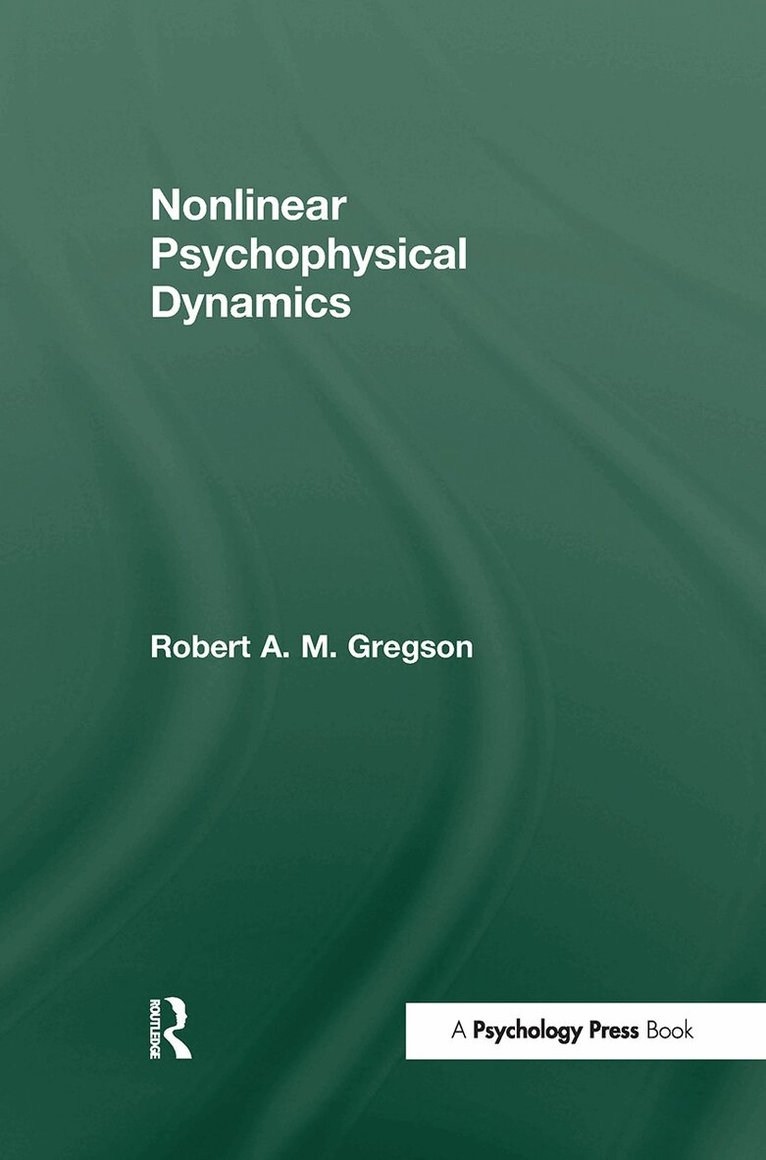
Nonlinear Psychophysical Dynamics
Inbunden, 1988
742 kr
Lägg i varukorg
Nonlinear Psychophysical Dynamics utilizes new results in systems theory as a foundation for representing sensory channels as a form of recursive loop processes. It demonstrates that a range of phenomena, previously treated as diverse or anomalous, are more readily seen as related and as the …
Nonlinear Dynamical Systems Analysis for the Behavioral Sciences Using Real Data
Av Robert A.M. Gregson, Stephen J. Guastello
E-bok, 2016
762 kr
Lägg i varukorg
Although its roots can be traced to the 19th century, progress in the study of nonlinear dynamical systems has taken off in the last 30 years. While pertinent source material exists, it is strewn about the literature in mathematics, physics, biology, economics, and psychology at varying levels of …
Nonlinear Psychophysical Dynamics
E-bok, 2013
485 kr
Lägg i varukorg
Nonlinear Psychophysical Dynamics utilizes new results in systems theory as a foundation for representing sensory channels as a form of recursive loop processes. It demonstrates that a range of phenomena, previously treated as diverse or anomalous, are more readily seen as related and as the …
Nonlinear Psychophysical Dynamics
E-bok, 2013
485 kr
Lägg i varukorg
Nonlinear Psychophysical Dynamics utilizes new results in systems theory as a foundation for representing sensory channels as a form of recursive loop processes. It demonstrates that a range of phenomena, previously treated as diverse or anomalous, are more readily seen as related and as the …
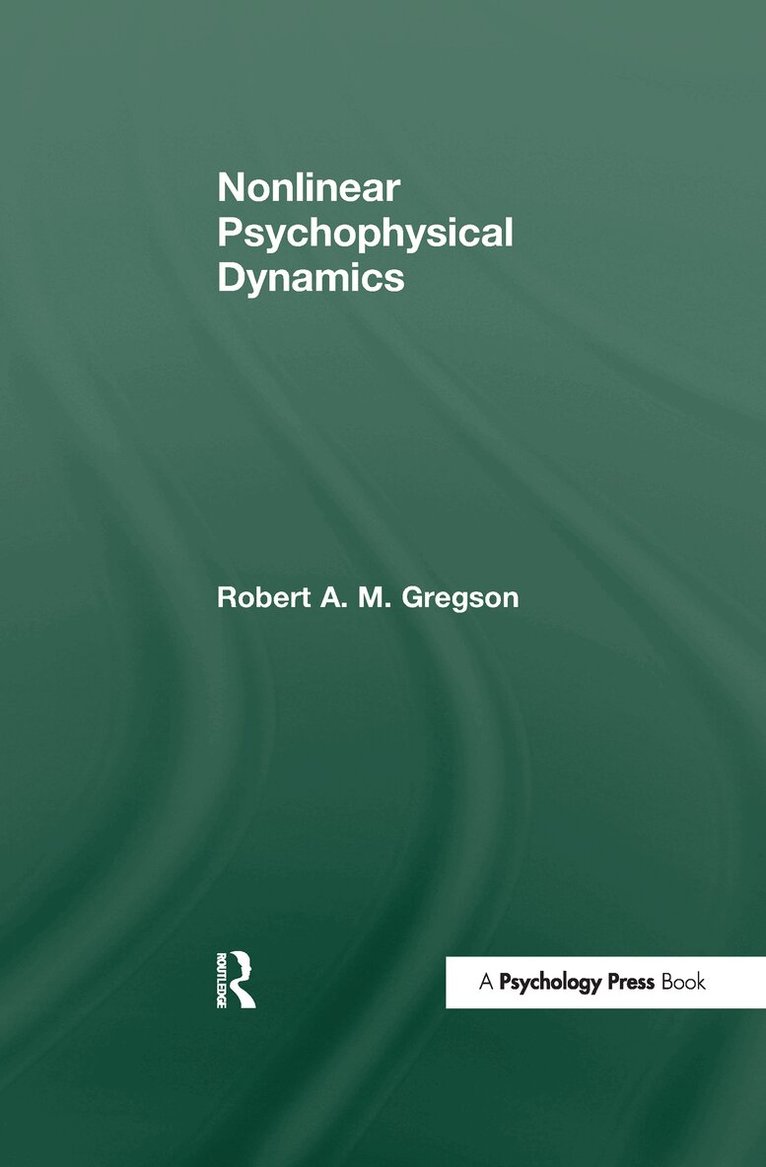
Nonlinear Psychophysical Dynamics
Häftad, 2016
403 kr
Lägg i varukorg
Nonlinear Psychophysical Dynamics utilizes new results in systems theory as a foundation for representing sensory channels as a form of recursive loop processes. It demonstrates that a range of phenomena, previously treated as diverse or anomalous, are more readily seen as related and as the …
Nonlinear Dynamical Systems Analysis for the Behavioral Sciences Using Real Data
Av Stephen J. Guastello, Robert A.M. Gregson
Inbunden, 2010
742 kr
Lägg i varukorg
Although its roots can be traced to the 19th century, progress in the study of nonlinear dynamical systems has taken off in the last 30 years. While pertinent source material exists, it is strewn about the literature in mathematics, physics, biology, economics, and psychology at varying levels of …
Nonlinear Dynamical Systems Analysis for the Behavioral Sciences Using Real Data
Av Robert A.M. Gregson, Stephen J. Guastello
E-bok, 2016
762 kr
Lägg i varukorg
Although its roots can be traced to the 19th century, progress in the study of nonlinear dynamical systems has taken off in the last 30 years. While pertinent source material exists, it is strewn about the literature in mathematics, physics, biology, economics, and psychology at varying levels of …