Robert D. Gibbons - Böcker
Visar alla böcker från författaren Robert D. Gibbons. Handla med fri frakt och snabb leverans.
6 produkter
6 produkter
Del 59 - Statistics in Practice
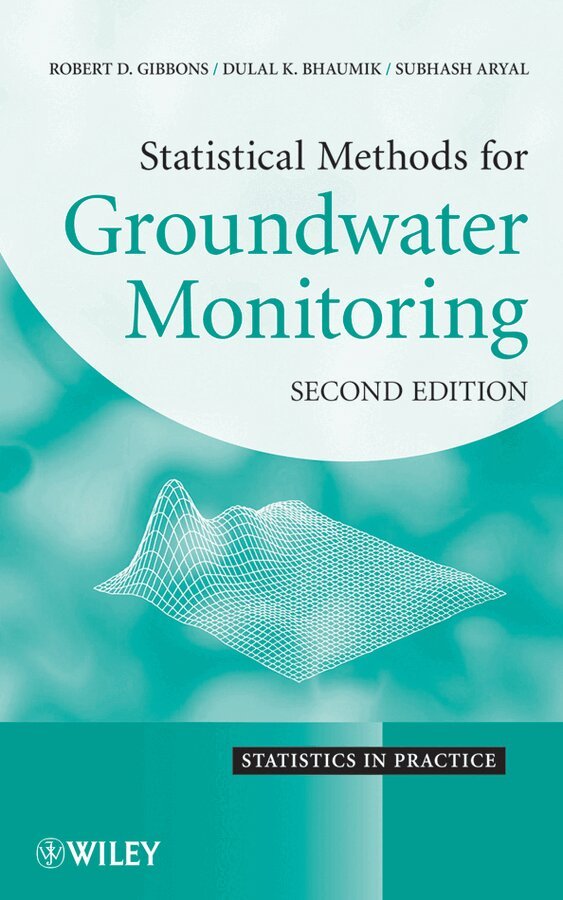
Statistical Methods for Groundwater Monitoring
Inbunden, Engelska, 2009
1 618 kr
Skickas inom 7-10 vardagar
A new edition of the most comprehensive overview of statistical methods for environmental monitoring applications Thoroughly updated to provide current research findings, Statistical Methods for Groundwater Monitoring, Second Edition continues to provide a comprehensive overview and accessible treatment of the statistical methods that are useful in the analysis of environmental data. This new edition expands focus on statistical comparison to regulatory standards that are a vital part of assessment, compliance, and corrective action monitoring in the environmental sciences.The book explores quantitative concepts useful for surface water monitoring as well as soil and air monitoring applications while also maintaining a focus on the analysis of groundwater monitoring data in order to detect environmental impacts from a variety of sources, such as industrial activity and waste disposal. The authors introduce the statistical properties of alternative approaches, such as false positive and false negative rates, that are associated with each test and the factors related to these error rates. The Second Edition also features: An introduction to Intra-laboratory Calibration Curves and random-effects regression models for non-constant measurement variabilityCoverage of statistical prediction limits for a gamma-distributed random variable, with a focus on estimation and testing of parameters in environmental monitoring applicationsA unified treatment of censored data with the computation of statistical prediction, tolerance, and control limitsExpanded coverage of statistical issues related to laboratory practice, such as detection and quantitation limitsAn updated chapter on regulatory issues that outlines common mistakes to avoid in groundwater monitoring applications as well as an introduction to the newest regulations for both hazardous and municipal solid waste facilitiesEach chapter provides a general overview of a problem, followed by statistical derivation of the solution and a relevant example complete with computational details that allow readers to perform routine application of the statistical results. Relevant issues are highlighted throughout, and recommendations are also provided for specific problems based on characteristics such as number of monitoring wells, number of constituents, distributional form of measurements, and detection frequency.Statistical Methods for Groundwater Monitoring, Second Edition is an excellent supplement to courses on environmental statistics at the upper-undergraduate and graduate levels. It is also a valuable resource for researchers and practitioners in the fields of biostatistics, engineering, and the environmental sciences who work with statistical methods in their everyday work.
Statistical Methods for Detection and Quantification of Environmental Contamination
Inbunden, Engelska, 2001
1 685 kr
Skickas inom 7-10 vardagar
Amstat News asked three review editors to rate their top five favorite books in the September 2003 issue. Statistical Methods for Detection and Quantification of Environmental Contamination was among those chosen. This groundbreaking volume describes the statistical theory that underlies the detection and quantification of environmental pollution both in the laboratory and in the field. It presents the foundation of relating measured concentrations to true concentrations and the development of intervals of uncertainty for true concentrations, and it presents a comprehensive review of the problem of estimating thresholds at which detection and quantification decisions can be made reliably.The authors demonstrate the use of analytical measurements in making environmental impact decisions and in comparing environmental data to regulatory standards and naturally occurring background concentrations. Taking the next step in a major evolution in the way environmental impact decisions are made, Statistical Methods for Detection and Quantification of Environmental Contamination: Presents statistical methods that allow the earliest possible detection and quantification of contaminantsDescribes procedures applicable to all environmental constituents Covers numerous state-of-the-art approachesIncludes case studies demonstrating practical applications of these approachesAn indispensable handbook for scientists and engineers involved in environmental monitoring programs, this book is also an important resource for public health officials, waste facility managers, regulators, statisticians, and analytical chemists.
Del 451 - Wiley Series in Probability and Statistics
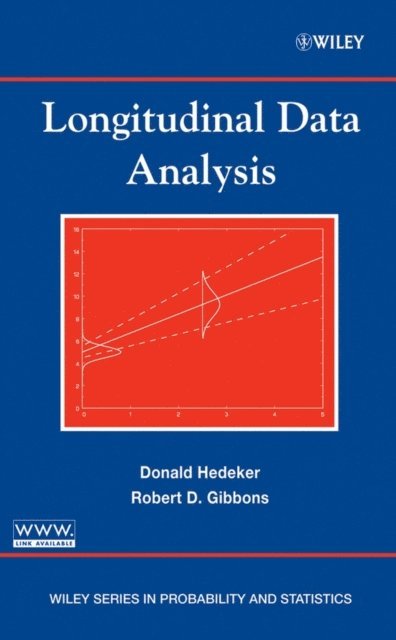
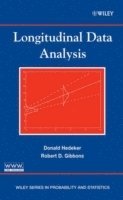
Longitudinal Data Analysis
Inbunden, Engelska, 2006
1 734 kr
Skickas inom 7-10 vardagar
Longitudinal data analysis for biomedical and behavioral sciences This innovative book sets forth and describes methods for the analysis of longitudinaldata, emphasizing applications to problems in the biomedical and behavioral sciences. Reflecting the growing importance and use of longitudinal data across many areas of research, the text is designed to help users of statistics better analyze and understand this type of data. Much of the material from the book grew out of a course taught by Dr. Hedeker on longitudinal data analysis. The material is, therefore, thoroughly classroom tested and includes a number of features designed to help readers better understand and apply the material. Statistical procedures featured within the text include:* Repeated measures analysis of variance* Multivariate analysis of variance for repeated measures* Random-effects regression models (RRM)* Covariance-pattern models* Generalized-estimating equations (GEE) models* Generalizations of RRM and GEE for categorical outcomes Practical in their approach, the authors emphasize the applications of the methods, using real-world examples for illustration. Some syntax examples are provided, although the authors do not generally focus on software in this book. Several datasets and computer syntax examples are posted on this title's companion Web site. The authors intend to keep the syntax examples current as new versions of the software programs emerge. This text is designed for both undergraduate and graduate courses in longitudinal data analysis. Instructors can take advantage of overheads and additional course materials available online for adopters. Applied statisticians in biomedicine and the social sciences can also use the book as a convenient reference.
691 kr
Skickas inom 10-15 vardagar
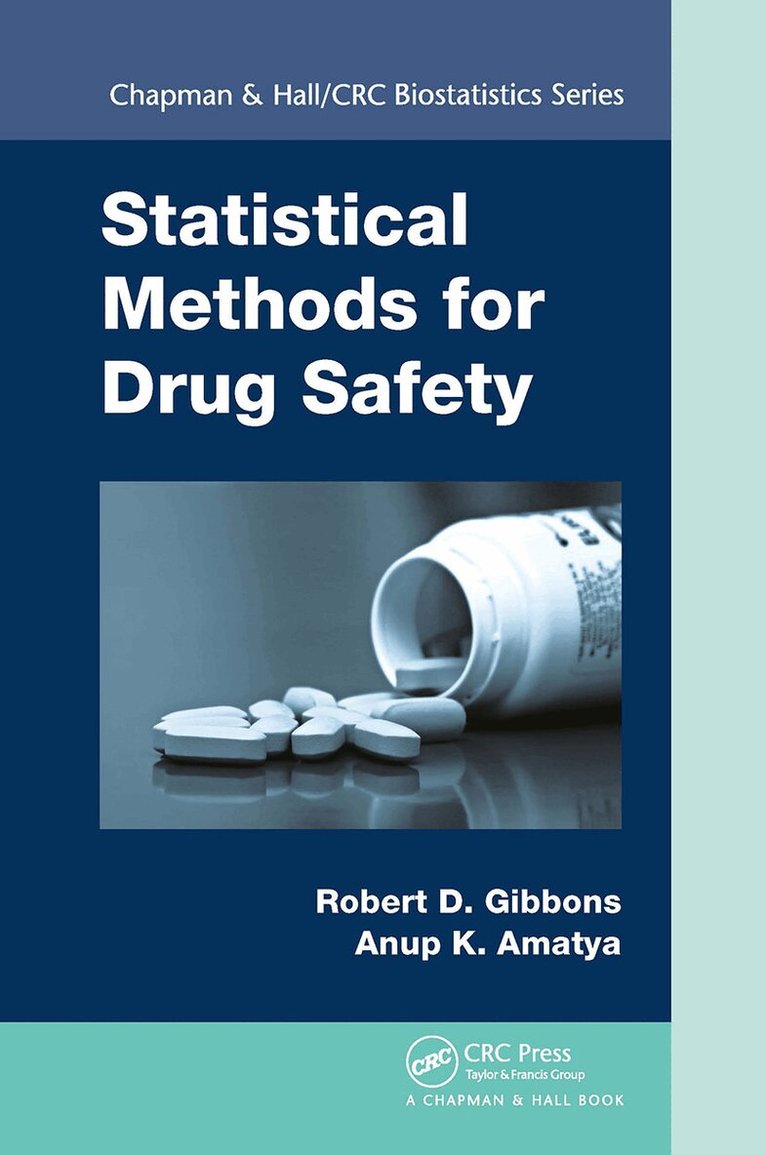
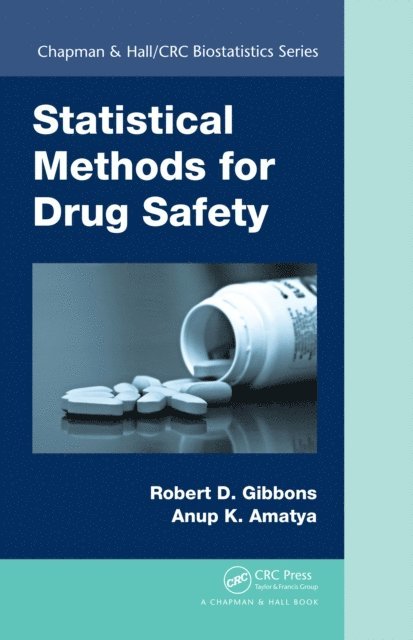
Explore Important Tools for High-Quality Work in Pharmaceutical SafetyStatistical Methods for Drug Safety presents a wide variety of statistical approaches for analyzing pharmacoepidemiologic data. It covers both commonly used techniques, such as proportional reporting ratios for the analysis of spontaneous adverse event reports, and newer approaches, such as the use of marginal structural models for controlling dynamic selection bias in the analysis of large-scale longitudinal observational data.Choose the Right Statistical Approach for Analyzing Your Drug Safety DataThe book describes linear and non-linear mixed-effects models, discrete-time survival models, and new approaches to the meta-analysis of rare binary adverse events. It explores research involving the re-analysis of complete longitudinal patient records from randomized clinical trials. The book discusses causal inference models, including propensity score matching, marginal structural models, and differential effects, as well as mixed-effects Poisson regression models for analyzing ecological data, such as county-level adverse event rates. The authors also cover numerous other methods useful for the analysis of within-subject and between-subject variation in adverse events abstracted from large-scale medical claims databases, electronic health records, and additional observational data streams. Advance Statistical Practice in PharmacoepidemiologyAuthored by two professors at the forefront of developing new statistical methodologies to address pharmacoepidemiologic problems, this book provides a cohesive compendium of statistical methods that pharmacoepidemiologists can readily use in their work. It also encourages statistical scientists to develop new methods that go beyond the foundation covered in the text.
1 370 kr
Skickas inom 7-10 vardagar
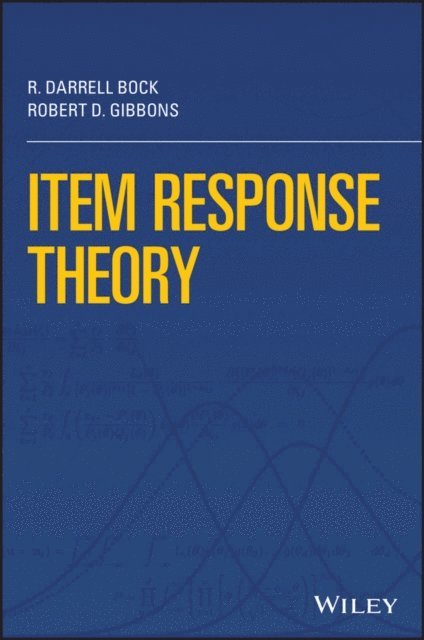
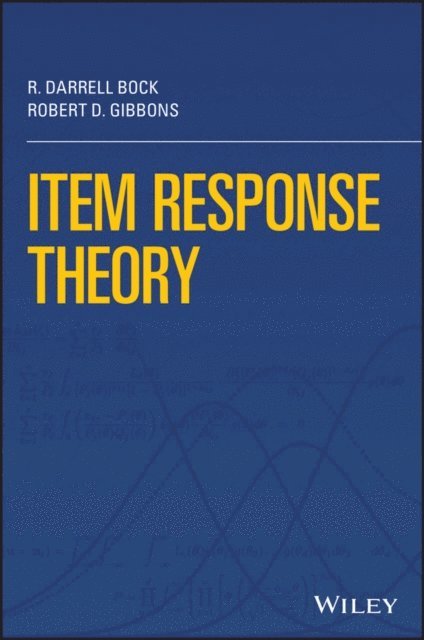
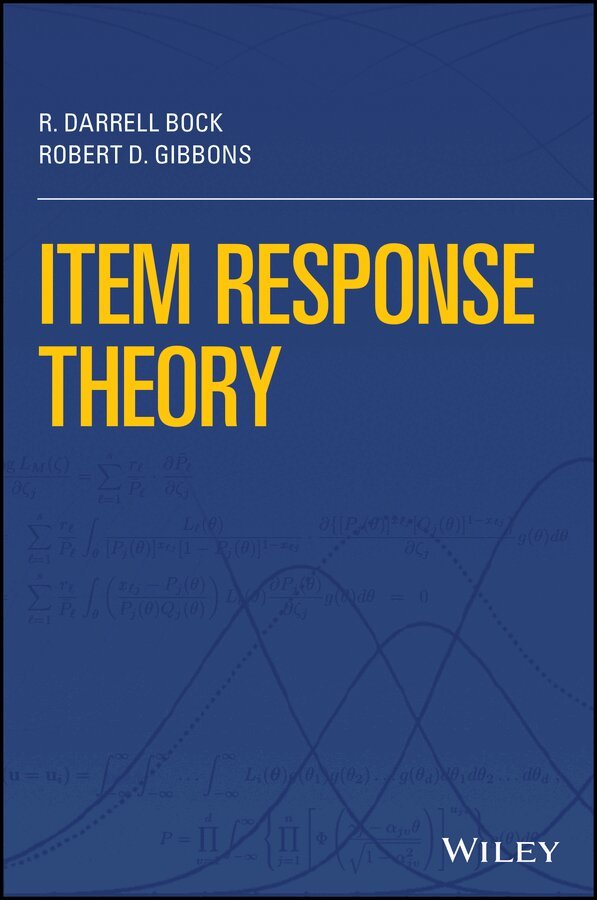
A complete discussion of fundamental and advanced topics in Item Response Theory written by pioneers in the fieldIn Item Response Theory, accomplished psychometricians Darrell Bock and Robert Gibbons deliver a comprehensive and up-to-date exploration of the theoretical foundations and applications of Item Response Theory (IRT). Covering both unidimensional and multidimensional IRT, as well as related adaptive test administration of previously calibrated item banks, the book addresses the growing need for understanding of this topic as the use of IRT spreads to other fields.The first book on the topic that offers a complete and unified treatment of its subject, Item Response Theory prepares researchers and students to understand and apply IRT and multidimensional IRT to fields like education, mental health and marketing. Accessible to first year-graduate students with a foundation in the behavioral or social sciences, basic statistics, and generalized linear models, the book walks readers through everything from the logic of IRT to cutting edge applications of the technique.Readers will also benefit from the inclusion of:• A thorough introduction to the foundations of Item Response Theory, including its logic and origins, model-based measurement, psychological scaling, and classical test theory• An exploration of selected mathematical and statistical results, including points, point sets, and set operations, probability, sampling, and joint, conditional, and marginal probability• Discussions of unidimensional and multidimensional IRT models, including item parameter estimation with binary and polytomous data• Analysis of dimensionality, differential item functioning, and multiple group IRTPerfect for graduate students and researchers studying and working with psychometrics in psychology, quantitative psychology, educational measurement, marketing, and statistics, Item Response Theory will also benefit researchers interested in patient reported outcomes in health research.
1 473 kr
Skickas inom 10-15 vardagar
Explore Important Tools for High-Quality Work in Pharmaceutical SafetyStatistical Methods for Drug Safety presents a wide variety of statistical approaches for analyzing pharmacoepidemiologic data. It covers both commonly used techniques, such as proportional reporting ratios for the analysis of spontaneous adverse event reports, and newer approaches, such as the use of marginal structural models for controlling dynamic selection bias in the analysis of large-scale longitudinal observational data.Choose the Right Statistical Approach for Analyzing Your Drug Safety DataThe book describes linear and non-linear mixed-effects models, discrete-time survival models, and new approaches to the meta-analysis of rare binary adverse events. It explores research involving the re-analysis of complete longitudinal patient records from randomized clinical trials. The book discusses causal inference models, including propensity score matching, marginal structural models, and differential effects, as well as mixed-effects Poisson regression models for analyzing ecological data, such as county-level adverse event rates. The authors also cover numerous other methods useful for the analysis of within-subject and between-subject variation in adverse events abstracted from large-scale medical claims databases, electronic health records, and additional observational data streams. Advance Statistical Practice in PharmacoepidemiologyAuthored by two professors at the forefront of developing new statistical methodologies to address pharmacoepidemiologic problems, this book provides a cohesive compendium of statistical methods that pharmacoepidemiologists can readily use in their work. It also encourages statistical scientists to develop new methods that go beyond the foundation covered in the text.