Robert D. Shumer - Böcker
Visar alla böcker från författaren Robert D. Shumer. Handla med fri frakt och snabb leverans.
6 produkter
6 produkter
515 kr
Skickas inom 7-10 vardagar
Service-learning research has been growing and expanding around the world. While much of the early work was carried out in the US and Europe, such efforts have been developing in Asia for the past few decades. The use of the term, ‘service-learning’ was not popular, while use of community engagement, volunteerism, social services are more common among community practitioners and academics, with the rapid development of service-learning, both research and community-based programs have been growing throughout Asia over the last decade.One of the major movements in that part of the world has been the Service-Learning Asia Network (started in 2005), where more than 11 countries have unified to share their efforts collectively through conferences and journals. In this new book we have examples from five (5) different places: China, Singapore, Hong Kong, Indonesia, and India. These models follow a recent publication of Asian research found in the Michigan Journal of Community Service Learning, published in Summer 2019 after the 7th Asia Pacific Regional Service-Learning conference in Singapore.The chapters represent some of the exciting work that is developing in Asia, highlighting the rich and powerful connections between universities and communities throughout the region. Excellent examples of various kinds of study, from case studies, to qualitative research, to mixed method designs are included. In addition, the focus of the studies, from student learning, community change, innovative practice, and institutional development and change are provided to illustrate the rich diversity of work occurring throughout Asia.
950 kr
Skickas inom 7-10 vardagar
Service-learning research has been growing and expanding around the world. While much of the early work was carried out in the US and Europe, such efforts have been developing in Asia for the past few decades. The use of the term, ‘service-learning’ was not popular, while use of community engagement, volunteerism, social services are more common among community practitioners and academics, with the rapid development of service-learning, both research and community-based programs have been growing throughout Asia over the last decade.One of the major movements in that part of the world has been the Service-Learning Asia Network (started in 2005), where more than 11 countries have unified to share their efforts collectively through conferences and journals. In this new book we have examples from five (5) different places: China, Singapore, Hong Kong, Indonesia, and India. These models follow a recent publication of Asian research found in the Michigan Journal of Community Service Learning, published in Summer 2019 after the 7th Asia Pacific Regional Service-Learning conference in Singapore.The chapters represent some of the exciting work that is developing in Asia, highlighting the rich and powerful connections between universities and communities throughout the region. Excellent examples of various kinds of study, from case studies, to qualitative research, to mixed method designs are included. In addition, the focus of the studies, from student learning, community change, innovative practice, and institutional development and change are provided to illustrate the rich diversity of work occurring throughout Asia.
515 kr
Skickas inom 7-10 vardagar
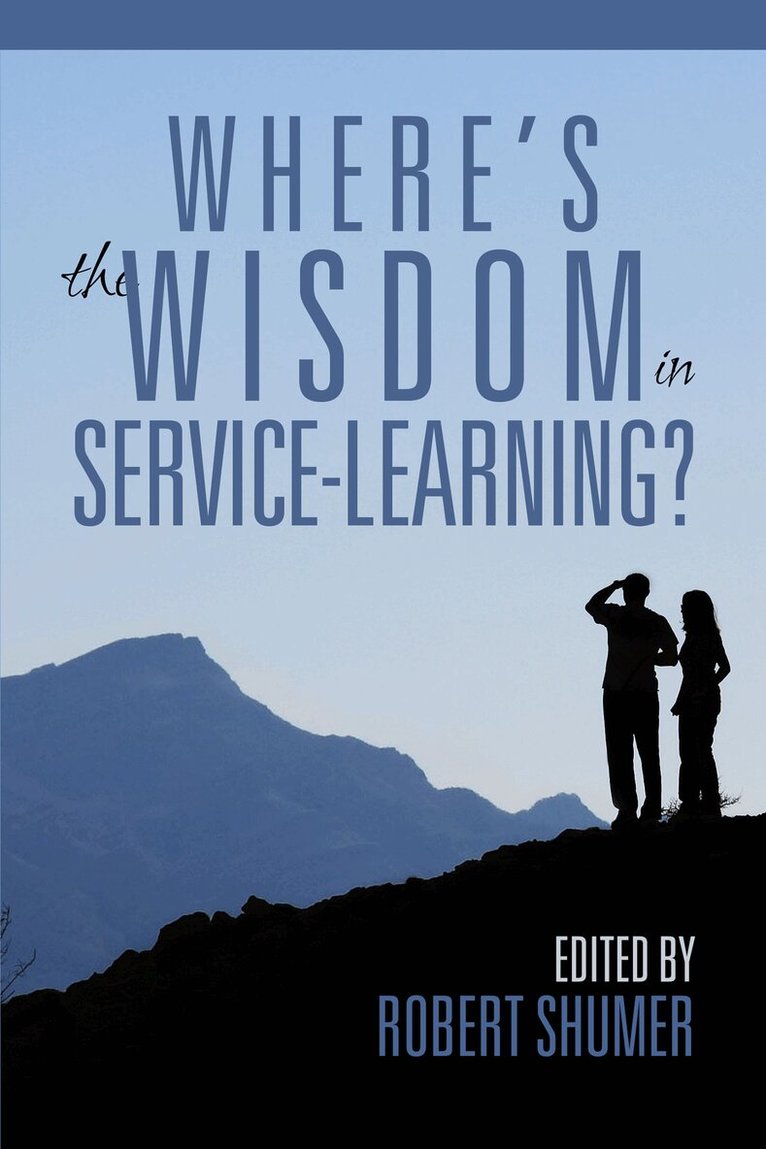
The service-learning field is 50 years old in the United States. Much has been developed over that time in the fields of K-12 schooling, higher education, and community organizations. People who have been involved in the movement have worked individually and collaboratively to include servicelearning as an effective pedagogy and program in educational settings. They have created opportunities for students, teachers, faculty, and community members to learn about academic content and personal commitment to serving others for social change and community impact.In this book we hear from individuals who have been involved in the effort for more than 30 or 40 years about what they have learned from their experiences and what wisdom they can share with others who will be involved for the next several decades. Their experience, insight, and understanding will hopefully help younger people to improve and expand on the movement and place service-learning and community engagement as a regular part of American education.
950 kr
Skickas inom 7-10 vardagar
The service-learning field is 50 years old in the United States. Much has been developed over that time in the fields of K-12 schooling, higher education, and community organizations. People who have been involved in the movement have worked individually and collaboratively to include servicelearning as an effective pedagogy and program in educational settings. They have created opportunities for students, teachers, faculty, and community members to learn about academic content and personal commitment to serving others for social change and community impact.In this book we hear from individuals who have been involved in the effort for more than 30 or 40 years about what they have learned from their experiences and what wisdom they can share with others who will be involved for the next several decades. Their experience, insight, and understanding will hopefully help younger people to improve and expand on the movement and place service-learning and community engagement as a regular part of American education.
Taking eService-learning to the Next Level
Models and Tools for Next Generation Implementation
Häftad, Engelska, 2023
515 kr
Skickas inom 7-10 vardagar
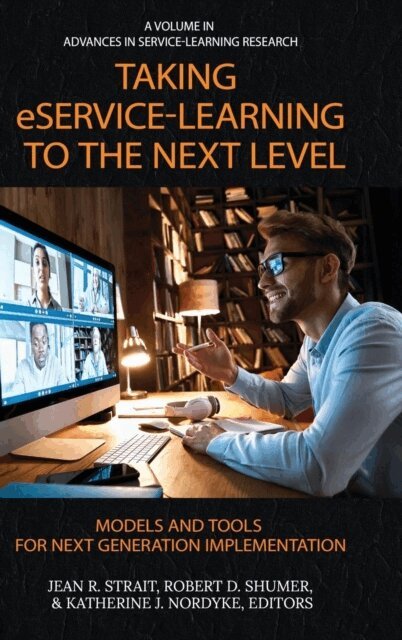
The chapters in this book provide an excellent story of the growth of e-learning and eService-learning over the past many years. Strait takes us from the first chapter examining current issues and considerations for eService-Learning, to a second chapter that documents the growth and maturation of a program at Missouri State University, to chapters that introduce “critical” e-service learning with a social justice orientation (Gordon and Jackson-Brown), and chapters that address international experiences (Ong, Tan, et al., and Dietrich and Ekici) that involve eService-learning in Singapore and long-distance relationships between the U.S. and Afghanistan, to illustrate the multiplicity and diversity of current models of service and learning that occur through electronic means.The importance of the book and its chapters is that change happens. What was occurring in the early 21st century was altered by situations, such as the global pandemic of COVID-19, to increase the reliance on e-educational systems and promote the increased use of electronic educational programs that covered almost all areas of educational systems. While early mobile phones existed in the 1970s (Teixeira, T. 2010), they evolved, and more sophisticated versions were produced throughout the 20th century. By the end of the century, phones that could easily transmit emails were developed, and then came camera phones and then smart phones by 2003. And phone communication has continued to change, existing today as a total communication device used by people all over the world.Similarly, video, and visual systems have evolved and continue to change. Zoom was developed in 2011 and has continued to evolve and expand services all over the world. People are now able to visually and orally communicate with others on every continent 24 hours a day, and the complexity and utility of communication has similarly expanded. Now phones can instantaneously translate between languages and people in all parts of the world can share experiences and visual products without barriers of language, country, or time. Indeed, the electronic world is an amazing entity and continues to evolve each year.So, what are the implications of all these changes for education and service? Simply put, they are and will continue to evolve to more complex and more useful forms for all communication and interaction. And this current volume gives us much insight into the important areas of change in both e-learning and eService-learning. All the chapters add great insight and information about important issues in the field and highlight some of the critical concepts embedded in its development.
Taking eService-learning to the Next Level
Models and Tools for Next Generation Implementation
Inbunden, Engelska, 2023
950 kr
Skickas inom 7-10 vardagar
The chapters in this book provide an excellent story of the growth of e-learning and eService-learning over the past many years. Strait takes us from the first chapter examining current issues and considerations for eService-Learning, to a second chapter that documents the growth and maturation of a program at Missouri State University, to chapters that introduce “critical” e-service learning with a social justice orientation (Gordon and Jackson-Brown), and chapters that address international experiences (Ong, Tan, et al., and Dietrich and Ekici) that involve eService-learning in Singapore and long-distance relationships between the U.S. and Afghanistan, to illustrate the multiplicity and diversity of current models of service and learning that occur through electronic means.The importance of the book and its chapters is that change happens. What was occurring in the early 21st century was altered by situations, such as the global pandemic of COVID-19, to increase the reliance on e-educational systems and promote the increased use of electronic educational programs that covered almost all areas of educational systems. While early mobile phones existed in the 1970s (Teixeira, T. 2010), they evolved, and more sophisticated versions were produced throughout the 20th century. By the end of the century, phones that could easily transmit emails were developed, and then came camera phones and then smart phones by 2003. And phone communication has continued to change, existing today as a total communication device used by people all over the world.Similarly, video, and visual systems have evolved and continue to change. Zoom was developed in 2011 and has continued to evolve and expand services all over the world. People are now able to visually and orally communicate with others on every continent 24 hours a day, and the complexity and utility of communication has similarly expanded. Now phones can instantaneously translate between languages and people in all parts of the world can share experiences and visual products without barriers of language, country, or time. Indeed, the electronic world is an amazing entity and continues to evolve each year.So, what are the implications of all these changes for education and service? Simply put, they are and will continue to evolve to more complex and more useful forms for all communication and interaction. And this current volume gives us much insight into the important areas of change in both e-learning and eService-learning. All the chapters add great insight and information about important issues in the field and highlight some of the critical concepts embedded in its development.