Robert Danon – författare
1 913 kr
Skickas inom 5-8 vardagar
1 612 kr
Läs direkt efter köp
The Future of the Profit Split Method
Edited by Robert Danon, Guglielmo Maisto, Vikram Chand & Gabriella Cappelleri
Among the various transfer pricing methods, the profit split method (PSM) is under the spotlight after the OECD’s Base Erosion and Profit Shifting (BEPS) project. However, both expert analysis and experience indicate that this method is not straightforward either for taxpayers to apply or for tax administrations to evaluate. In this thorough and detailed commentary – the first book to analyse this increasingly adopted transfer pricing method – notable scholars and practitioners working in the international tax community express their views on the method, answering some unresolved questions and highlighting issues that are still open and pending, especially in light of the digitalization of the economy.
Crucial issues covered by the contributors include the following:
choice of the appropriate splitting factors, their relative weights, and valuation of the contributions; uncertainties and outcomes potentially not aligned with the arm’s-length standard; possible role of assessments made by the European Commission on State aid; nexus with the work done by the EU Joint Transfer Pricing Forum; impact of profit split on indirect taxes (VAT/customs tax/excise tax); and application to digital business models and, in general, to the digitalized economy.Moreover, relevant experience of applying this method in France, Germany, Italy, Spain, Switzerland, the United Kingdom, and the United States is provided. A concluding chapter also deals with selected industry experiences.
Due to a high level of uncertainty in alignment with international guidance in the application of the PSM – and to the underdeveloped nature of current literature on the subject – there is a need for this book because both tax administrations and taxpayers, going forward, will apply the PSM extensively. The book is highly relevant for policymakers, tax administrations, practitioners and academics engaged in the areas of international taxation, transfer pricing and tax policy.
1 612 kr
Läs direkt efter köp
The Future of the Profit Split Method
Edited by Robert Danon, Guglielmo Maisto, Vikram Chand & Gabriella Cappelleri
Among the various transfer pricing methods, the profit split method (PSM) is under the spotlight after the OECD’s Base Erosion and Profit Shifting (BEPS) project. However, both expert analysis and experience indicate that this method is not straightforward either for taxpayers to apply or for tax administrations to evaluate. In this thorough and detailed commentary – the first book to analyse this increasingly adopted transfer pricing method – notable scholars and practitioners working in the international tax community express their views on the method, answering some unresolved questions and highlighting issues that are still open and pending, especially in light of the digitalization of the economy.
Crucial issues covered by the contributors include the following:
choice of the appropriate splitting factors, their relative weights, and valuation of the contributions; uncertainties and outcomes potentially not aligned with the arm’s-length standard; possible role of assessments made by the European Commission on State aid; nexus with the work done by the EU Joint Transfer Pricing Forum; impact of profit split on indirect taxes (VAT/customs tax/excise tax); and application to digital business models and, in general, to the digitalized economy.Moreover, relevant experience of applying this method in France, Germany, Italy, Spain, Switzerland, the United Kingdom, and the United States is provided. A concluding chapter also deals with selected industry experiences.
Due to a high level of uncertainty in alignment with international guidance in the application of the PSM – and to the underdeveloped nature of current literature on the subject – there is a need for this book because both tax administrations and taxpayers, going forward, will apply the PSM extensively. The book is highly relevant for policymakers, tax administrations, practitioners and academics engaged in the areas of international taxation, transfer pricing and tax policy.
2 142 kr
Skickas inom 5-8 vardagar
1 758 kr
Läs direkt efter köp
It is well known that intercompany financing arrangements have become increasingly subject to scrutiny in contexts of applying transfer pricing and anti-tax avoidance-related rules.
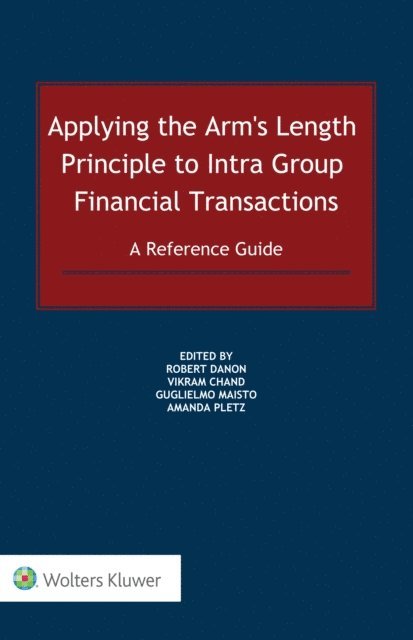
With contributions by more than 50 leading global transfer pricing and international tax experts from law firms, multinational enterprises, academia, and tax administrations, this book provides unparalleled insights into the application of the Arm’s Length Principle to different types of financial transactions, application of anti-avoidance rules to various intra-group financial arrangements as well as the business value creation process and the dispute management landscape that underlie intra-group financial transactions.
With in-depth analysis of the legislation and market developments that fuel the diverse range of financing options available to market participants – and loaded with practical examples and case studies that cover the legal and economic considerations that arise when analysing intra-group finance – the contributors examine such topics and issues as the following:
national anti-abuse rules applicable to financial transactions;
tax treaty issues;
role of credit ratings and impact of implicit support;
loans, cash pooling, financial guarantees;
transfer pricing aspects of performance guarantees;
‘mezzanine’ financing;
considerations for crypto financing;
impact of crises situations such as COVID-19;
how treasury operations can be structured in a group and the decision-making process involved;
how hedges offset or mitigate risks;
how to apply the arm’s length principle to factoring and captive insurance transactions;
comparability analysis for various transactions;
special considerations for transactions carried out by a permanent establishment;
EU state aid and its interaction with transfer pricing rules;
dispute prevention and resolution tools under the OECD, UN, and EU frameworks; and
developing countries’ perspectives, focusing on Brazil, India, and South Africa.
Given the challenges facing taxpayers and tax authorities alike, this book will prove an immeasurably valuable reference guide to support tax practitioners, tax administrations, and tax scholars in developing standards and policies in dealing with intra-group financing issues.
1 822 kr
Läs direkt efter köp
It is well known that intercompany financing arrangements have become increasingly subject to scrutiny in contexts of applying transfer pricing and anti-tax avoidance-related rules.
With contributions by more than 50 leading global transfer pricing and international tax experts from law firms, multinational enterprises, academia, and tax administrations, this book provides unparalleled insights into the application of the Arm’s Length Principle to different types of financial transactions, application of anti-avoidance rules to various intra-group financial arrangements as well as the business value creation process and the dispute management landscape that underlie intra-group financial transactions.
With in-depth analysis of the legislation and market developments that fuel the diverse range of financing options available to market participants – and loaded with practical examples and case studies that cover the legal and economic considerations that arise when analysing intra-group finance – the contributors examine such topics and issues as the following:
national anti-abuse rules applicable to financial transactions;
tax treaty issues;
role of credit ratings and impact of implicit support;
loans, cash pooling, financial guarantees;
transfer pricing aspects of performance guarantees;
‘mezzanine’ financing;
considerations for crypto financing;
impact of crises situations such as COVID-19;
how treasury operations can be structured in a group and the decision-making process involved;
how hedges offset or mitigate risks;
how to apply the arm’s length principle to factoring and captive insurance transactions;
comparability analysis for various transactions;
special considerations for transactions carried out by a permanent establishment;
EU state aid and its interaction with transfer pricing rules;
dispute prevention and resolution tools under the OECD, UN, and EU frameworks; and
developing countries’ perspectives, focusing on Brazil, India, and South Africa.
Given the challenges facing taxpayers and tax authorities alike, this book will prove an immeasurably valuable reference guide to support tax practitioners, tax administrations, and tax scholars in developing standards and policies in dealing with intra-group financing issues.