Robert E. Krebs – författare
Visar alla böcker från författaren Robert E. Krebs. Handla med fri frakt och snabb leverans.
12 produkter
12 produkter
E-bok
PDF, Engelska, 20031 059 kr
Läs direkt efter köp
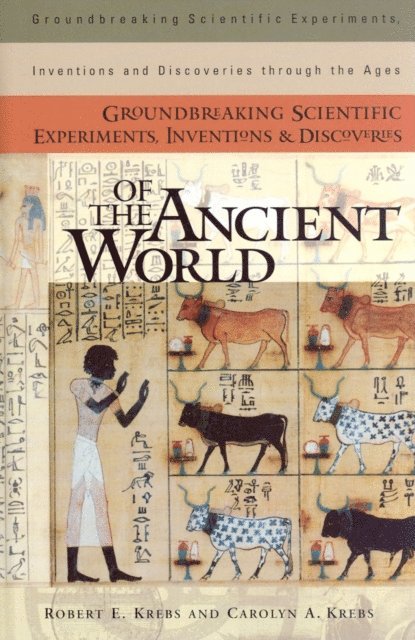
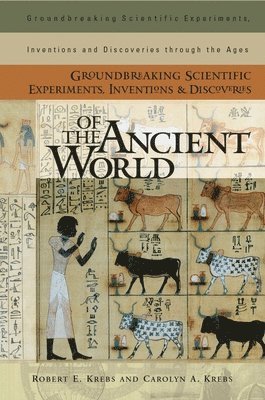
This reference work describes the trial-and-error experiments, discoveries, and inventions of early humans who lived from before recorded history to the Middle Ages. Krebs travels through the ancient periods of Egypt, China, and Mesoamerica, to the classical Greek and Roman periods, and finally to the Christian era, providing students with the link between science and history, while revealing information about many cultures around the world. Each entry provides the who, when, and where of each discovery, invention, or experiment. Entries include calendars, gunpowder, anesthesia, contraception, spontaneous generation, the Arctic Circle, language, and tides.Part of the Groundbreaking Experiments, Inventions, and Discoveries through the Ages series, this book provides readers with a detailed look early humans' relation to world around them and the scientific advancements they made. It will be useful to high school and college students, teachers, and the general public interested in the history and science behind ancient civilizations.
E-bok
PDF, Engelska, 20061 059 kr
Läs direkt efter köp
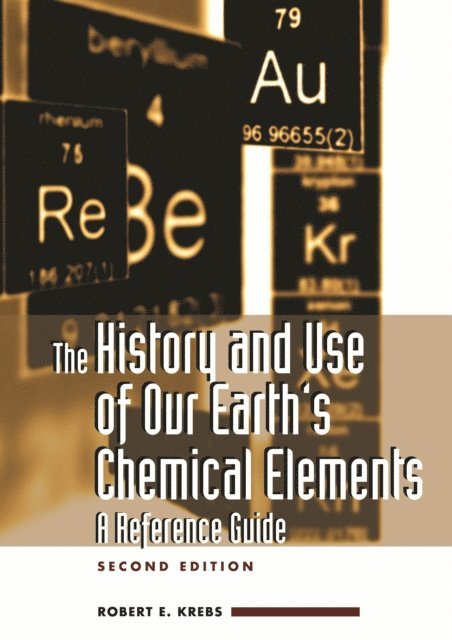
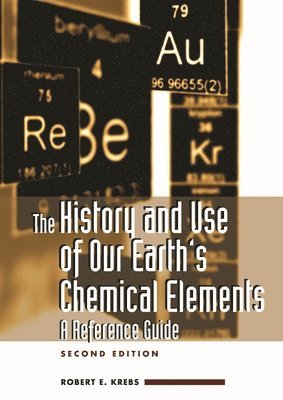
Understanding the Periodic Table of Chemical Elements is critical for success in the chemistry classroom and laboratory. In today's classroom, students not only need to understand the properties of the chemical elements, but how these elements play such an integral role in industry, the earth and the environment, and in modern life. No resource provides a better introduction than Robert Krebs's The History and Use of Our Earth's Chemical Elements. In this thoroughly revised edition, with extensive new examples on the importance of the chemical elements, the elements are examined within their groups, enabling students to make connections between elements of similar structure. In addition, the discovery and history of each element - from those known from ancient times to those created in the modern laboratory - is explained clearly and concisely.Understanding the Periodic Table of Chemical Elements is critical for success in the chemistry classroom and laboratory. In today's classroom, students not only need to understand the properties of the chemical elements, but how these elements play such an integral role in industry, the earth and the environment, and in modern life. No resource provides a better introduction than Robert Krebs's The History and Use of Our Earth's Chemical Elements. In this thoroughly revised edition, with extensive new and updated examples on the use of the chemical elements, the elements are examined within their groups, enabling students to make connections between elements of similar structure. In addition, the discovery and history of each element - from those known from ancient times to those created in the modern laboratory - is explained clearly and concisely.In addition to the handy Guide to the Chemical Elements that comprises the bulk of the work, The History and Use of Our Earth's Chemical Elements includes other useful features: ; Introductory material on the basics of chemistry and the Periodic Table ; Appendices on the discoverers of the chemical elements ; A glossary of words commonly used in chemistry and chemical engineering ; A complete bibliography of useful resources, including websites All of this information makes The History and Use of Our Earth's Chemical Elements the ideal one-volume resource for understanding the importance of the chemical elements.
E-bok
PDF, Engelska, 2004949 kr
Läs direkt efter köp
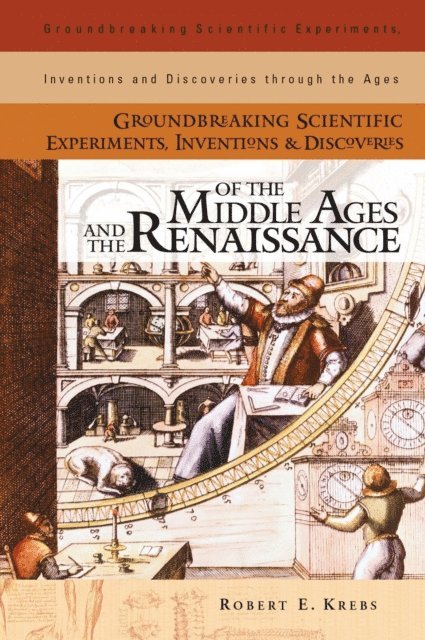
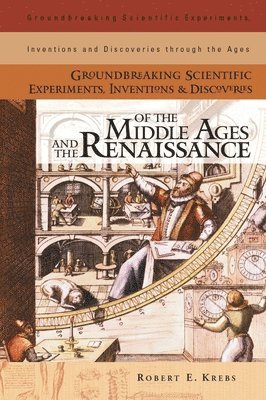
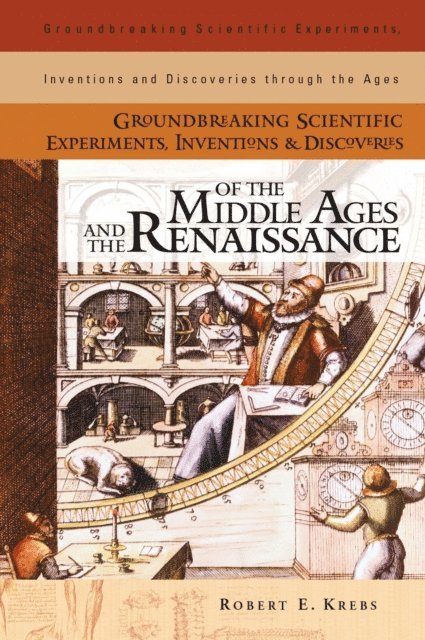
The Middle Ages and the Renaissance were a period of scientific and literary reawakening. Scientific development and a renewed interest in classical science led to new discoveries, inventions, and technologies. Between 500 and 1600 A.D., scientific explorers rediscovered ancient Greek and Eastern knowledge, which led to an eruption of fresh ideas. This reference work describes more than 75 experiments, inventions, and discoveries of the period, as well as the scientists, physicians, and scholars responsible for them. Individuals such as Leonardo da Vinci, Marco Polo, and Galileo are included, along with entries on reconstructive surgery, Stonehenge, eyeglasses, the microscope, and the discovery of smallpox.Part of a unique series that ranges from ancient times to the 20th century, this exploration of scientific advancements during the Middle Ages and the Renaissance will be useful to high school and college students, teachers, and general readers seeking information about significant advances in scientific history.
E-bok
PDF, Engelska, 20082 229 kr
Läs direkt efter köp
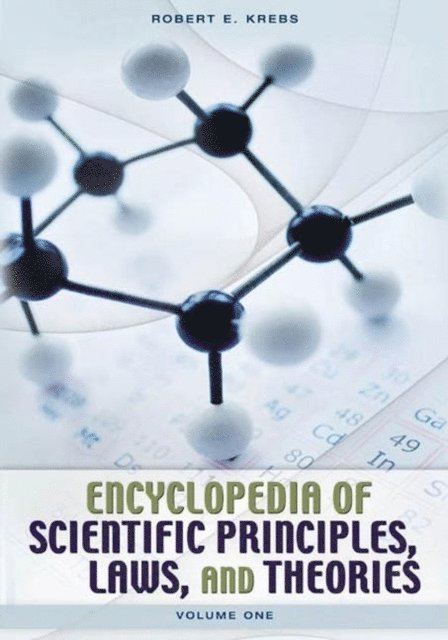
What is a scientific theory? How is it different from a law or a principle? And what practical use is it? Science students, especially those new to studying the sciences, ask these questions everyday about these essential parts of a science education. To support these students, the Encyclopedia of Scientific Principles, Laws, and Principles is designed to be an easy-to-understand, accessible, and accurate description of the most famous scientific concepts, principles, laws, and theories that are known in the areas of astronomy, biology, chemistry, geology, mathematics, medicine, meteorology, and physics. The encyclopedia contributes to the scientific literacy of students and the general public by providing them with a comprehensive, but not overwhelming source of those scientific concepts, principles, laws and theories that impact every facet of their daily lives.The Encyclopedia of Scientific Principles, Laws, and Theories includes several hundred entries. For ease of use, entries are arranged alphabetically by the names of the men or women who are best-known for their discovery or development or after whom the particular scientific law or theory is named. Entries include a short biography of the main discoverers, as well as any information that was of particular relevance in the evolution of the scientific topic. The encyclopedia includes sidebars and examples of the usefulness of the theories, principles, and laws in everyday life, demonstrating that understanding these concepts have practical use. Each entry also includes resources for further research, and the encyclopedia includes a general bibliography of particularly useful primary and secondary source materials.
Inbunden, Engelska, 1999
906 kr
Skickas inom 10-15 vardagar
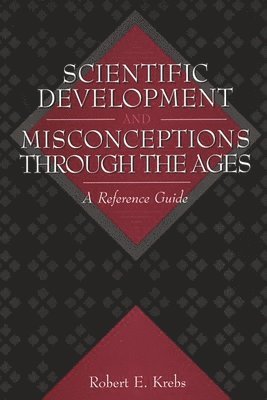
The evolution of science through the ages has often been marred by people's misconceptions. From pre-historic times, when myths played a major role in people's lives, to present-day debates concerning the environment, people have sought ways to explain the world around them and have often come up with incorrect answers. Science has grown through the correction of these misconceptions. This unique reference source can be used by students, teachers, and other interested researchers to explore this growth as it pertains to both the field of science and the process of scientific experimentation. Readers will discover how misunderstandings led to further experimentation and eventually to scientific facts.These false paths to scientific knowledge are not treated as deliberate misconduct, but rather as a lack of knowledge and a misunderstanding of the science and technology involved, both of which were sooner or later corrected by men and women of science. Krebs explores the conception and development of scientific thought in five different fields: Medicine and Health; Life Science; Chemistry and Physics; Astrology, Astronomy, and Cosmology; and Conservation, Ecology, and Environmentalism. Within each of these categories, he explores more specific areas, such as the circulatory system, geology, and inner planets. This arrangement provides easy access for the researcher interested in a particular area of science as well as those looking for general information, illuminating how our modern understanding of science is based on much of the developments in our ancient past.
Inbunden, Engelska, 2003
974 kr
Skickas inom 10-15 vardagar
This reference work describes the trial-and-error experiments, discoveries, and inventions of early humans who lived from before recorded history to the Middle Ages. Krebs travels through the ancient periods of Egypt, China, and Mesoamerica, to the classical Greek and Roman periods, and finally to the Christian era, providing students with the link between science and history, while revealing information about many cultures around the world. Each entry provides the who, when, and where of each discovery, invention, or experiment. Entries include calendars, gunpowder, anesthesia, contraception, spontaneous generation, the Arctic Circle, language, and tides.Part of the Groundbreaking Experiments, Inventions, and Discoveries through the Ages series, this book provides readers with a detailed look early humans' relation to world around them and the scientific advancements they made. It will be useful to high school and college students, teachers, and the general public interested in the history and science behind ancient civilizations.
Inbunden, Engelska, 2003
974 kr
Skickas inom 10-15 vardagar
The 19th century is known as the modern era of science. Many of the ideas, theories, and inventions developed during this time are used everyday in today's society. Windelspecht investigates the century's tremendous discoveries, inventions, and inquiries in more than 60 alphabetical entries. This reference presents familiar subjects, such as the telephone and elevator, as well as those less frequently studied, such as the spectroscope and Pasteur's development of the germ theory.Readers will find a thorough discussion of each entry's scientific impact and gain an understanding of the lasting social and political importance of these advancements. Narratives enrich many of the entries by adding perspective to the century's fascinating history. Students and researchers will find this reference book easy to use. An appendix of entries listed by scientific field, a glossary of terms, and name and subject indexes make this the perfect, easy-to-use reference for anyone interested in the scientific revolutions of the 19th.
Inbunden, Engelska, 2003
1 043 kr
Skickas inom 10-15 vardagar
The 18th century saw the emergence of the industrial and chemical revolutions and witnessed the near-universal acceptance of applied science. It was a time of revolutionary, lasting transformation for the practice of science and mathematics. Most procedures and precepts of modern science took hold during the 18th century, when scientists first paired scientific research with practical application to astonishing results. In over 60 alphabetical entries, Shectman examines at the tremendous scientific discoveries, inventions, and inquiries of the period. Familiar topics such as the steam engine and hot air balloon are covered, along with lesser-known topics such as the Watt copy press and Newton's experimentum crucis.A thorough discussion of each entry's scientific impact provides readers with an understanding of the lasting social and political importance of these advancements. Narratives enrich the entries by adding context and perspective to the century's fascinating scientific history. Students and researchers will find this reference book easy to use. Included are an appendix of entries listed by scientific field, a glossary of terms, indexes by name and subject.
Inbunden, Engelska, 2004
905 kr
Skickas inom 10-15 vardagar
The Middle Ages and the Renaissance were a period of scientific and literary reawakening. Scientific development and a renewed interest in classical science led to new discoveries, inventions, and technologies. Between 500 and 1600 A.D., scientific explorers rediscovered ancient Greek and Eastern knowledge, which led to an eruption of fresh ideas. This reference work describes more than 75 experiments, inventions, and discoveries of the period, as well as the scientists, physicians, and scholars responsible for them. Individuals such as Leonardo da Vinci, Marco Polo, and Galileo are included, along with entries on reconstructive surgery, Stonehenge, eyeglasses, the microscope, and the discovery of smallpox.Part of a unique series that ranges from ancient times to the 20th century, this exploration of scientific advancements during the Middle Ages and the Renaissance will be useful to high school and college students, teachers, and general readers seeking information about significant advances in scientific history.
Inbunden, Engelska, 2006
974 kr
Skickas inom 10-15 vardagar
Understanding the Periodic Table of Chemical Elements is critical for success in the chemistry classroom and laboratory. In today's classroom, students not only need to understand the properties of the chemical elements, but how these elements play such an integral role in industry, the earth and the environment, and in modern life. No resource provides a better introduction than Robert Krebs's The History and Use of Our Earth's Chemical Elements. In this thoroughly revised edition, with extensive new examples on the importance of the chemical elements, the elements are examined within their groups, enabling students to make connections between elements of similar structure. In addition, the discovery and history of each element - from those known from ancient times to those created in the modern laboratory - is explained clearly and concisely.Understanding the Periodic Table of Chemical Elements is critical for success in the chemistry classroom and laboratory. In today's classroom, students not only need to understand the properties of the chemical elements, but how these elements play such an integral role in industry, the earth and the environment, and in modern life. No resource provides a better introduction than Robert Krebs's The History and Use of Our Earth's Chemical Elements. In this thoroughly revised edition, with extensive new and updated examples on the use of the chemical elements, the elements are examined within their groups, enabling students to make connections between elements of similar structure. In addition, the discovery and history of each element - from those known from ancient times to those created in the modern laboratory - is explained clearly and concisely.In addition to the handy Guide to the Chemical Elements that comprises the bulk of the work, The History and Use of Our Earth's Chemical Elements includes other useful features:; Introductory material on the basics of chemistry and the Periodic Table; Appendices on the discoverers of the chemical elements; A glossary of words commonly used in chemistry and chemical engineering; A complete bibliography of useful resources, including websites All of this information makes The History and Use of Our Earth's Chemical Elements the ideal one-volume resource for understanding the importance of the chemical elements.
E-bok
PDF, Engelska, 1999984 kr
Läs direkt efter köp
The evolution of science through the ages has often been marred by people's misconceptions. From pre-historic times, when myths played a major role in people's lives, to present-day debates concerning the environment, people have sought ways to explain the world around them and have often come up with incorrect answers. Science has grown through the correction of these misconceptions. This unique reference source can be used by students, teachers, and other interested researchers to explore this growth as it pertains to both the field of science and the process of scientific experimentation. Readers will discover how misunderstandings led to further experimentation and eventually to scientific facts.These false paths to scientific knowledge are not treated as deliberate misconduct, but rather as a lack of knowledge and a misunderstanding of the science and technology involved, both of which were sooner or later corrected by men and women of science. Krebs explores the conception and development of scientific thought in five different fields: Medicine and Health; Life Science; Chemistry and Physics; Astrology, Astronomy, and Cosmology; and Conservation, Ecology, and Environmentalism. Within each of these categories, he explores more specific areas, such as the circulatory system, geology, and inner planets. This arrangement provides easy access for the researcher interested in a particular area of science as well as those looking for general information, illuminating how our modern understanding of science is based on much of the developments in our ancient past.
E-bok
Engelska, 2004949 kr
Läs direkt efter köp
The Middle Ages and the Renaissance were a period of scientific and literary reawakening. Scientific development and a renewed interest in classical science led to new discoveries, inventions, and technologies. Between 500 and 1600 A.D., scientific explorers rediscovered ancient Greek and Eastern knowledge, which led to an eruption of fresh ideas. This reference work describes more than 75 experiments, inventions, and discoveries of the period, as well as the scientists, physicians, and scholars responsible for them. Individuals such as Leonardo da Vinci, Marco Polo, and Galileo are included, along with entries on reconstructive surgery, Stonehenge, eyeglasses, the microscope, and the discovery of smallpox.Part of a unique series that ranges from ancient times to the 20th century, this exploration of scientific advancements during the Middle Ages and the Renaissance will be useful to high school and college students, teachers, and general readers seeking information about significant advances in scientific history.