Robert E. Lane – författare
Visar alla böcker från författaren Robert E. Lane. Handla med fri frakt och snabb leverans.
5 produkter
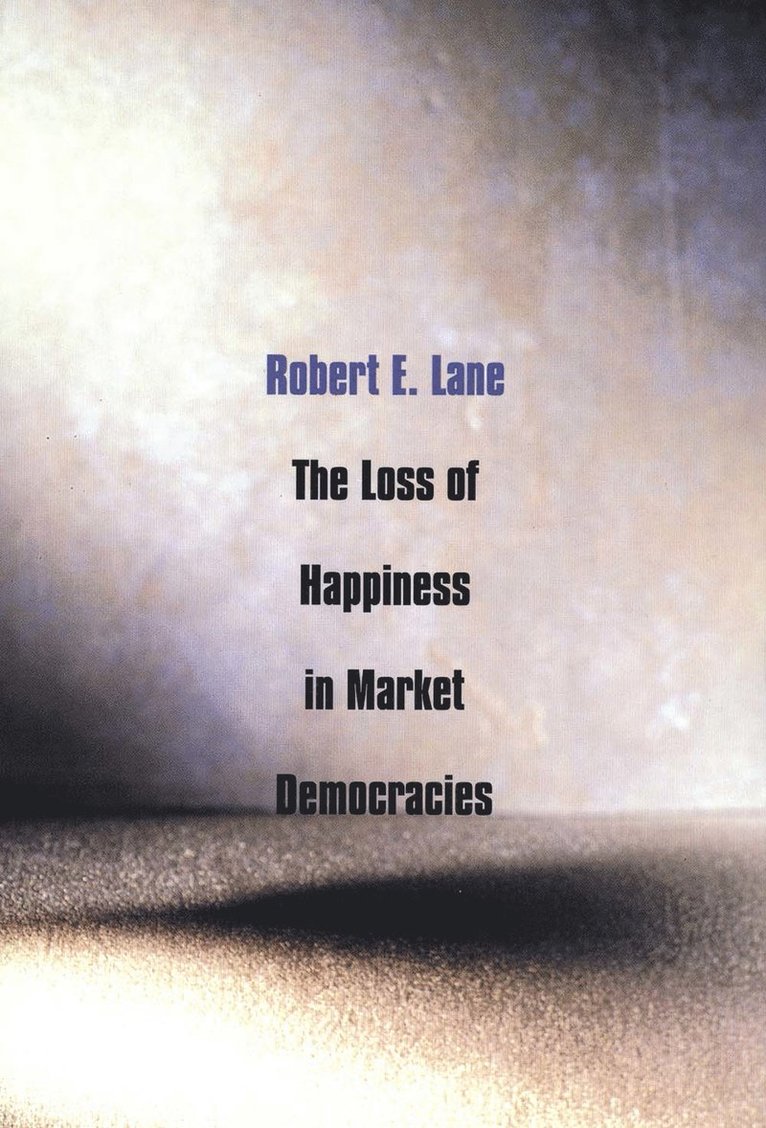
Loss of Happiness in Market Democracies
Häftad, 2001
730 kr
Lägg i varukorg
Despite the fact that citizens of advanced market democracies are satisfied with their material progress, many are haunted by a spirit of unhappiness. There is evidence of a rising tide of clinical depression in most advanced societies, and in the United States studies have documented a decline in …
After the End of History
The Curious Fate of American Materialism
E-bok, 2009
644 kr
Lägg i varukorg
"Robert E. Lane is one of the most prominent and distinguished critics of both the human impact of market economies and economic theory, arguing from much research that happiness is more likely to flow from companionship, enjoyment of work, contribution to society, and the opportunity to develop as …
The Market Experience
Häftad, 1991
670 kr
Lägg i varukorg
In a period when market economics are widely recognised as the most desirable form of economic organisation, Robert Lane offers evidence that the major premises of market economics are mistaken. Lane shows that work, far from being a disutility, as economic theory would have it, is instead one of …
After the End of History
The Curious Fate of American Materialism
Häftad, 2005
427 kr
Tillfälligt slut
"Robert E. Lane is one of the most prominent and distinguished critics of both the human impact of market economies and economic theory, arguing from much research that happiness is more likely to flow from companionship, enjoyment of work, contribution to society, and the opportunity to develop as …
After the End of History
The Curious Fate of American Materialism
Inbunden, 2005
1328 kr
Tillfälligt slut
"Robert E. Lane is one of the most prominent and distinguished critics of both the human impact of market economies and economic theory, arguing from much research that happiness is more likely to flow from companionship, enjoyment of work, contribution to society, and the opportunity to develop as …