Robert E. Looney - Böcker
Visar alla böcker från författaren Robert E. Looney. Handla med fri frakt och snabb leverans.
12 produkter
12 produkter
Economic Causes And Consequences Of Defense Expenditures In The Middle East And South Asia
Inbunden, Engelska, 2019
2 113 kr
Skickas inom 10-15 vardagar
This book presents a detailed and rigorous quantitative economic assessment, analysis, and interpretation of the causes and consequences of regional defense expenditures in countries in the Middle East and South Asia. It examines the relationship between defense spending and budgetary allocations.
2 113 kr
Skickas inom 10-15 vardagar
In the spring of 1976, I had the privilege of serving on a Stanford Research Institute team engaged in examining various facets of the Mexican economy. That study provided the opportunity to visit many government ministries and talk with some of Mexico's leading economists. These professional experiences stimulated me to undertake full-scale research on the growth potential of the Mexican economy, a subject in which I had long been interested and on which I had written from time to time, beginning with my book Income Distribution Policies and Economic Growth in Semi-Industrialized Countries: A Comparative Study of Iran, Mexico, Brazil, and South Korea. 1 The present volume might be regarded as the culmination of this endeavor. The methodological approach here is partly descriptive and partly empirical-illustrative formal models are built on both qualitative and theoretical foundations. To sharpen the issue and put the Mexican economy in perspective, international comparisons are made through-out.
Economic Causes And Consequences Of Defense Expenditures In The Middle East And South Asia
Häftad, Engelska, 2020
618 kr
Skickas inom 10-15 vardagar
This book presents a detailed and rigorous quantitative economic assessment, analysis, and interpretation of the causes and consequences of regional defense expenditures in countries in the Middle East and South Asia. It examines the relationship between defense spending and budgetary allocations.
618 kr
Skickas inom 10-15 vardagar
This book analyzes the Echeverria administration's economic policies and their role in the events leading up to the 1976 crisis in Mexico. It examines the new economic strategy of the Lopez Portillo administration in light of its ability to cope with the devaluation of the peso.
2 113 kr
Skickas inom 10-15 vardagar
This book analyzes the main causes of deterioration in the Jamaican economy since 1972 and assesses the prospects for returning to a period of stable growth under an International Monetary Fund Stabilization program. Considering both the role of international economic conditions and domestic policies on Jamaica's economic decline, Dr. Looney compares the viability of the socialist model of development, implemented between 1972 and 1980, with that of the U.S.-sponsored supply side model. He raises important questions about the ability of small open economies to sustain acceptable rates of growth in the existing world economic environment, the effectiveness of IMF Stabilization programs on these economies, the possible impact of supply side development strategies, and the significance of Caribbean Basin Initiative policies for growth and stability in the area.
618 kr
Skickas inom 10-15 vardagar
This book analyzes the main causes of deterioration in the Jamaican economy since 1972 and assesses the prospects for returning to a period of stable growth under an International Monetary Fund Stabilization program. Considering both the role of international economic conditions and domestic policies on Jamaica's economic decline, Dr. Looney compares the viability of the socialist model of development, implemented between 1972 and 1980, with that of the U.S.-sponsored supply side model. He raises important questions about the ability of small open economies to sustain acceptable rates of growth in the existing world economic environment, the effectiveness of IMF Stabilization programs on these economies, the possible impact of supply side development strategies, and the significance of Caribbean Basin Initiative policies for growth and stability in the area.
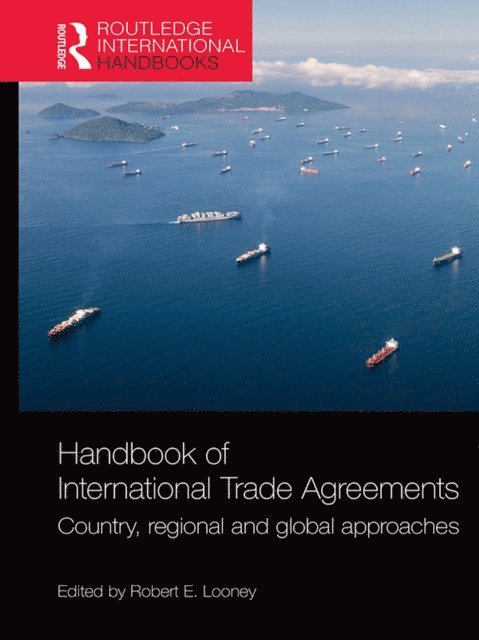
Handbook of International Trade Agreements
Country, regional and global approaches
Häftad, Engelska, 2020
581 kr
Skickas inom 10-15 vardagar
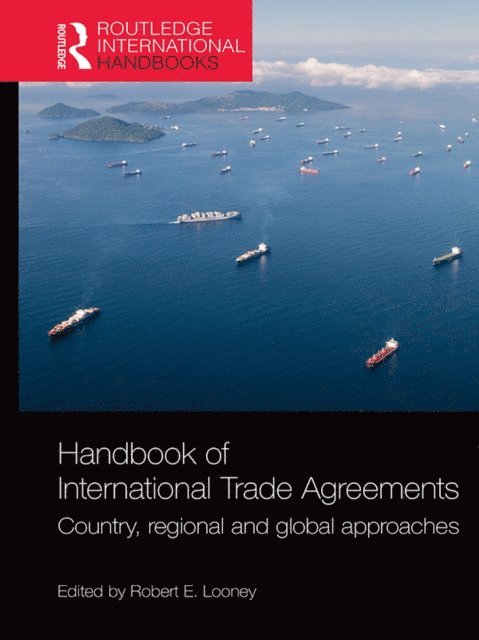
International trade has, for decades, been central to economic growth and improved standards of living for nations and regions worldwide. For most of the advanced countries, trade has raised standards of living, while for most emerging economies, growth did not begin until their integration into the global economy. The economic explanation is simple: international trade facilitates specialization, increased efficiency and improved productivity to an extent impossible in closed economies. However, recent years have seen a significant slowdown in global trade, and the global system has increasingly come under attack from politicians on the right and on the left. The benefits of open markets, the continuation of international co-operation, and the usefulness of multilateral institutions such as the World Trade Organization (WTO), the International Monetary Fund and the World Bank have all been called into question. While globalization has had a broadly positive effect on overall global welfare, it has also been perceived by the public as damaging communities and social classes in the industrialized world, spawning, for example, Brexit and the US exit from the Trans-Pacific Partnership.The purpose of this volume is to examine international and regional preferential trade agreements (PTAs), which offer like-minded countries a possible means to continue receiving the benefits of economic liberalization and expanded trade. What are the strengths and weaknesses of such agreements, and how can they sustain growth and prosperity for their members in an ever-challenging global economic environment? The Handbook is divided into two parts. The first, Global Themes, offers analysis of issues including the WTO, trade agreements and economic development, intellectual property rights, security and environmental issues, and PTAs and developing countries. The second part examines regional and country-specific agreements and issues, including NAFTA, CARICOM, CETA, the Pacific Alliance, the European Union, EFTA, ECOWAS, SADC, TTIP, RCEP and the TPP (now the CPTPP), as well as the policies of countries such as Japan and Australia.
534 kr
Skickas inom 10-15 vardagar
Del 72 - Contemporary Studies in Economic and Financial Analysis
Economics of Third World Defense Expenditures
Inbunden, Engelska, 1995
1 175 kr
Skickas inom 7-10 vardagar
This 72nd volume in the series discusses such topics as the influence of the environment, the effect of the type of regime, regional case studies, and generalizations.
3 336 kr
Skickas inom 10-15 vardagar
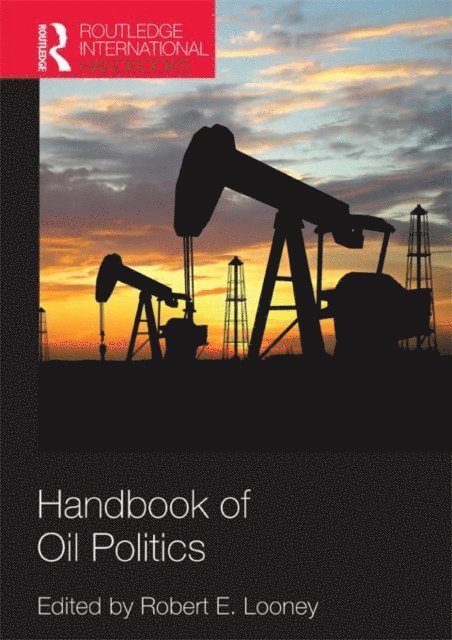
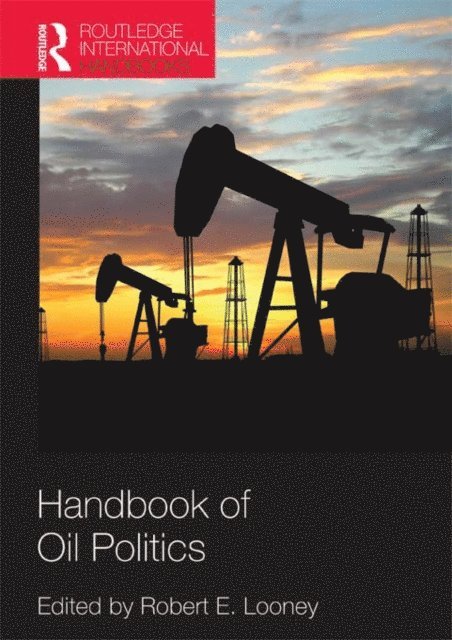
These days, one would have a difficult time picking up a newspaper, or watching a newscast that did not have a lead story dealing with some aspect of oil. From instability in the Middle East, to stock market crashes and concerns over the health of the world economy, to wars that seem to break out unexpectedly around the world, to discussions of global warming, and even speculation over the fate of mankind, oil is usually lurking somewhere in the background. To many, oil markets and their linkages to a whole spectrum of events remain something of a mystery. Unfortunately, most of the easily obtained information on oil is deeply flawed. Whole web-conspiracy sites depict ruthless insiders and reckless dictators manipulating energy markets at will. The 30 essays in this volume, written by the leading experts in the field, attempt to set the record straight. While their assessments may lack the sensationalism of many popular pundits, serious readers will find their insights invaluable in the years to come in providing a framework for understanding many of the events of the day. The volume is divided into sections. Part I provides a broad overview of the political dimensions underlying the supply of oil. Some of the key questions addressed include: is the world running out of oil? And if so, is the cause physical scarcity or political/policy failure? Why are many of the oil-producing countries in the developing world so unstable? Can oil markets be made to provide more stability to the world system? Part II examines some of the political responses to oil-related developments. Here, the key questions concern the role of the political process in the development of alternative sources of energy. The various means through which countries approach their energy security is assessed, as is the problem of climate change. The section ends with the provocative question: do governments really need to go to war for oil? Oil production, energy markets, and the political environment produce distinct regional patterns. Part III examines oil and political power in Africa, Latin America, the Middle East and South-East Asia. Part IV expands some of the main regional themes through a series of case studies on specific countries: Iraq, Iran, Saudi Arabia, Egypt, Russia and Brazil. A final section looks to the future: will the oil curse continue for many countries? How will the growth and expansion of China affect oil prices and availabilities? Will oil-based sovereign wealth funds contribute to global stability or will they create increased political tensions between consuming and producing countries? Will volatile oil markets undermine the US dollar as well as the global financial system? Perhaps appropriately, the volume ends with an assessment of the future of oil in a carbon constrained world.All in all, the essays in this volume cover the whole spectrum of the politics of oil. They will help shed light on this vital, yet still often misunderstood topic. The book does not represent any particular political or ideological position. Instead, each author has sought to objectively seek a deeper understanding as to the complexity and subtlety of forces that have all too often eluded policymakers around the world.
822 kr
Skickas inom 10-15 vardagar
These days, one would have a difficult time picking up a newspaper, or watching a newscast that did not have a lead story dealing with some aspect of oil. From instability in the Middle East, to stock market crashes and concerns over the health of the world economy, to wars that seem to break out unexpectedly around the world, to discussions of global warming, and even speculation over the fate of mankind, oil is usually lurking somewhere in the background. To many, oil markets and their linkages to a whole spectrum of events remain something of a mystery. Unfortunately, most of the easily obtained information on oil is deeply flawed. Whole web-conspiracy sites depict ruthless insiders and reckless dictators manipulating energy markets at will. The 30 essays in this volume, written by the leading experts in the field, attempt to set the record straight. While their assessments may lack the sensationalism of many popular pundits, serious readers will find their insights invaluable in the years to come in providing a framework for understanding many of the events of the day. The volume is divided into sections. Part I provides a broad overview of the political dimensions underlying the supply of oil. Some of the key questions addressed include: is the world running out of oil? And if so, is the cause physical scarcity or political/policy failure? Why are many of the oil-producing countries in the developing world so unstable? Can oil markets be made to provide more stability to the world system? Part II examines some of the political responses to oil-related developments. Here, the key questions concern the role of the political process in the development of alternative sources of energy. The various means through which countries approach their energy security is assessed, as is the problem of climate change. The section ends with the provocative question: do governments really need to go to war for oil? Oil production, energy markets, and the political environment produce distinct regional patterns. Part III examines oil and political power in Africa, Latin America, the Middle East and South-East Asia. Part IV expands some of the main regional themes through a series of case studies on specific countries: Iraq, Iran, Saudi Arabia, Egypt, Russia and Brazil. A final section looks to the future: will the oil curse continue for many countries? How will the growth and expansion of China affect oil prices and availabilities? Will oil-based sovereign wealth funds contribute to global stability or will they create increased political tensions between consuming and producing countries? Will volatile oil markets undermine the US dollar as well as the global financial system? Perhaps appropriately, the volume ends with an assessment of the future of oil in a carbon constrained world.All in all, the essays in this volume cover the whole spectrum of the politics of oil. They will help shed light on this vital, yet still often misunderstood topic. The book does not represent any particular political or ideological position. Instead, each author has sought to objectively seek a deeper understanding as to the complexity and subtlety of forces that have all too often eluded policymakers around the world.
Handbook of International Trade Agreements
Country, regional and global approaches
Inbunden, Engelska, 2018
2 756 kr
Skickas inom 10-15 vardagar
International trade has, for decades, been central to economic growth and improved standards of living for nations and regions worldwide. For most of the advanced countries, trade has raised standards of living, while for most emerging economies, growth did not begin until their integration into the global economy. The economic explanation is simple: international trade facilitates specialization, increased efficiency and improved productivity to an extent impossible in closed economies. However, recent years have seen a significant slowdown in global trade, and the global system has increasingly come under attack from politicians on the right and on the left. The benefits of open markets, the continuation of international co-operation, and the usefulness of multilateral institutions such as the World Trade Organization (WTO), the International Monetary Fund and the World Bank have all been called into question. While globalization has had a broadly positive effect on overall global welfare, it has also been perceived by the public as damaging communities and social classes in the industrialized world, spawning, for example, Brexit and the US exit from the Trans-Pacific Partnership.The purpose of this volume is to examine international and regional preferential trade agreements (PTAs), which offer like-minded countries a possible means to continue receiving the benefits of economic liberalization and expanded trade. What are the strengths and weaknesses of such agreements, and how can they sustain growth and prosperity for their members in an ever-challenging global economic environment? The Handbook is divided into two parts. The first, Global Themes, offers analysis of issues including the WTO, trade agreements and economic development, intellectual property rights, security and environmental issues, and PTAs and developing countries. The second part examines regional and country-specific agreements and issues, including NAFTA, CARICOM, CETA, the Pacific Alliance, the European Union, EFTA, ECOWAS, SADC, TTIP, RCEP and the TPP (now the CPTPP), as well as the policies of countries such as Japan and Australia.