
Robert E. Norton - Böcker
Visar alla böcker från författaren Robert E. Norton. Handla med fri frakt och snabb leverans.
3 produkter
3 produkter
968 kr
Skickas inom 10-15 vardagar
Stefan George (1868–1933) was one of the most important and influential poets to have written in German. His work, in its originality and impact, easily ranks with that of Goethe, Holderlin, or Rilke. Yet George's reach extended far beyond the sphere of literature. Particularly during his last three decades, George gathered around himself a group of men who subscribed to his homoerotic and idiosyncratic vision of life and sought to transform that vision into reality. George considered his circle to be the embodiment and defender of the "real" but "secret" Germany, opposed to the false values of contemporary bourgeois society. Some of his disciples, friends, and admirers were themselves historians, philosophers, and poets. Their works profoundly affected the intellectual and cultural attitudes of Germany's elite during the critical postwar years of the Weimar Republic. Essentially conservative in temperament and outlook, George and his circle occupy a central, but problematic, place in the rise of proto-fascism in Germany. Their own surrogate state offered a miniature model of a future German state: enthusiastic followers submitting themselves without question to the figure and will of a charismatic leader believed to be in possession of mysterious, even quasi-divine, powers.When he died several months after the Nazi takeover, George was one of the most famous and revered figures in Germany. Today the importance of George and his circle has largely been forgotten. In this, the first full biography of George to appear in any language, Robert E. Norton traces the poet's life and rise to fame.
452 kr
Skickas inom 10-15 vardagar
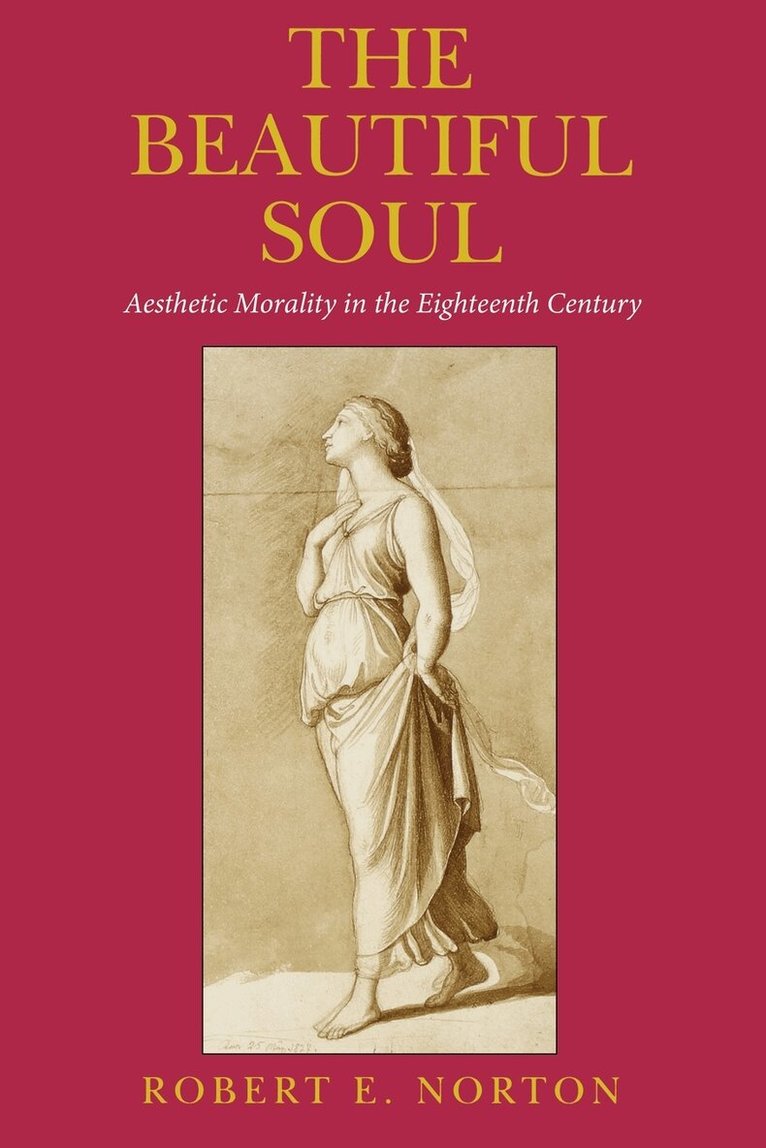
For many eighteenth-century European philosophers and writers, the beautiful soul was a symbol of enlightened humanity, carrying with it the possibility that aesthetic beauty and moral goodness would be fused in a new, indivisible unity. In the first book in English on the subject, Robert E. Norton follows the fortunes of this cultural icon, exploring the reasons for both its initial popularity and its subsequent decline as a cultural ideal during the Enlightenment. Tracing the emergence of the notion of moral beauty as it first appears in the late seventeenth and early eighteenth centuries, Norton maintains that the attempt to combine the good and the beautiful was a response to the rise of secular authority. He draws on English, French, and German sources to show how writers in various intellectual traditions united philosophical, theological, and cultural themes in their elaboration of the beautiful soul. In Norton's view, this articulation of the beautiful soul was so persuasive that, by the second half of the eighteenth century, some version of moral beauty was introduced in nearly every discussion of morality. While writers such as Wieland, Rousseau, and Goethe employed the beautiful soul as a moral and aesthetic ideal in fiction, thinkers such as Kant explored it in philosophical works. Norton ends by demonstrating how the figure of the beautiful soul achieved its foremost expression in Schiller's writings and was definitively rejected in Hegel's Phenomenology.
Del 197 - Beiträge zur historischen Theologie
The Crucible of German Democracy
Ernst Troeltsch and the First World War
Inbunden, Engelska, 2021
2 456 kr
Skickas inom 5-8 vardagar
Der berühmte Philosoph, Historiker, Theologe und Politiker Ernst Troeltsch (1865-1923) war einer der prominentesten Verfechter der demokratischen Idee in Deutschland während des Ersten Weltkrieges und den Jahren danach, bis zu seinem Tode. Robert E. Norton stellt zum ersten Mal die dramatische Geschichte seines Wirkens während dieser turbulenten, entscheidenden Jahre dar.