Robert G. Moser - Böcker
Visar alla böcker från författaren Robert G. Moser. Handla med fri frakt och snabb leverans.
8 produkter
8 produkter
410 kr
Skickas inom 7-10 vardagar
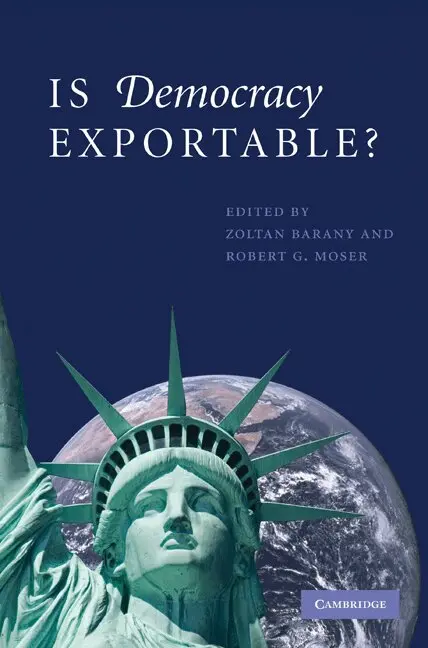
Can democratic states transplant the seeds of democracy into developing countries? What have political thinkers going back to the Greek city-states thought about their capacity to promote democracy? How can democracy be established in divided societies? This books answers these and other fundamental questions behind the concept known as 'democracy promotion.' Following an illuminating concise discussion of what political philosophers from Plato to Montesquieu thought about the issue, the authors explore the structural preconditions (culture, divided societies, civil society) as well as the institutions and processes of democracy building (constitutions, elections, security sector reform, conflict, and trade). Along the way they share insights about what policies have worked, which ones need to be improved or discarded, and, more generally, what advanced democracies can do to further the cause of democratization in a globalizing world. In other words, they seek answers to the question, Is democracy exportable?
1 034 kr
Skickas inom 7-10 vardagar
Can democratic states transplant the seeds of democracy into developing countries? What have political thinkers going back to the Greek city-states thought about their capacity to promote democracy? How can democracy be established in divided societies? This books answers these and other fundamental questions behind the concept known as 'democracy promotion.' Following an illuminating concise discussion of what political philosophers from Plato to Montesquieu thought about the issue, the authors explore the structural preconditions (culture, divided societies, civil society) as well as the institutions and processes of democracy building (constitutions, elections, security sector reform, conflict, and trade). Along the way they share insights about what policies have worked, which ones need to be improved or discarded, and, more generally, what advanced democracies can do to further the cause of democratization in a globalizing world. In other words, they seek answers to the question, Is democracy exportable?
995 kr
Skickas inom 7-10 vardagar
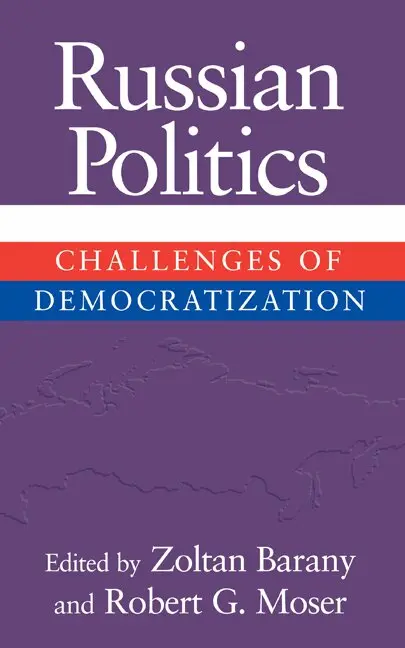
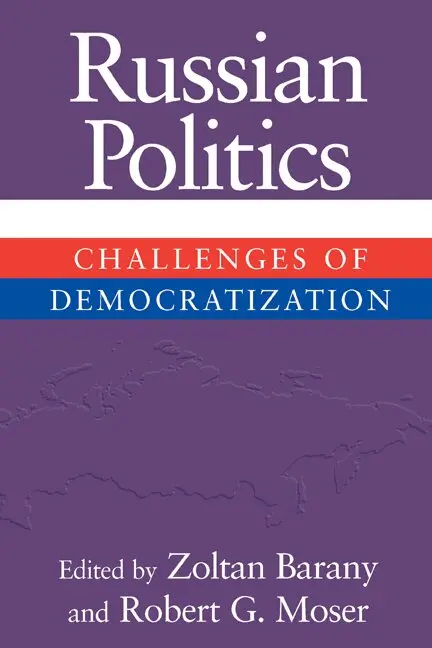
What went wrong in Russia's decade-old post-communist transition? A group of leading young scholars answer this question by offering assessments of five crucial political arenas during the Yeltsin era: elections, executive-legislative relations, interactions between the central state and the regions, economic reforms, and civil-military relations. All of the contributors recognize that adverse historical legacies have complicated Russian democratization. They challenge structural explanations that emphasize constraints of the pre-existing system, however, and concentrate instead on the importance of elite decisions and institution-building. The authors agree that elites' failure to develop robust political institutions has been a central problem of Russia's post-communist transition. The weakness of the state and its institutions has contributed to a number of serious problems threatening democratic consolidation. These include the tensions between the executive and the legislature, the frail infrastructure for successful market reform, and the absence of proper civilian control over the armed forces.
322 kr
Skickas inom 7-10 vardagar
What went wrong in Russia's decade-old post-communist transition? A group of leading young scholars answer this question by offering assessments of five crucial political arenas during the Yeltsin era: elections, executive-legislative relations, interactions between the central state and the regions, economic reforms, and civil-military relations. All of the contributors recognize that adverse historical legacies have complicated Russian democratization. They challenge structural explanations that emphasize constraints of the pre-existing system, however, and concentrate instead on the importance of elite decisions and institution-building. The authors agree that elites' failure to develop robust political institutions has been a central problem of Russia's post-communist transition. The weakness of the state and its institutions has contributed to a number of serious problems threatening democratic consolidation. These include the tensions between the executive and the legislature, the frail infrastructure for successful market reform, and the absence of proper civilian control over the armed forces.
1 518 kr
Skickas inom 10-15 vardagar
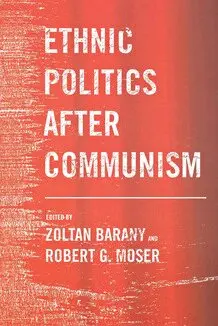
The Soviet Union encompassed dozens of nationalities and ethnicities, and in the wake of its collapse, the politics of ethnicity within its former borders and throughout Eastern Europe have undergone tremendous changes. In this book, Zoltan Barany and Robert G. Moser bring together eminent scholars whose theoretically diverse and empirically rich research examines various facets of ethnicity in postcommunist Europe and Eurasia: ethnic identity and culture, mobilization, parties and voting, conflict, and ethnic migration. The contributors consider how ethnic forces have influenced political outcomes that range from voting to violence and protest mobilization to language acquisition. Conversely, each chapter demonstrates that political behavior itself has an impact on the forms and strength of ethnic identity. Thus, ethnicity is deemed to be a contested, malleable, and constructed force rather than a static characteristic inherent in the attributes of groups and individuals with a common religion, race, or national origin.Contributors: Zoltan Barany, University of Texas at Austin; Mark R. Beissinger, University of Wisconsin–Madison; Daniel Chirot, University of Washington; Charles King, Georgetown University; Will Kymlicka, Queen's University; David D. Laitin, Stanford University; Robert G. Moser, University of Texas at Austin; Roger D. Petersen, Massachusetts Institute of Technology; Ronald Grigor Suny, University of Chicago
434 kr
Skickas inom 10-15 vardagar
The Soviet Union encompassed dozens of nationalities and ethnicities, and in the wake of its collapse, the politics of ethnicity within its former borders and throughout Eastern Europe have undergone tremendous changes. In this book, Zoltan Barany and Robert G. Moser bring together eminent scholars whose theoretically diverse and empirically rich research examines various facets of ethnicity in postcommunist Europe and Eurasia: ethnic identity and culture, mobilization, parties and voting, conflict, and ethnic migration. The contributors consider how ethnic forces have influenced political outcomes that range from voting to violence and protest mobilization to language acquisition. Conversely, each chapter demonstrates that political behavior itself has an impact on the forms and strength of ethnic identity. Thus, ethnicity is deemed to be a contested, malleable, and constructed force rather than a static characteristic inherent in the attributes of groups and individuals with a common religion, race, or national origin.Contributors: Zoltan Barany, University of Texas at Austin; Mark R. Beissinger, University of Wisconsin–Madison; Daniel Chirot, University of Washington; Charles King, Georgetown University; Will Kymlicka, Queen's University; David D. Laitin, Stanford University; Robert G. Moser, University of Texas at Austin; Roger D. Petersen, Massachusetts Institute of Technology; Ronald Grigor Suny, University of Chicago
Electoral Systems and Political Context
How the Effects of Rules Vary Across New and Established Democracies
Inbunden, Engelska, 2012
823 kr
Skickas inom 7-10 vardagar
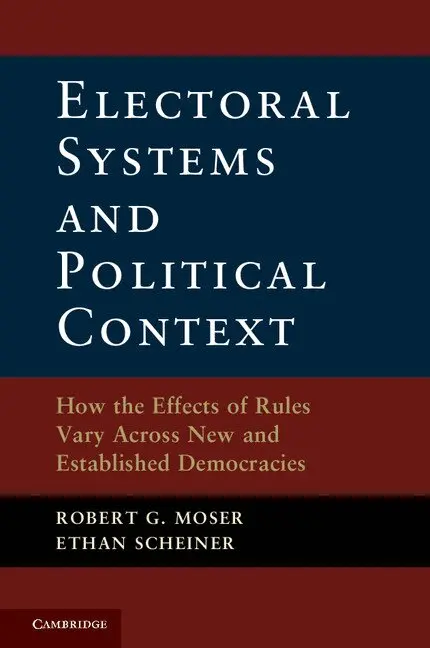
Electoral Systems and Political Context illustrates how political and social context conditions the effects of electoral rules. The book examines electoral behavior and outcomes in countries that use 'mixed-member' electoral systems - where voters cast one ballot for a party list under proportional representation (PR) and one for a candidate in a single member district (SMD). Based on comparisons of outcomes under the two different rules used in mixed-member systems, the book highlights how electoral systems' effects - especially strategic voting, the number of parties and women's representation - tend to be different in new democracies from what one usually sees in established democracies. Moreover, electoral systems such as SMDs are usually presumed to constrain the number of parties irrespective of the level of social diversity, but this book demonstrates that social diversity frequently shapes party fragmentation even under such restrictive rules.
Electoral Systems and Political Context
How the Effects of Rules Vary Across New and Established Democracies
Häftad, Engelska, 2012
385 kr
Skickas inom 7-10 vardagar
Electoral Systems and Political Context illustrates how political and social context conditions the effects of electoral rules. The book examines electoral behavior and outcomes in countries that use 'mixed-member' electoral systems - where voters cast one ballot for a party list under proportional representation (PR) and one for a candidate in a single member district (SMD). Based on comparisons of outcomes under the two different rules used in mixed-member systems, the book highlights how electoral systems' effects - especially strategic voting, the number of parties and women's representation - tend to be different in new democracies from what one usually sees in established democracies. Moreover, electoral systems such as SMDs are usually presumed to constrain the number of parties irrespective of the level of social diversity, but this book demonstrates that social diversity frequently shapes party fragmentation even under such restrictive rules.