Robert Goulding - Böcker
Visar alla böcker från författaren Robert Goulding. Handla med fri frakt och snabb leverans.
4 produkter
4 produkter
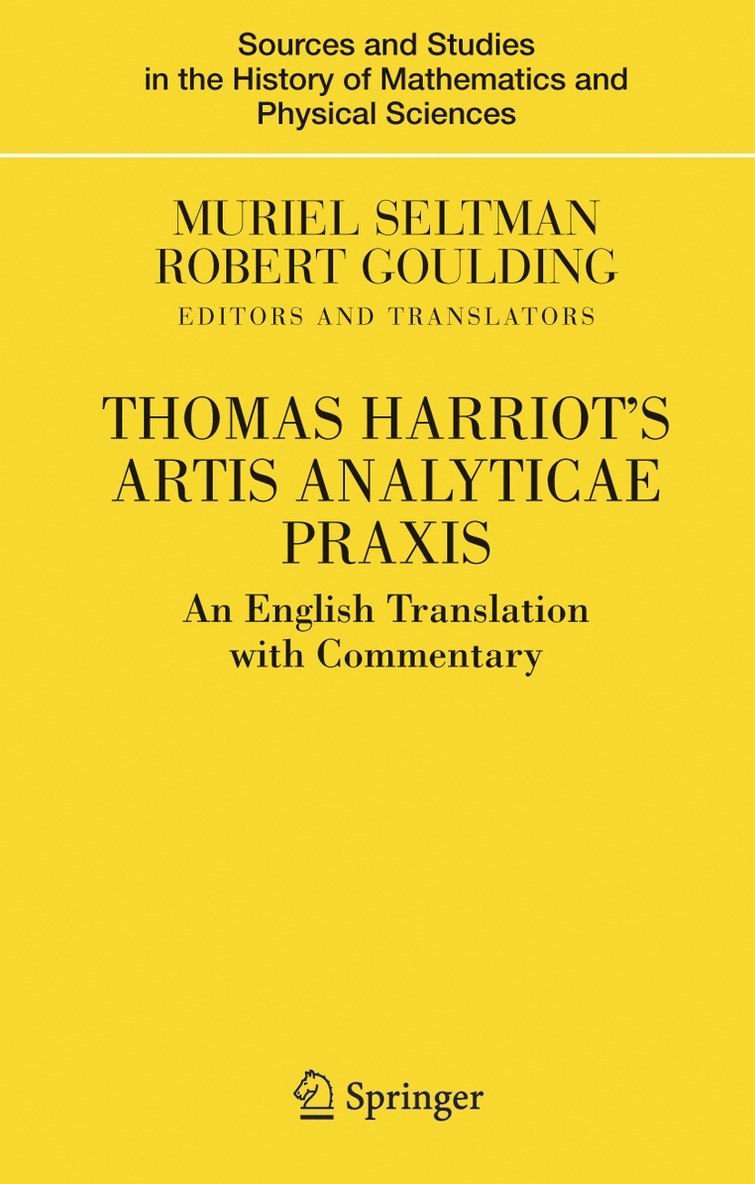
Thomas Harriot's Artis Analyticae Praxis
An English Translation with Commentary
Inbunden, Engelska, 2007
1 062 kr
Skickas inom 10-15 vardagar
The Artis analyticae praxis was published in 1631 in Latin. Until relatively - cently, an English edition would not have been considered necessary since most of the people who might have been expected to be interested in the text would have been able to read it in Latin. That is no longer the case and it is ?tting that an English edition should be published. It is also the case that a considerable proportion of the readership of the present volume will not be professional mathematicians, so we have tried to produce a translation that makes the mathematical content accessible to the modern reader. This is not because the algebra is intrinsically dif?cult but because it is not the kind of mathematics which is a part of today’s secondary school curriculum. A further problem lies in the fact that the book in the form in which it was - blished in 1631 may very well not conform to Harriot’s intentions for the publi- tion of his mathematical manuscript papers. This is why the book is accompanied by a Commentary which attempts to compare it with the appropriate passages in the surviving manuscript papers. The present work is a translation of the original text and not intended as a facsimile. The original has well over 300 errors (there may very well be more) and we have listed these at the end. In the interests of mathematical accessibility we have tried to produce a mathematically “clean” copy.
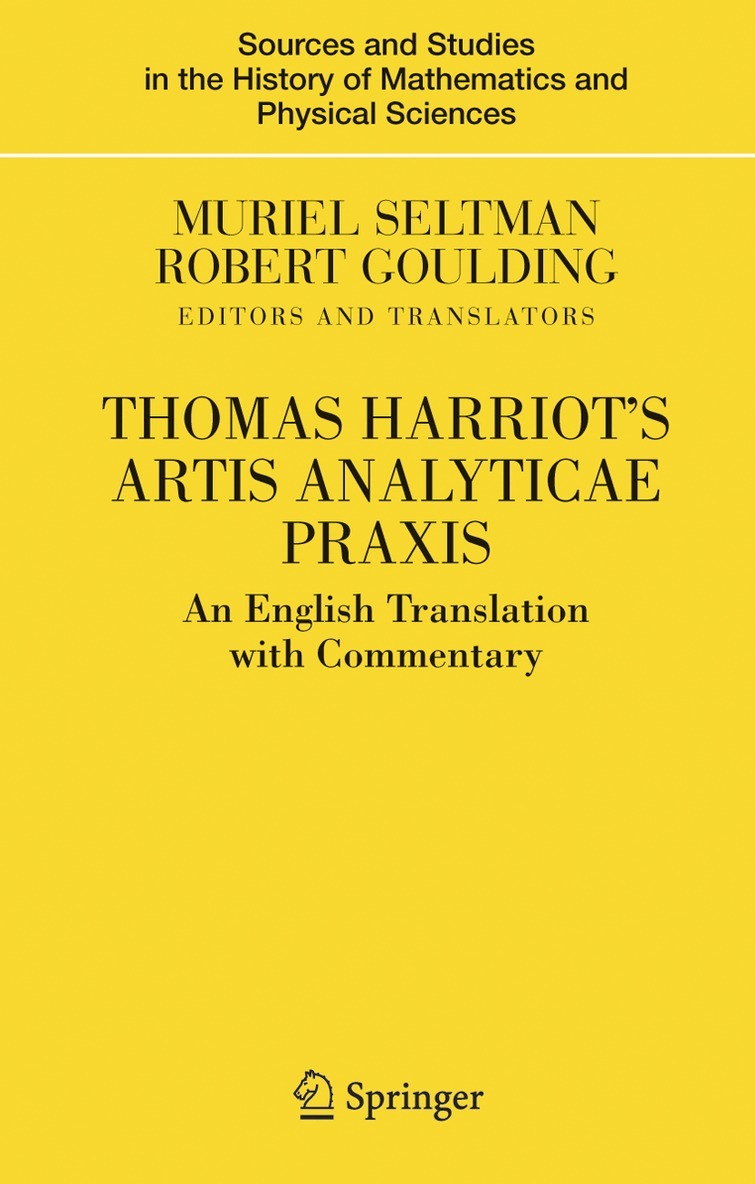
Thomas Harriot's Artis Analyticae Praxis
An English Translation with Commentary
Häftad, Engelska, 2014
1 062 kr
Skickas inom 10-15 vardagar
The Artis analyticae praxis was published in 1631 in Latin. Until relatively - cently, an English edition would not have been considered necessary since most of the people who might have been expected to be interested in the text would have been able to read it in Latin. That is no longer the case and it is ?tting that an English edition should be published. It is also the case that a considerable proportion of the readership of the present volume will not be professional mathematicians, so we have tried to produce a translation that makes the mathematical content accessible to the modern reader. This is not because the algebra is intrinsically dif?cult but because it is not the kind of mathematics which is a part of today’s secondary school curriculum. A further problem lies in the fact that the book in the form in which it was - blished in 1631 may very well not conform to Harriot’s intentions for the publi- tion of his mathematical manuscript papers. This is why the book is accompanied by a Commentary which attempts to compare it with the appropriate passages in the surviving manuscript papers. The present work is a translation of the original text and not intended as a facsimile. The original has well over 300 errors (there may very well be more) and we have listed these at the end. In the interests of mathematical accessibility we have tried to produce a mathematically “clean” copy.
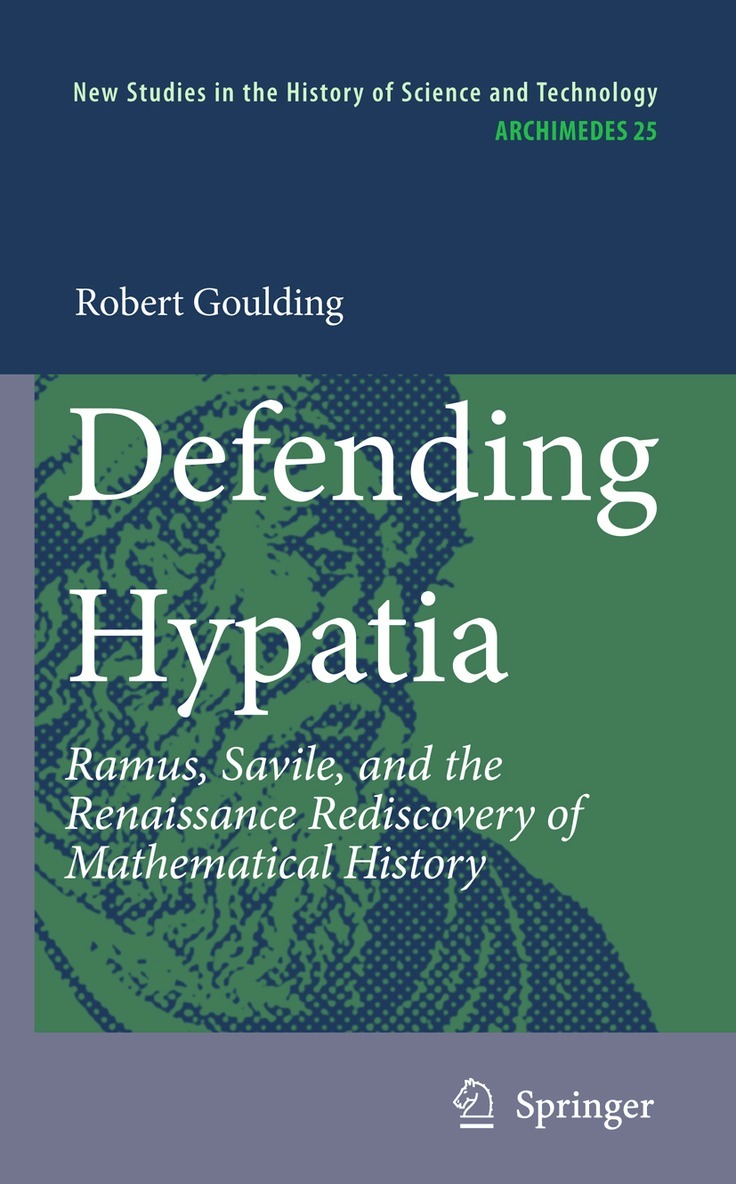
Defending Hypatia
Ramus, Savile, and the Renaissance Rediscovery of Mathematical History
Inbunden, Engelska, 2010
1 378 kr
Skickas inom 10-15 vardagar
In1713,PierreRem ' onddeMontmortwrotetothemathematicianNicolasBernoulli: It would bedesirable if someone wanted totake thetrouble toinstruct how and inwhat order the discoveries in mathematics have come about ...The histories of painting, of music, of medicine have been written. A good history of mathematics, especially of geometry, would bea much more interesting and useful work ...Such a work, ifdone well,could be regarded to some extent as a history of the human mind, since it is in this science, more than in anything else, that man makes known that gift of intelligence that God has given him to rise 1 above all other creatures. Ahalf-centurylater,Jean-EtienneMontuclaprovidedsuchanaccountinhisHistoire des mathem ' atiques ( rst printed in 1758, and reissued in a greatly expanded form 2 in 1799). Montucla's great work is generally acknowledged as the rst genuine history of mathematics. According to modern historians, previous attempts at such a history had amounted to little more than collections of anecdotes, biographies or exhaustive bibliographies: "jumbles of names, dates and titles," as one writer in the 3 Dictionary of Scienti c Biography characterizes them.Montucla, in contrast, was thoroughly animated by the Enlightenment project expressed in de Montmort's l- ter. In his Histoire he set out to provide a philosophicalhistory of the "development 4 of the human mind," as he himself described it.
Defending Hypatia
Ramus, Savile, and the Renaissance Rediscovery of Mathematical History
Häftad, Engelska, 2012
1 510 kr
Skickas inom 10-15 vardagar
In1713,PierreRem ' onddeMontmortwrotetothemathematicianNicolasBernoulli: It would bedesirable if someone wanted totake thetrouble toinstruct how and inwhat order the discoveries in mathematics have come about ...The histories of painting, of music, of medicine have been written. A good history of mathematics, especially of geometry, would bea much more interesting and useful work ...Such a work, ifdone well,could be regarded to some extent as a history of the human mind, since it is in this science, more than in anything else, that man makes known that gift of intelligence that God has given him to rise 1 above all other creatures. Ahalf-centurylater,Jean-EtienneMontuclaprovidedsuchanaccountinhisHistoire des mathem ' atiques ( rst printed in 1758, and reissued in a greatly expanded form 2 in 1799). Montucla's great work is generally acknowledged as the rst genuine history of mathematics. According to modern historians, previous attempts at such a history had amounted to little more than collections of anecdotes, biographies or exhaustive bibliographies: "jumbles of names, dates and titles," as one writer in the 3 Dictionary of Scienti c Biography characterizes them.Montucla, in contrast, was thoroughly animated by the Enlightenment project expressed in de Montmort's l- ter. In his Histoire he set out to provide a philosophicalhistory of the "development 4 of the human mind," as he himself described it.