Robert Guskind – författare
Visar alla böcker från författaren . Handla med fri frakt och snabb leverans.
9 produkter
9 produkter
Häftad, Engelska
260 kr
Skickas inom 3-6 vardagar
Inbunden, Engelska, 2017
2 365 kr
Skickas inom 10-15 vardagar
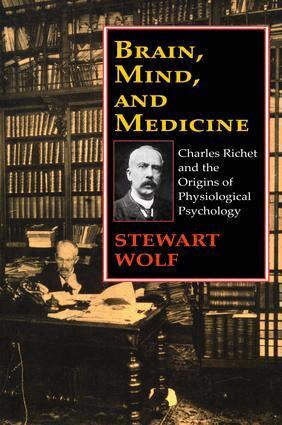
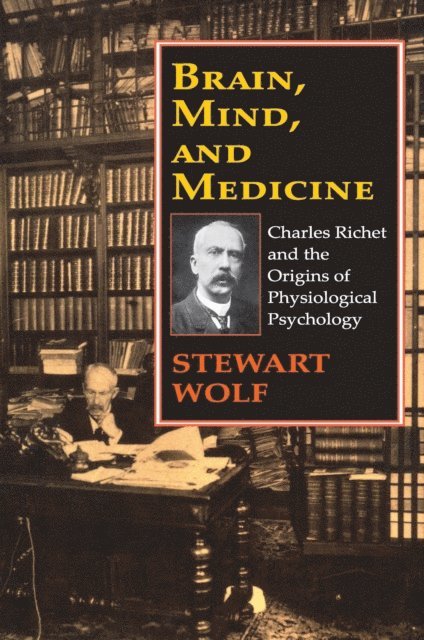
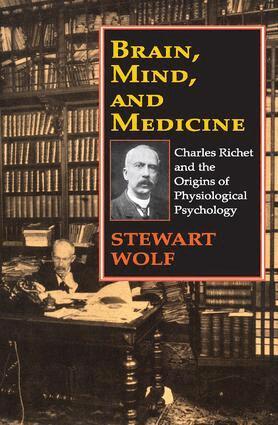
Charles Richet was one of the most remarkable figures in the history of medical science. He is best known for his work on the body's immune reactions to foreign substances for which he won the Nobel Prize in medicine in 1913. Richet was also a poet, playwright, historian, bibliographer, political activist, classical scholar, and pioneer in aircraft design.Brain, Mind, and Medicine is the first major biography of Richet in any language. Wolf brilliantly situates Richet's work in the intellectual currents of Europe during the latter half of the nineteenth and early twentieth century. Richet was a contemporary of Wilhelm Wundt and William James. All three considered psychology to be an aspect of physiology governed by biological laws. But while James and Wundt considered consciousness as a process influenced by experience without much reference to neural structures, Richet's focus was on the brain itself as shaped by genetics and experience and serving as the organ of the mind.Brain, Mind, and Medicine illuminates a significant chapter in scientific and cultural history. It should be read by medical scientists, historians, and individuals interested in medicine and psychology.
Inbunden, Engelska, 2018
2 193 kr
Skickas inom 10-15 vardagar
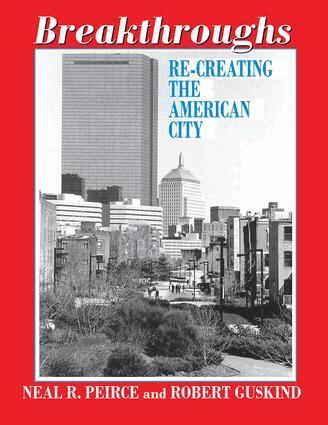
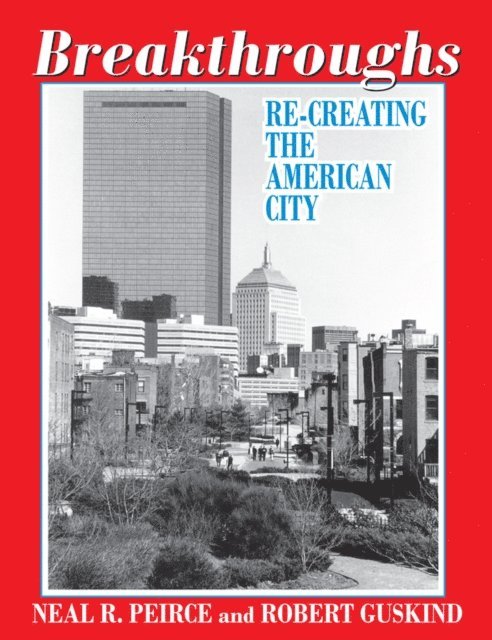
Large or small, America's cities have had a difficult time generating admiration, respect, or understanding. They have served the nation as sources of commerce, finance, and the arts. They have taken millions of new Americans from their point of entry and helped newcomers elevate themselves economically into the American mainstream. In recent years, the greatest of cities have become command centers of a new global economy. However, the headlines from urban America proclaim riot, decline, and despair.This book is different, it is about solutions: the breakthroughs - the indicators that can serve as models for neighborhoods, communities, and cities in the twenty-first century. In vivid, colorful, and provocative prose, authors Neal R. Peirce and Robert Guskind describe six innovative experiments in urban revitalization: the winners of the Rudy Bruner Award for Excellence in the Urban Environment. The Bruner Award recognizes and rewards innovative projects that blend empowerment, diversity, and equity with effective design, social responsibility, and economic viability.Peirce and Guskind describe the premises underlying each project, the barriers that were overcome, and the results that were achieved. They also provide the vital lessons of what made these efforts work, and lessons that stand as requirements for successful projects elsewhere: openness to innovation; decentralized decision-making; broad-based participation; empowerment of locally driven solutions. This is essential reading for students, policy-makers, planners, and all those seeking a glimpse of a future in which we can take pride in being Americans.
E-bok
Engelska, 2017795 kr
Läs direkt efter köp
Large or small, America''s cities have had a difficult time generating admiration, respect, or understanding. They have served the nation as sources of commerce, finance, and the arts. They have taken millions of new Americans from their point of entry and helped newcomers elevate themselves economically into the American mainstream. In recent years, the greatest of cities have become command centers of a new global economy. However, the headlines from urban America proclaim riot, decline, and despair.This book is different, it is about solutions: the breakthroughs - the indicators that can serve as models for neighborhoods, communities, and cities in the twenty-first century. In vivid, colorful, and provocative prose, authors Neal R. Peirce and Robert Guskind describe six innovative experiments in urban revitalization: the winners of the Rudy Bruner Award for Excellence in the Urban Environment. The Bruner Award recognizes and rewards innovative projects that blend empowerment, diversity, and equity with effective design, social responsibility, and economic viability.Peirce and Guskind describe the premises underlying each project, the barriers that were overcome, and the results that were achieved. They also provide the vital lessons of what made these efforts work, and lessons that stand as requirements for successful projects elsewhere: openness to innovation; decentralized decision-making; broad-based participation; empowerment of locally driven solutions. This is essential reading for students, policy-makers, planners, and all those seeking a glimpse of a future in which we can take pride in being Americans.
E-bok
PDF, Engelska, 2017824 kr
Läs direkt efter köp
Large or small, America''s cities have had a difficult time generating admiration, respect, or understanding. They have served the nation as sources of commerce, finance, and the arts. They have taken millions of new Americans from their point of entry and helped newcomers elevate themselves economically into the American mainstream. In recent years, the greatest of cities have become command centers of a new global economy. However, the headlines from urban America proclaim riot, decline, and despair.This book is different, it is about solutions: the breakthroughs - the indicators that can serve as models for neighborhoods, communities, and cities in the twenty-first century. In vivid, colorful, and provocative prose, authors Neal R. Peirce and Robert Guskind describe six innovative experiments in urban revitalization: the winners of the Rudy Bruner Award for Excellence in the Urban Environment. The Bruner Award recognizes and rewards innovative projects that blend empowerment, diversity, and equity with effective design, social responsibility, and economic viability.Peirce and Guskind describe the premises underlying each project, the barriers that were overcome, and the results that were achieved. They also provide the vital lessons of what made these efforts work, and lessons that stand as requirements for successful projects elsewhere: openness to innovation; decentralized decision-making; broad-based participation; empowerment of locally driven solutions. This is essential reading for students, policy-makers, planners, and all those seeking a glimpse of a future in which we can take pride in being Americans.
E-bok
Engelska, 2017833 kr
Läs direkt efter köp
Charles Richet was one of the most remarkable figures in the history of medical science. He is best known for his work on the body''s immune reactions to foreign substances for which he won the Nobel Prize in medicine in 1913. Richet was also a poet, playwright, historian, bibliographer, political activist, classical scholar, and pioneer in aircraft design.Brain, Mind, and Medicine is the first major biography of Richet in any language. Wolf brilliantly situates Richet''s work in the intellectual currents of Europe during the latter half of the nineteenth and early twentieth century. Richet was a contemporary of Wilhelm Wundt and William James. All three considered psychology to be an aspect of physiology governed by biological laws. But while James and Wundt considered consciousness as a process influenced by experience without much reference to neural structures, Richet''s focus was on the brain itself as shaped by genetics and experience and serving as the organ of the mind.Brain, Mind, and Medicine illuminates a significant chapter in scientific and cultural history. It should be read by medical scientists, historians, and individuals interested in medicine and psychology.
E-bok
PDF, Engelska, 2017833 kr
Läs direkt efter köp
Charles Richet was one of the most remarkable figures in the history of medical science. He is best known for his work on the body''s immune reactions to foreign substances for which he won the Nobel Prize in medicine in 1913. Richet was also a poet, playwright, historian, bibliographer, political activist, classical scholar, and pioneer in aircraft design.Brain, Mind, and Medicine is the first major biography of Richet in any language. Wolf brilliantly situates Richet''s work in the intellectual currents of Europe during the latter half of the nineteenth and early twentieth century. Richet was a contemporary of Wilhelm Wundt and William James. All three considered psychology to be an aspect of physiology governed by biological laws. But while James and Wundt considered consciousness as a process influenced by experience without much reference to neural structures, Richet''s focus was on the brain itself as shaped by genetics and experience and serving as the organ of the mind.Brain, Mind, and Medicine illuminates a significant chapter in scientific and cultural history. It should be read by medical scientists, historians, and individuals interested in medicine and psychology.
Häftad, Engelska, 2012
725 kr
Skickas inom 10-15 vardagar
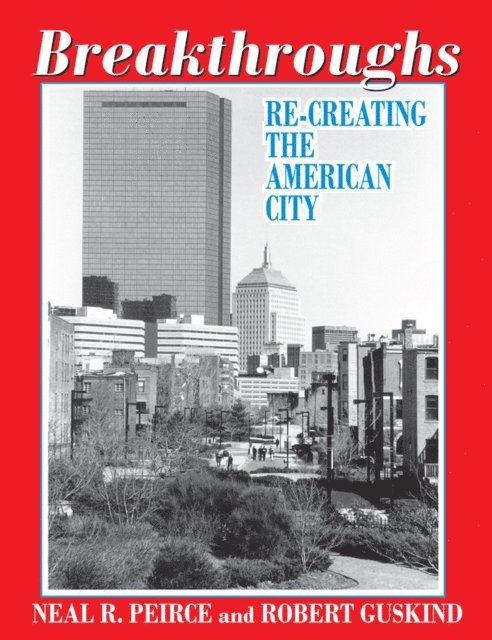
Large or small, America's cities have had a difficult time generating admiration, respect, or understanding. They have served the nation as sources of commerce, finance, and the arts. They have taken millions of new Americans from their point of entry and helped newcomers elevate themselves economically into the American mainstream. In recent years, the greatest of cities have become command centers of a new global economy. However, the headlines from urban America proclaim riot, decline, and despair.This book is different, it is about solutions: the breakthroughs - the indicators that can serve as models for neighborhoods, communities, and cities in the twenty-first century. In vivid, colorful, and provocative prose, authors Neal R. Peirce and Robert Guskind describe six innovative experiments in urban revitalization: the winners of the Rudy Bruner Award for Excellence in the Urban Environment. The Bruner Award recognizes and rewards innovative projects that blend empowerment, diversity, and equity with effective design, social responsibility, and economic viability.Peirce and Guskind describe the premises underlying each project, the barriers that were overcome, and the results that were achieved. They also provide the vital lessons of what made these efforts work, and lessons that stand as requirements for successful projects elsewhere: openness to innovation; decentralized decision-making; broad-based participation; empowerment of locally driven solutions. This is essential reading for students, policy-makers, planners, and all those seeking a glimpse of a future in which we can take pride in being Americans.
Häftad, Engelska, 2012
747 kr
Skickas inom 10-15 vardagar
Charles Richet was one of the most remarkable figures in the history of medical science. He is best known for his work on the body's immune reactions to foreign substances for which he won the Nobel Prize in medicine in 1913. Richet was also a poet, playwright, historian, bibliographer, political activist, classical scholar, and pioneer in aircraft design.Brain, Mind, and Medicine is the first major biography of Richet in any language. Wolf brilliantly situates Richet's work in the intellectual currents of Europe during the latter half of the nineteenth and early twentieth century. Richet was a contemporary of Wilhelm Wundt and William James. All three considered psychology to be an aspect of physiology governed by biological laws. But while James and Wundt considered consciousness as a process influenced by experience without much reference to neural structures, Richet's focus was on the brain itself as shaped by genetics and experience and serving as the organ of the mind.Brain, Mind, and Medicine illuminates a significant chapter in scientific and cultural history. It should be read by medical scientists, historians, and individuals interested in medicine and psychology.