Robert H. Rubin – författare
Visar alla böcker från författaren Robert H. Rubin. Handla med fri frakt och snabb leverans.
6 produkter
6 produkter
E-bok
Engelska, 20102 123 kr
Läs direkt efter köp
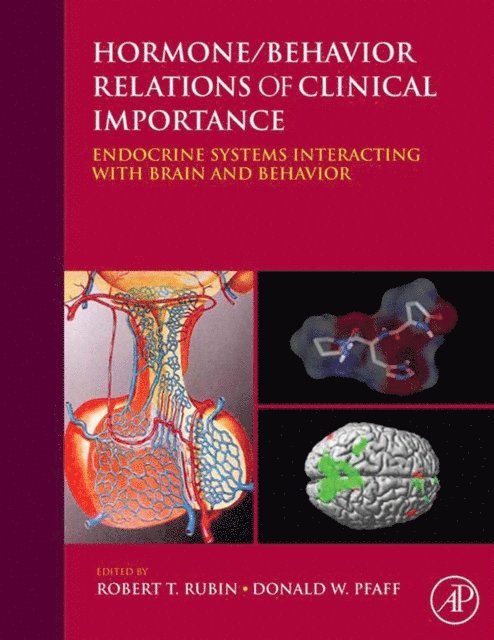
A single volume of 41 articles, Hormone/Behavior Relations of Clinical Importance is an authoritative selection of relevant chapters from the Hormones Brain and Behavior 2e MRW, the most comprehensive source of neuroendocrinological information assembled to date (AP July 2009). The study of hormones as they impact the brain and, subsequently, behavior is a central topic in neuroscience, endocrinology and psychiatry. This volume offers an overview of neuroendocrinological topics, approaching the subject from the perspective of hormone-brain function, hormone-behavior relations, sex differences, and the impact on various diseases/pathologies. Many basic human behavioral functions are subject to the influence of hormones - sexual orientation, the experience of pain, fertility, immunity - as are clinical conditions such as diabetes, substance abuse disorder, eating disorders, PTSD, TBI, pain, Alzheimer''s, stress/anxiety, affective disorders, and more. There is considerable commercial clinical potential in the study of hormones - drug companies are currently developing a Cholecystokinin (hormonal peptide) booster to reduce appetite in those who suffer from sever obesity, and catamenial epilepsy (features seizure exacerbation in relation to the menstrual cycle) is resistant to treatment by standard antiepileptic medications, but may be hormonally controlled. These issues and more are covered, and there is simply no other current single-volume reference with such comprehensive coverage and depth.Authors selected are the internationally renowned experts for the particular topics on which they write, and the volume is richly illustrated with over 150 figures (50 in color). A collection of articles reviewing our fundamental knowledge of neuroendocrinology, the book provides an essential, affordable reference for researchers, clinicians and graduate students in the area.- Offering outstanding scholarship, each chapter is written by an expert in the topic area and approximately 25% of chapters are written by international contributors (7 countries represented)- Provides more fully vetted expert knowledge than any existing work with broad appeal for the US, UK and Europe, accurately crediting the contributions to research in those regions- Heavily illustrated with 150 figures, approximately 50 in color, presenting the material in the most visually useful form for the reader- Fully explores various clinical conditions associated with the hormones and the brain (PTSD, TBI, Stress & Anxiety, eating disorders, diabetes, addictive disorders, Alzheimer''s, affective disorders)- Broad coverage of disorders makes the volume relevant to clinicians as well as researchers and basic scientists
Inbunden, Engelska, 2009
2 063 kr
Skickas inom 10-15 vardagar
A single volume of 41 articles, Hormone/Behavior Relations of Clinical Importance is an authoritative selection of relevant chapters from the Hormones Brain and Behavior 2e MRW, the most comprehensive source of neuroendocrinological information assembled to date (AP July 2009). The study of hormones as they impact the brain and, subsequently, behavior is a central topic in neuroscience, endocrinology and psychiatry. This volume offers an overview of neuroendocrinological topics, approaching the subject from the perspective of hormone-brain function, hormone-behavior relations, sex differences, and the impact on various diseases/pathologies. Many basic human behavioral functions are subject to the influence of hormones - sexual orientation, the experience of pain, fertility, immunity - as are clinical conditions such as diabetes, substance abuse disorder, eating disorders, PTSD, TBI, pain, Alzheimer's, stress/anxiety, affective disorders, and more. There is considerable commercial clinical potential in the study of hormones - drug companies are currently developing a Cholecystokinin (hormonal peptide) booster to reduce appetite in those who suffer from sever obesity, and catamenial epilepsy (features seizure exacerbation in relation to the menstrual cycle) is resistant to treatment by standard antiepileptic medications, but may be hormonally controlled. These issues and more are covered, and there is simply no other current single-volume reference with such comprehensive coverage and depth.Authors selected are the internationally renowned experts for the particular topics on which they write, and the volume is richly illustrated with over 150 figures (50 in color). A collection of articles reviewing our fundamental knowledge of neuroendocrinology, the book provides an essential, affordable reference for researchers, clinicians and graduate students in the area. Offering outstanding scholarship, each chapter is written by an expert in the topic area and approximately 25% of chapters are written by international contributors (7 countries represented) Provides more fully vetted expert knowledge than any existing work with broad appeal for the US, UK and Europe, accurately crediting the contributions to research in those regions Heavily illustrated with 150 figures, approximately 50 in color, presenting the material in the most visually useful form for the reader Fully explores various clinical conditions associated with the hormones and the brain (PTSD, TBI, Stress & Anxiety, eating disorders, diabetes, addictive disorders, Alzheimer's, affective disorders) Broad coverage of disorders makes the volume relevant to clinicians as well as researchers and basic scientists
E-bok
PDF, Engelska, 20071 132 kr
Läs direkt efter köp
At the beginning of the new millennium, it is opportune to raveling of the molecular pathways of impaired host - review what has been accomplished in the field of infec- fense mechanisms and the characterization of the genetic tious diseases during the last decades of the previous mutations involved, with the prospect of novel strategies century. The paradigm of the immunocompromised host for therapeutic interventions and possible corrective gene has taught much about the pathophysiology of infectious therapy. In this foreword, I will take a helicopter view of diseases, particularly with regard to immunological as- the various aspects of host defense mechanisms with pects of host defense. In the beginning, Robert Good special emphasis on genetic factors, because of their re- called immunodeficiency syndromes “experiments of na- vance for the course and outcome of infections. ture. ” In the 1960s and subsequent decades, the clinical During life, there exist phases of age-related c- and immunological aspects of immune deficiencies were promised immune functions. After birth there is a phys- studied and adequate treatment attempted. A reflection of logical immune deficiency because the production of an- these developments were the three successful meetings on bodies commences slowly upon contact of the neonate these topics in Veldhoven, The Netherlands (1980), Stir- with microorganisms and upon vaccination.
E-bok
PDF, Engelska, 20131 132 kr
Läs direkt efter köp
`With admirable clarity the authors-all highly regarded experts in their respective fields-present the clinician with a supremely readable and practical text. The emphasis here is pragmatic, although there is sufficient pathogenesis and physiology to provide a fine balance.''-Journal of the American Medical Association, from a review of the second edition. This updated and profusely illustrated edition is 75% larger than its first incarnation. New coverage includes transplantation medicine, AIDS, patient management, and host-parasite interactions.
E-bok
PDF, Engelska, 20121 132 kr
Läs direkt efter köp
"Infection in the Compromised Host" has become a classic chapter in textbooks devoted to infectious diseases and internal medicine. The numbers of compromised hosts are increasing in the era of modem medicine because of our expanded capabilities to deal with difficult diseases, especially neoplasms. As a consequence, microbiologic complications related to the intensive care administered to these patients are increasing as well. Under these circum stances, not only does the underlying illness create conditions favorable for the development of unusual infections, but often the therapy contributes to the acquisition of potential pathogens that tum into agents responsible for severe and frequently fatal disease. Granulocytopenia and immunosuppression have been the two key factors in predisposing patients with cancer and other serious diseases to severe bacterial infections. Colonization by hospital-acquired pathogens and breaks in the anatomic barriers-as a result of disease or medical intervention-have contributed to the high incidence of infectious diseases in these patients. Although there is some overlap between the types of infection in granulocytopenic and immunosuppressed hosts, each of these clinical entities has distinctive features thatjustify considering them separately, reserving the term immunocompromised hosts only when refer ring to patients who are predisposed to opportunistic infections. For about two decades, infections in granulocytopenic patients have attracted the atten tion of clinicians because they represent a model for the study of antimicrobial drugs in hosts deprived of an essential element of defense against bacterial infection, that is, an adequate number of normally functioning granulocytes.
Inbunden, Engelska
1 420 kr
Tillfälligt slut