Robert Heinsohn – författare
Visar alla böcker från författaren Robert Heinsohn. Handla med fri frakt och snabb leverans.
4 produkter
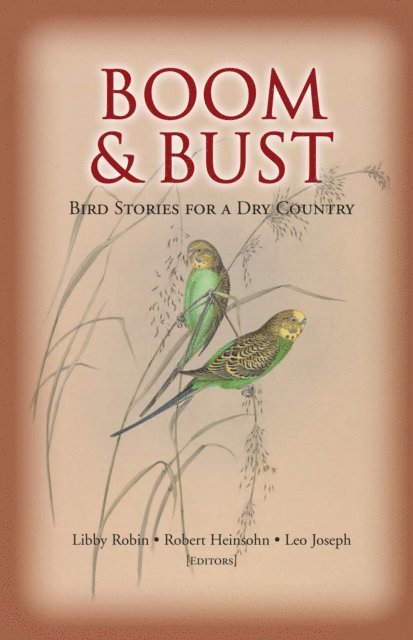
Boom and Bust
Bird Stories for a Dry Country
Av Leo Joseph, Robert Heinsohn m. fl.
E-bok, 2009
367 kr
Lägg i varukorg
In Boom and Bust, the authors draw on the natural history of Australia''s charismatic birds to explore the relations between fauna, people and environment in a continent where variability is ''normal'' and rainfall patterns not always seasonal. They consider changing ideas about deserts and how …
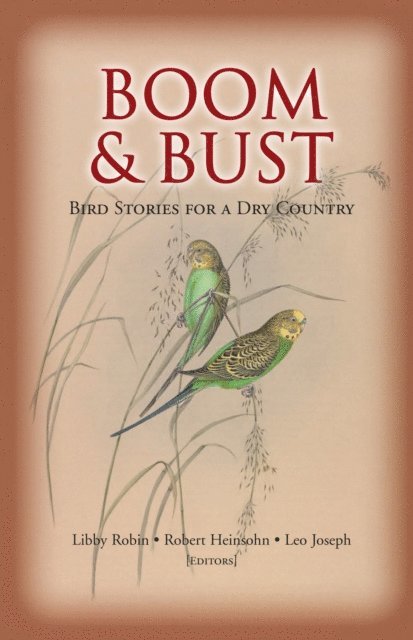
Boom and Bust
Bird Stories for a Dry Country
Av Leo Joseph, Robert Heinsohn m. fl.
E-bok, 2009
367 kr
Lägg i varukorg
In Boom and Bust , the authors draw on the natural history of Australia''s charismatic birds to explore the relations between fauna, people and environment in a continent where variability is ''normal'' and rainfall patterns not always seasonal. They consider changing ideas about deserts and how …
Life in the Cape York Rainforest
Av Michael Cermak, Robert Heinsohn
E-bok, 2008
269 kr
Lägg i varukorg
The remote, beautiful and poorly known rainforests of Cape York Peninsula tell a special story about Australia’s historic and present-day connections to New Guinea. Life in the Cape York Rainforest highlights these connections by examining the fascinating biology of some of the most spectacular …
Life in the Cape York Rainforest
Av Michael Cermak, Robert Heinsohn
E-bok, 2008
275 kr
Lägg i varukorg
The remote, beautiful and poorly known rainforests of Cape York Peninsula tell a special story about Australia’s historic and present-day connections to New Guinea. Life in the Cape York Rainforest highlights these connections by examining the fascinating biology of some of the most spectacular …