Robert J. Blake – författare
Visar alla böcker från författaren Robert J. Blake. Handla med fri frakt och snabb leverans.
11 produkter
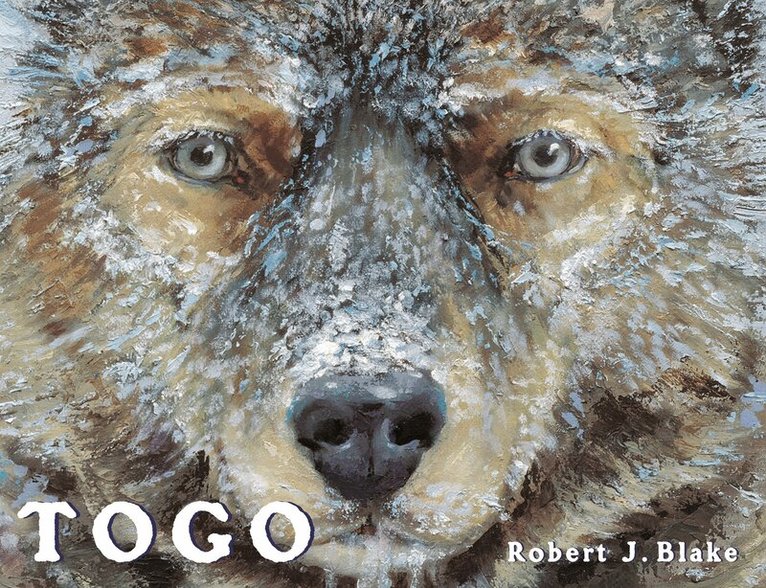
Togo
Häftad, 2025
157 kr
Lägg i varukorg
Based on the true story of the heroic dogs who saved countless lives in Alaska in 1925, this classic tale is a thrilling adventure and a history lesson all in one. Togo wasn't meant to be a sled dog. He was too feisty and independent to make a good team member, let alone a leader. But Togo is …
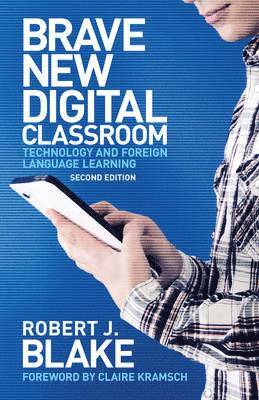
Brave New Digital Classroom: Technology and Foreign Language Learning, Second Edition
Häftad, 2013
556 kr
Lägg i varukorg
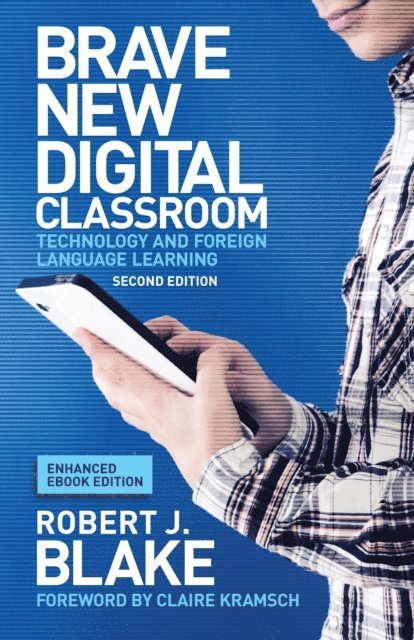
Brave New Digital Classroom, Enhanced Ebook Edition
Technology and Foreign Language Learning, Second Edition
E-bok, 2013
411 kr
Lägg i varukorg
Brave New Digital Classroom examines the most effective ways to utilize technology in language learning. The author deftly interweaves the latest results of pedagogical research with descriptions of the most successful computer-assisted language learning (CALL) projects to show how to implement …
español y la lingüística aplicada
Av Robert J. Blake, Eve C. Zyzik
Inbunden, 2016
2189 kr
Lägg i varukorg
Informed by the latest research in the fields of second language acquisition and applied linguistics, El espanol y la linguistica aplicada responds to the central questions that lie at the heart of learning Spanish as a second or foreign language. What does it mean to know a language? Can …
español y la lingüística aplicada
Av Robert J. Blake, Eve C. Zyzik
Häftad, 2016
628 kr
Lägg i varukorg
Informed by the latest research in the fields of second language acquisition and applied linguistics, El espanol y la linguistica aplicada responds to the central questions that lie at the heart of learning Spanish as a second or foreign language. What does it mean to know a language? Can …
Brave New Digital Classroom
Technology and Foreign Language Learning, Third Edition
Av Robert J. Blake, Gabriel Guillén
Inbunden, 2020
1425 kr
Lägg i varukorg
Robert Blake, now with Gabriel Guillén, updates his successful book (1st ed. 2008, 2nd ed. 2013) on how to teach foreign languages using technology. Brave New Digital Classroom touches on all of the key concepts and challenges of teaching with technology, focusing on issues specific to FLL or L2 …
Brave New Digital Classroom
Technology and Foreign Language Learning, Third Edition
Av Robert J. Blake, Gabriel Guillén
Häftad, 2020
390 kr
Lägg i varukorg
Robert Blake, now with Gabriel Guillén, updates his successful book (1st ed. 2008, 2nd ed. 2013) on how to teach foreign languages using technology. Brave New Digital Classroom touches on all of the key concepts and challenges of teaching with technology, focusing on issues specific to FLL or L2 …
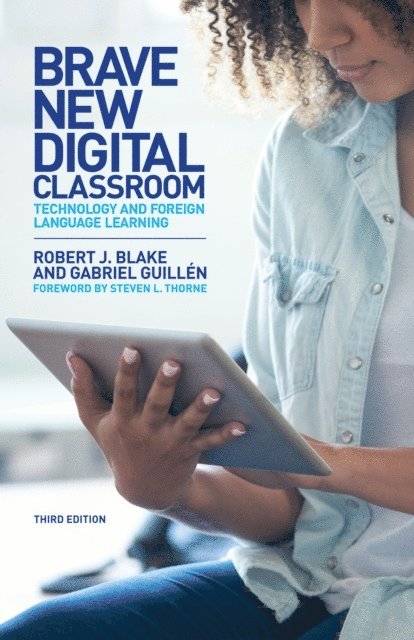
Brave New Digital Classroom
Technology and Foreign Language Learning, Third Edition
Av Gabriel Guillen, Robert J. Blake
E-bok, 2020
470 kr
Lägg i varukorg
Robert Blake, now with Gabriel Guillén, updates his successful book (1st ed. 2008, 2nd ed. 2013) on how to teach foreign languages using technology. Brave New Digital Classroom touches on all of the key concepts and challenges of teaching with technology, focusing on issues specific to FLL or L2 …