Robert Jan Van Pelt - Böcker
Visar alla böcker från författaren Robert Jan Van Pelt. Handla med fri frakt och snabb leverans.
13 produkter
13 produkter
633 kr
Skickas inom 7-10 vardagar
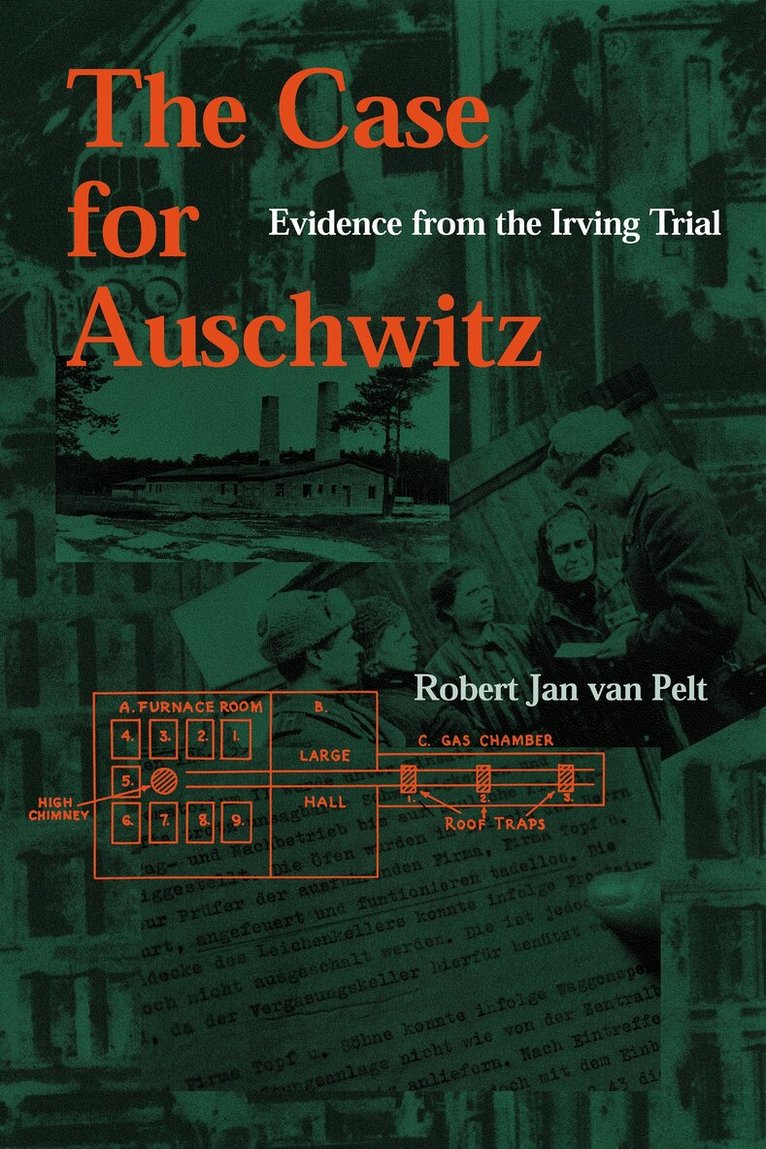
From January to April 2000 historian David Irving brought a high-profile libel case against Penguin Books and Deborah Lipstadt in the British High Court, charging that Lipstadt's book, Denying the Holocaust (1993), falsely labeled him a Holocaust denier. The question about the evidence for Auschwitz as a death camp played a central role in these proceedings. Irving had based his alleged denial of the Holocaust in part on a 1988 report by an American execution specialist, Fred Leuchter, which claimed that there was no evidence for homicidal gas chambers in Auschwitz. In connection with their defense, Penguin and Lipstadt engaged architectural historian Robert Jan van Pelt to present evidence for our knowledge that Auschwitz had been an extermination camp where up to one million Jews were killed, mainly in gas chambers. Employing painstaking historical scholarship, van Pelt prepared and submitted an exhaustive forensic report that he successfully defended in cross-examination in court.
1 001 kr
Skickas inom 10-15 vardagar
From January to April 2000 historian David Irving brought a high-profile libel case against Penguin Books and Deborah Lipstadt in the British High Court, charging that Lipstadt's book, Denying the Holocaust (1993), falsely labeled him a Holocaust denier. The question about the evidence for Auschwitz as a death camp played a central role in these proceedings. Irving had based his alleged denial of the Holocaust in part on a 1988 report by an American execution specialist, Fred Leuchter, which claimed that there was no evidence for homicidal gas chambers in Auschwitz. In connection with their defense, Penguin and Lipstadt engaged architectural historian Robert Jan van Pelt to present evidence for our knowledge that Auschwitz had been an extermination camp where up to one million Jews were killed, mainly in gas chambers. Employing painstaking historical scholarship, van Pelt prepared and submitted an exhaustive forensic report that he successfully defended in cross-examination in court.
262 kr
Skickas inom 7-10 vardagar
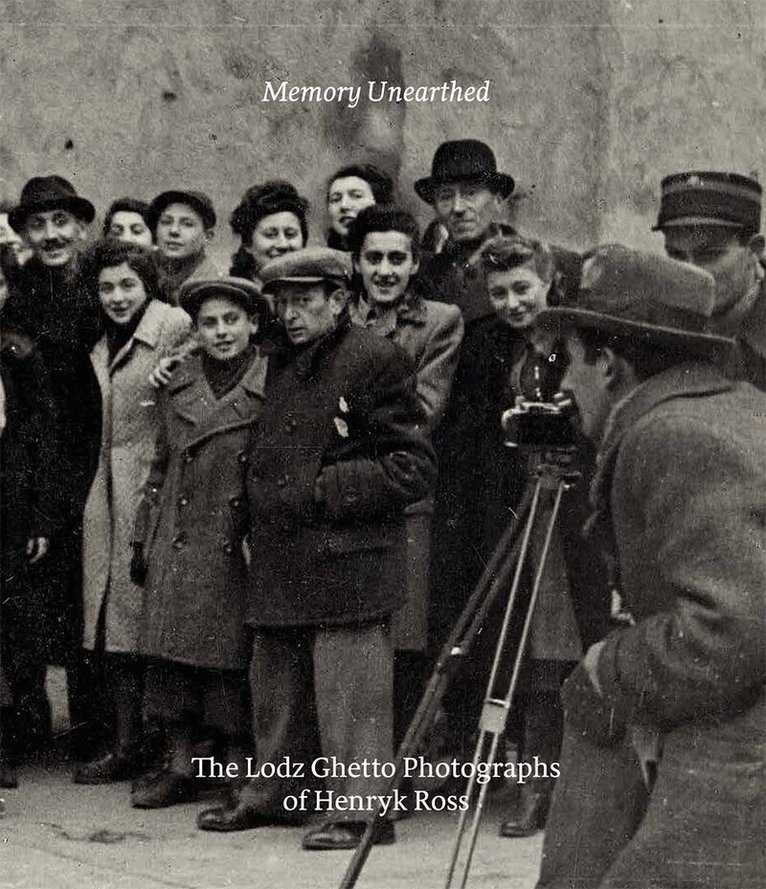
Emotionally resonant photographs of everyday life in the Jewish Lódz Ghetto taken during WWIIFrom 1941 to 1944, the Polish Jewish photographer Henryk Ross (1910–91) was a member of an official team documenting the implementation of Nazi policies in the Lódz Ghetto. Covertly, he captured on film scores of both quotidian and intimate moments of Jewish life. In 1944, he buried thousands of negatives in an attempt to save this secret record. After the war, Ross returned to Poland to retrieve them. Although some were destroyed by nature and time, many negatives survived. This compelling volume, originally published in 2015 and now available in paperback, presents a selection of Ross’s images along with original prints and other archival material including curfew notices and newspapers. The photographs offer a startling and moving representation of one of humanity’s greatest tragedies. Striking for both their historical content and artistic quality, his photographs have a raw intimacy and emotional power that remain undiminished.Distributed for the Art Gallery of Ontario
455 kr
Skickas inom 5-8 vardagar
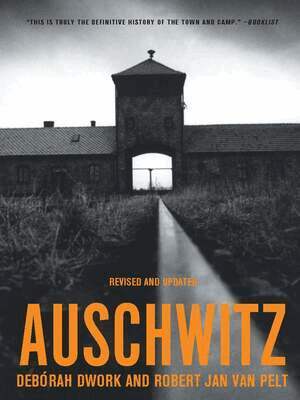
No symbol of the Holocaust is more profound than Auschwitz. Yet the sheer, crushing number of murders—over 1,200,000—the overwhelming scale of the crime, and the vast, abandoned site of ruined chimneys and rusting barbed wire isolate Auschwitz from us. How could an ordinary town become a site of such terror? Why was this particular town chosen? Who conceived, created, and constructed the camp? This unprecedented history reveals how an unremarkable Polish village was transformed into a killing field. Using architectural designs and planning documents recently discovered in Poland and Russia and over 200 illustrations, Auschwitz tells how this town became the epicenter of the Final Solution. A National Jewish Book Award winner.
275 kr
Skickas inom 3-6 vardagar
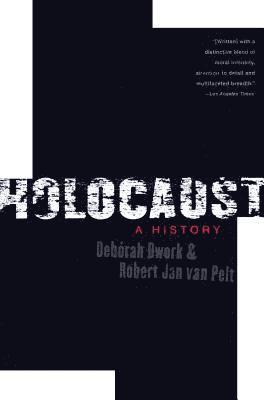
Unrivaled in reach and scope, Holocaust illuminates the long march of events, from the Middle Ages to the modern era, which led to this great atrocity. It is a story of all Europe, of Nazis and their allies, the experience of wartime occupation, the suffering and strategies of marked victims, the failure of international rescue, and the success of individual rescuers. It alone in Holocaust literature negotiates the chasm between the two histories, that of the perpetrators and of the victims and their families, shining new light on German actions and Jewish reactions.No other book in any language has so embraced this multifaceted story. Holocaust uniquely makes use of oral histories recorded by the authors over fifteen years across Europe and the United States, as well as never-before-analyzed archival documents, letters, and diaries; it contains in addition seventy-five illustrations and sixteen original maps, each accompanied by an extended caption. This book is an original analysis of a defining event.
364 kr
Skickas inom 5-8 vardagar
As persecution, war, and deportation savaged their communities, Jews tried to flee Nazi Europe through both legal and clandestine routes. In this riveting tale of Jewish refugees during and after the Nazi era, Debórah Dwork and Robert Jan van Pelt thread together official papers and personal accounts to weave the history of refugees’ lives into the history of the Holocaust.
390 kr
Skickas inom 7-10 vardagar
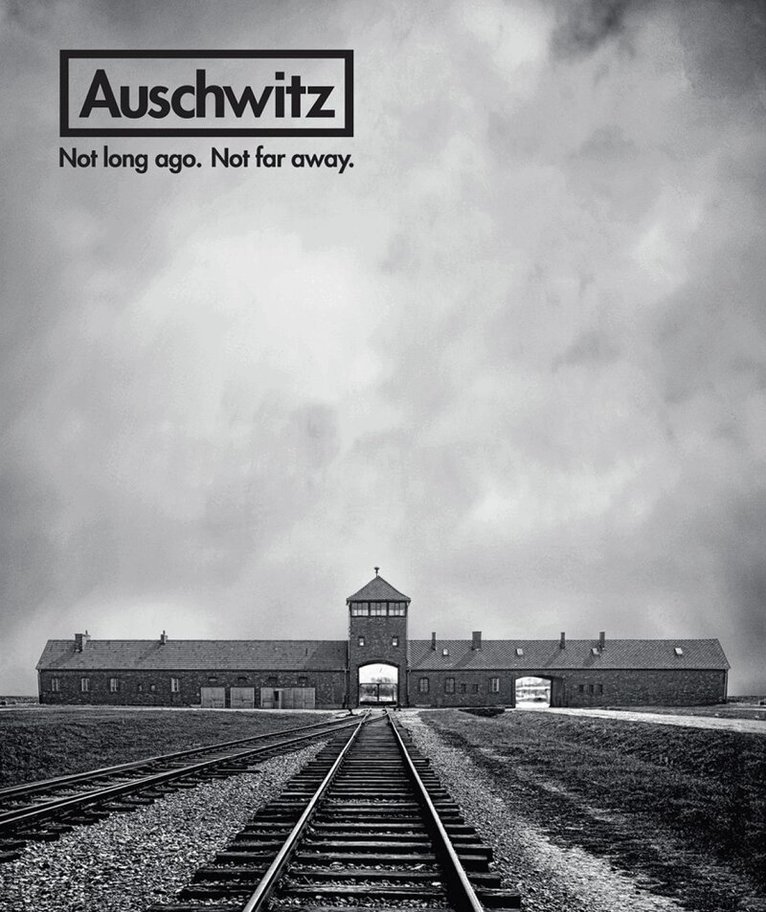
This is the catalogue of the first-ever travelling exhibition about the Auschwitz concentration camp, where 1.1 million people - mostly Jews, but also non-Jewish Poles, Roma, and others - lost their lives.More than 280 objects and images from the exhibition are illustrated herein. Drawn from the Auschwitz-Birkenau State Museum and other collections around the world, they range from the intimate (such as victims’ family snapshots and personal belongings) to the immense (an actual surviving barrack from the Auschwitz III–Monowitz satellite camp); all are eloquent in their testimony. An authoritative yet accessible text weaves the stories behind these artefacts into an encompassing history of Auschwitz - from a Polish town at the crossroads of Europe, to the dark center of the Holocaust, to a powerful site of remembrance. Auschwitz: Not long ago. Not far away. is an essential volume for everyone who is interested in history and its lessons.
246 kr
Skickas inom 7-10 vardagar
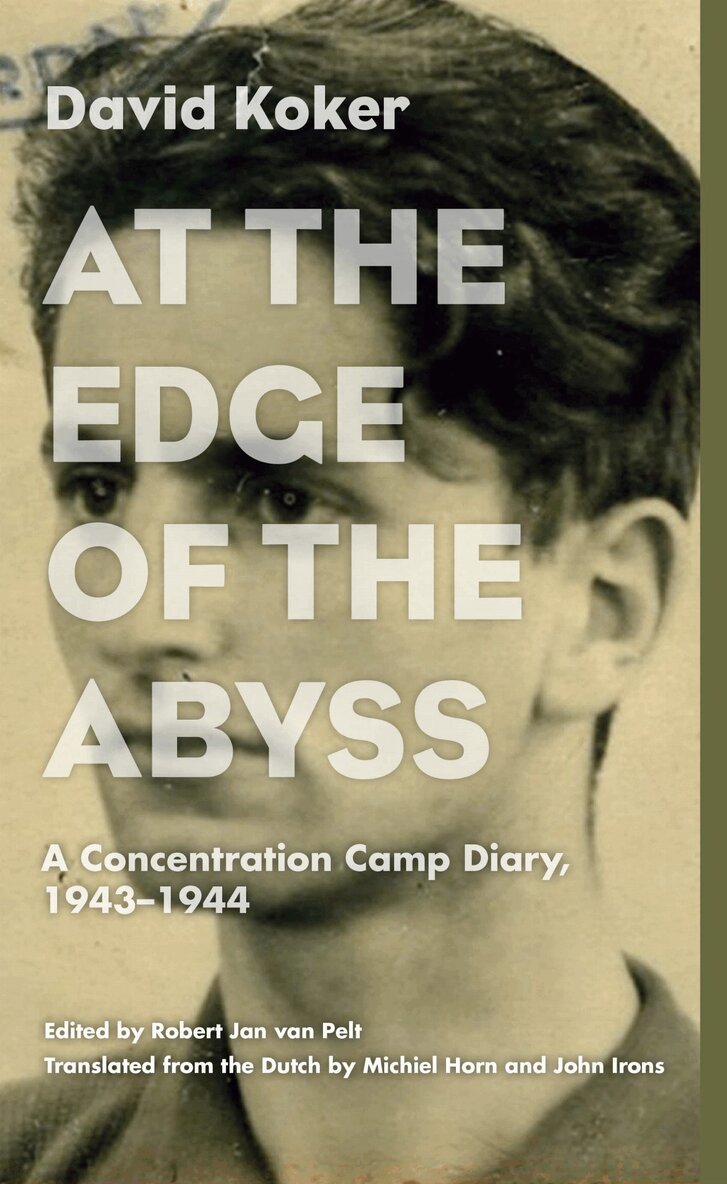
Finalist for 2012 National Jewish Book Award in the Holocaust categoryDavid Koker's diary is one of the most notable accounts of life in a German concentration camp written by a Jew during the years of the Holocaust. First brought to attention when the Dutch historian Jacob Presser-Koker's history teacher in high school-quoted from Koker's diary in his monumental history, published in English as The Destruction of the Dutch Jews (1968), the diary itself became a part of the Dutch literary canon when it was published in 1977 as Dagboek geschreven in Vught (Diary Written in Vught). It has remained in print ever since, and is notable for its literary qualities, weaving poetry and powerful observations of the emotional life of a camp prisoner, including reflections after an in-person visit by Heinrich Himmler. Surprisingly, the book has never before been translated into English.During his time in the Vught concentration camp, the 21-year-old David recorded on an almost daily basis his observations, thoughts, and feelings. He mercilessly probed the abyss that opened around him and, at times, within himself. David's diary covers almost a year, both charting his daily life in Vught as it developed over time and tracing his spiritual evolution as a writer. Until early February 1944, David was able to smuggle some 73,000 words from the camp to his best friend Karel van het Reve, a non-Jew.With an informative introduction, annotation, and list of dramatis personae by Robert Jan van Pelt, At the Edge of the Abyss offers an immediate and wholly original look into the life of a concentration camp prisoner.
96 kr
Skickas inom 5-8 vardagar
346 kr
Skickas inom 7-10 vardagar
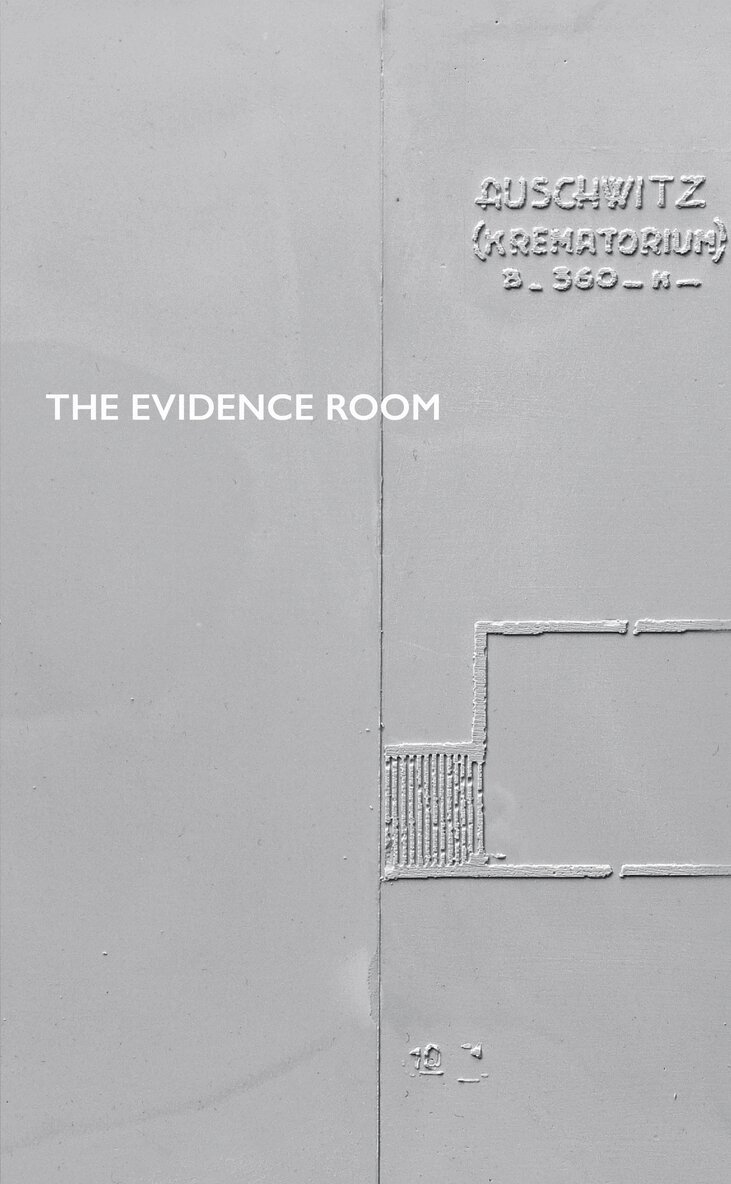
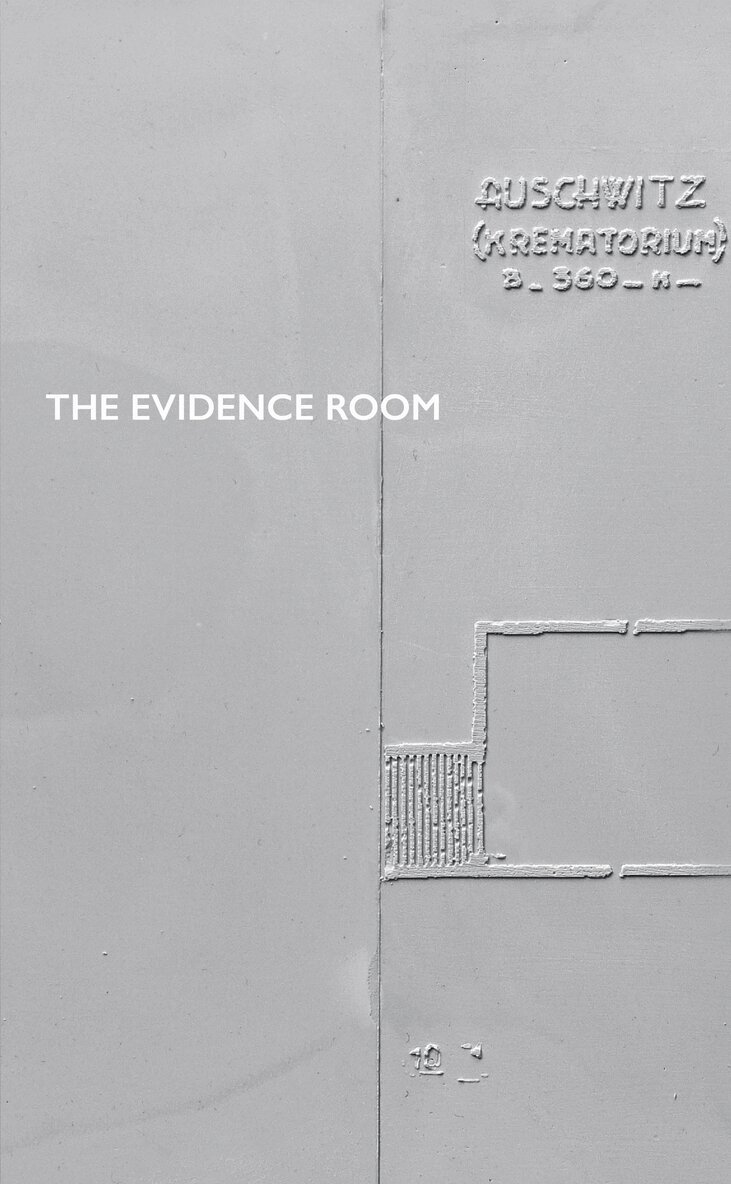
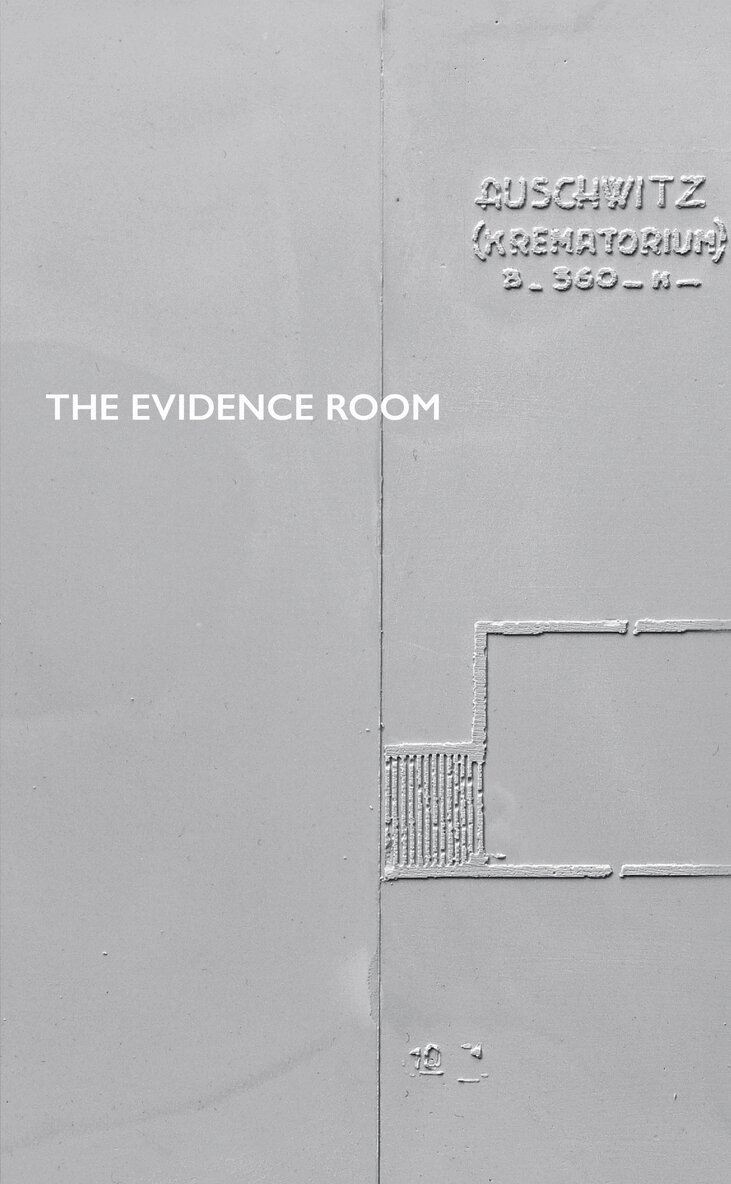
Internationally renowned and award-winning historian Dr. Robert Jan van Pelt's The Evidence Room is a chilling exploration of the role architecture played in constructing Auschwitz - arguably the Nazis' most horrifying facility. The Evidence Room is both a companion piece to, and an elaboration of, an exhibit at the 2016 Venice Architecture Biennale, based on van Pelt's authoritative testimony against Holocaust denial in a 2000 libel suit argued before the Royal Courts of Justice in London.
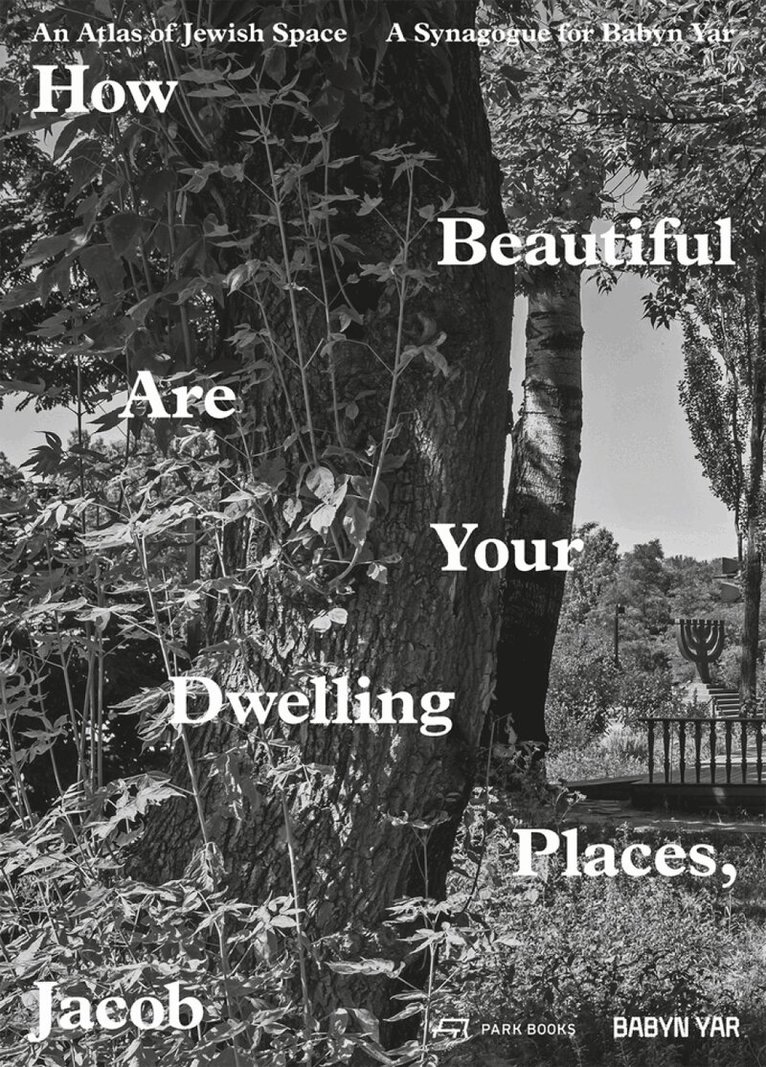
How Beautiful Are Your Dwelling Places, Jacob
An Atlas of Jewish Space, and a Synagogue for Babyn Yar
Inbunden, Engelska, 2021
377 kr
Skickas inom 7-10 vardagar
On September 29 and 30 1941 more than 33,000 Jewish men, women, and children were murdered in Babyn Yar, a gorge near Kiev. This event constituted the largest single massacre perpetrated by German troops against Jews during World War II.In commemoration, a synagogue designed in the shape of a book will open on the same site in 2021. When opened, the book building’s inner space and its furnishings unfold. This impressive movable structure was designed by Manuel Herz, whose studio runs offices in Basel and Cologne. This book for the first time shows the Babyn Yar synagogue captured in photographs by celebrated architectural photographer Iwan Baan, as well as through plans and model photos.Yet the core part of the book tells the story of the Jewish people and of Judaism through the medium of space: the Jewish concept of space from biblical times to the present. Space as a leitmotif is understood in broad terms here: territorially, architecturally, psychologically, theologically, intellectually, as well as pertaining to the persecution of the Jewish people. Rather than in an abstract treatise, this story is told through 135 brief and engaging texts by Robert Jan van Pelt, a leading Holocaust researcher and professor of architecture. Each of these reflections is illustrated with drawings and watercolours by New York-based artist Mark Podwal, who is known for his illustration of Elie Wiesel’s works.
492 kr
Skickas
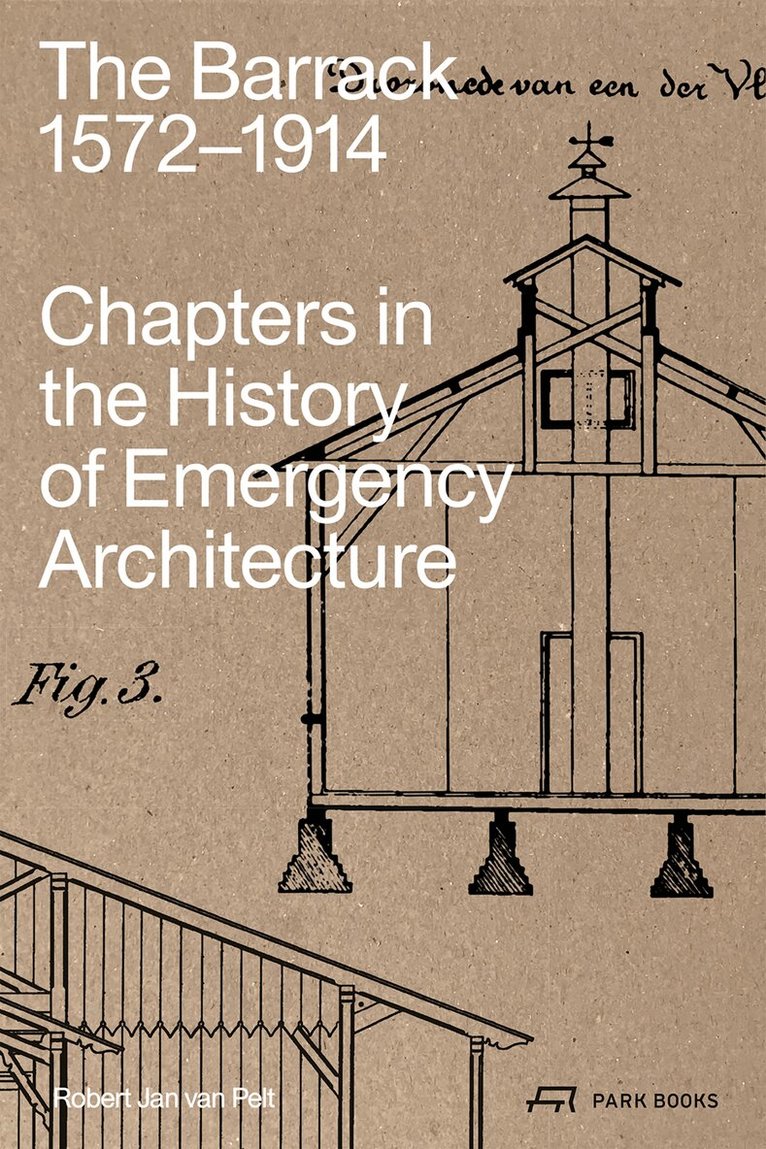
The Barrack, 1572–1914 tells the little-known history of a building type that many people used to register as an alien interloper in conventionally built-up areas. The barrack is a mostly lightweight construction, a hybrid between shack, tent, and traditional building. It is a highly efficient structure that sometimes also proves to be extremely durable. Easy to erect and to take down, it is—after the introduction of railways and later motor vehicles in the late 19th and early 20th centuries—also easy to transplant from one location to another. Originating as a standardised accommodation in the late 16th century, the barrack became a mass-produced utility of military and civilian mobilization in the 19th century, providing immediate shelter for soldiers as well as for displaced persons, disaster victims, or prisoners. The barrack played a decisive role in shaping the political space of modernity.Robert Jan van Pelt traces nearly 350 years of barrack history up to 1914. That year, in which the Great War broke out, proved to be a turning point in the perception of the barrack, away from pragmatic emergency shelter and towards sinister forced housing. Richly illustrated with some 250 images, van Pelt’s book records the traditions of barrack design and the technological inventiveness that went into it in the late 19th century.
446 kr
Skickas inom 3-6 vardagar