Robert Knight – författare
Visar alla böcker från författaren Robert Knight. Handla med fri frakt och snabb leverans.
17 produkter
17 produkter
Häftad, Engelska, 2018
520 kr
Skickas inom 10-15 vardagar
Robert Knight’s book examines how the 60,000 strong Slovene community in the Austrian borderland province of Carinthia continued to suffer in the wake of Nazism’s fall. It explores how and why Nazi values continued to be influential in a post-Nazi era in postwar Central Europe and provides valuable insights into the Cold War as a point of interaction of local, national and international politics.Though Austria was re-established in 1945 as Hitler’s ‘first victim’, many Austrians continued to share principles which had underpinned the Third Reich. Long treated as both inferior and threatening prior to the rise of Hitler and then persecuted during his time in power, the Slovenes of Carinthia were prevented from equality of schooling by local Nazis in the years that followed World War Two, behavior that was tolerated in Vienna and largely ignored by the rest of the world. Slavs in Post-Nazi Austria uses this vital case study to discuss wider issues relating to the stubborn legacy of Nazism in postwar Europe and to instill a deeper understanding of the interplay between collective and individual (liberal) rights in Central Europe.This is a fascinating study for anyone interested in knowing more about the disturbing imprint that Nazism left in some parts of Europe in the postwar years.
Inbunden, Engelska, 2012
2 000 kr
Skickas inom 10-15 vardagar
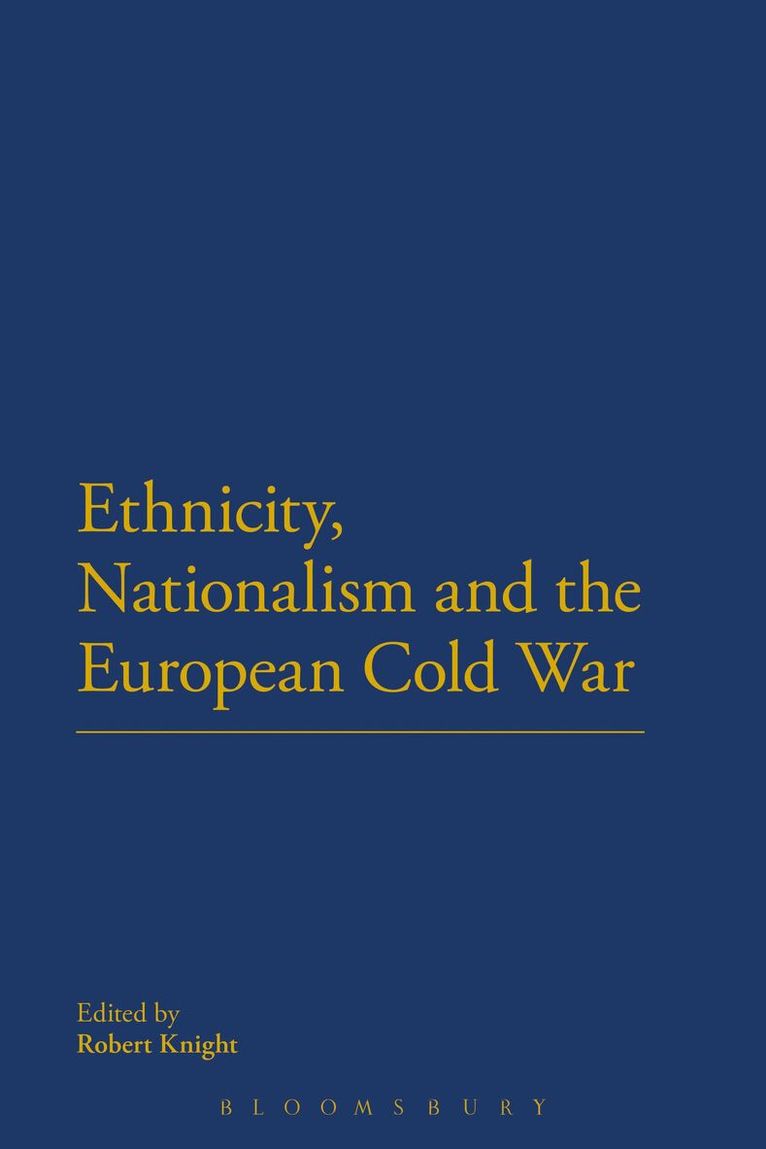
This book questions the prevalent assumption that ethnicity and nationalist politics had nothing to do with the Cold War and that, far from being frozen until the fall of communism, they remained central to the conflict in Europe. Leading scholarsbring theirunderstanding of particular regions to bear on the wider issue of why ethnic explanations were written out of the discourse and whether this was a failure on the part of Western observers. This in turn has led to an overly simple understanding of power flowing downwards, from superpower to nation state and from state to society. Engaging with key thinkers such as Gaddis, Moynihan and Adam Roberts this collection ultimately allows such speculation to be replaced by historical research and bridges the gap between high politics and ethnic concerns.
E-bok
PDF, Engelska, 2012608 kr
Läs direkt efter köp
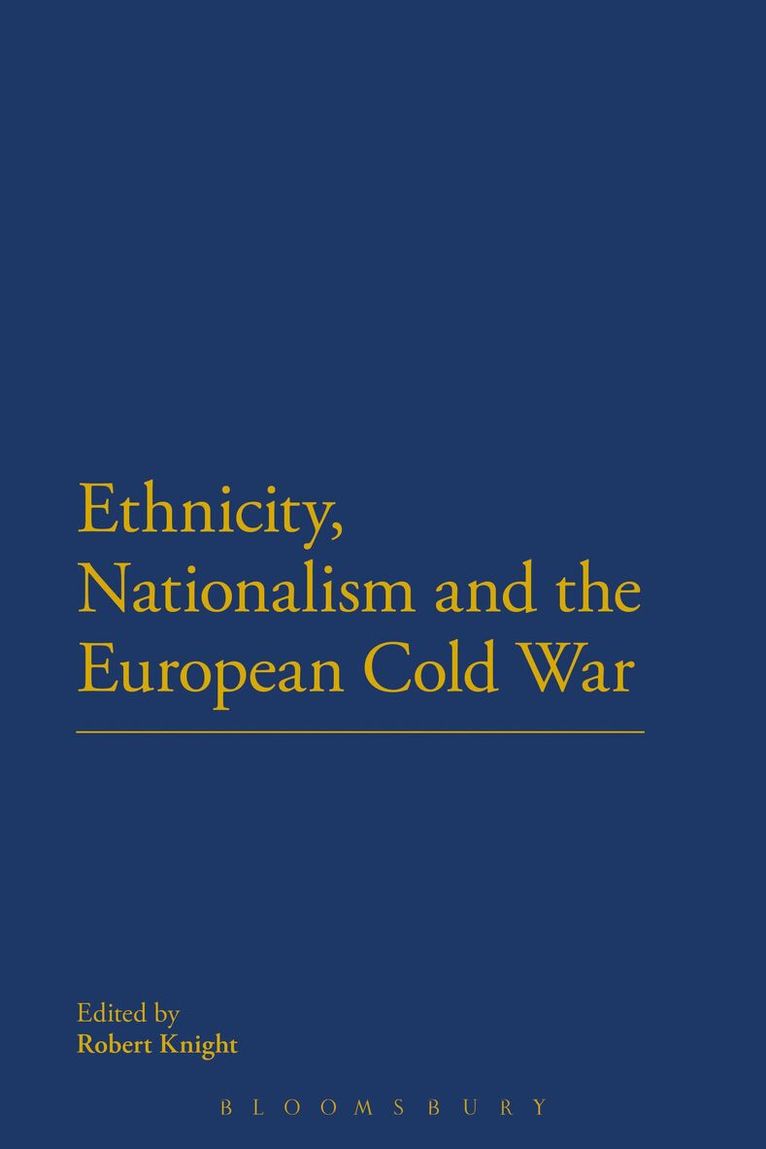
This book questions the prevalent assumption that ethnicity and nationalist politics had nothing to do with the Cold War and that, far from being 'frozen' until the fall of communism, they remained central to the conflict in Europe. Leading scholars bring their understanding of particular regions to bear on the wider issue of why ethnic explanations were written out of the discourse and whether this was a failure on the part of Western observers. This in turn has led to an overly simple understanding of power flowing downwards, from superpower to nation state and from state to society. Engaging with key thinkers such as Gaddis, Moynihan and Adam Roberts this collection ultimately allows such speculation to be replaced by historical research and bridges the gap between 'high politics' and ethnic concerns.
E-bok
Engelska, 2012608 kr
Läs direkt efter köp
This book questions the prevalent assumption that ethnicity and nationalist politics had nothing to do with the Cold War and that, far from being ''frozen'' until the fall of communism, they remained central to the conflict in Europe. Leading scholars bring their understanding of particular regions to bear on the wider issue of why ethnic explanations were written out of the discourse and whether this was a failure on the part of Western observers. This in turn has led to an overly simple understanding of power flowing downwards, from superpower to nation state and from state to society. Engaging with key thinkers such as Gaddis, Moynihan and Adam Roberts this collection ultimately allows such speculation to be replaced by historical research and bridges the gap between ''high politics'' and ethnic concerns.
Häftad, Engelska, 2013
562 kr
Skickas inom 10-15 vardagar
This book questions the prevalent assumption that ethnicity and nationalist politics had nothing to do with the Cold War and that, far from being 'frozen' until the fall of communism, they remained central to the conflict in Europe. Leading scholars bring their understanding of particular regions to bear on the wider issue of why ethnic explanations were written out of the discourse and whether this was a failure on the part of Western observers. This in turn has led to an overly simple understanding of power flowing downwards, from superpower to nation state and from state to society. Engaging with key thinkers such as Gaddis, Moynihan and Adam Roberts this collection ultimately allows such speculation to be replaced by historical research and bridges the gap between 'high politics' and ethnic concerns.
Inbunden, Engelska, 2017
2 000 kr
Skickas inom 10-15 vardagar
Robert Knight’s book examines how the 60,000 strong Slovene community in the Austrian borderland province of Carinthia continued to suffer in the wake of Nazism’s fall. It explores how and why Nazi values continued to be influential in a post-Nazi era in postwar Central Europe and provides valuable insights into the Cold War as a point of interaction of local, national and international politics.Though Austria was re-established in 1945 as Hitler’s ‘first victim’, many Austrians continued to share principles which had underpinned the Third Reich. Long treated as both inferior and threatening prior to the rise of Hitler and then persecuted during his time in power, the Slovenes of Carinthia were prevented from equality of schooling by local Nazis in the years that followed World War Two, behavior that was tolerated in Vienna and largely ignored by the rest of the world. Slavs in Post-Nazi Austria uses this vital case study to discuss wider issues relating to the stubborn legacy of Nazism in postwar Europe and to instill a deeper understanding of the interplay between collective and individual (liberal) rights in Central Europe.This is a fascinating study for anyone interested in knowing more about the disturbing imprint that Nazism left in some parts of Europe in the postwar years.
E-bok
PDF, Engelska, 2017542 kr
Läs direkt efter köp
Robert Knight''s book examines how the 60,000 strong Slovene community in the Austrian borderland province of Carinthia continued to suffer in the wake of Nazism''s fall. It explores how and why Nazi values continued to be influential in a post-Nazi era in postwar Central Europe and provides valuable insights into the Cold War as a point of interaction of local, national and international politics.Though Austria was re-established in 1945 as Hitler''s ''first victim'', many Austrians continued to share principles which had underpinned the Third Reich. Long treated as both inferior and threatening prior to the rise of Hitler and then persecuted during his time in power, the Slovenes of Carinthia were prevented from equality of schooling by local Nazis in the years that followed World War Two, behavior that was tolerated in Vienna and largely ignored by the rest of the world. Slavs in Post-Nazi Austria uses this vital case study to discuss wider issues relating to the stubborn legacy of Nazism in postwar Europe and to instill a deeper understanding of the interplay between collective and individual (liberal) rights in Central Europe.This is a fascinating study for anyone interested in knowing more about the disturbing imprint that Nazism left in some parts of Europe in the postwar years.
E-bok
Engelska, 2017561 kr
Läs direkt efter köp
Robert Knight''s book examines how the 60,000 strong Slovene community in the Austrian borderland province of Carinthia continued to suffer in the wake of Nazism''s fall. It explores how and why Nazi values continued to be influential in a post-Nazi era in postwar Central Europe and provides valuable insights into the Cold War as a point of interaction of local, national and international politics.Though Austria was re-established in 1945 as Hitler''s ''first victim'', many Austrians continued to share principles which had underpinned the Third Reich. Long treated as both inferior and threatening prior to the rise of Hitler and then persecuted during his time in power, the Slovenes of Carinthia were prevented from equality of schooling by local Nazis in the years that followed World War Two, behavior that was tolerated in Vienna and largely ignored by the rest of the world. Slavs in Post-Nazi Austria uses this vital case study to discuss wider issues relating to the stubborn legacy of Nazism in postwar Europe and to instill a deeper understanding of the interplay between collective and individual (liberal) rights in Central Europe.This is a fascinating study for anyone interested in knowing more about the disturbing imprint that Nazism left in some parts of Europe in the postwar years.
Häftad, Engelska, 2009
567 kr
Skickas inom 5-8 vardagar
E-bok
PDF, Engelska, 2009941 kr
Läs direkt efter köp
Del 1 - Turning Around Turnaround Schools
Turning Around Turnaround Schools
What to Do When Conventional Wisdom and Best Practice Aren't Enough
Häftad, Engelska, 2018
221 kr
Skickas inom 5-8 vardagar
E-bok
Engelska111 kr
Läs direkt efter köp
Häftad, Engelska, 2024
221 kr
Skickas inom 5-8 vardagar
E-bok
Engelska33 kr
Läs direkt efter köp
E-bok
Engelska32 kr
Läs direkt efter köp
E-bok
Engelska31 kr
Läs direkt efter köp
E-bok
Engelska33 kr
Läs direkt efter köp