Robert L. Glicksman - Böcker
Visar alla böcker från författaren Robert L. Glicksman. Handla med fri frakt och snabb leverans.
6 produkter
6 produkter
1 280 kr
Skickas inom 10-15 vardagar
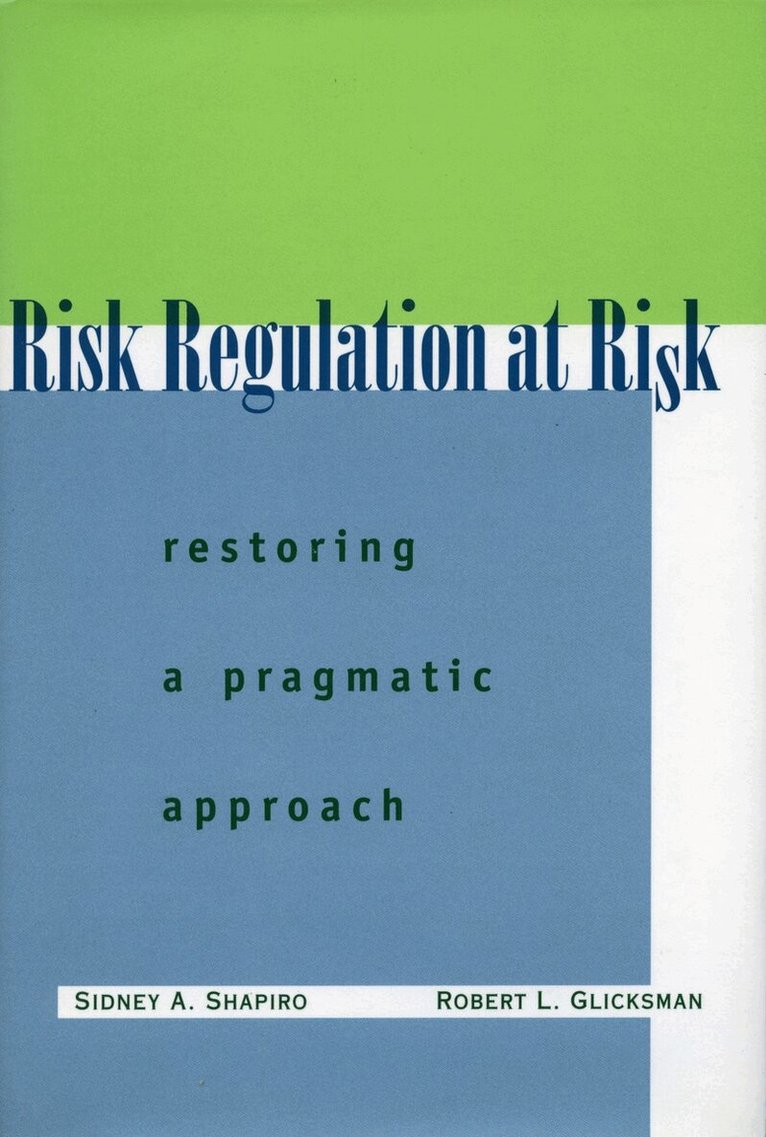
In the 1960s and 1970s, Congress enacted a vast body of legislation to protect the environment and individual health and safety. Collectively, this legislation is known as "risk regulation" because it addresses the risk of harm that technology creates for individuals and the environment. In the last two decades, this legislation has come under increasing attack by critics who employ utilitarian philosophy and cost-benefit analysis. The defenders of this body of risk regulation, by contrast, have lacked a similar unifying theory. In this book, the authors propose that the American tradition of philosophical pragmatism fills this vacuum. They argue that pragmatism offers a better method for conceiving of and implementing risk regulation than the economic paradigm favored by its critics. While pragmatism offers a methodology in support of risk regulation as it was originally conceived, it also offers a perspective from which this legislation can be held up to critical appraisal. The authors employ pragmatism to support risk regulation, but pragmatism also leads them to agree with some of the criticisms against it, and even to level new criticisms of their own. In the end, the authors reject the picture—painted by risk regulation's critics—of widely excessive and irrational regulation, but the pragmatic perspective also leads them to propose a number of recommendations for useful reforms to risk regulation.
300 kr
Skickas inom 10-15 vardagar
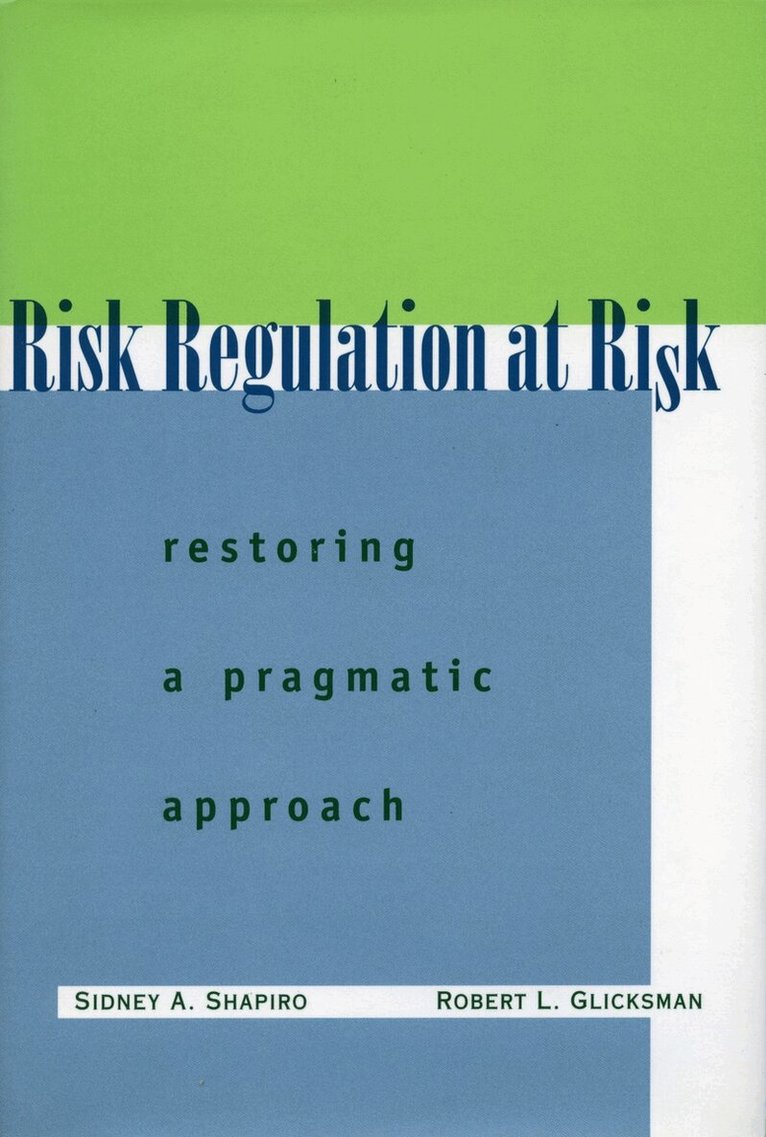
In the 1960s and 1970s, Congress enacted a vast body of legislation to protect the environment and individual health and safety. Collectively, this legislation is known as "risk regulation" because it addresses the risk of harm that technology creates for individuals and the environment. In the last two decades, this legislation has come under increasing attack by critics who employ utilitarian philosophy and cost-benefit analysis. The defenders of this body of risk regulation, by contrast, have lacked a similar unifying theory. In this book, the authors propose that the American tradition of philosophical pragmatism fills this vacuum. They argue that pragmatism offers a better method for conceiving of and implementing risk regulation than the economic paradigm favored by its critics. While pragmatism offers a methodology in support of risk regulation as it was originally conceived, it also offers a perspective from which this legislation can be held up to critical appraisal. The authors employ pragmatism to support risk regulation, but pragmatism also leads them to agree with some of the criticisms against it, and even to level new criticisms of their own. In the end, the authors reject the picture—painted by risk regulation's critics—of widely excessive and irrational regulation, but the pragmatic perspective also leads them to propose a number of recommendations for useful reforms to risk regulation.
Pollution Limits and Polluters' Efforts to Comply
The Role of Government Monitoring and Enforcement
Inbunden, Engelska, 2011
1 882 kr
Skickas inom 7-10 vardagar
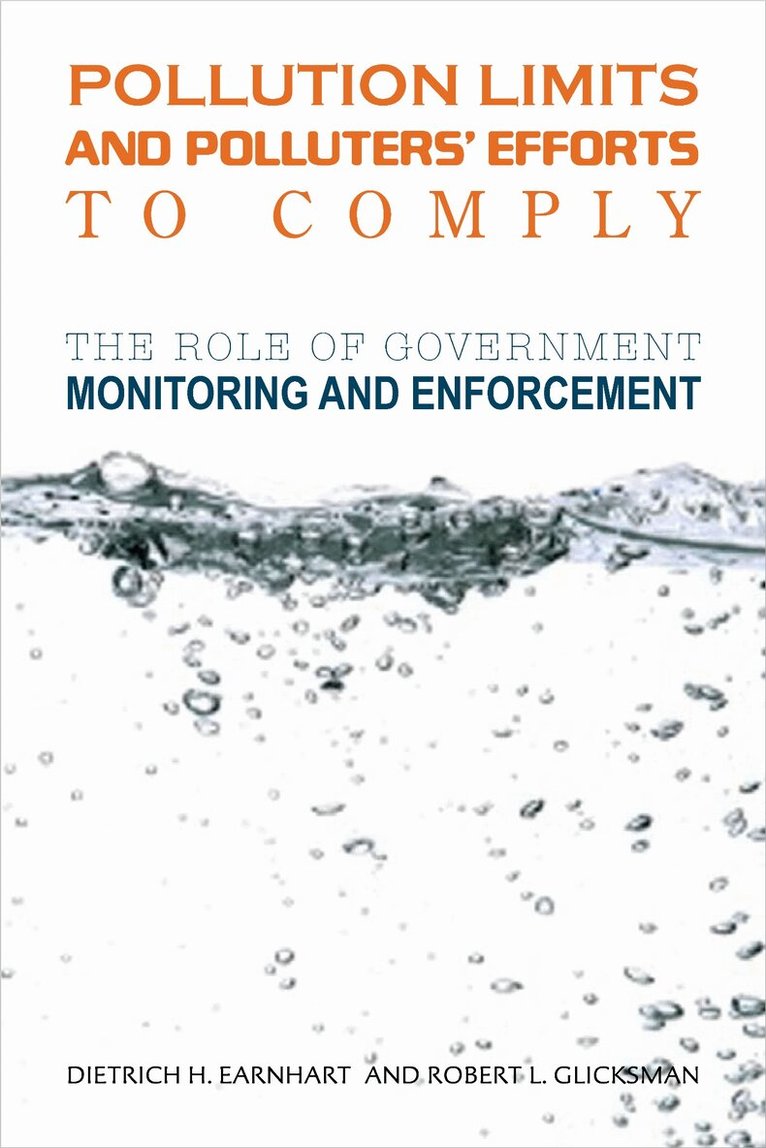
This book integrates the fields of economics and law to empirically examine compliance with regulatory obligations under the Clean Water Act (CWA). It examines four dimensions of federal water pollution control policy in the United States: limits imposed on industrial facilities' pollution discharges; facilities' efforts to comply with pollution limits, identified as "environmental behavior"; facilities' success at controlling their discharges to comply with pollution limits, identified as "environmental performance"; and regulators' efforts to induce compliance via inspections and enforcement actions, identified as "government interventions."The authors gather and analyze data on environmental performance and government interventions from Environmental Protection Agency (EPA) databases, and data on environmental behavior gathered from their own survey of all 1,612 chemical manufacturing facilities permitted to discharge wastewater in 2002. By analyzing links between critical elements in the puzzle of enforcement of and compliance with environmental protection laws, the text speaks to several important, policy-relevant research questions: Do government interventions help induce better environmental behavior and/or better environmental performance? Do tighter pollution limits improve environmental behavior and/or performance? And, does better environmental behavior lead to better environmental performance?
Pollution Limits and Polluters' Efforts to Comply
The Role of Government Monitoring and Enforcement
Häftad, Engelska, 2011
474 kr
Skickas inom 10-15 vardagar
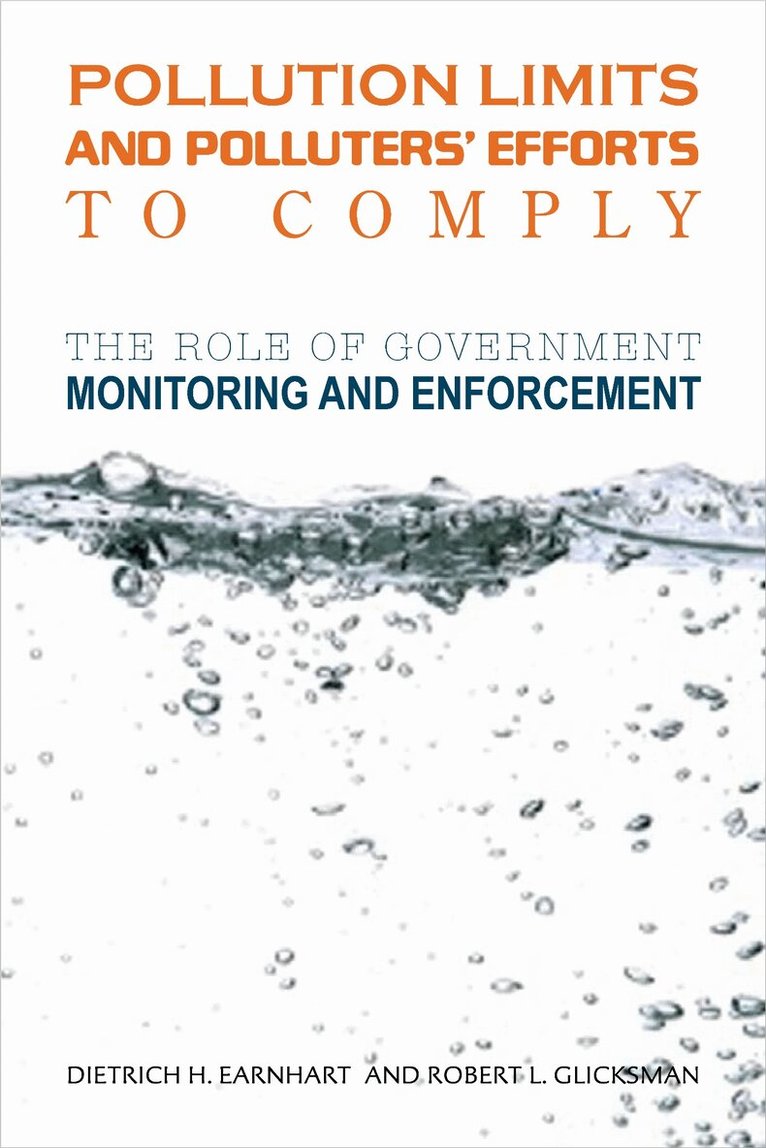
This book integrates the fields of economics and law to empirically examine compliance with regulatory obligations under the Clean Water Act (CWA). It examines four dimensions of federal water pollution control policy in the United States: limits imposed on industrial facilities' pollution discharges; facilities' efforts to comply with pollution limits, identified as "environmental behavior"; facilities' success at controlling their discharges to comply with pollution limits, identified as "environmental performance"; and regulators' efforts to induce compliance via inspections and enforcement actions, identified as "government interventions."The authors gather and analyze data on environmental performance and government interventions from Environmental Protection Agency (EPA) databases, and data on environmental behavior gathered from their own survey of all 1,612 chemical manufacturing facilities permitted to discharge wastewater in 2002. By analyzing links between critical elements in the puzzle of enforcement of and compliance with environmental protection laws, the text speaks to several important, policy-relevant research questions: Do government interventions help induce better environmental behavior and/or better environmental performance? Do tighter pollution limits improve environmental behavior and/or performance? And, does better environmental behavior lead to better environmental performance?
1 641 kr
Skickas inom 7-10 vardagar
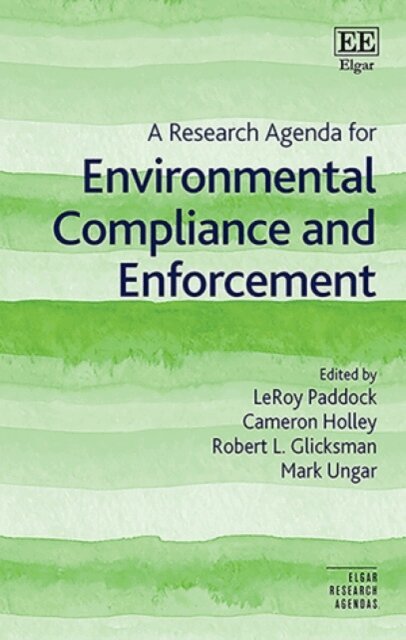
Elgar Research Agendas outline the future of research in a given area. Leading scholars are given the space to explore their subject in provocative ways, and map out the potential directions of travel. They are relevant but also visionary.This incisive book examines cutting edge issues in environmental compliance and enforcement law. It highlights critical research needs in the field, and explains how their realisation would enhance the efforts of governments, citizens and regulated entities in ensuring compliance and enforcement.Taking a comprehensive view of the field, expert authors address research questions beginning with detection of environmental harms and continuing through to judicial resolution. Chapters focus on key areas of research, including the structure of environmental enforcement programs, the role of behaviour in compliance, measuring outcomes, inspections and auditing, monitoring, emerging regulatory technologies, citizen law suits, as well as judicial remedies and sanctions. The book also analyzes the challenges of environmental enforcement in countries with limited enforcement resources through case studies involving Columbia and Peru, and the growing role of the private sector in environmental compliance.With a spotlight on enhancing ecofriendly outcomes, this book is a valuable resource for scholars and students in environmental law, as well as criminal law and justice. It is also beneficial to environmental agency staff interested in identifying ways to improve their practices, and those involved in environmental research projects.
Del 2 - Elgar Encyclopedia of Environmental Law series
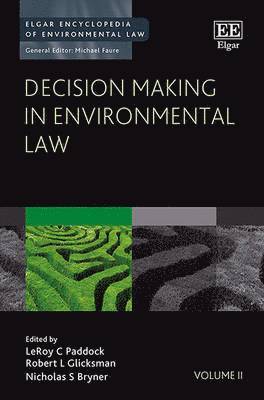
Decision Making in Environmental Law
Inbunden, Engelska, 2016
3 631 kr
Skickas inom 7-10 vardagar
The Elgar Encyclopedia of Environmental Law is a landmark reference work, providing definitive and comprehensive coverage of this dynamic field. Each volume probes the key elements of law, the essential concepts, and the latest research through concise, structured entries written by international experts. Each entry includes an extensive bibliography as a starting point for further reading. The mix of authoritative commentary and insightful discussion will make this an essential tool for research and teaching, as well as a valuable resource for professionals and policymakers.Environmental issues are at the heart of some of the most complex and consequential decisions that society must face in pursuit of a more sustainable future. They encompass the international, national, and local levels and engage all branches of government. Decision Making in Environmental Law, one of the constituent volumes in the Elgar Encyclopedia of Environmental Law, brings together some of the leading experts in the field and provides a structured overview of the various dimensions of decision making from an environmental law perspective. The concise and accessible chapters provide an international scope and detailed bibliographies that allow readers to explore issues in depth. Topics include: the role of treaties, common law tools, rulemaking, access to information, regulatory structures, market-based and trading mechanisms, monitoring and reporting, voluntary programs and private regulation, environmental impact analysis, public engagement and environmental justice, administrative and judicial review, and the role of environmental courts and tribunals. This volume offers a complete exploration of the complicated issue of environmental decision making. It is ideal as an introduction for students, as a reference point for scholars, and as a comprehensive guide for practitioners.Contributors include: W.L. Andreen, J. Broderick, C. Bruch, N.S. Bryner, W.W. Buzbee, C. Coglianese, K.S. Coplan, E. Daly, E.A. DeGroff, J.C. Dernbach, D.M. Driesen, H. Elliott, K.H. Engel, V.B. Flatt, R.L. Glicksman, E. Hammond, R.L. Hill, S.B. Krolikowski, B.C. Karkkainen, I.E. Kornfeld, G.J. S. Leal, M. Lee, G. Levitt, S.E. Light, J. Makowiak, D.R. Mandelker, B.C. Mank, J.R. May, K. Morrow, J. Nash, S.F. Nolon, D. Owen, L.C. Paddock. C. Pring, G. Pring, A. Sinden, W.M. Tabb, G. Van Hoorick, M.P. Vandenbergh, M.A. Wenisch, J.A. Wentz, M.C. Wood, S. Zellmer