Robert L. Sadoff – författare
1 286 kr
Skickas inom 11-20 vardagar
930 kr
Skickas inom 5-8 vardagar
1 037 kr
Läs direkt efter köp
Robert Sadoff addresses the long-term harm that can be either avoided or minimized through careful planning and application of ethical principles. He is not advocating that the harm can be totally eliminated, because that is impossible in the adversarial system in which forensic psychiatrists work. However, there are means by which harm may be minimized if care is taken during the assessment, the report writing, and the testimony phase of the proceedings. The book develops the scope of forensic psychiatry from the standpoint of administrative, civil and criminal cases. It presents the practical issues involved in conducting forensic psychiatric assessments under various conditions plus special considerations, such as bias, minimizing harm, developing a therapeutic approach, and elaborating on various vulnerable individuals who are frequently examined in forensic cases. These include juveniles, mentally retarded, autistic, sexual assault victims, the elderly, the organically damaged, the psychotic, and mentally disabled prisoners. Immigrants are covered in a chapter by Solange Margery Bertoglia. The ethical issues in conducting forensic psychiatric examinations and presenting psychiatric testimony in court are examined and discussed. Cases illustrating the difficulties involved punctuate the presentation. The book closes with a fascinating account of the legal perspective by Donna Vanderpool.
In summary, this book illustrates the ethical and practical issues that affect forensic psychiatric practice. The question is not what we do, but how we do it, and which standards, ethical guidelines and personal values contribute to the total picture. Despite the fact that we cannot always adhere to the doctrine of "primum non nocere," we can minimize the harm caused inherently by the adversarial system in which we participate.
Praise for Ethical Issues in Forensic Psychiatry
"One of the founding giants of the forensic psychiatric field has written here far more than a "mere" ethics textbook. Instead, this compendium serves multiple purposes: it is a valuable primer on forensic techniques of examination and testimony, a model of best forensic practices, and an instruction on the most appropriately civilized way in which to conduct oneself as a forensic psychiatrist.
The success of these multiple accomplishments clearly derives from characteristics of the author. In both sage advice to practitioners and in many revealing case examples, Dr. Sadoff displays the tact, good manners and sensitivity of a consummate gentleman – a term not always associated with the hurly-burly of courtroom work. The book''s primary focus on avoiding harm to all the parties involved in the work places it on the moral high ground of the legal system in which participating clinicians must find a place." Thomas G. Gutheil, MD, Professor of Psychiatry and Co-Founder, Program in Psychiatry and the Law, Beth Israel Deaconess Medical Center, Harvard Medical School
786 kr
Skickas inom 5-8 vardagar
1 379 kr
Läs direkt efter köp
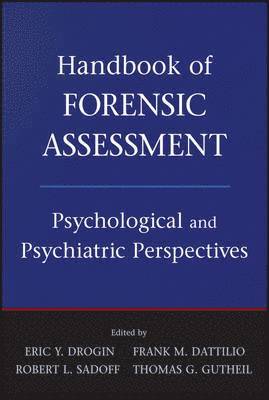
"The editors have assembled a magnificent collaboration between psychiatrists and psychologists to bring forth critical knowledge and insight to the core competency of forensic assessment. This handbook is essential reading and a comprehensive resource for both newly minted and seasoned forensic practitioners." —Robert I. Simon, MD, Director, Program in Psychiatry and Law, Georgetown University School of Medicine
"This long-awaited resource blows the dust off traditional standards, shakes the cobwebs out of our old ways of thinking, and shows the practical steps in producing work that will make sense to juries and withstand the most skillful cross-examination. . . . [T]here is no better resource." —Kenneth S. Pope, PhD, ABPP, Diplomate in Clinical Psychology; coauthor, Ethics in Psychotherapy and Counseling, Fourth Edition
"From preparation to collection to interpretation to communication of the results, this excellent, comprehensive treasure shows how to conduct forensic assessments. Each splendid evidence-based chapter is presented from the collaboration between psychologists and psychiatrists. It is a must-have resource for forensic experts as well as general practitioners or anyone wishing to understand standard of care in forensic assessment." —Melba Vasquez, PhD, ABPP, 2011 American Psychological Association President
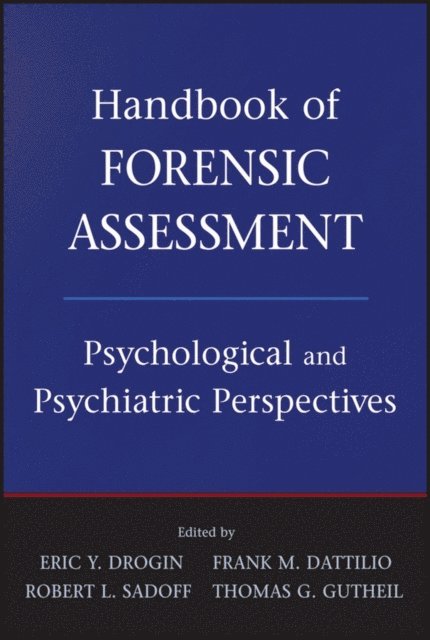
The practitioner-oriented coverage in the Handbook of Forensic Assessment examines:
The current state of psychology and psychiatry—including requisite clinical competencies, ethical guidelines, and considerations of multidisciplinary collaboration
Various approaches to assessments in criminal and civil matters
The principles of effective preparation, data collection, and interpretation, as well as communication for each special situation
Topics including competence to stand trial, sexual offender evaluations, addictions, child abuse, and education
Overarching practice issues, such as practice development, retention, compensation, consultation, and forensic treatment
Includes sample reports that demonstrate the integrative potential of both psychology and psychiatry
Incorporating a wealth of current and multidisciplinary research, the Handbook of Forensic Assessment is destined to become every mental health professional''s most valuable one-stop reference for their forensic work.
1 379 kr
Läs direkt efter köp
"The editors have assembled a magnificent collaboration between psychiatrists and psychologists to bring forth critical knowledge and insight to the core competency of forensic assessment. This handbook is essential reading and a comprehensive resource for both newly minted and seasoned forensic practitioners." —Robert I. Simon, MD, Director, Program in Psychiatry and Law, Georgetown University School of Medicine
"This long-awaited resource blows the dust off traditional standards, shakes the cobwebs out of our old ways of thinking, and shows the practical steps in producing work that will make sense to juries and withstand the most skillful cross-examination. . . . [T]here is no better resource." —Kenneth S. Pope, PhD, ABPP, Diplomate in Clinical Psychology; coauthor, Ethics in Psychotherapy and Counseling, Fourth Edition
"From preparation to collection to interpretation to communication of the results, this excellent, comprehensive treasure shows how to conduct forensic assessments. Each splendid evidence-based chapter is presented from the collaboration between psychologists and psychiatrists. It is a must-have resource for forensic experts as well as general practitioners or anyone wishing to understand standard of care in forensic assessment." —Melba Vasquez, PhD, ABPP, 2011 American Psychological Association President
The practitioner-oriented coverage in the Handbook of Forensic Assessment examines:
The current state of psychology and psychiatry—including requisite clinical competencies, ethical guidelines, and considerations of multidisciplinary collaboration
Various approaches to assessments in criminal and civil matters
The principles of effective preparation, data collection, and interpretation, as well as communication for each special situation
Topics including competence to stand trial, sexual offender evaluations, addictions, child abuse, and education
Overarching practice issues, such as practice development, retention, compensation, consultation, and forensic treatment
Includes sample reports that demonstrate the integrative potential of both psychology and psychiatry
Incorporating a wealth of current and multidisciplinary research, the Handbook of Forensic Assessment is destined to become every mental health professional''s most valuable one-stop reference for their forensic work.
1 037 kr
Läs direkt efter köp
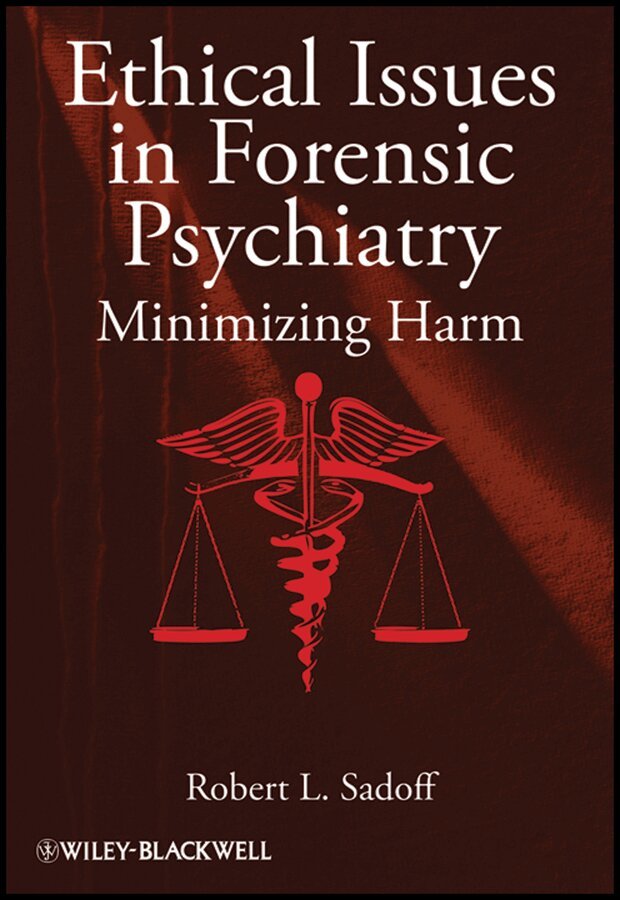
Robert Sadoff addresses the long-term harm that can be either avoided or minimized through careful planning and application of ethical principles. He is not advocating that the harm can be totally eliminated, because that is impossible in the adversarial system in which forensic psychiatrists work. However, there are means by which harm may be minimized if care is taken during the assessment, the report writing, and the testimony phase of the proceedings. The book develops the scope of forensic psychiatry from the standpoint of administrative, civil and criminal cases. It presents the practical issues involved in conducting forensic psychiatric assessments under various conditions plus special considerations, such as bias, minimizing harm, developing a therapeutic approach, and elaborating on various vulnerable individuals who are frequently examined in forensic cases. These include juveniles, mentally retarded, autistic, sexual assault victims, the elderly, the organically damaged, the psychotic, and mentally disabled prisoners. Immigrants are covered in a chapter by Solange Margery Bertoglia. The ethical issues in conducting forensic psychiatric examinations and presenting psychiatric testimony in court are examined and discussed. Cases illustrating the difficulties involved punctuate the presentation. The book closes with a fascinating account of the legal perspective by Donna Vanderpool.
In summary, this book illustrates the ethical and practical issues that affect forensic psychiatric practice. The question is not what we do, but how we do it, and which standards, ethical guidelines and personal values contribute to the total picture. Despite the fact that we cannot always adhere to the doctrine of "primum non nocere," we can minimize the harm caused inherently by the adversarial system in which we participate.
Praise for Ethical Issues in Forensic Psychiatry
"One of the founding giants of the forensic psychiatric field has written here far more than a "mere" ethics textbook. Instead, this compendium serves multiple purposes: it is a valuable primer on forensic techniques of examination and testimony, a model of best forensic practices, and an instruction on the most appropriately civilized way in which to conduct oneself as a forensic psychiatrist.
The success of these multiple accomplishments clearly derives from characteristics of the author. In both sage advice to practitioners and in many revealing case examples, Dr. Sadoff displays the tact, good manners and sensitivity of a consummate gentleman – a term not always associated with the hurly-burly of courtroom work. The book''s primary focus on avoiding harm to all the parties involved in the work places it on the moral high ground of the legal system in which participating clinicians must find a place." Thomas G. Gutheil, MD, Professor of Psychiatry and Co-Founder, Program in Psychiatry and the Law, Beth Israel Deaconess Medical Center, Harvard Medical School