Robert Lensink – författare
Visar alla böcker från författaren Robert Lensink. Handla med fri frakt och snabb leverans.
20 produkter
Financial Development and Economic Growth
Theory and Experiences from Developing Countries
Av Niels Hermes, Robert Lensink
Inbunden, 1996
2588 kr
Lägg i varukorg
This collection brings together a collection of theoretical and empirical findings on aspects of financial development and economic growth in developing countries. The book is divided into two parts: the first identifies and analyses the major theoretical issues using examples from developing …
Financial Liberalization and Investment
Av Kanhaya Gupta, Robert Lensink
Inbunden, 1996
3158 kr
Lägg i varukorg
For two decades thinking on economic policy has been dominated by the idea of economic liberalization in general and financial deregulation in particular. This field has become both extensive and controversial, yet there is no single book which treats financial deregulation in a complete and …
Contemporary Issues in Development Finance
Av Robert Lensink, Charles Komla Delali Adjasi m. fl.
E-bok, 2020
981 kr
Lägg i varukorg
Contemporary Issues in Development Finance provides comprehensive and up-to-date coverage of theoretical and policy issues in development finance from both the domestic and the external finance perspectives and emphasizes addressing the gaps in financial markets. The chapters cover topical issues …
Contemporary Issues in Development Finance
Av Robert Lensink, Charles Komla Delali Adjasi m. fl.
E-bok, 2020
981 kr
Lägg i varukorg
Contemporary Issues in Development Finance provides comprehensive and up-to-date coverage of theoretical and policy issues in development finance from both the domestic and the external finance perspectives and emphasizes addressing the gaps in financial markets. The chapters cover topical issues …
Financial Reforms in Eastern Europe
A Policy Model for Poland
Av Robert Lensink, Kanhaya Gupta
E-bok, 2006
803 kr
Lägg i varukorg
This book presents a model which simulates the effects of financial reforms in transitional economies, which is then applied to Poland for a variety of policy simulations. The authors develop models for households, commerical banks and firms, expanding their enquiry into the government sector, the …
Financial Reforms in Eastern Europe
A Policy Model for Poland
Av Robert Lensink, Kanhaya Gupta
E-bok, 2006
803 kr
Lägg i varukorg
This book presents a model which simulates the effects of financial reforms in transitional economies, which is then applied to Poland for a variety of policy simulations. The authors develop models for households, commerical banks and firms, expanding their enquiry into the government sector, the …
Financial Liberalization and Investment
Av Robert Lensink, Kanhaya Gupta
E-bok, 1996
856 kr
Lägg i varukorg
For two decades thinking on economic policy has been dominated by the idea of economic liberalization in general and financial deregulation in particular. This field has become both extensive and controversial, yet there is no single book which treats financial deregulation in a complete and …
Financial Liberalization and Investment
Av Robert Lensink, Kanhaya Gupta
E-bok, 1996
831 kr
Lägg i varukorg
For two decades thinking on economic policy has been dominated by the idea of economic liberalization in general and financial deregulation in particular. This field has become both extensive and controversial, yet there is no single book which treats financial deregulation in a complete and …
Financial Development and Economic Growth
Theory and Experiences from Developing Countries
Av Robert Lensink, Niels Hermes
E-bok, 2013
856 kr
Lägg i varukorg
This collection brings together a collection of theoretical and empirical findings on aspects of financial development and economic growth in developing countries. The book is divided into two parts: the first identifies and analyses the major theoretical issues using examples from developing …
Financial Development and Economic Growth
Theory and Experiences from Developing Countries
Av Robert Lensink, Niels Hermes
E-bok, 2013
856 kr
Lägg i varukorg
This collection brings together a collection of theoretical and empirical findings on aspects of financial development and economic growth in developing countries. The book is divided into two parts: the first identifies and analyses the major theoretical issues using examples from developing …
Contemporary Issues in Development Finance
Av Joshua Yindenaba Abor, Charles Komla Delali Adjasi m. fl.
Inbunden, 2020
2588 kr
Lägg i varukorg
Contemporary Issues in Development Finance provides comprehensive and up-to-date coverage of theoretical and policy issues in development finance from both the domestic and the external finance perspectives and emphasizes addressing the gaps in financial markets.The chapters cover topical issues …
Contemporary Issues in Development Finance
Av Joshua Yindenaba Abor, Charles Komla Delali Adjasi m. fl.
Häftad, 2020
832 kr
Lägg i varukorg
Contemporary Issues in Development Finance provides comprehensive and up-to-date coverage of theoretical and policy issues in development finance from both the domestic and the external finance perspectives and emphasizes addressing the gaps in financial markets.The chapters cover topical issues …
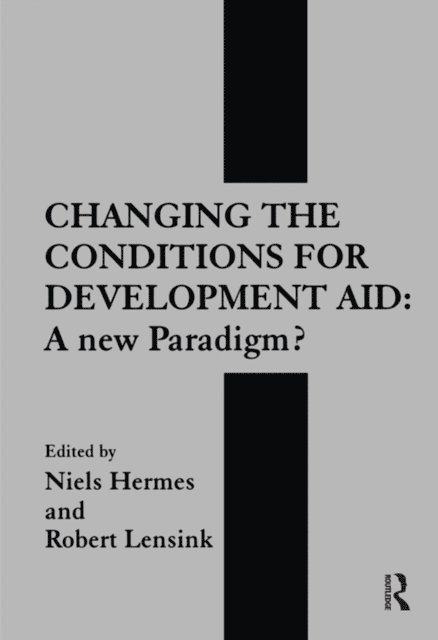
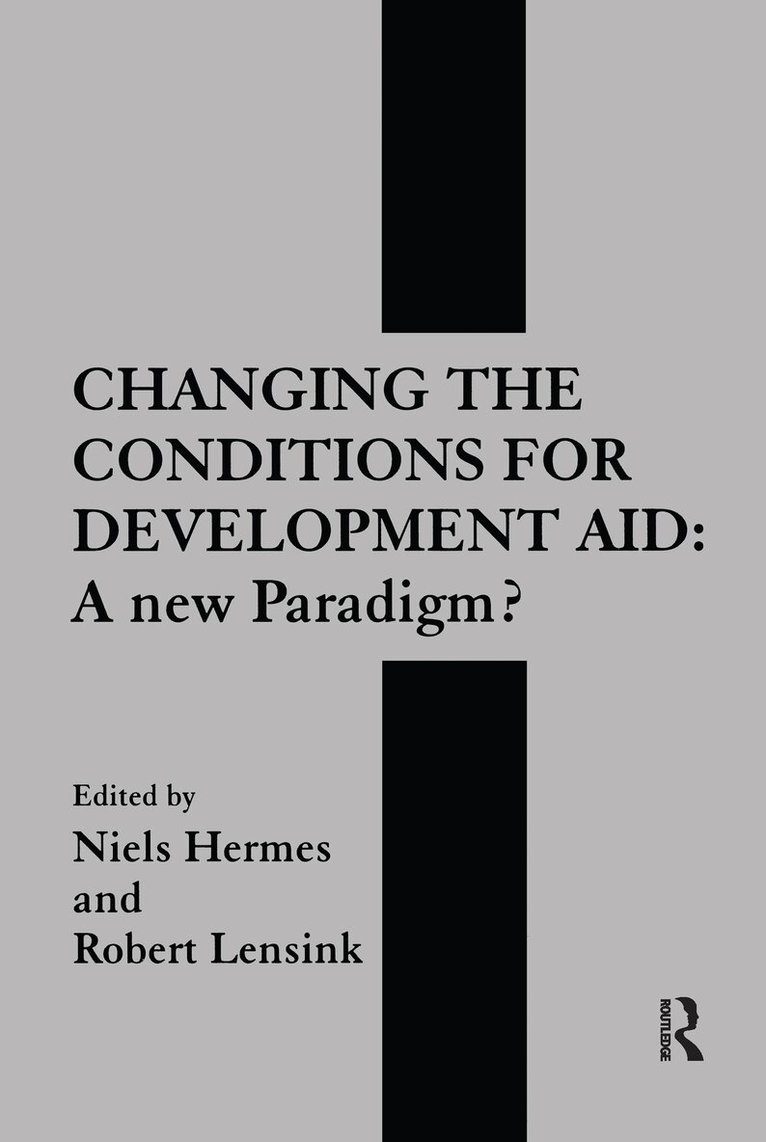
Changing the Conditions for Development Aid
A New Paradigm?
Av Neils Hermes, Robert Lensink
Häftad, 2019
427 kr
Lägg i varukorg
In 1998 the World Bank published a report entitled "Assessing Aid: What Works, What Doesn't and Why". This report presents the results of an extensive investigation into the effectiveness of development aid. The main message of the text of the report is that development aid helps, but only when …
Changing the Conditions for Development Aid
A New Paradigm?
Av Robert Lensink, Neils Hermes
E-bok, 2019
485 kr
Lägg i varukorg
In 1998 the World Bank published a report entitled "Assessing Aid: What Works, What Doesn''t and Why". This report presents the results of an extensive investigation into the effectiveness of development aid. The main message of the text of the report is that development aid helps, but only when …
Changing the Conditions for Development Aid
A New Paradigm?
Av Robert Lensink, Neils Hermes
E-bok, 2019
485 kr
Lägg i varukorg
In 1998 the World Bank published a report entitled "Assessing Aid: What Works, What Doesn''t and Why". This report presents the results of an extensive investigation into the effectiveness of development aid. The main message of the text of the report is that development aid helps, but only when …
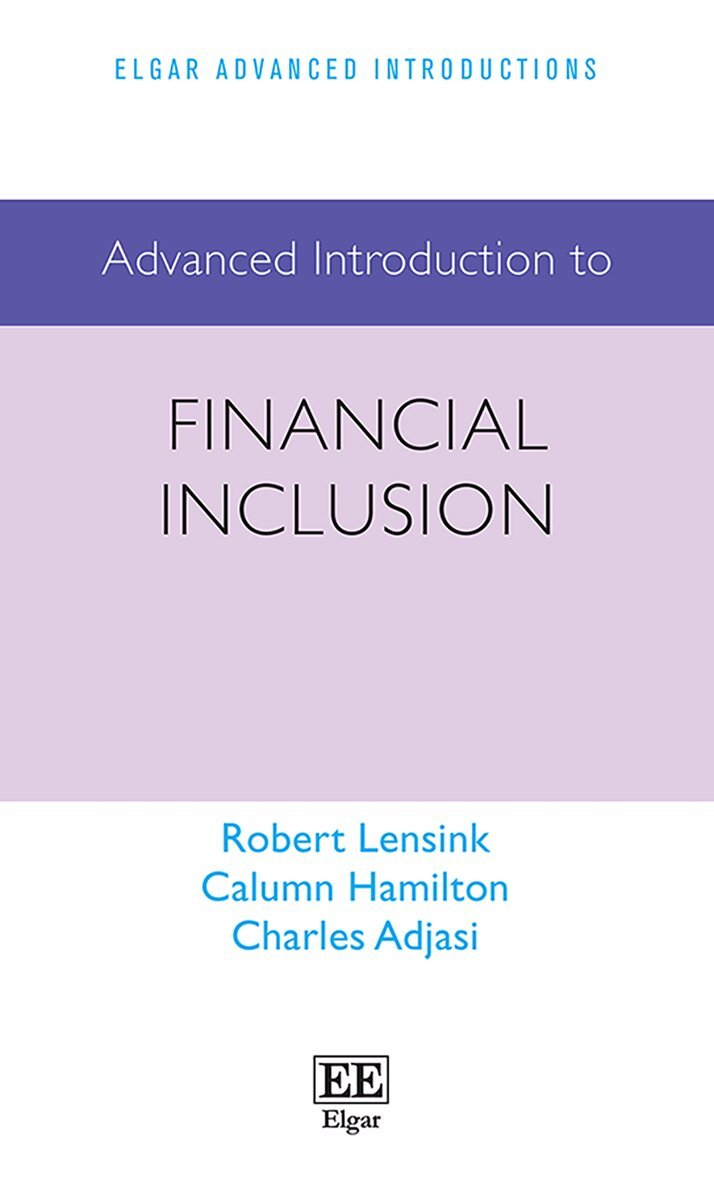
Advanced Introduction to Financial Inclusion
Av Robert Lensink, Calumn Hamilton m. fl.
Inbunden, 2022
1910 kr
Lägg i varukorg
Elgar Advanced Introductions are stimulating and thoughtful introductions to major fields in the social sciences, business and law, expertly written by the world’s leading scholars. Designed to be accessible yet rigorous, they offer concise and lucid surveys of the substantive and policy issues …
Advanced Introduction to Financial Inclusion
Av Charles Adjasi, Calumn Hamilton m. fl.
E-bok, 2022
303 kr
Lägg i varukorg
Elgar Advanced Introductions are stimulating and thoughtful introductions to major fields in the social sciences, business and law, expertly written by the world’s leading scholars. Designed to be accessible yet rigorous, they offer concise and lucid surveys of the substantive and policy issues …
Advanced Introduction to Financial Inclusion
Av Robert Lensink, Calumn Hamilton m. fl.
Häftad, 2022
354 kr
Lägg i varukorg
Elgar Advanced Introductions are stimulating and thoughtful introductions to major fields in the social sciences, business and law, expertly written by the world’s leading scholars. Designed to be accessible yet rigorous, they offer concise and lucid surveys of the substantive and policy issues …
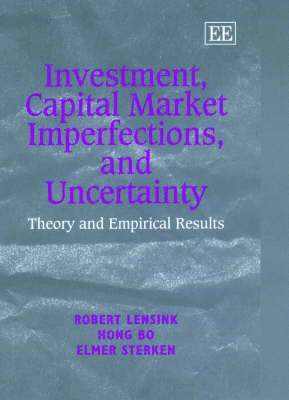
Investment, Capital Market Imperfections, and Uncertainty
Theory and Empirical Results
Av Robert Lensink, Hong Bo m. fl.
Inbunden, 2001
1800 kr
Lägg i varukorg
This book presents an up-to-date overview of the theory as well as the empirics of the relationship between investment, financial imperfections and uncertainty. After reviewing the capital market imperfections literature and the empirical results, the authors discuss both traditional investment …
Changing the Conditions for Development Aid
A New Paradigm?
Av Neils Hermes, Robert Lensink
Inbunden, 2001
1570 kr
Tillfälligt slut
This report presents the results of an extensive investigation into the effectiveness of development aid. Its main message is that development aid helps, but only when there is a good policy environment in the recipient countries, that is when there is sound macroeconomic management.