Robert Leventhal – författare
Visar alla böcker från författaren Robert Leventhal. Handla med fri frakt och snabb leverans.
9 produkter
9 produkter
Inbunden, Engelska, 2020
756 kr
Skickas inom 10-15 vardagar
Stepping Forward Together is a call to action for strategic thinking in synagogue and other religious community planning. At a time of external turmoil affecting every community, leaders need to look beyond short-term fixes to focus on sustainable strategy.Without sidestepping tough realities, positive leaders can maintain focus on their communal vision while following a careful plan to implement change. Expert leadership consultant Robert Leventhal presents a step-by-step guide to stepping forward into that strategic change. Annotated guides explain how to form a committee, develop a planning calendar, gather and analyze input, and develop a vision for the future. Leventhal guides readers through a campaign for expanding leadership capacity by forming a planning committee and task forces. He uses real-life cases to illustrate the struggles and successes of strategic planning.An essential volume for all religious community leaders in and outside the Jewish faith, Stepping Forward Together welcomes readers into a vigorous method of planning to achieve unparalleled community growth.
Häftad, Engelska, 2020
361 kr
Skickas inom 10-15 vardagar
Stepping Forward Together is a call to action for strategic thinking in synagogue and other religious community planning. At a time of external turmoil affecting every community, leaders need to look beyond short-term fixes to focus on sustainable strategy.Without sidestepping tough realities, positive leaders can maintain focus on their communal vision while following a careful plan to implement change. Expert leadership consultant Robert Leventhal presents a step-by-step guide to stepping forward into that strategic change. Annotated guides explain how to form a committee, develop a planning calendar, gather and analyze input, and develop a vision for the future. Leventhal guides readers through a campaign for expanding leadership capacity by forming a planning committee and task forces. He uses real-life cases to illustrate the struggles and successes of strategic planning.An essential volume for all religious community leaders in and outside the Jewish faith, Stepping Forward Together welcomes readers into a vigorous method of planning to achieve unparalleled community growth.
Häftad, Engelska, 2007
238 kr
Skickas inom 10-15 vardagar
Häftad, Engelska, 2024
235 kr
Skickas inom 5-8 vardagar
Del 25 - Interdisciplinary German Cultural Studies
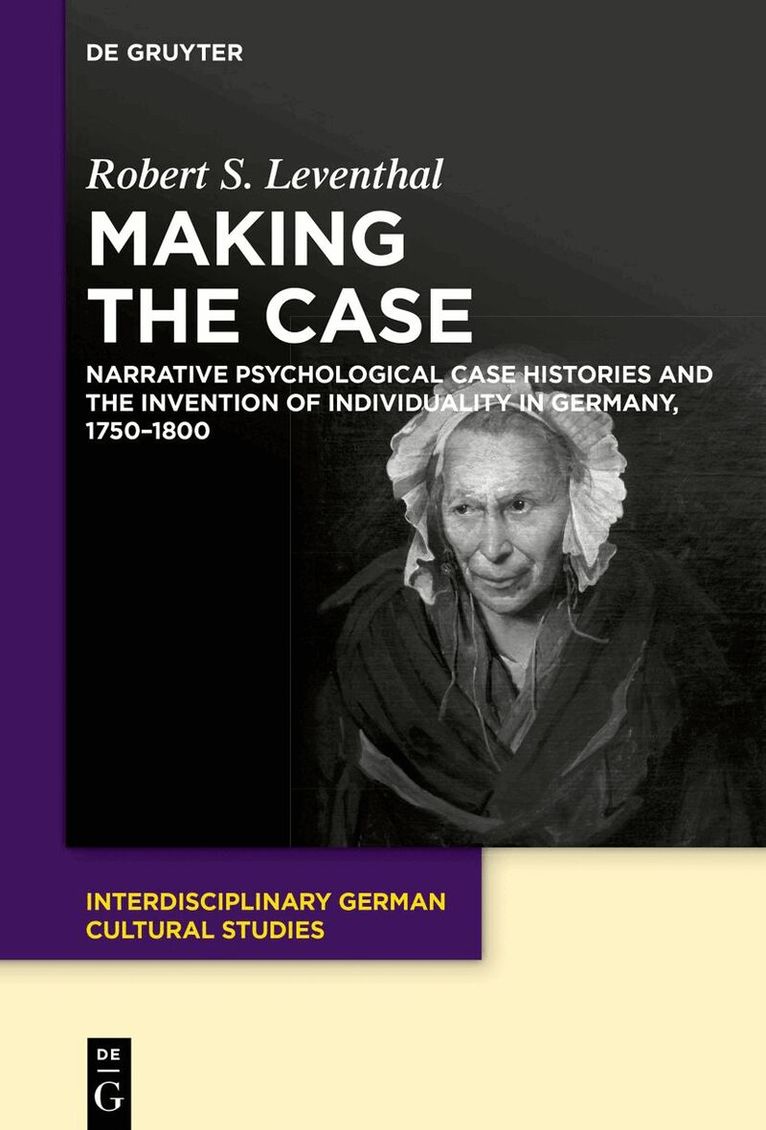
Making the Case
Narrative Psychological Case Histories and the Invention of Individuality in Germany, 1750-1800
Inbunden, Engelska, 2019
1 619 kr
Skickas inom 5-8 vardagar
One hundred years before Freud’s striking psychoanalytic case-histories, the narrative psychological case-history emerged in the second half of the eighteenth century in Germany as an epistemic genre (Gianna Pomata) that cut across the disciplines of medicine, philosophy, law, psychology, anthropology and literature. It differed significantly from its predecessors in theology, jurisprudence, and medicine. Rather than subsuming the individual under an established classification, moral precept, category, or type, the narrative psychological case-history endeavored to articulate the individual in its very individuality, thereby constructing a ‘self’ in its irreducible singularity. The presentation and analysis of several significant psychological case-histories, their theory and practice, as well as the controversies surrounding their utility, validity, and function for an envisioned ‘science of the soul’ constitutes the core of the book. Close and ‘distant’ (F. Moretti) readings of key texts and figures in the discussion regarding ‘empirical psychology’ (psychologia empirica), experiential psychology (Erfahrungsseelenkunde) and ‘medical psychology’ (medizinische Psychologie) such as Christian Wolff, J.C. Krüger, J.C. Bolton, Ernst Nicolai, J.A. Unzer, J.G. Sulzer, J.G. Herder, Friedrich Schiller, Jacob Friedrich Abel, Marcus Herz, Karl Philipp Moritz, J.C. Reil, Ernst Platner and Immanuel Kant provide the disciplinary, historical-scientific context within which this genre comes to the fore. As the first systematic argument concerning the early history of this genre, my thesis is that the psychological case-history evolved as part of a pastoral apparatus of care, concern, guidance and direction for what it fashioned as the ‘unique’ individual, as the discursive medium in a process by which the soul became a ‘self’. The narrative psychological case-history was in fact a meta-genre that transcended traditional boundaries of history and fiction, medicine and philosophy, psychology and anthropology, and sought, for the first time, to explicitly link the experience, history, memory, fantasy, previous trauma or suffering of a unique individual to illness, deviance, aberration and crime. In a word, it demonstrated, as Freud later said of his own case-histories in Studies on Hysteria, “the intimate relation between the history of suffering and the symptoms of illness” (“die innige Beziehung zwischen Leidensgeschichte und Krankheitssymptome”). This genre not only had a profound and far-reaching effect on the evolution of German and European literature – one thinks of the rich traditions of the Novella and the Fallgeschichte from Goethe, Büchner, R. L Stevenson, Edgar Allen Poe and Chekhov to Kafka and beyond – but in shaping modern literature, the clinical sciences, and even popular culture. The book should therefore be of interest not merely to Germanists, modern European cultural historians, historians of science, and literary historians, but also those interested in the history of medicine and psychology, the origins of psychoanalysis, the history of anthropology, cultural studies, and, more generally, the history of ideas.

E-bok
Engelska, 20191 490 kr
Läs direkt efter köp
One hundred years before Freud’s striking psychoanalytic case-histories, the narrative psychological case-history emerged in the second half of the eighteenth century in Germany as an epistemic genre (Gianna Pomata) that cut across the disciplines of medicine, philosophy, law, psychology, anthropology and literature. It differed significantly from its predecessors in theology, jurisprudence, and medicine. Rather than subsuming the individual under an established classification, moral precept, category, or type, the narrative psychological case-history endeavored to articulate the individual in its very individuality, thereby constructing a ‘self’ in its irreducible singularity. The presentation and analysis of several significant psychological case-histories, their theory and practice, as well as the controversies surrounding their utility, validity, and function for an envisioned ‘science of the soul’ constitutes the core of the book. Close and ‘distant’ (F. Moretti) readings of key texts and figures in the discussion regarding ‘empirical psychology’ (psychologia empirica), experiential psychology (Erfahrungsseelenkunde) and ‘medical psychology’ (medizinische Psychologie) such as Christian Wolff, J.C. Krüger, J.C. Bolton, Ernst Nicolai, J.A. Unzer, J.G. Sulzer, J.G. Herder, Friedrich Schiller, Jacob Friedrich Abel, Marcus Herz, Karl Philipp Moritz, J.C. Reil, Ernst Platner and Immanuel Kant provide the disciplinary, historical-scientific context within which this genre comes to the fore. As the first systematic argument concerning the early history of this genre, my thesis is that the psychological case-history evolved as part of a pastoral apparatus of care, concern, guidance and direction for what it fashioned as the ‘unique’ individual, as the discursive medium in a process by which the soul became a ‘self’. The narrative psychological case-history was in fact a meta-genre that transcended traditional boundaries of history and fiction, medicine and philosophy, psychology and anthropology, and sought, for the first time, to explicitly link the experience, history, memory, fantasy, previous trauma or suffering of a unique individual to illness, deviance, aberration and crime. In a word, it demonstrated, as Freud later said of his own case-histories in Studies on Hysteria, “the intimate relation between the history of suffering and the symptoms of illness” (“die innige Beziehung zwischen Leidensgeschichte und Krankheitssymptome”). This genre not only had a profound and far-reaching effect on the evolution of German and European literature – one thinks of the rich traditions of the Novella and the Fallgeschichte from Goethe, Büchner, R. L Stevenson, Edgar Allen Poe and Chekhov to Kafka and beyond – but in shaping modern literature, the clinical sciences, and even popular culture. The book should therefore be of interest not merely to Germanists, modern European cultural historians, historians of science, and literary historians, but also those interested in the history of medicine and psychology, the origins of psychoanalysis, the history of anthropology, cultural studies, and, more generally, the history of ideas.

E-bok
PDF, Engelska, 20191 476 kr
Läs direkt efter köp
One hundred years before Freud’s striking psychoanalytic case-histories, the narrative psychological case-history emerged in the second half of the eighteenth century in Germany as an epistemic genre (Gianna Pomata) that cut across the disciplines of medicine, philosophy, law, psychology, anthropology and literature. It differed significantly from its predecessors in theology, jurisprudence, and medicine. Rather than subsuming the individual under an established classification, moral precept, category, or type, the narrative psychological case-history endeavored to articulate the individual in its very individuality, thereby constructing a ‘self’ in its irreducible singularity. The presentation and analysis of several significant psychological case-histories, their theory and practice, as well as the controversies surrounding their utility, validity, and function for an envisioned ‘science of the soul’ constitutes the core of the book. Close and ‘distant’ (F. Moretti) readings of key texts and figures in the discussion regarding ‘empirical psychology’ (psychologia empirica), experiential psychology (Erfahrungsseelenkunde) and ‘medical psychology’ (medizinische Psychologie) such as Christian Wolff, J.C. Krüger, J.C. Bolton, Ernst Nicolai, J.A. Unzer, J.G. Sulzer, J.G. Herder, Friedrich Schiller, Jacob Friedrich Abel, Marcus Herz, Karl Philipp Moritz, J.C. Reil, Ernst Platner and Immanuel Kant provide the disciplinary, historical-scientific context within which this genre comes to the fore. As the first systematic argument concerning the early history of this genre, my thesis is that the psychological case-history evolved as part of a pastoral apparatus of care, concern, guidance and direction for what it fashioned as the ‘unique’ individual, as the discursive medium in a process by which the soul became a ‘self’. The narrative psychological case-history was in fact a meta-genre that transcended traditional boundaries of history and fiction, medicine and philosophy, psychology and anthropology, and sought, for the first time, to explicitly link the experience, history, memory, fantasy, previous trauma or suffering of a unique individual to illness, deviance, aberration and crime. In a word, it demonstrated, as Freud later said of his own case-histories in Studies on Hysteria, “the intimate relation between the history of suffering and the symptoms of illness” (“die innige Beziehung zwischen Leidensgeschichte und Krankheitssymptome”). This genre not only had a profound and far-reaching effect on the evolution of German and European literature – one thinks of the rich traditions of the Novella and the Fallgeschichte from Goethe, Büchner, R. L Stevenson, Edgar Allen Poe and Chekhov to Kafka and beyond – but in shaping modern literature, the clinical sciences, and even popular culture. The book should therefore be of interest not merely to Germanists, modern European cultural historians, historians of science, and literary historians, but also those interested in the history of medicine and psychology, the origins of psychoanalysis, the history of anthropology, cultural studies, and, more generally, the history of ideas.

Del 25 - Interdisciplinary German Cultural Studies
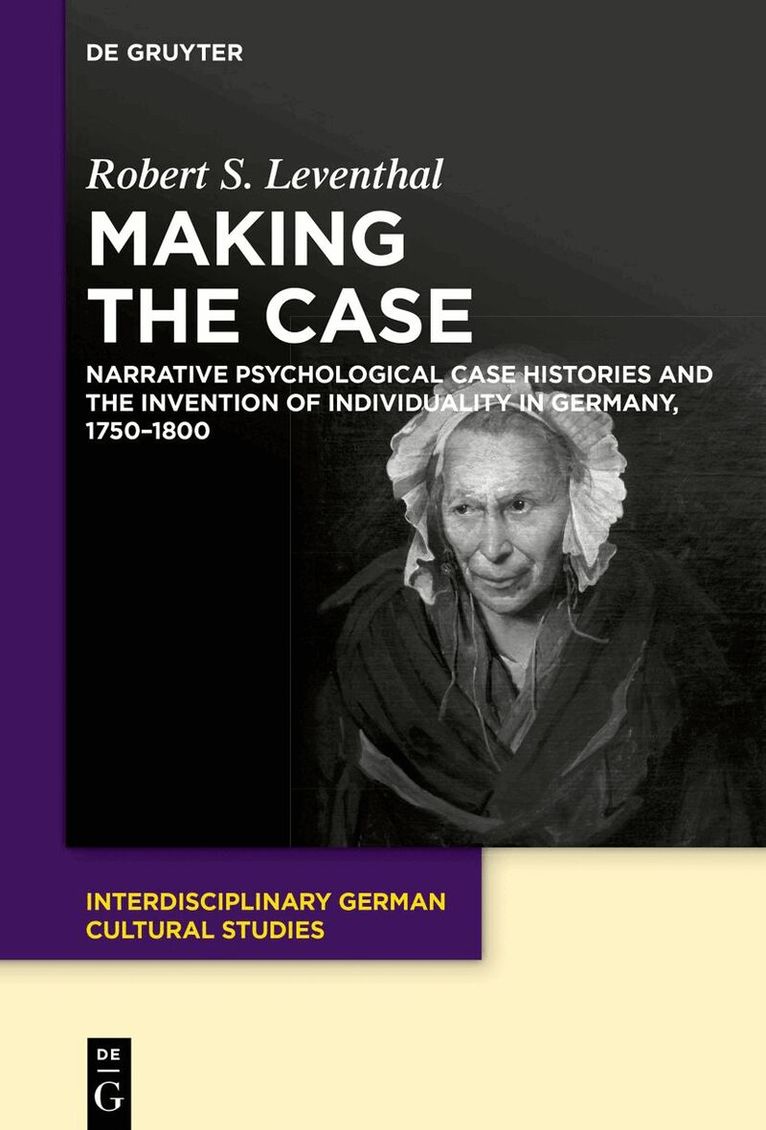
Making the Case
Narrative Psychological Case Histories and the Invention of Individuality in Germany, 1750-1800
Häftad, Engelska, 2021
404 kr
Skickas inom 5-8 vardagar
One hundred years before Freud’s striking psychoanalytic case-histories, the narrative psychological case-history emerged in the second half of the eighteenth century in Germany as an epistemic genre (Gianna Pomata) that cut across the disciplines of medicine, philosophy, law, psychology, anthropology and literature. It differed significantly from its predecessors in theology, jurisprudence, and medicine. Rather than subsuming the individual under an established classification, moral precept, category, or type, the narrative psychological case-history endeavored to articulate the individual in its very individuality, thereby constructing a ‘self’ in its irreducible singularity. The presentation and analysis of several significant psychological case-histories, their theory and practice, as well as the controversies surrounding their utility, validity, and function for an envisioned ‘science of the soul’ constitutes the core of the book. Close and ‘distant’ (F. Moretti) readings of key texts and figures in the discussion regarding ‘empirical psychology’ (psychologia empirica), experiential psychology (Erfahrungsseelenkunde) and ‘medical psychology’ (medizinische Psychologie) such as Christian Wolff, J.C. Krüger, J.C. Bolton, Ernst Nicolai, J.A. Unzer, J.G. Sulzer, J.G. Herder, Friedrich Schiller, Jacob Friedrich Abel, Marcus Herz, Karl Philipp Moritz, J.C. Reil, Ernst Platner and Immanuel Kant provide the disciplinary, historical-scientific context within which this genre comes to the fore. As the first systematic argument concerning the early history of this genre, my thesis is that the psychological case-history evolved as part of a pastoral apparatus of care, concern, guidance and direction for what it fashioned as the ‘unique’ individual, as the discursive medium in a process by which the soul became a ‘self’. The narrative psychological case-history was in fact a meta-genre that transcended traditional boundaries of history and fiction, medicine and philosophy, psychology and anthropology, and sought, for the first time, to explicitly link the experience, history, memory, fantasy, previous trauma or suffering of a unique individual to illness, deviance, aberration and crime. In a word, it demonstrated, as Freud later said of his own case-histories in Studies on Hysteria, “the intimate relation between the history of suffering and the symptoms of illness” (“die innige Beziehung zwischen Leidensgeschichte und Krankheitssymptome”). This genre not only had a profound and far-reaching effect on the evolution of German and European literature – one thinks of the rich traditions of the Novella and the Fallgeschichte from Goethe, Büchner, R. L Stevenson, Edgar Allen Poe and Chekhov to Kafka and beyond – but in shaping modern literature, the clinical sciences, and even popular culture. The book should therefore be of interest not merely to Germanists, modern European cultural historians, historians of science, and literary historians, but also those interested in the history of medicine and psychology, the origins of psychoanalysis, the history of anthropology, cultural studies, and, more generally, the history of ideas.

E-bok
Engelska, 2024187 kr
Läs direkt efter köp
"We affectionately called my father Harry, the Bear," Robert Leventhal writes. "Big, garrulous, and gruff, he cast a big shadow. I would struggle to determine how to be my own kind of bear." Swept Away is the story about the father and son relationship that shaped Leventhal''s life. The journey of becoming his own kind of bear is one that lead him from being a manager in his family broom and mop business in Springfield, Ohio to becoming a well-known synagogue leadership consultant in New York City. Leventhal spent 23 years in his family''s broom business, which would evolve into O-Cedar-Vining cleaning products. After the business was sold he stayed for 5 years with new owners. He then resigned from full-time work with O-Cedar and began exploring Jewish communal interests. He was interested I what was giving him energy in life and what was draining him. Along the way, he became a 7th grade religious school teacher, a Jewish day school president, and a Federation leader. From these experiences sprouted Leventhal''s idea of combining his business background with his emerging Jewish learnings—into a career as a synagogue consultant.Leventhal tells this story through a series of chronological vignettes that are organized around the narratives of key eras of his life: childhood, high school, college, early career and courtship, entering family business, choosing a new career, Jewish spiritual awakening, thoughts on love, legacy and loss. This is not an exhaustive biography full of dates. It''s more like a charm bracelet: stories on a glinting chain of narrative themes. Leventhal''s relationship with his father and his father''s legacy are certainly themes along this chain. Leventhal writes, "Dad was the hero of our family story. He went out from our home in Springfield, Ohio each week to sell his brooms. On these lonely highways, pre cell phone or Sirus XM radio, curiosity was his companion. On his return, he entertained us with his curious adventures."Leventhal chose to mirror his father''s style: its adventurousness, ambition, and curiosity. Swept Away tells the story of Leventhal''s longing to learn new things, to be a story gatherer and story teller, to hold court, to entertain the table as his father always had. Unknowingly, just a kid, he also accepted the burden of his father''s restlessness, driven nature, and loneliness. He would be swept away from home and hearth—by ambition and by fate—to launch his own adventures.The first Jewish senior consultant at the Alban Institute in Bethesda, Maryland, Leventhal was taught how to patiently and carefully consult to congregations. He would use his entrepreneurial marketing skills to develop leadership, learning programs. After 10 years at Alban, he moved to New York City, to become the director of leadership at United Synagogues of Conservative Judaism.During this time, he was a Jewish work-in-progress. Through trial and error, he created a synagogue consulting practice and worked to create a life of Jewish learning, living, and leadership. Leventhal writes that, "As I did this work, I came to feel that God was smiling on my construction site—cheering me on."