Robert Lucas Scott - Böcker
Visar alla böcker från författaren Robert Lucas Scott. Handla med fri frakt och snabb leverans.
3 produkter
3 produkter
1 053 kr
Skickas inom 7-10 vardagar
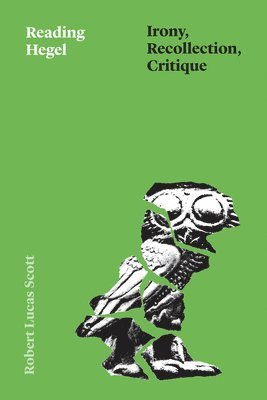
Retrieves Hegelian speculative experience for literary theory.The relationship between Hegel and literary theory has for a long time been both contested and paradoxical. On the one hand, “theory” is often skeptical of all that Hegel ostensibly stood for: idealism, systematicity, and identity at the expense of difference. Yet, in spite of itself, literary theory is taken to owe a profound debt to Hegel’s philosophy. Robert Lucas Scott’s book complicates this account and argues that literary theory has made the mistake of abstracting Hegel’s thought from its more dynamic presentation in Hegel’s writings, reducing “Hegel” to a series of propositions or positions. Literary theory, Scott argues, misses what is perhaps the greatest innovation of Hegel’s philosophy: a presentation of experience that begins precisely by setting aside all preconceptions or prior assumptions. It is on this point that Hegel’s philosophy itself approaches literature: its content cannot be simply abstracted from the singular experience of reading it. Only through a mode of reading alive to speculative experience can literary theory become truly Hegelian. Scott’s exposition of Hegel offers a model of reading with relevance beyond philosophy: one that is critical without pretensions of mastery and detachment and that honors the singularity of the reading experience without succumbing to the subjectivism of the “postcritical.”The book also includes engagements with the work of Luther, Kant, Marx, Gillian Rose, Fredric Jameson, Robert Brandom, Catherine Malabou, and more in its recovery of Hegel’s thought for a critical understanding of our time.
254 kr
Skickas inom 7-10 vardagar
Retrieves Hegelian speculative experience for literary theory.The relationship between Hegel and literary theory has for a long time been both contested and paradoxical. On the one hand, "theory" is often skeptical of all that Hegel ostensibly stood for: idealism, systematicity, and identity at the expense of difference. Yet, in spite of itself, literary theory is taken to owe a profound debt to Hegel's philosophy. Robert Lucas Scott's book complicates this account and argues that literary theory has made the mistake of abstracting Hegel's thought from its more dynamic presentation in Hegel's writings, reducing "Hegel" to a series of propositions or positions. Literary theory, Scott argues, misses what is perhaps the greatest innovation of Hegel's philosophy: a presentation of experience that begins precisely by setting aside all preconceptions or prior assumptions. It is on this point that Hegel's philosophy itself approaches literature: its content cannot be simply abstracted from the singular experience of reading it. Only through a mode of reading alive to speculative experience can literary theory become truly Hegelian. Scott's exposition of Hegel offers a model of reading with relevance beyond philosophy: one that is critical without pretensions of mastery and detachment and that honors the singularity of the reading experience without succumbing to the subjectivism of the "postcritical."The book also includes engagements with the work of Luther, Kant, Marx, Gillian Rose, Fredric Jameson, Robert Brandom, Catherine Malabou, and more in its recovery of Hegel's thought for a critical understanding of our time.
198 kr
Skickas inom 7-10 vardagar
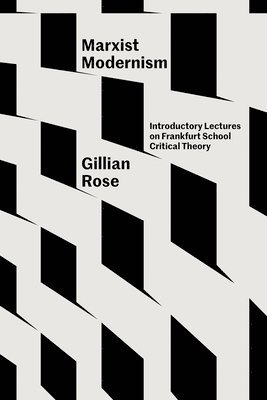
Marxist Modernism is a comprehensive yet concise and conversational introduction to the Frankfurt School. It is also a new resource from one of the twentieth century's most important philosophers: Gillian Rose.Her 1979 lectures on the Frankfurt School explore the lives and philosophies of a range of the school's members and affiliates, including Adorno, Lukács, Brecht, Bloch, Benjamin, and Horkheimer, and outline the way each theorist developed Marx's theory of commodity fetishism into a Marxist theory of culture.Edited by Robert Lucas Scott and James Gordon Finlayson