Robert M. Blumenthal – författare
Visar alla böcker från författaren Robert M. Blumenthal. Handla med fri frakt och snabb leverans.
4 produkter
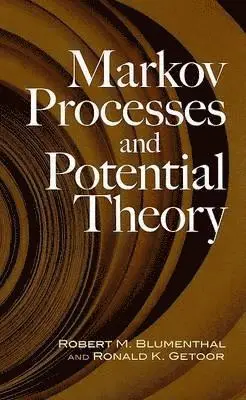
Markov Processes and Potential Theory
Av Robert M. Blumenthal, Ronald K. Getoor
Häftad, 2007
249 kr
Lägg i varukorg
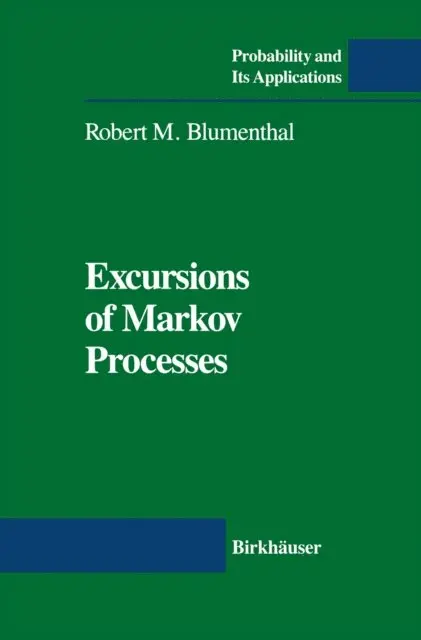
Excursions of Markov Processes
E-bok, 2012
978 kr
Lägg i varukorg
Let {Xti t ~ O} be a Markov process in Rl, and break up the path X t into (random) component pieces consisting of the zero set ({ tlX = O}) and t the "excursions away from 0," that is pieces of path X. : T ::5 s ::5 t, with Xr- = X = 0, but X. 1= 0 for T < s < t. When one measures the time in t the …
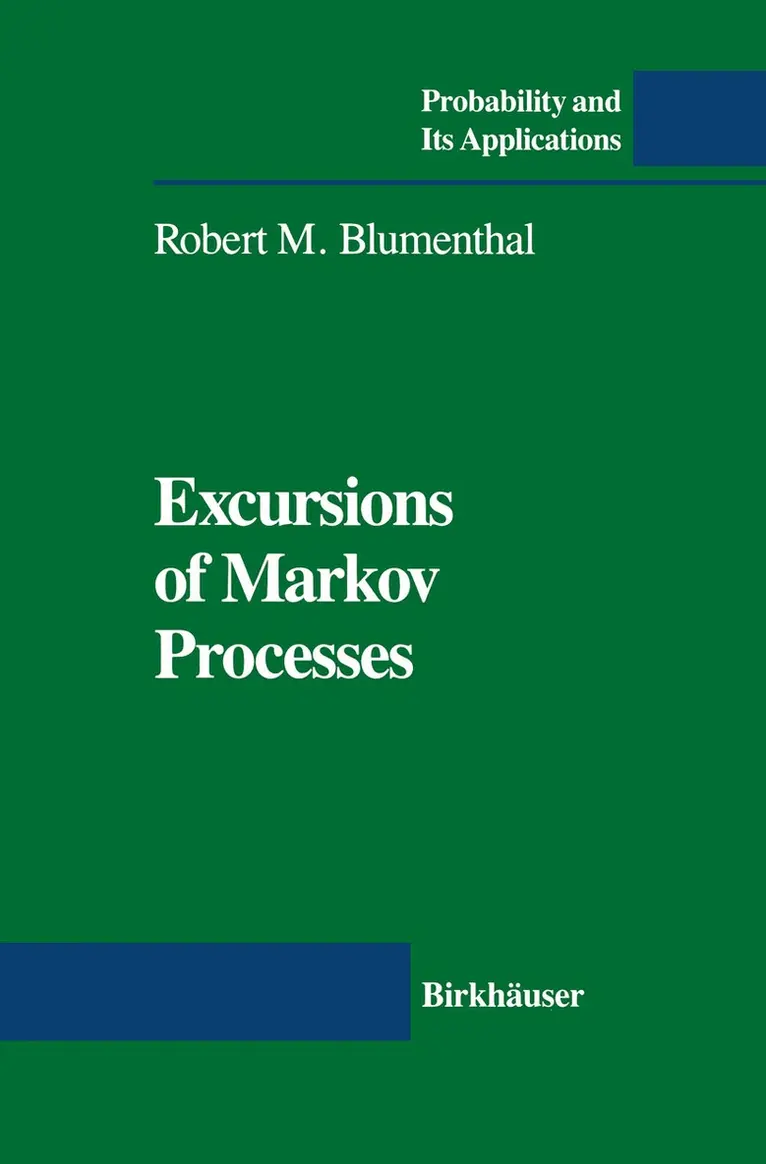
Excursions of Markov Processes
Häftad, 2012
764 kr
Lägg i varukorg
Let {Xti t ~ O} be a Markov process in Rl, and break up the path X t into (random) component pieces consisting of the zero set ({ tlX = O}) and t the "excursions away from 0," that is pieces of path X. : T ::5 s ::5 t, with Xr- = X = 0, but X. 1= 0 for T < s < t. When one measures the time in t the …
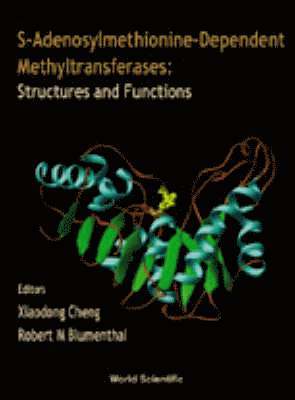
S-ADENOSYLMETHIONINE-DEPENDENT METHYLTRANSFERASES: STRUCTURES AND FUNCTIONS
Av CHENG XIAODONG, Xiaodong Cheng m. fl.
Inbunden, 1999
2462 kr
Tillfälligt slut
This invaluable volume, written by an international group of scientists, presents an overview of the AdoMet-dependent methyltransferases, with special emphasis on structure-function relationships.S-adenosyl-L-methionine (AdoMet) is the second most commonly used enzyme cofactor after ATP. The …