Robert Mecham – författare
Visar alla böcker från författaren Robert Mecham. Handla med fri frakt och snabb leverans.
12 produkter
Extracellular Matrix: an Overview
Inbunden, 2011
3265 kr
Lägg i varukorg
Knowledge of the extracellular matrix (ECM) is essential to understand cellular differentiation, tissue development, and tissue remodeling.This volume of the series “Biology of Extracellular Matrix” provides a timely overview of the structure, regulation, and function of the major macromolecules …
Extracellular Matrix: an Overview
E-bok, 2011
4187 kr
Lägg i varukorg
Knowledge of the extracellular matrix (ECM) is essential to understand cellular differentiation, tissue development, and tissue remodeling. This volume of the series “Biology of Extracellular Matrix” provides a timely overview of the structure, regulation, and function of the major macromolecules …
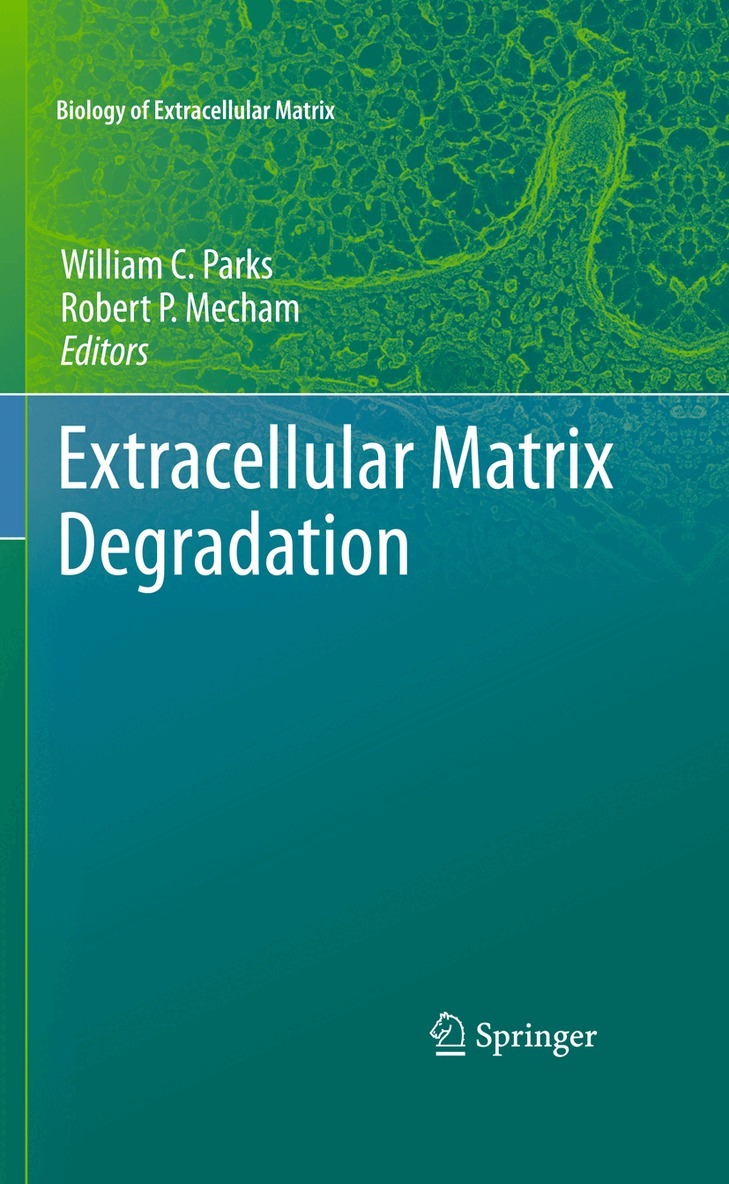
Extracellular Matrix Degradation
Av William C. Parks, Robert Mecham
Inbunden, 2011
1685 kr
Lägg i varukorg
Regulated turnover of extracellular matrix (ECM) is an important component of tissue homeostasis. In recent years, the enzymes that participate in, and control ECM turnover have been the focus of research that touches on development, tissue remodeling, inflammation and disease. This volume in the …
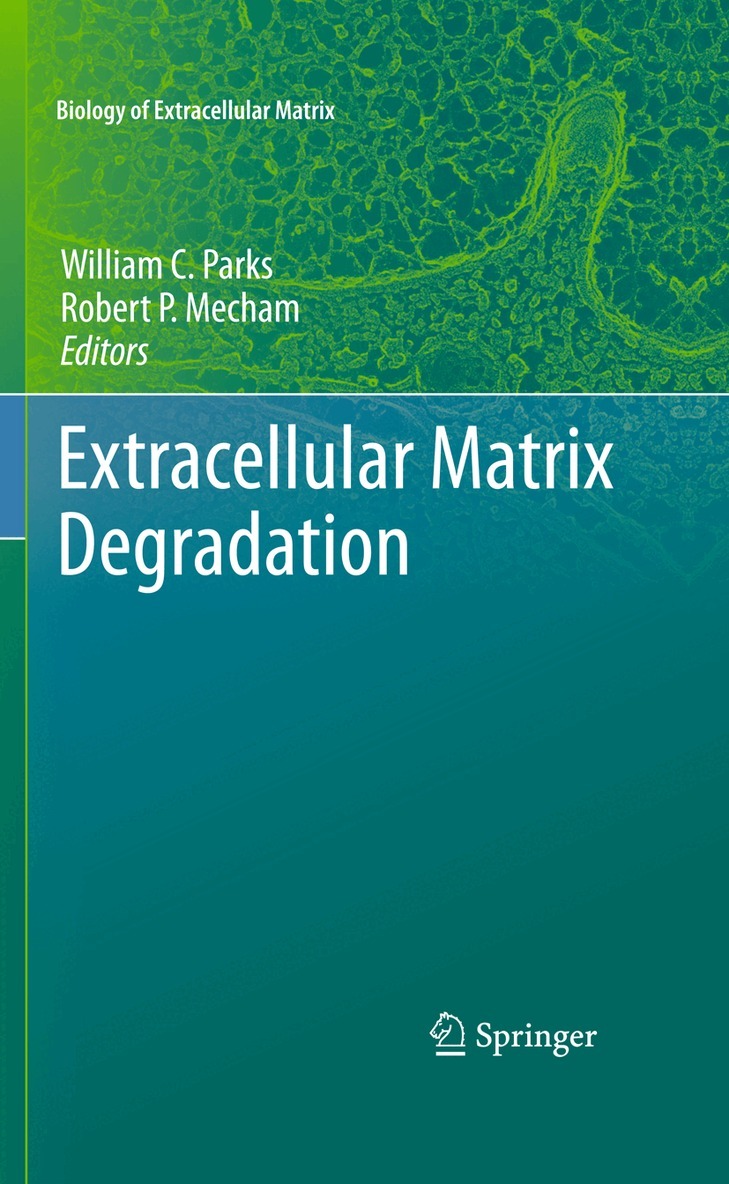
Extracellular Matrix Degradation
Av Robert Mecham, William C. Parks
E-bok, 2011
2174 kr
Lägg i varukorg
Regulated turnover of extracellular matrix (ECM) is an important component of tissue homeostasis. In recent years, the enzymes that participate in, and control ECM turnover have been the focus of research that touches on development, tissue remodeling, inflammation and disease. This volume in the …
Extracellular Matrix: an Overview
Häftad, 2013
3363 kr
Lägg i varukorg
Knowledge of the extracellular matrix (ECM) is essential to understand cellular differentiation, tissue development, and tissue remodeling.This volume of the series “Biology of Extracellular Matrix” provides a timely overview of the structure, regulation, and function of the major macromolecules …
Extracellular Matrix Degradation
Av William C. Parks, Robert Mecham
Häftad, 2013
1685 kr
Lägg i varukorg
Regulated turnover of extracellular matrix (ECM) is an important component of tissue homeostasis. In recent years, the enzymes that participate in, and control ECM turnover have been the focus of research that touches on development, tissue remodeling, inflammation and disease. This volume in the …
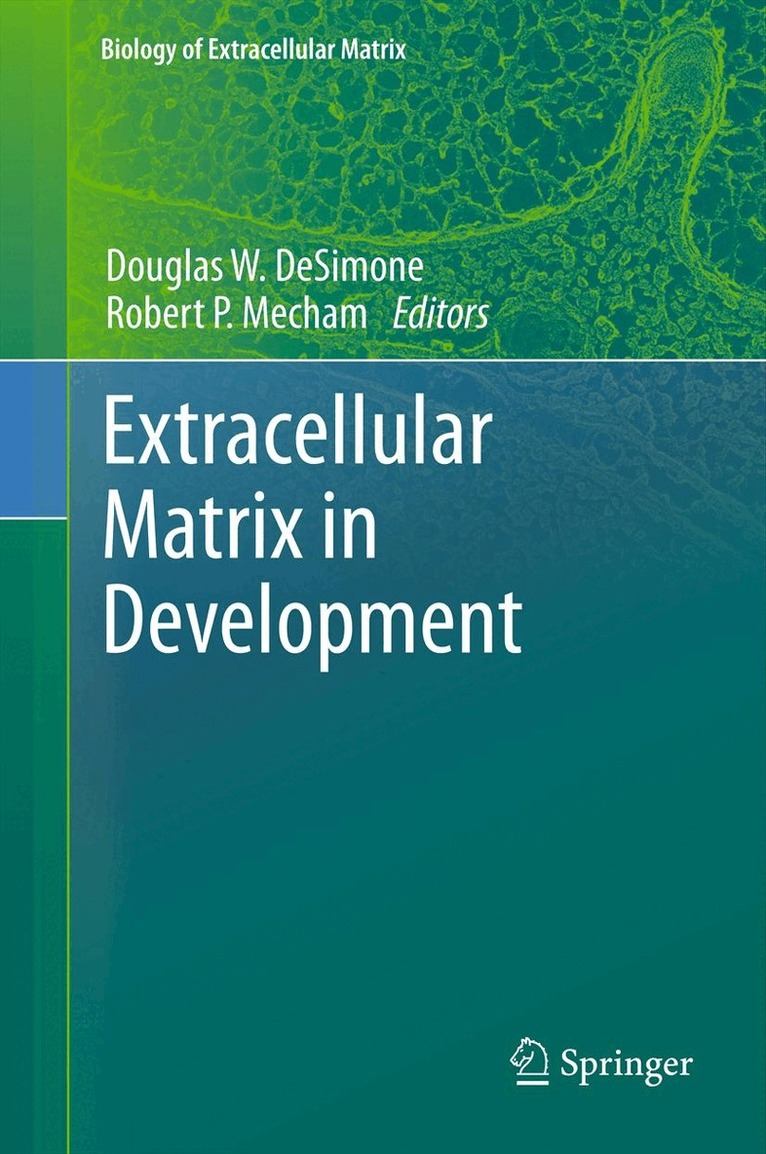
Extracellular Matrix in Development
Av Douglas W. DeSimone, Robert Mecham
Inbunden, 2013
1685 kr
Lägg i varukorg
Cells in the developing embryo depend on signals from the extracellular environment to help guide their differentiation. An important mediator in this process is the extracellular matrix – secreted macromolecules that interact to form large protein networks outside the cell. During development, the …
Extracellular Matrix in Development
Av Robert Mecham, Douglas W. DeSimone
E-bok, 2013
2174 kr
Lägg i varukorg
Cells in the developing embryo depend on signals from the extracellular environment to help guide their differentiation. An important mediator in this process is the extracellular matrix – secreted macromolecules that interact to form large protein networks outside the cell. During development, the …
Evolution of Extracellular Matrix
Av Fred W. Keeley, Robert Mecham
Inbunden, 2013
1636 kr
Lägg i varukorg
The evolution of single cells into multicellular organisms was mediated, in large part, by the extracellular matrix. The proteins and glycoconjugates that make up the extracellular matrix provide structural support to cellular complexes, facilitate cell adhesion and migration, and impart mechanical …
Evolution of Extracellular Matrix
Av Robert Mecham, Fred W. Keeley
E-bok, 2013
2065 kr
Lägg i varukorg
The evolution of single cells into multicellular organisms was mediated, in large part, by the extracellular matrix. The proteins and glycoconjugates that make up the extracellular matrix provide structural support to cellular complexes, facilitate cell adhesion and migration, and impart mechanical …
Extracellular Matrix in Development
Av Douglas W. DeSimone, Robert Mecham
Häftad, 2015
1685 kr
Lägg i varukorg
Cells in the developing embryo depend on signals from the extracellular environment to help guide their differentiation. An important mediator in this process is the extracellular matrix – secreted macromolecules that interact to form large protein networks outside the cell. During development, the …
Evolution of Extracellular Matrix
Av Fred W. Keeley, Robert Mecham
Häftad, 2015
1636 kr
Lägg i varukorg
The evolution of single cells into multicellular organisms was mediated, in large part, by the extracellular matrix. The proteins and glycoconjugates that make up the extracellular matrix provide structural support to cellular complexes, facilitate cell adhesion and migration, and impart mechanical …