Robert P. Liberman - Böcker
Visar alla böcker från författaren Robert P. Liberman. Handla med fri frakt och snabb leverans.
2 produkter
2 produkter
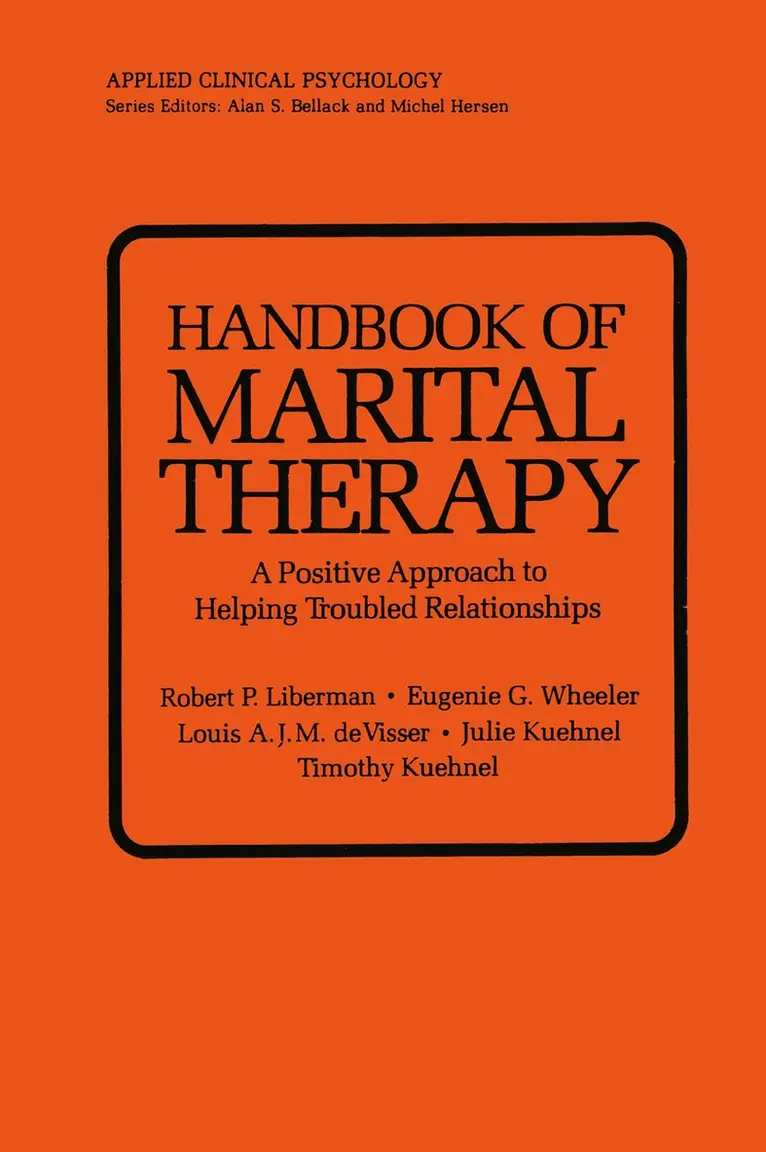
Handbook of Marital Therapy: A Positive Approach to Helping Troubled Relationships
Häftad, Engelska, 1980
1 625 kr
Skickas inom 10-15 vardagar
In the treatment of marital problems, behaviorally oriented and com munication oriented approaches have been in conflict and seen as con trasting and unlikely bed partners. Many therapists, focusing on com munication skills, have felt that behaviorists were too structured and uncaring; on the other hand, behaviorists have considered humanistic therapists as being "touchy-feely," vague, and unfocused. However, in the Handbook of Marital Therapy, Liberman, Wheeler, de Visser, and the Kuehnels have wedded these two potent approaches into an inte grated framework that makes them loving bed partners. With over a decade of experience in applying behaviorally ori ented treatment to couples, Liberman and his co-authors have devel oped an educational model that focuses on teaching specific commu nication skills to couples. The communication skills they describe have been used extensively in all types of marital therapy, regardless of the therapist's theoretical orientation. The unique contribution of this book is that the authors provide a step-by-step approach to teaching these communication skills within a behavioral framework. Each chapter guides the therapist through the many issues and problems confronting him or her as a change agent. This highly readable book is enhanced by a liberal use of case exam ples. Emphasis is given to homework and structured sessions that focus on increasing specific communication skills in a sequential manner. The advantages of working with couples in a group setting are dis cussed, and concrete suggestions on how to manage these groups are clearly presented.
910 kr
Tillfälligt slut
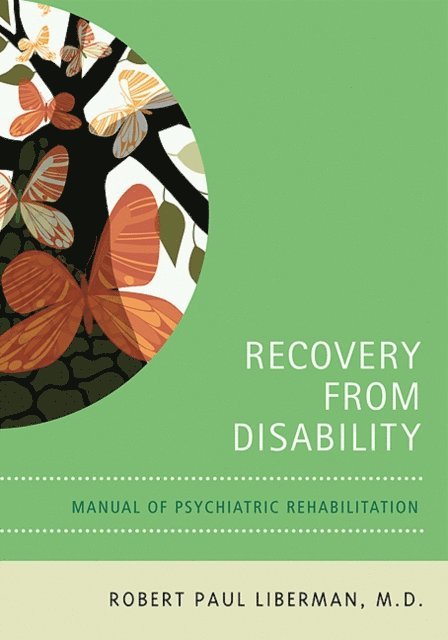
The time is right for recovery from serious mental disorders. Mental health professionals and state and local mental health agencies are responding to a national call for action on recovery: from the President's Commission on Mental Health, the Surgeon General, the National Alliance on Mental Illness, and the Substance Abuse and Mental Health Services Administration. But how can recovery from mental disorders become a reality? Recovery From Disability describes the principles and practices of psychiatric rehabilitation to bridge the gap between what is known and what actually can be used to achieve recovery for patients in real-life mental health programs. The book draws on Dr. Robert Paul Liberman's 40 years of designing, testing, and disseminating innovative treatments for persons with mental disabilities. Illuminating up-to-date treatment techniques that reflect a consensus of experts regarding evidence-based practices, Dr. Liberman shows how recovery can be the rule rather than the exception.This practical book addresses day-to-day realities faced by practitioners who must wrestle with the individualized needs and personal goals of each patient while drawing up a rehabilitation roadmap to recovery. Written in a down-to-earth manner with minimal jargon, this clinical manual is intended for everyday use. Brimming with clear advice and ideas for effective services, the book is relevant to the work of all mental health disciplines, administrators, consumer advocates, and clinicians with all levels of experience. Practice-based evidence is highlighted by an abundance of real-life examples and a host of graphic aids. The author addresses the particular needs of Latino patients and takes up the latest developments in rehabilitation, such as illness management, social and independent living skills training, neurocognitive pharmacology, cognitive remediation, and use of computers in rehabilitation. Each chapter contains information, techniques, and treatment methods that enable clinicians to: ; Help patients select realistic yet personally meaningful goals for enriching their lives; Teach patients how to stabilize their symptoms and cognitive impairments; Train patients in social and independent living skills for empowerment and autonomy; Educate family members and other caregivers to collaborate with mental health professionals in overcoming their loved one's disability; Provide access to vocational rehabilitation, including supported employment; Facilitate comprehensiveness, continuity, and coordination of competency-based rehabilitation, using personal support specialists, assertive community treatment, and integrated mental health care Dr. Liberman also describes how to customize services that are effective for individuals with more than one disorder, whose disorder is refractory to customary pharmacological and psychosocial treatments, or whose adaptation to community life is marred by aggressive behavior. With its wealth of rich and immediately applicable treatment approaches, Recovery From Disability will help professionals equip mentally disabled patients to reach their personally relevant goals and progress on the road to recovery.