Robert P. Marzec - Böcker
Visar alla böcker från författaren Robert P. Marzec. Handla med fri frakt och snabb leverans.
4 produkter
4 produkter
271 kr
Skickas inom 11-20 vardagar
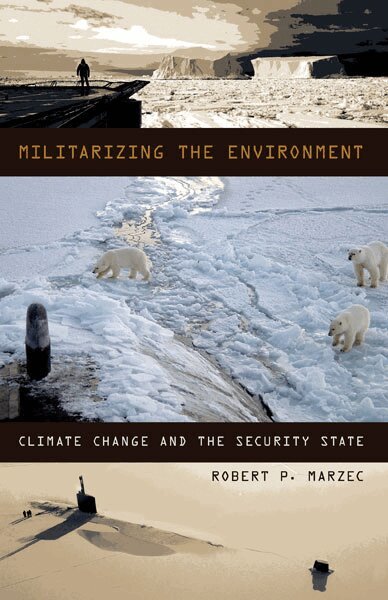
As the seriousness of climate change becomes more and more obvious, military institutions are responding by taking a prominent role in the governing of environmental concerns, engaging in “climate change war games,” and preparing for the effects of climate change-from conflicts due to loss of food, water, and energy to the mass migration of millions of people displaced by rising sea levels. This combat-oriented stance stems from a self-destructive pattern of thought that Robert P. Marzec names “environmentality,” an attitude that has been affecting human–environmental relations since the seventeenth century.Militarizing the Environment traces the rise of this influential mindset in America and other nations that threatens to supplant ideas of sustainability with demands for adaptation. In this extensive historical study of scientific, military, political, and economic formations across five centuries, Marzec reveals how environmentality has been instrumental in the development of today’s security society-informing the creation of the military-industrial complex during World War II and the National Security Act that established the CIA during the Cold War.Now embedded in contemporary Western thought, environmentality has even infiltrated scientific thinking-transforming Darwinian insights into a quasi-theology that makes security the biological basis of existence. Marzec exposes the self-destructive nature of this increasingly accepted worldview and offers alternatives that counter the blind alleys of national and global security.
1 037 kr
Skickas
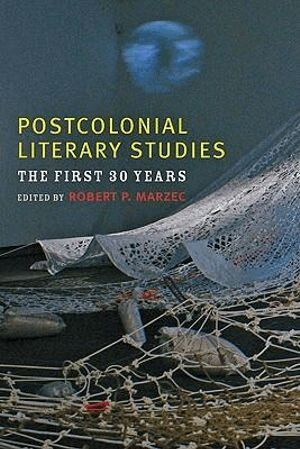
Internationally recognized for its superior scholarship, Modern Fiction Studies was one of the first journals to publish articles on postcolonial studies. Since postcolonialism's inception, scholars have defined, clarified, and enriched its conceptions and theoretical development in the pages of MFS. This anthology collects the best and most important articles on postcolonial literary studies published in MFS in the past thirty years. Postcolonial Literary Studies brings together groundbreaking scholarship focusing on significant works of fiction by such writers as Chinua Achebe, J. M. Coetzee, Jamaica Kincaid, V. S. Naipaul, Arundhati Roy, Salman Rushdie, Bapsi Sidhwa, Ngugi wa Thiong'o, and more. The essays feature ideas that helped shape the discipline from its earliest stages to the present and represent some of the finest examples of literary, theoretical, historical, and cultural criticism. With its focus on literary figures and texts, rather than solely on theory, this volume fills a significant gap in the fields of postcolonialism, global studies, and literary criticism in general.This rich collection of essays by the field's leading scholars will prove indispensable to instructors and students across a broad spectrum of humanistic studies. It not only highlights the development and transformation of postcolonial literary study but also, by mapping out new directions of study, considers its continual significance and expansion.
541 kr
Tillfälligt slut
Internationally recognized for its superior scholarship, Modern Fiction Studies was one of the first journals to publish articles on postcolonial studies. Since postcolonialism's inception, scholars have defined, clarified, and enriched its conceptions and theoretical development in the pages of MFS. This anthology collects the best and most important articles on postcolonial literary studies published in MFS in the past thirty years. Postcolonial Literary Studies brings together groundbreaking scholarship focusing on significant works of fiction by such writers as Chinua Achebe, J. M. Coetzee, Jamaica Kincaid, V. S. Naipaul, Arundhati Roy, Salman Rushdie, Bapsi Sidhwa, Ngugi wa Thiong'o, and more. The essays feature ideas that helped shape the discipline from its earliest stages to the present and represent some of the finest examples of literary, theoretical, historical, and cultural criticism. With its focus on literary figures and texts, rather than solely on theory, this volume fills a significant gap in the fields of postcolonialism, global studies, and literary criticism in general.This rich collection of essays by the field's leading scholars will prove indispensable to instructors and students across a broad spectrum of humanistic studies. It not only highlights the development and transformation of postcolonial literary study but also, by mapping out new directions of study, considers its continual significance and expansion.
397 kr
Tillfälligt slut
Narrating 9/11 challenges the notion that Americans have overcome the national trauma of the terrorist attacks on the World Trade Center and the Pentagon. The volume responds to issues of war, surveillance, and the expanding security state, including the Bush Administration's policies on preemptive war, extraordinary rendition, torture abroad, and the suspension of privacy rights and civil liberties at home. Building on the work of Giorgio Agamben, Slavoj Zizek, and Donald Pease, the contributors focus on the ways in which post-9/11 narratives help make visible the fantasies that attempt to justify the ongoing state of exception and American exceptionalism. Narrating 9/11 examines a variety of contemporary narratives as they relate to the cultural construction of the neoliberal nation-state, a role that mediates the possibilities of ethnic and religious identity as well as the ability to imagine terrorism.Touching on some of the mainstays of 9/11 fiction, including Jonathan Safran Foer's Extremely Loud & Incredibly Close and John Updike's Terrorist, the book expands this particular canon by considering the work of such writers as Jess Walter, William Gibson, Lauren Groff, Ken Kalfus, Ian McEwan, Philip Roth, John le Carre, Laila Halaby, Michael Chabon, and Jarett Kobek. Narrating 9/11 pushes beyond a critical focus on domestic realism, offering chapters that examine speculative and genre fiction, postmodernism, climate change, and the evolving security state, as well as the television series Lost and the film Paradise Now.