Robert P. Saldin – författare
Visar alla böcker från författaren Robert P. Saldin. Handla med fri frakt och snabb leverans.
9 produkter
9 produkter
Inbunden, Engelska, 2017
1 509 kr
Skickas inom 5-8 vardagar
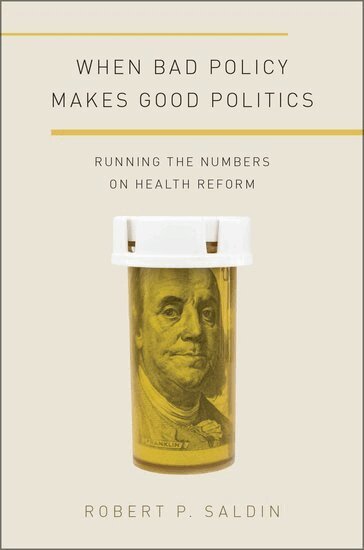
From all outward appearances, the American policymaking process has been revolutionized in the last half century. Beginning in the 1970s, new safeguards were put in place to prevent the kind of free-wheeling and sometimes reckless policymaking environment of earlier periods. These changes--including the creation of the non-partisan Congressional Budget Office--were widely hailed as ushering in a new era of accountability in Washington and putting an end to the days when cagey political operatives could rush major legislation through Congress without any real consideration of the economic costs. But what if the supposedly new and improved policymaking process that resulted from these 'good government' reforms is every bit as prone to manipulation as the one it replaced?As Robert Saldin shows in When Bad Policy Makes Good Politics, that has unfortunately been the case. As in the past, the new politics of the policymaking process encourage savvy political actors to game the system. The very rules that were designed to thwart financially irresponsible legislation now incentivize the development of fundamentally flawed and unworkable policies. To uncover the pathologies of the American policymaking process, Saldin traces the sad tale of the Community Living Assistance Services and Supports (CLASS) Act. While few outside the beltway are aware of it, it was a major piece of legislation that played a central role in the passage of the Affordable Care Act (ACA), the most important social policy law since the 1960s. The CLASS Act targeted an intractable problem: the ever-increasing demand for costly long-term care services. For decades, both Republicans and Democrats have recognized the problem as a major one, so the question has not been whether we should tackle it. Rather, the debate centered on how we should do it-that is, how we should pay for it. The problem was always that the costs were staggering, and there was little political will to fund such a program (Medicare did not fund it). Long term care advocates realized this, and therefore focused on passing a law that effectively ignored the economic costs. They finally shuttled it into the larger Affordable Care Act, which was passed into law in 2010. Saldin traces the process, showing how an array of perverse incentives allowed such a flawed law to come into being. In fact, Kathleen Sibelius, the Secretary of Health and Human Services, announced in late 2011 that the administration would no longer try to put the law into effect because of its basic unworkability. Saldin's book is ostensibly about this one piece of legislation, but it's about much more than this: the near-impossibility of passing 'clean' laws that are not doctored by special interests adept at gaming the system. Essential reading for anyone interested in the policymaking process, the book establishes that our current policymaking environment produces outcomes that are just as perverse as the ones enacted by the old system.
Häftad, Engelska, 2017
504 kr
Skickas inom 5-8 vardagar
From all outward appearances, the American policymaking process has been revolutionized in the last half century. Beginning in the 1970s, new safeguards were put in place to prevent the kind of free-wheeling and sometimes reckless policymaking environment of earlier periods. These changes--including the creation of the non-partisan Congressional Budget Office--were widely hailed as ushering in a new era of accountability in Washington and putting an end to the days when cagey political operatives could rush major legislation through Congress without any real consideration of the economic costs. But what if the supposedly new and improved policymaking process that resulted from these 'good government' reforms is every bit as prone to manipulation as the one it replaced?As Robert Saldin shows in When Bad Policy Makes Good Politics, that has unfortunately been the case. As in the past, the new politics of the policymaking process encourage savvy political actors to game the system. The very rules that were designed to thwart financially irresponsible legislation now incentivize the development of fundamentally flawed and unworkable policies. To uncover the pathologies of the American policymaking process, Saldin traces the sad tale of the Community Living Assistance Services and Supports (CLASS) Act. While few outside the beltway are aware of it, it was a major piece of legislation that played a central role in the passage of the Affordable Care Act (ACA), the most important social policy law since the 1960s. The CLASS Act targeted an intractable problem: the ever-increasing demand for costly long-term care services. For decades, both Republicans and Democrats have recognized the problem as a major one, so the question has not been whether we should tackle it. Rather, the debate centered on how we should do it-that is, how we should pay for it. The problem was always that the costs were staggering, and there was little political will to fund such a program (Medicare did not fund it). Long term care advocates realized this, and therefore focused on passing a law that effectively ignored the economic costs. They finally shuttled it into the larger Affordable Care Act, which was passed into law in 2010. Saldin traces the process, showing how an array of perverse incentives allowed such a flawed law to come into being. In fact, Kathleen Sibelius, the Secretary of Health and Human Services, announced in late 2011 that the administration would no longer try to put the law into effect because of its basic unworkability. Saldin's book is ostensibly about this one piece of legislation, but it's about much more than this: the near-impossibility of passing 'clean' laws that are not doctored by special interests adept at gaming the system. Essential reading for anyone interested in the policymaking process, the book establishes that our current policymaking environment produces outcomes that are just as perverse as the ones enacted by the old system.
E-bok
PDF, Engelska, 2017503 kr
Läs direkt efter köp
Since the 1960s, America''s policymaking system has transitioned from one in which leaders like Lyndon Johnson could simply disparage the concept of budget projections to one in which policymakers consciously manipulate cost estimates. Paradoxically, the very safeguards put in place to thwart economically unsound legislation now cause chaos by incentivizing the development of flawed, even blatantly unworkable, policies. As Robert Saldin shows in When Bad Policy Makes Good Politics, the pathologies of the new system are illustrated by the Community Living Assistance Services and Supports Act and its role in aiding passage of President Obama''s landmark health reform law. CLASS was supposed to bring much needed relief of America''s dysfunctional long-term care system, but critics argued that its flawed design rendered the program unviable. However, what appeared to be a naïve proposal was actually a carefully framed policy designed to fit the rules of the game, particularly the Congressional Budget Office''s cost-projection process. Although CLASS was destined for a "death spiral" requiring massive government bailouts, the CBO estimated it would save tens of billions of dollars. These official "savings" made CLASS an appealing add-on to the Affordable Care Act. But when the Obama administration later announced that CLASS was impossible to implement, America''s long-term care system was left in crisis. This skillful examination of CLASS and the machinations of Congress provides insight into how the contemporary policymaking process really functions.
E-bok
Engelska, 2017498 kr
Läs direkt efter köp
Since the 1960s, America''s policymaking system has transitioned from one in which leaders like Lyndon Johnson could simply disparage the concept of budget projections to one in which policymakers consciously manipulate cost estimates. Paradoxically, the very safeguards put in place to thwart economically unsound legislation now cause chaos by incentivizing the development of flawed, even blatantly unworkable, policies. As Robert Saldin shows in When Bad Policy Makes Good Politics, the pathologies of the new system are illustrated by the Community Living Assistance Services and Supports Act and its role in aiding passage of President Obama''s landmark health reform law. CLASS was supposed to bring much needed relief of America''s dysfunctional long-term care system, but critics argued that its flawed design rendered the program unviable. However, what appeared to be a naïve proposal was actually a carefully framed policy designed to fit the rules of the game, particularly the Congressional Budget Office''s cost-projection process. Although CLASS was destined for a "death spiral" requiring massive government bailouts, the CBO estimated it would save tens of billions of dollars. These official "savings" made CLASS an appealing add-on to the Affordable Care Act. But when the Obama administration later announced that CLASS was impossible to implement, America''s long-term care system was left in crisis. This skillful examination of CLASS and the machinations of Congress provides insight into how the contemporary policymaking process really functions.
Inbunden, Engelska, 2020
351 kr
Skickas inom 5-8 vardagar
As it became increasingly apparent that Donald Trump might actually become the Republican party's 2016 presidential nominee, alarmed conservatives coalesced behind a simple, uncompromising slogan: Never Trump. Although the movement initially included a large number of Republican office-holders, its white-hot core was always comprised of the policy experts, public intellectuals, and campaign professionals who play a critical role in the modern political party system. They saw in Trump a repudiation of longstanding conservative doctrine and, in his unprincipled appeals to voters, the kind of demagogue the founders famously warned about. Never Trumpers took their shot at denying Trump the presidency-everything from flailing attempts to coalesce around other Republican candidates and collective letters of opposition, to a desperate third party challenge and even supporting their longtime nemesis Hillary Clinton. But in their attempt to kill the king, they missed. Now on the margins of a party that has enthusiastically united around the president, Never Trumpers have been reduced to the status of a remnant, shut out from government and hoping for a day when their party awakens from its Trumpist spell.Based on extensive interviews with conservative opponents of the president, Robert P. Saldin and Steven M. Teles reveal why such a wide range of committed partisans chose to break with their longtime comrades in arms. Never Trump provides a window into the motivations of these conservative professionals and a guide to the long-term consequences that their unprecedented revolt holds for the Republican and Democratic parties, conservatism, and American democracy.
E-bok
PDF, Engelska, 2020382 kr
Läs direkt efter köp
As it became increasingly apparent that Donald Trump might actually become the Republican party''s 2016 presidential nominee, alarmed conservatives coalesced behind a simple, uncompromising slogan: Never Trump. Although the movement initially included a large number of Republican office-holders, its white-hot core was always comprised of the policy experts, public intellectuals, and campaign professionals who play a critical role in the modern political party system. They saw in Trump a repudiation of longstanding conservative doctrine and, in his unprincipled appeals to voters, the kind of demagogue the founders famously warned about. Never Trumpers took their shot at denying Trump the presidency-everything from flailing attempts to coalesce around other Republican candidates and collective letters of opposition, to a desperate third party challenge and even supporting their longtime nemesis Hillary Clinton. But in their attempt to kill the king, they missed. Now on the margins of a party that has enthusiastically united around the president, Never Trumpers have been reduced to the status of a remnant, shut out from government and hoping for a day when their party awakens from its Trumpist spell.Based on extensive interviews with conservative opponents of the president, Robert P. Saldin and Steven M. Teles reveal why such a wide range of committed partisans chose to break with their longtime comrades in arms. Never Trump provides a window into the motivations of these conservative professionals and a guide to the long-term consequences that their unprecedented revolt holds for the Republican and Democratic parties, conservatism, and American democracy.
E-bok
Engelska, 2020382 kr
Läs direkt efter köp
As it became increasingly apparent that Donald Trump might actually become the Republican party''s 2016 presidential nominee, alarmed conservatives coalesced behind a simple, uncompromising slogan: Never Trump. Although the movement initially included a large number of Republican office-holders, its white-hot core was always comprised of the policy experts, public intellectuals, and campaign professionals who play a critical role in the modern political party system. They saw in Trump a repudiation of longstanding conservative doctrine and, in his unprincipled appeals to voters, the kind of demagogue the founders famously warned about. Never Trumpers took their shot at denying Trump the presidency-everything from flailing attempts to coalesce around other Republican candidates and collective letters of opposition, to a desperate third party challenge and even supporting their longtime nemesis Hillary Clinton. But in their attempt to kill the king, they missed. Now on the margins of a party that has enthusiastically united around the president, Never Trumpers have been reduced to the status of a remnant, shut out from government and hoping for a day when their party awakens from its Trumpist spell.Based on extensive interviews with conservative opponents of the president, Robert P. Saldin and Steven M. Teles reveal why such a wide range of committed partisans chose to break with their longtime comrades in arms. Never Trump provides a window into the motivations of these conservative professionals and a guide to the long-term consequences that their unprecedented revolt holds for the Republican and Democratic parties, conservatism, and American democracy.
Inbunden, Engelska, 2010
1 330 kr
Skickas inom 7-10 vardagar
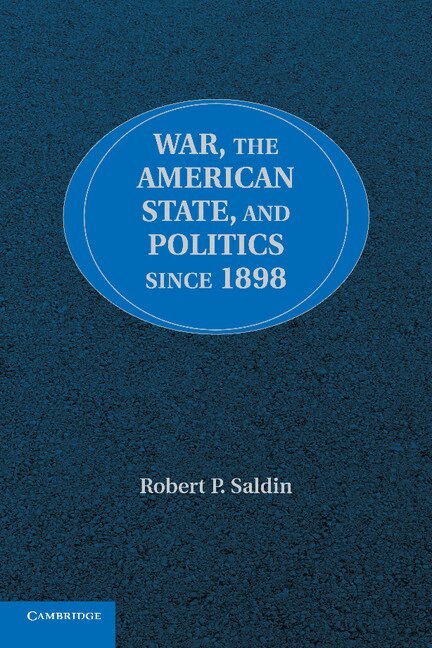
This book examines major foreign conflicts from the Spanish-American War through Vietnam, arguing that international conflicts have strong effects on American political parties, elections, state development, and policymaking. First, major wars expose and highlight problems requiring governmental solutions or necessitating emergency action. Second, despite well-known curtailments of civil liberties, wars often enhance democracy by drawing attention to the contributions of previously marginalized groups and facilitating the extension of fuller citizenship rights to them. Finally, wars affect the party system. Foreign conflicts create crises - many of which are unanticipated - that require immediate attention, supplant prior issues on the policy agenda, and engender shifts in party ideology. These new issues and redefinitions of party ideology frequently influence elections by shaping both elite and mass behavior.
Häftad, Engelska, 2014
448 kr
Skickas inom 7-10 vardagar
This book examines major foreign conflicts from the Spanish-American War through Vietnam, arguing that international conflicts have strong effects on American political parties, elections, state development, and policymaking. First, major wars expose and highlight problems requiring governmental solutions or necessitating emergency action. Second, despite well-known curtailments of civil liberties, wars often enhance democracy by drawing attention to the contributions of previously marginalized groups and facilitating the extension of fuller citizenship rights to them. Finally, wars affect the party system. Foreign conflicts create crises - many of which are unanticipated - that require immediate attention, supplant prior issues on the policy agenda, and engender shifts in party ideology. These new issues and redefinitions of party ideology frequently influence elections by shaping both elite and mass behavior.