Robert Plonsey - Böcker
Visar alla böcker från författaren Robert Plonsey. Handla med fri frakt och snabb leverans.
10 produkter
10 produkter
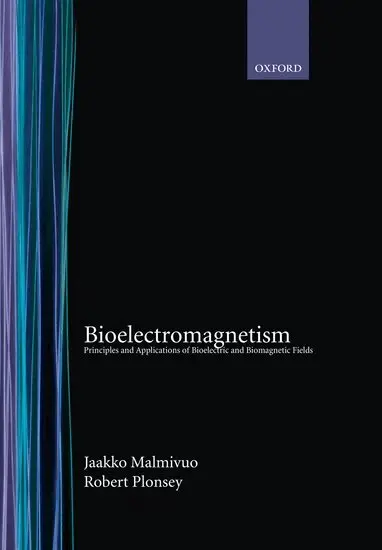
Bioelectromagnetism
Principles and Applications of Bioelectric and Biomagnetic Fields
Inbunden, Engelska, 1995
1 888 kr
Skickas inom 5-8 vardagar
This book is one of the first to apply engineering science and technology to biological cells and tissues that are electrically conducting and excitable. It describes the theory and a wide range of applications in both electric and magnetic fields. The similarities and differences between bioelectricity and biomagnetism are described in detail from the viewpoint of lead field theory. This book will enable readers to understand the properties of existing bioelectric and biomagnetic measurements and stimulation methods, and to design new systems. It includes carefully drawn illustrations and 500 references, and can be used as a textbook and as a reference.
1 625 kr
Skickas inom 10-15 vardagar
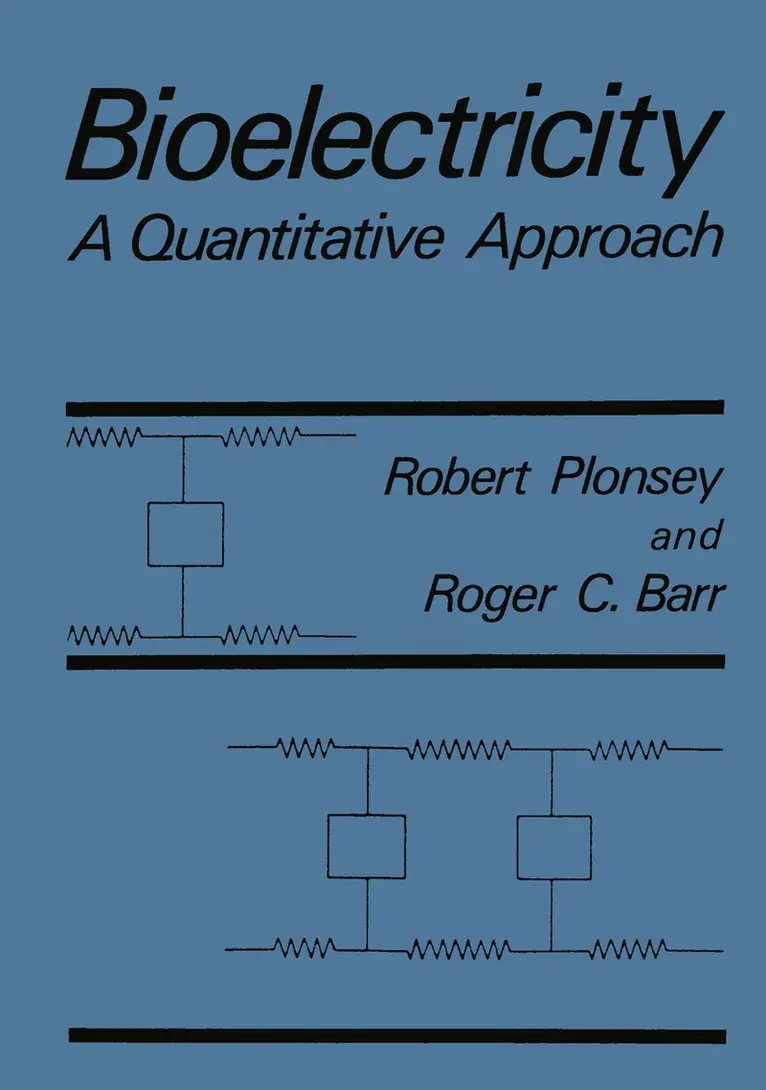
This text is an introduction to electrophysiology, following a quantitative approach. The first chapter summarizes much of the mathematics required in the following chapters. The second chapter presents a very concise overview of the general principles of electrical fields and current flow, mostly es tablished in physical science and engineering, but also applicable to biolog ical environments. The following five chapters are the core material of this text. They include descriptions of how voltages come to exist across membranes and how these are described using the Nernst and Goldman equations (Chapter 3), an examination of the time course of changes in membrane voltages that produce action potentials (Chapter 4), propagation of action potentials down fibers (Chapter 5), the response of fibers to artificial stimuli such as those used in pacemakers (Chapter 6), and the voltages and currents produced by these active processes in the surrounding extracellular space (Chapter 7). The subsequent chapters present more detailed material about the application of these principles to the study of cardiac and neural electrophysiology, and include a chapter on recent developments in mem brane biophysics. The study of electrophysiology has progressed rapidly because of the precise, delicate, and ingenious experimental studies of many investigators. The field has also made great strides by unifying the numerous experimental observations through the development of increasingly accurate theoretical concepts and mathematical descriptions. The application of these funda mental principles has in turn formed a basis for the solution of many different electrophysiological problems.
942 kr
Skickas inom 10-15 vardagar
A volume in the new Principles and Applications in Engineering series, Tissue Engineering provides an overview of the major physiologic systems of current interest to biomedical engineers: cardiovascular, endocrine, nervous, visual, auditory, gastrointestinal, and respiratory. It contains useful definitions, tables of basic physiologic data, and an introduction to the literature. Then, the book reviews the status of tissue engineering of specific organs, including bone marrow, skeletal muscle, and cartilage. Readers will acquire a good understanding of the engineering and cell biological fundamentals of tissue engineering and will develop ideas for further development of this emerging and important field.
1 504 kr
Skickas inom 10-15 vardagar
The study of electrophysiology has progressed rapidly because of the precise, delicate, and in- nious experimental studies of many investigators. The ?eld has also made great strides by uni- ingtheseexperimentalobservationsthroughmathematicaldescriptionsbasedonelectromagnetic ?eld theory, electrochemistry, etc. , which underlie these experiments. In turn, these quantitative materialsprovideanunderstandingofmanyelectrophysiologicalapplicationsthrougharelatively small number of fundamental ideas. This text is an introduction to electrophysiology, following a quantitative approach. The ?rst chapter summarizes much of the mathematics required in the following chapters. The second chapter presents a very concise overview of the principles of electrical ?elds and the concomitant current ?ow in conducting media. It utilizes basic principles from the physical sciences and engineering but takes into account the biological applications. The following six chapters are the core material of this text. Chapter 3 includes a description of how voltages/currents exist across membranes and how these are evaluated using the Nernst–Planck equation. The membrane channels, which are the basis for cell excitability, are described in Chapter 4. An examination of the time course of changes in membrane voltages that produce action potentials are considered in Chapter 5. Propagation of action potentials down ?bers is the subject of Chapter 6, and the response of ?bers to arti?cial stimuli, such as those used in cardiac pacemakers, is treated in Chapter 7. The voltages and currents produced by these active processes in the surrounding extracellular space is described in Chapter 8.
2 634 kr
Skickas inom 10-15 vardagar
Comprised of chapters carefully selected from CRC’s best-selling engineering handbooks, volumes in the Principles and Applications in Engineering series provide convenient, economical references sharply focused on particular engineering topics and subspecialties. Culled from the Biomedical Engineering Handbook, Biomedical Imaging provides an overview of the main medical imaging devices and highlights emerging systems. With applications ranging from imaging the whole body to replicating cellular components, the imaging modalities discussed include x-ray systems, computed tomographic systems, magnetic resonance imaging, nuclear medicine, ultrasound, MR microscopy, virtual reality, and more.
2 557 kr
Skickas inom 10-15 vardagar
A volume in the new Principles and Applications in Engineering series, Tissue Engineering provides an overview of the major physiologic systems of current interest to biomedical engineers: cardiovascular, endocrine, nervous, visual, auditory, gastrointestinal, and respiratory. It contains useful definitions, tables of basic physiologic data, and an introduction to the literature. Then, the book reviews the status of tissue engineering of specific organs, including bone marrow, skeletal muscle, and cartilage. Readers will acquire a good understanding of the engineering and cell biological fundamentals of tissue engineering and will develop ideas for further development of this emerging and important field.
2 164 kr
Skickas inom 10-15 vardagar
The field of electrocardiography is at a cross roads. We have reached an era in cardiovascular about the electrical state of the heart not likely to be available in any other imaging techniques. medicine where it is claimed that "imaging" is king. The innovative and useful ultrasound And, in the body surface potential map, we have an imaging technique that goes beyond struc techniques continue to develop, and, in the wings lie magnetic resonance, position emission, ture-the only other being, perhaps, magnetic resonance, which has the potential for metabolic and, perhaps, other modalities. Consequently, there are those who state that, other than the imaging. Clinical electrocardiography is impor problems related to cardiac rhythm, electro tant not only as a diagnostic tool for it can truly cardiography as a discipline is passe. In addi give insight into the effect of the disease in question on the heart muscle itself. tion, although there is continued superb work in the basic science related to arrhythmias, only Therefore, it seemed now to be appropriate to a handful of scientists are interested in the bring together leaders in the various fields of myocardial source per se. And few scientists are electrocardiography with the only constraint interested in what happens to that myocardial being a concentration on newer concepts and electrical source on its trip from the endo ideas.
2 164 kr
Skickas inom 10-15 vardagar
The field of electrocardiography is at a cross roads. We have reached an era in cardiovascular about the electrical state of the heart not likely to be available in any other imaging techniques. medicine where it is claimed that "imaging" is king. The innovative and useful ultrasound And, in the body surface potential map, we have an imaging technique that goes beyond struc techniques continue to develop, and, in the wings lie magnetic resonance, position emission, ture-the only other being, perhaps, magnetic resonance, which has the potential for metabolic and, perhaps, other modalities. Consequently, there are those who state that, other than the imaging. Clinical electrocardiography is impor problems related to cardiac rhythm, electro tant not only as a diagnostic tool for it can truly cardiography as a discipline is passe. In addi give insight into the effect of the disease in question on the heart muscle itself. tion, although there is continued superb work in the basic science related to arrhythmias, only Therefore, it seemed now to be appropriate to a handful of scientists are interested in the bring together leaders in the various fields of myocardial source per se. And few scientists are electrocardiography with the only constraint interested in what happens to that myocardial being a concentration on newer concepts and electrical source on its trip from the endo ideas.
1 733 kr
Skickas inom 10-15 vardagar
This text is an introduction to electrophysiology, following a quantitative approach. The first chapter summarizes much of the mathematics required in the following chapters. The second chapter presents a very concise overview of the general principles of electrical fields and current flow, mostly es tablished in physical science and engineering, but also applicable to biolog ical environments. The following five chapters are the core material of this text. They include descriptions of how voltages come to exist across membranes and how these are described using the Nernst and Goldman equations (Chapter 3), an examination of the time course of changes in membrane voltages that produce action potentials (Chapter 4), propagation of action potentials down fibers (Chapter 5), the response of fibers to artificial stimuli such as those used in pacemakers (Chapter 6), and the voltages and currents produced by these active processes in the surrounding extracellular space (Chapter 7). The subsequent chapters present more detailed material about the application of these principles to the study of cardiac and neural electrophysiology, and include a chapter on recent developments in mem brane biophysics. The study of electrophysiology has progressed rapidly because of the precise, delicate, and ingenious experimental studies of many investigators. The field has also made great strides by unifying the numerous experimental observations through the development of increasingly accurate theoretical concepts and mathematical descriptions. The application of these funda mental principles has in turn formed a basis for the solution of many different electrophysiological problems.
906 kr
Skickas inom 10-15 vardagar
The study of electrophysiology has progressed rapidly because of the precise, delicate, and in- nious experimental studies of many investigators. The ?eld has also made great strides by uni- ingtheseexperimentalobservationsthroughmathematicaldescriptionsbasedonelectromagnetic ?eld theory, electrochemistry, etc. , which underlie these experiments. In turn, these quantitative materialsprovideanunderstandingofmanyelectrophysiologicalapplicationsthrougharelatively small number of fundamental ideas. This text is an introduction to electrophysiology, following a quantitative approach. The ?rst chapter summarizes much of the mathematics required in the following chapters. The second chapter presents a very concise overview of the principles of electrical ?elds and the concomitant current ?ow in conducting media. It utilizes basic principles from the physical sciences and engineering but takes into account the biological applications. The following six chapters are the core material of this text. Chapter 3 includes a description of how voltages/currents exist across membranes and how these are evaluated using the Nernst–Planck equation. The membrane channels, which are the basis for cell excitability, are described in Chapter 4. An examination of the time course of changes in membrane voltages that produce action potentials are considered in Chapter 5. Propagation of action potentials down ?bers is the subject of Chapter 6, and the response of ?bers to arti?cial stimuli, such as those used in cardiac pacemakers, is treated in Chapter 7. The voltages and currents produced by these active processes in the surrounding extracellular space is described in Chapter 8.