Robert S. McElvaine – författare
Visar alla böcker från författaren Robert S. McElvaine. Handla med fri frakt och snabb leverans.
7 produkter
7 produkter
Häftad, Engelska, 2003
1 019 kr
Skickas inom 3-6 vardagar
E-bok
Engelska, 200886 kr
Läs direkt efter köp
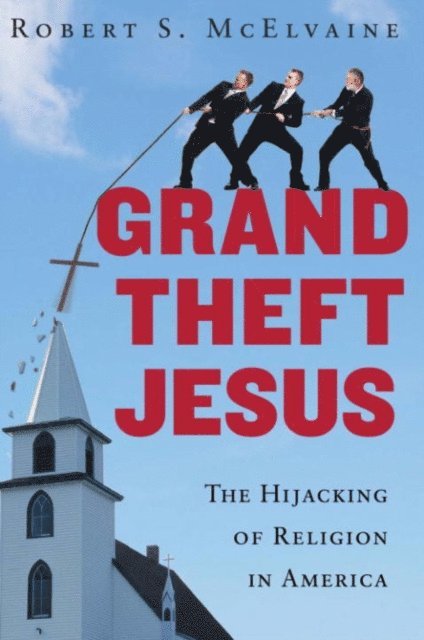
“Jesus never wrote a book, but I recognize his handwriting in Grand Theft Jesus. Like Jesus, McElvaine uses lively illustrations and a serious sense of humor to cleanse the temple of exclusive and exploitative religion.” –The Reverend Alan Storey,Calvary Methodist Church, South Africa“We’re mad as Heaven, and we’re not going to take it anymore!” declares historian Robert McElvaine in this passionate and often hilarious rallying cry for sincere Jesus Followers. He lets the rest of society know that the extreme right wing won’t be allowed to speak for all Christians any longer. His whip-smart, take-no-prisoners polemic lays bare the Christian Right’s “Easy Jesus” creed, in which people who claim to accept Jesus get a free pass to lie in his name. Grand Theft Jesus exposes the televangelists and the leaders of megachurches as the people Jesus warned us about–the wolves in sheep’s clothing of our day.The religion that McElvaine calls ChristianityLite resembles schemes that promise “Lose weight without diet or exercise!” Its leaders say, “Be saved without sacrifice or good works!” Run by a crew of politicians, megachurch preachers, televangelists, hypocrites, and snake-oil salesmen, it has hijacked true Christianity and distorted it into something Jesus wouldn’t recognize. Its leaders have taken the generous and loving ideals of Christ and twisted them into a religion that advocates war and intolerance, values money above charity, preaches hatred instead of brotherhood, and promises “true” believers the keys to the gates of the kingdom of God–and to the bank vault. Jesus’ radical message of love and peace has been drowned out by the bluster, the hate, and the selfishness that often passes for Christianity in America. McElvaine names names in his list of “Leading Lites” who have earned spots on Jesus’ Ten Most Unwanted List and exposes the hypocritical (Ted Haggard), the disgraceful (Pat Robertson), and the shocking (Ann Coulter). Grand Theft Jesus blends outrage and humor in a compelling argument that will help to resurrect the real Jesus, who has been crucified and interred by the “Right Reverends” who recite the Apostles’ Greed, are pro-choice on wars of choice, and preach the Greater Gory of Christ.From the Hardcover edition.
E-bok
Engelska, 2010211 kr
Läs direkt efter köp
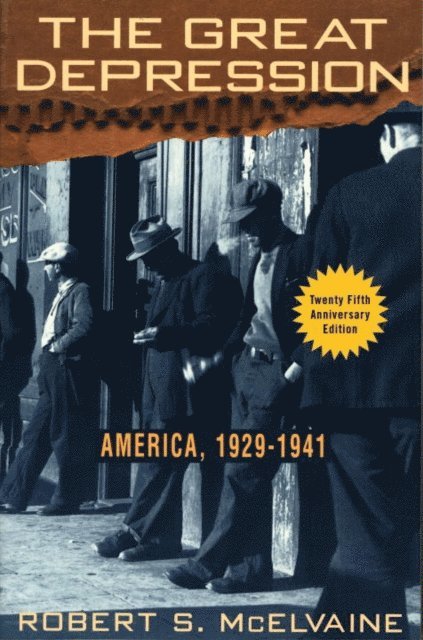
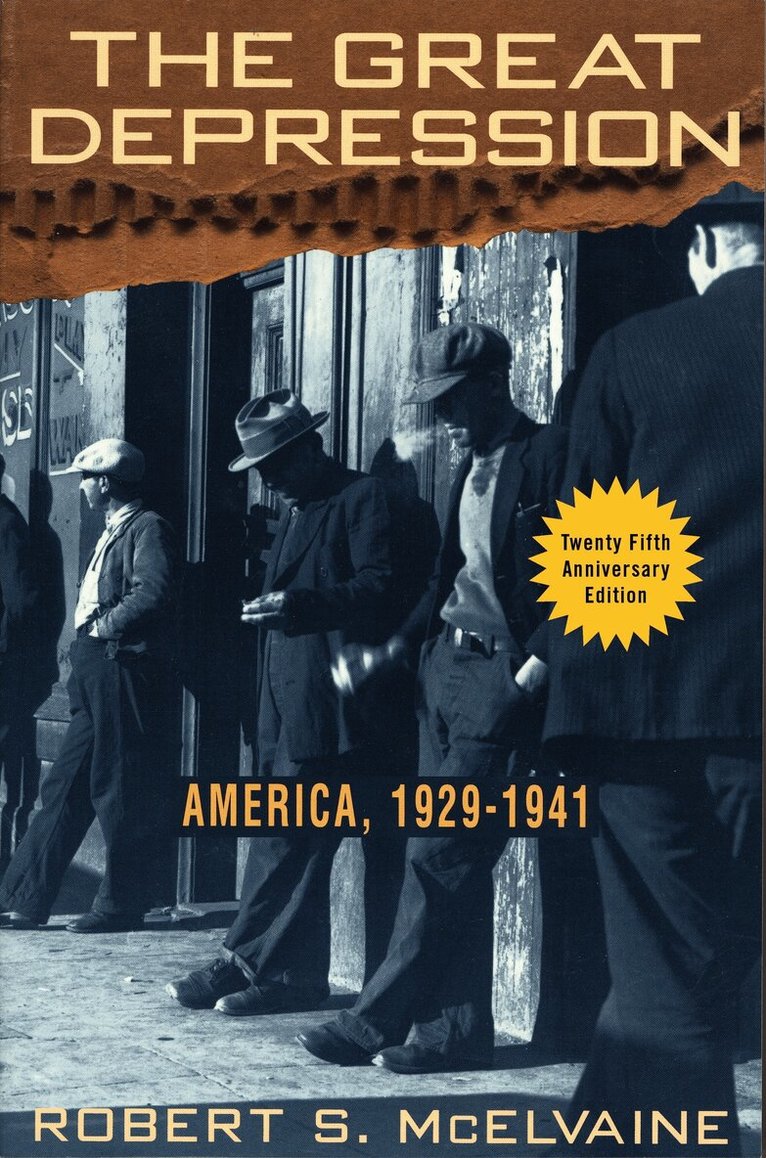
One of the classic studies of the Great Depression, featuring a new introduction by the author with insights into the economic crises of 1929 and today. In the twenty-five years since its publication, critics and scholars have praised historian Robert McElvaine’s sweeping and authoritative history of the Great Depression as one of the best and most readable studies of the era. Combining clear-eyed insight into the machinations of politicians and economists who struggled to revive the battered economy, personal stories from the average people who were hardest hit by an economic crisis beyond their control, and an evocative depiction of the popular culture of the decade, McElvaine paints an epic picture of an America brought to its knees—but also brought together by people’s widely shared plight. In a new introduction, McElvaine draws striking parallels between the roots of the Great Depression and the economic meltdown that followed in the wake of the credit crisis of 2008. He also examines the resurgence of anti-regulation free market ideology, beginning in the Reagan era, and argues that some economists and politicians revised history and ignored the lessons of the Depression era.From the Trade Paperback edition.
Häftad, Engelska, 2008
397 kr
Skickas inom 10-15 vardagar
This is a new edition of a classic book for a new generation.""Down and Out in the Great Depression"" is a moving, revealing collection of letters by the forgotten men, women, and children who suffered through one of the greatest periods of hardship in American history. Mainly because of his radio talks, thousands felt they knew President Franklin Roosevelt personally and could confide in him about their troubles. Sifting through some 15,000 letters from government and private sources, Robert McElvaine has culled nearly 200 examples that best show the problems, thoughts, and emotions of ordinary people during this time. For this twenty-fifth anniversary edition, McElvaine provides a new foreword recounting the history of the book, its impact on the historiography of the Depression, and its continued importance today.

Häftad, Engelska, 1993
202 kr
Skickas inom 5-8 vardagar
Inbunden, Engelska, 2022
232 kr
Skickas
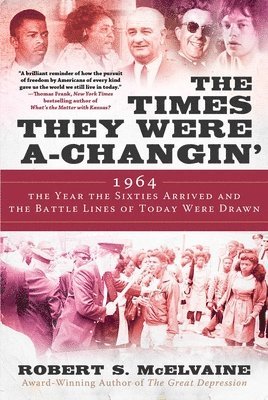
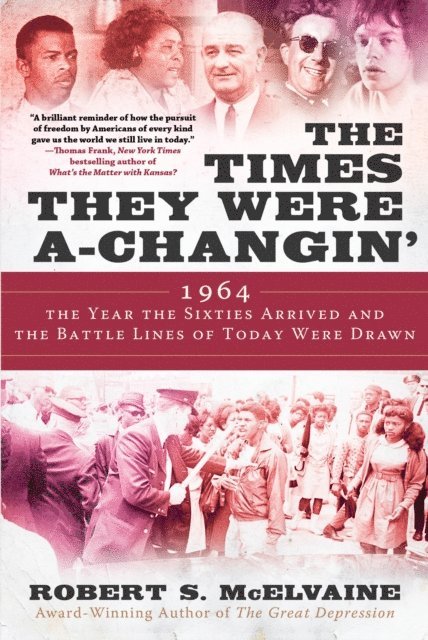
An award-winning historian on the transformative year in the sixties that continues to reverberate in our lives and politics—for readers of Heather Cox Richardson.If 1968 marked a turning point in a pivotal decade, 1964—or rather, the long 1964, from JFK’s assassination in November 1963 to mid-1965—was the time when the sixties truly arrived. It was then that the United States began a radical shift toward a much more inclusive definition of “American,” with a greater degree of equality and a government actively involved in social and economic improvement.It was a radical shift accompanied by a cultural revolution. The same month Bob Dylan released his iconic ballad “The Times They Are a-Changin’,” January 1964, President Lyndon Johnson announced his War on Poverty. Spurred by the civil rights movement and a generation pushing for change, the Civil Rights Act, the Voting Rights Act, and the Immigration and Nationality Act were passed during this period. This was a time of competing definitions of freedom. Freedom from racism, freedom from poverty. White youth sought freedoms they associated with black culture, captured imperfectly in the phrase “sex, drugs, and rock ’n’ roll.” Along with freedom from racist oppression, black Americans sought the opportunities associated with the white middle class: “white freedom.” Women challenged rigid gender roles. And in response to these freedoms, the changing mores, and youth culture, the contrary impulse found political expression in such figures as Barry Goldwater and Ronald Reagan, proponents of what was presented as freedom from government interference. Meanwhile, a nonevent in the Tonkin Gulf would accelerate the nation's plunge into the Vietnam tragedy.In narrating 1964’s moment of reckoning, when American identity began to be reimagined, McElvaine ties those past battles to their legacy today. Throughout, he captures the changing consciousness of the period through its vibrant music, film, literature, and personalities.
E-bok
Engelska, 2022253 kr
Läs direkt efter köp
An award-winning historian on the transformative year in the sixties that continues to reverberate in our lives and politics—for readers of Heather Cox Richardson.If 1968 marked a turning point in a pivotal decade, 1964—or rather, the long 1964, from JFK’s assassination in November 1963 to mid-1965—was the time when the sixties truly arrived. It was then that the United States began a radical shift toward a much more inclusive definition of “American,” with a greater degree of equality and a government actively involved in social and economic improvement.It was a radical shift accompanied by a cultural revolution. The same month Bob Dylan released his iconic ballad “The Times They Are a-Changin’,” January 1964, President Lyndon Johnson announced his War on Poverty. Spurred by the civil rights movement and a generation pushing for change, the Civil Rights Act, the Voting Rights Act, and the Immigration and Nationality Act were passed during this period. This was a time of competing definitions of freedom. Freedom from racism, freedom from poverty. White youth sought freedoms they associated with black culture, captured imperfectly in the phrase “sex, drugs, and rock ’n’ roll.” Along with freedom from racist oppression, black Americans sought the opportunities associated with the white middle class: “white freedom.” Women challenged rigid gender roles. And in response to these freedoms, the changing mores, and youth culture, the contrary impulse found political expression in such figures as Barry Goldwater and Ronald Reagan, proponents of what was presented as freedom from government interference. Meanwhile, a nonevent in the Tonkin Gulf would accelerate the nation's plunge into the Vietnam tragedy.In narrating 1964’s moment of reckoning, when American identity began to be reimagined, McElvaine ties those past battles to their legacy today. Throughout, he captures the changing consciousness of the period through its vibrant music, film, literature, and personalities.