Robert S. Reneman – författare
Visar alla böcker från författaren Robert S. Reneman. Handla med fri frakt och snabb leverans.
8 produkter
8 produkter
Inbunden, Engelska, 1999
1 681 kr
Skickas inom 10-15 vardagar
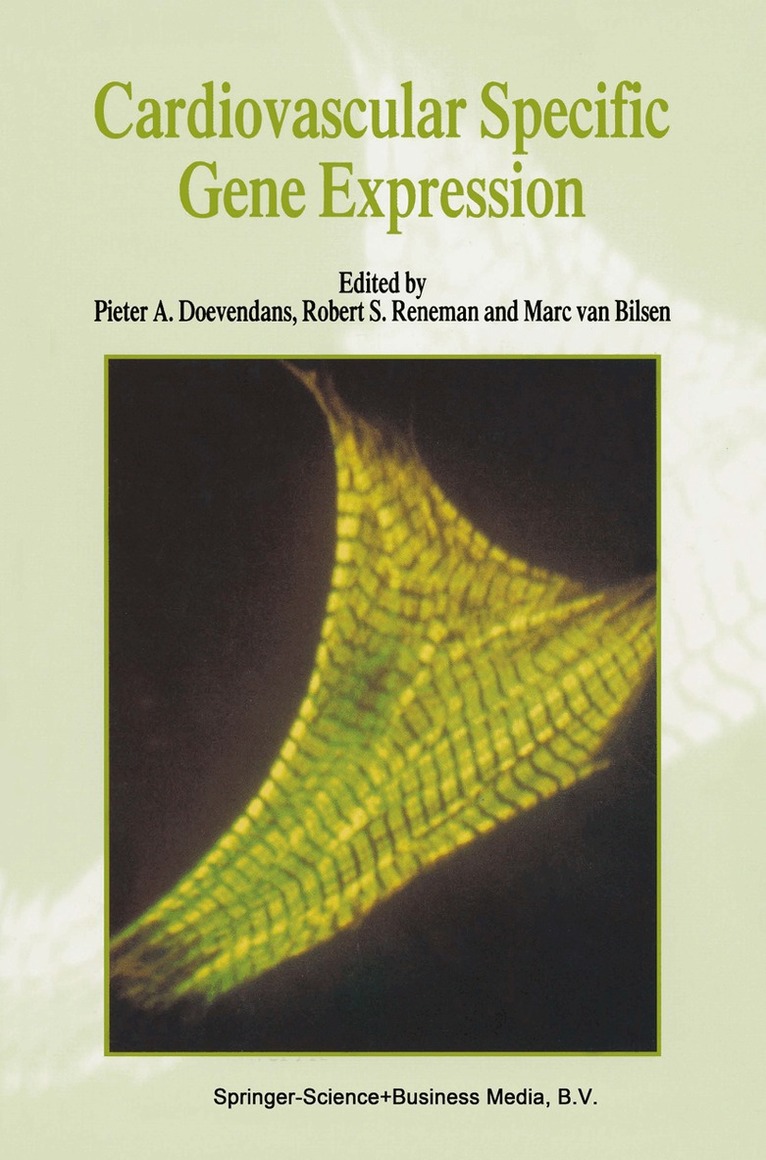
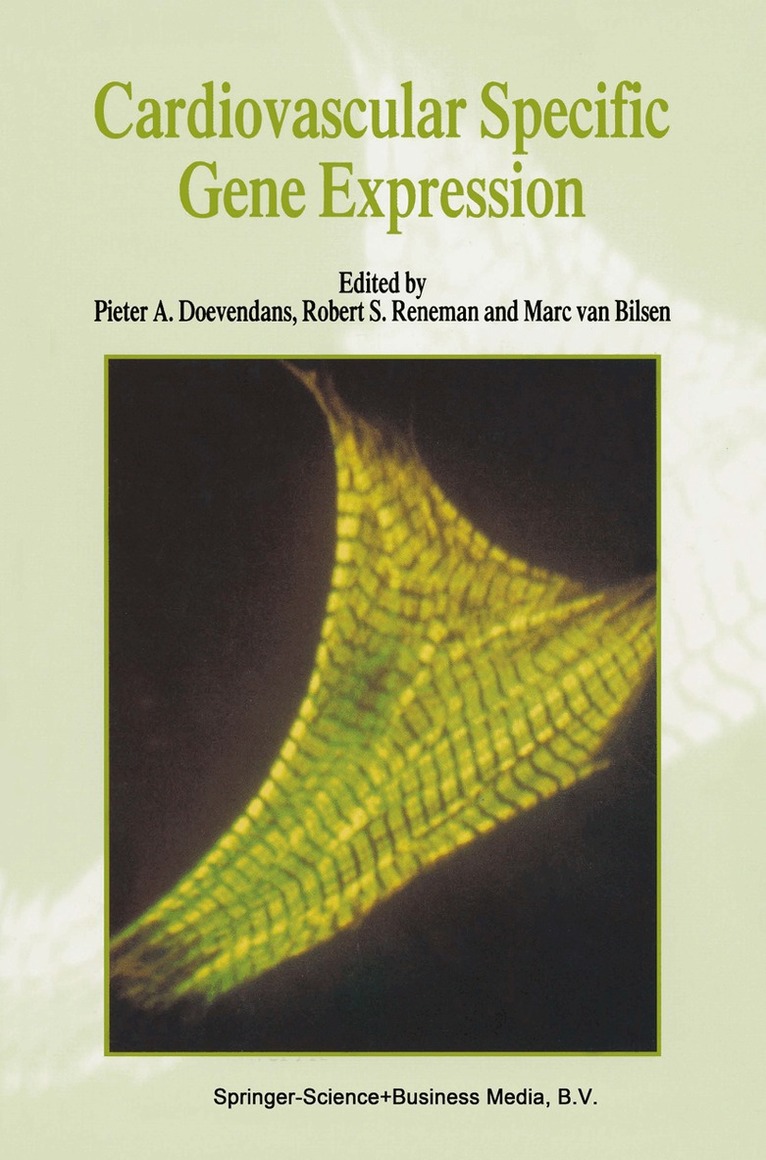
The development of the heart and vessels during embryogenesis depends on the complex interplay of various cell types and growth factors. The implementation of molecular tools has enabled us to analyse early steps in cardiogenesis and vasculogenesis. Furthermore the introduction of transgenic and knock-out techniques in mice, and the miniaturization of physiologic measurements to the mouse level has fundamentally changed our knowledge. Pathophysiology can be unravelled at the molecular level. The implications of various stimuli on specific membrane receptors can be analyzed. In response to receptor activation, interacting intracellular signalling pathways can activate or block transcription factors. The changes in gene expression lead to functional changes observed in the cardiovascular systems of animal models and humans. Changes in the level of gene expression and protein function in cardiovascular disease are discussed for the sarcomeric, calcium handling and ion channel genes. Furthermore, different approaches to the design of cell-type-specific gene therapy approaches for the heart and vessels are outlined.
E-bok
PDF, Engelska, 2013708 kr
Läs direkt efter köp
Advances in cellular physiology and molecular biology have now disclosed the metabolic changes and adaptational responses of the heart to various kinds of stresses. Topics covered in this volume include the regulation of myocardial proteins in mechanical overload, the alteration of adrenoceptors in the stressed heart, metabolic adaptation in cardiac hypertrophy, intracellular calcium metabolism in the ischemia-reperfused myocardium, calcium overload as a cause of myocardial stunning, acquisition of ischemic tolerance by ischemic preconditioning, factors that accelerate myocardial injury, and ventricular remodeling in the ischemic heart. As an update of the latest findings in basic cardiology, this book will benefit both researchers and clinical practitioners.
Häftad, Engelska, 2013
565 kr
Skickas inom 10-15 vardagar
Advances in cellular physiology and molecular biology have now disclosed the metabolic changes and adaptational responses of the heart to various kinds of stresses. Topics covered in this volume include the regulation of myocardial proteins in mechanical overload, the alteration of adrenoceptors in the stressed heart, metabolic adaptation in cardiac hypertrophy, intracellular calcium metabolism in the ischemia-reperfused myocardium, calcium overload as a cause of myocardial stunning, acquisition of ischemic tolerance by ischemic preconditioning, factors that accelerate myocardial injury, and ventricular remodeling in the ischemic heart. As an update of the latest findings in basic cardiology, this book will benefit both researchers and clinical practitioners.
Inbunden, Engelska, 1995
565 kr
Skickas inom 10-15 vardagar
Advances in cellular physiology and molecular biology have now disclosed the metabolic changes and adaptational responses of the heart to various kinds of stresses. Topics covered in this volume include the regulation of myocardial proteins in mechanical overload, the alteration of adrenoceptors in the stressed heart, metabolic adaptation in cardiac hypertrophy, intracellular calcium metabolism in the ischemia-reperfused myocardium, calcium overload as a cause of myocardial stunning, acquisition of ischemic tolerance by ischemic preconditioning, factors that accelerate myocardial injury, and ventricular remodeling in the ischemic heart. As an update of the latest findings in basic cardiology, this book will benefit both researchers and clinical practitioners.
Häftad, Engelska, 2010
1 681 kr
Skickas inom 10-15 vardagar
Improving our insights into the genetic predisposition to cardiovascular disease is one of the most important challenges in our field in the next millennium, not only to unravel the cause of disease but also to improve the selection of patients for particular treatments. Nowadays, for example, subjects with a cholesterol above a particular plasma level are exposed to a cholesterol lowering regime based upon the beneficial outcome of epidemiological studies which include subjects not prone to the disease, despite a plasma cholesterol above the accepted level. Identification of the patients who are genetically predisposed to the consequences of this disorder will reduce the number of subjects unnecessarily treated and, hence, the costs of health care. Because in most cardiovascular diseases the genetic component is a consequence of more than one gene defect, only limited progress has as yet been made in identifying subjects genetically at risk. For example, in hypertension only in less than 10% of the patients the genetic defect has been identified. It has been known for quite some time that in heart and blood vessels fetal genes are as high blood pressure and upregulated or induced when they are exposed to such disorders ischemia. Little is known about the function of these genes in the cardiac and vascular adaptation to these disorders; only guesses can be made.
E-bok
PDF, Engelska, 2012708 kr
Läs direkt efter köp
Nowadays clinical medicine is to a great extent dependent on techniques and instrumentation. Not infrequently, instrumentation is so complicated that technical specialists are required to perform the measurements and to process the data. Interpretation of the results, however, generally has to be done by physicians. For proper interpretation of data and good com munication with technical specialists, knowledge of, among other things, principle, advantages, limitations and applicability of the used techniques is necessary. Besides, this knowledge is required for critical comparison of systems to measure a certain variable. Critical evaluation as well as com parison of techniques and instruments ought to be an essential component of medical practice. In general, basic techniques and instrumentation are not taught in medi cal schools nor during residencies. Therefore, physicians themselves have to collect practical information about principle, advantages and limitations of techniques and instruments when using them in clinical medicine. This practical information, focussed on the specific techniques used in the various disciplines, is usually difficult to obtain from handbooks and manufacturers'' manuals. Hence a new series of books is started on instru mentation and techniques in clinical medicine.
Häftad, Engelska, 2011
565 kr
Skickas inom 10-15 vardagar
Nowadays clinical medicine is to a great extent dependent on techniques and instrumentation. Not infrequently, instrumentation is so complicated that technical specialists are required to perform the measurements and to process the data. Interpretation of the results, however, generally has to be done by physicians. For proper interpretation of data and good com munication with technical specialists, knowledge of, among other things, principle, advantages, limitations and applicability of the used techniques is necessary. Besides, this knowledge is required for critical comparison of systems to measure a certain variable. Critical evaluation as well as com parison of techniques and instruments ought to be an essential component of medical practice. In general, basic techniques and instrumentation are not taught in medi cal schools nor during residencies. Therefore, physicians themselves have to collect practical information about principle, advantages and limitations of techniques and instruments when using them in clinical medicine. This practical information, focussed on the specific techniques used in the various disciplines, is usually difficult to obtain from handbooks and manufacturers' manuals. Hence a new series of books is started on instru mentation and techniques in clinical medicine.
E-bok
PDF, Engelska, 20132 036 kr
Läs direkt efter köp
Improving our insights into the genetic predisposition to cardiovascular disease is one of the most important challenges in our field in the next millennium, not only to unravel the cause of disease but also to improve the selection of patients for particular treatments. Nowadays, for example, subjects with a cholesterol above a particular plasma level are exposed to a cholesterol lowering regime based upon the beneficial outcome of epidemiological studies which include subjects not prone to the disease, despite a plasma cholesterol above the accepted level. Identification of the patients who are genetically predisposed to the consequences of this disorder will reduce the number of subjects unnecessarily treated and, hence, the costs of health care. Because in most cardiovascular diseases the genetic component is a consequence of more than one gene defect, only limited progress has as yet been made in identifying subjects genetically at risk. For example, in hypertension only in less than 10% of the patients the genetic defect has been identified. It has been known for quite some time that in heart and blood vessels fetal genes are as high blood pressure and upregulated or induced when they are exposed to such disorders ischemia. Little is known about the function of these genes in the cardiac and vascular adaptation to these disorders; only guesses can be made.