Robert Waska – författare
Visar alla böcker från författaren Robert Waska. Handla med fri frakt och snabb leverans.
48 produkter
Moments of Uncertainty in Therapeutic Practice
Interpreting Within the Matrix of Projective Identification, Countertransference, and Enactment
Av Robert Waska
Häftad, 2011
297 kr
Lägg i varukorg
One of therapy's greatest challenges is the moment of transference, when a patient unconsciously transfers emotion or desire to a new and present object--in some cases the therapist. During the course of treatment, a patient's projections and the analyst's struggle to divert them can stress, …
Moments of Uncertainty in Therapeutic Practice
Interpreting Within the Matrix of Projective Identification, Countertransference, and Enactment
Av Robert Waska
E-bok, 2011
451 kr
Lägg i varukorg
One of therapy''s greatest challenges is the moment of transference, when a patient unconsciously transfers emotion or desire to a new and present objectin some cases the therapist. During the course of treatment, a patient''s projections and the analyst''s struggle to divert them can stress, …
Primitive Experiences of Loss
Working with the Paranoid-Schizoid Patient
Av Robert Waska
Inbunden, 2019
2085 kr
Lägg i varukorg
Taking as his starting point Melanie Klein's concept of the paranoid-schizoid position, and succinctly reviewing subsequent developments within the Kleinian perspective, the author formulates a distinctive and subtle argument concentrated on the topic of primitive loss. It is the author's …
Love, Hate and Knowledge
The Kleinian Method and the Future of Psychoanalysis
Av Robert Waska
Inbunden, 2019
2455 kr
Lägg i varukorg
This book introduces the clinical concept of analytic contact. This is a term that describes the therapeutic method of investigation that makes up psychoanalytic treatment. The field has been in debate for decades regarding what constitutes psychoanalysis. This usually centers on theoretical ideals …
Treating Severe Depressive and Persecutory Anxiety States
To Transform the Unbearable
Av Robert Waska
Inbunden, 2019
2601 kr
Lägg i varukorg
This book serves two purposes. First, it provides the psychoanalyst or psychotherapist with a more flexible method of practicing psychoanalysis. This is the clinical approach of "analytic contact", a technical stance in which more patients can be reached in a deeper and more helpful manner. …
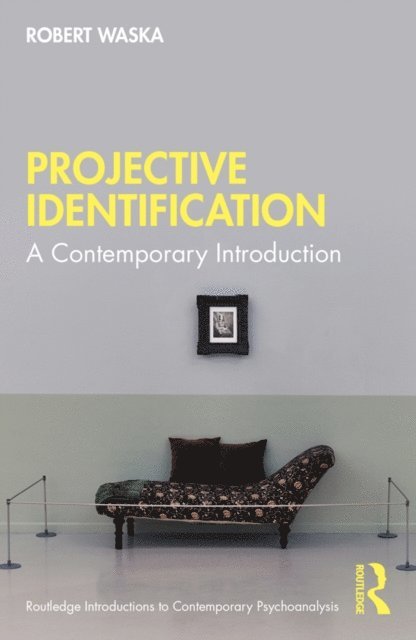
Projective Identification
A Contemporary Introduction
Av Robert Waska
Inbunden, 2021
2601 kr
Lägg i varukorg
This clear and thoughtful book by Robert Waska provides an accessible introduction to Projective Identification and the role it plays in internal and external life.Waska explores how Projective Identification is the foundation for much of psychic life, driving internal phantasy, influencing …
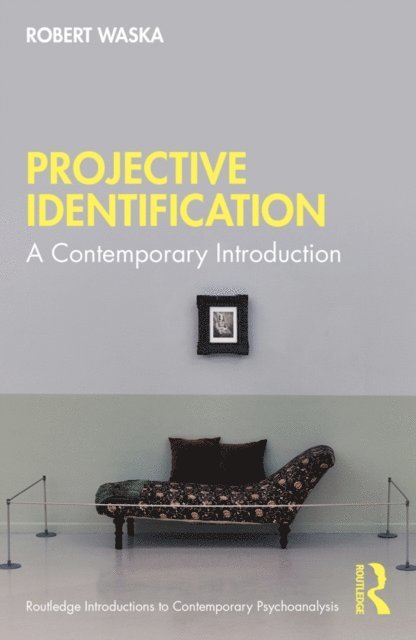
Projective Identification
A Contemporary Introduction
Av Robert Waska
Häftad, 2021
399 kr
Lägg i varukorg
This clear and thoughtful book by Robert Waska provides an accessible introduction to Projective Identification and the role it plays in internal and external life.Waska explores how Projective Identification is the foundation for much of psychic life, driving internal phantasy, influencing …
Danger of Change
The Kleinian Approach with Patients Who Experience Progress as Trauma
Av Robert Waska
Häftad, 2006
676 kr
Lägg i varukorg
Confusing clinical standoffs, loyalty to self-destruction and abrupt terminations are challenging and under-examined problems for the modern psychoanalytic practitioner. The Danger of Change is a timely book that addresses the so-called resistant patient so many clinicians are familiar with. Robert …
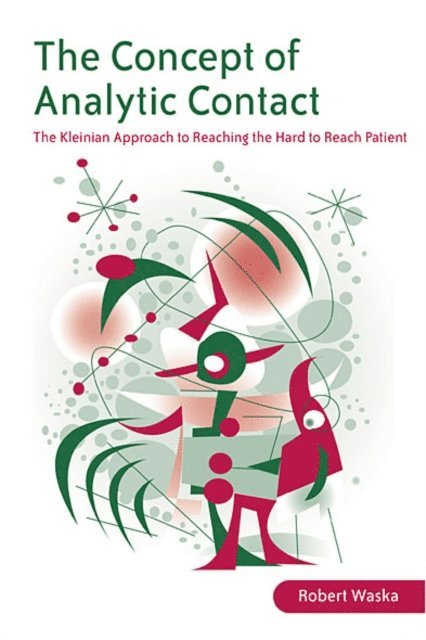
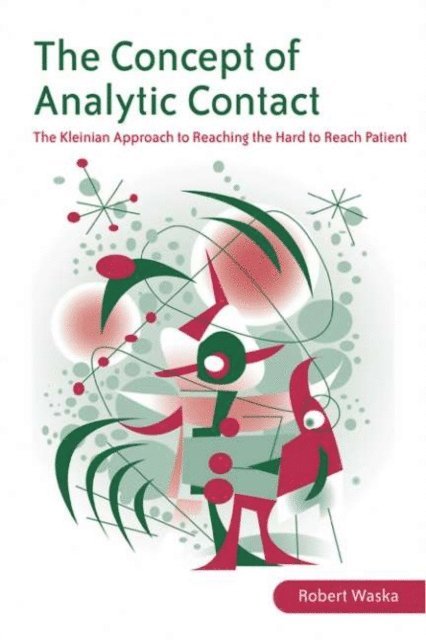
Concept of Analytic Contact
The Kleinian Approach to Reaching the Hard to Reach Patient
Av Robert Waska
Häftad, 2007
676 kr
Lägg i varukorg
The Concept of Analytic Contact presents practitioners with new ways to assist the often severely disturbed patients that come to see them in both private and institutional settings. In this book Robert Waska outlines the use of psychoanalysis as a method of engagement that can be utilised with or …
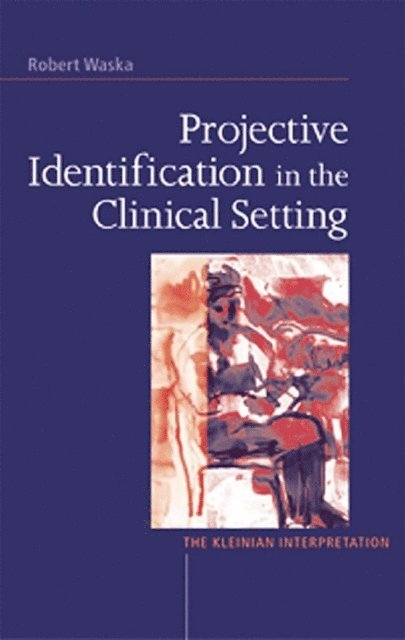
Projective Identification in the Clinical Setting
A Kleinian Interpretation
Av Robert Waska
Häftad, 2015
718 kr
Lägg i varukorg
How do Kleinians work with projective identification?The concept of projective identification, first introduced by Melanie Klein in 1946, has been widely studied by psychoanalysts of different persuasions. However, these explorations have neglected to show what Kleinians actually do with the …
Practical Casebook of Time-Limited Psychoanalytic Work
A Modern Kleinian approach
Av Robert Waska
Inbunden, 2013
2601 kr
Lägg i varukorg
Modern Kleinian Therapy is a model of effective psychoanalytic work that offers relief to deep internal conflicts by establishing and maintaining analytic contact, and beginning to unravel, modify, and heal turbulent and torn minds. This book defines Modern Kleinian Therapy as a modality for …
Practical Casebook of Time-Limited Psychoanalytic Work
A Modern Kleinian approach
Av Robert Waska
Häftad, 2013
4,0 utav 5 stjärnor. Totalt antal röster: (1)
761 kr
Lägg i varukorg
Modern Kleinian Therapy is a model of effective psychoanalytic work that offers relief to deep internal conflicts by establishing and maintaining analytic contact, and beginning to unravel, modify, and heal turbulent and torn minds. This book defines Modern Kleinian Therapy as a modality for …
Love, Hate and Knowledge
The Kleinian Method and the Future of Psychoanalysis
Av Robert Waska
E-bok, 2018
707 kr
Lägg i varukorg
This book introduces the clinical concept of analytic contact. This is a term that describes the therapeutic method of investigation that makes up psychoanalytic treatment. The field has been in debate for decades regarding what constitutes psychoanalysis. This usually centers on theoretical ideals …
Primitive Experiences of Loss
Working with the Paranoid-Schizoid Patient
Av Robert Waska
E-bok, 2018
838 kr
Lägg i varukorg
Taking as his starting point Melanie Klein''s concept of the paranoid-schizoid position, and succinctly reviewing subsequent developments within the Kleinian perspective, the author formulates a distinctive and subtle argument concentrated on the topic of primitive loss. It is the author''s …
Treating Severe Depressive and Persecutory Anxiety States
To Transform the Unbearable
Av Robert Waska
E-bok, 2018
628 kr
Lägg i varukorg
This book serves two purposes. First, it provides the psychoanalyst or psychotherapist with a more flexible method of practicing psychoanalysis. This is the clinical approach of "analytic contact", a technical stance in which more patients can be reached in a deeper and more helpful manner. …
Love, Hate and Knowledge
The Kleinian Method and the Future of Psychoanalysis
Av Robert Waska
E-bok, 2018
707 kr
Lägg i varukorg
This book introduces the clinical concept of analytic contact. This is a term that describes the therapeutic method of investigation that makes up psychoanalytic treatment. The field has been in debate for decades regarding what constitutes psychoanalysis. This usually centers on theoretical ideals …
Primitive Experiences of Loss
Working with the Paranoid-Schizoid Patient
Av Robert Waska
E-bok, 2018
838 kr
Lägg i varukorg
Taking as his starting point Melanie Klein''s concept of the paranoid-schizoid position, and succinctly reviewing subsequent developments within the Kleinian perspective, the author formulates a distinctive and subtle argument concentrated on the topic of primitive loss. It is the author''s …
Treating Severe Depressive and Persecutory Anxiety States
To Transform the Unbearable
Av Robert Waska
E-bok, 2018
642 kr
Lägg i varukorg
This book serves two purposes. First, it provides the psychoanalyst or psychotherapist with a more flexible method of practicing psychoanalysis. This is the clinical approach of "analytic contact", a technical stance in which more patients can be reached in a deeper and more helpful manner. …
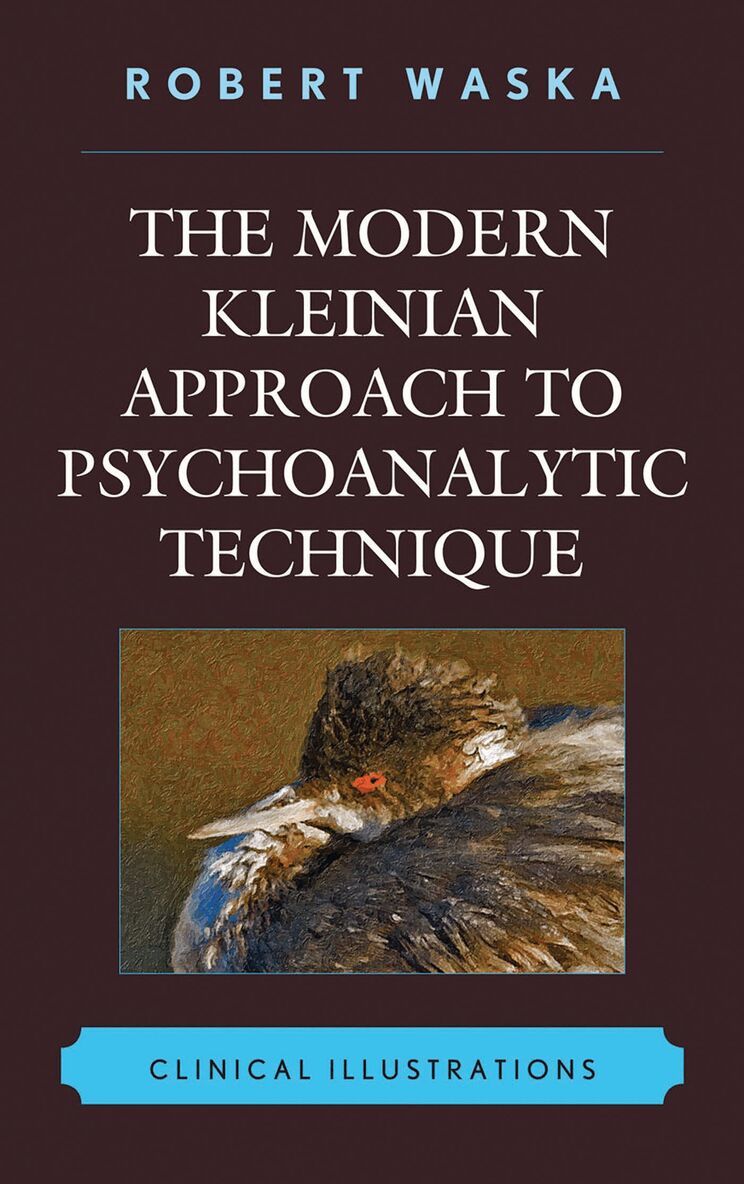
Modern Kleinian Approach to Psychoanalytic Technique
Clinical Illustrations
Av Robert Waska
Inbunden, 2010
1250 kr
Lägg i varukorg
The Modern Kleinian Approach to Psychoanalytic Technique: Clinical Illustrations describes how today's practitioner typically treats a number of types of very disturbed and hard-to-reach patients who, while prone to intense acting out and early termination, are in great need of in-depth …
Modern Kleinian Approach to Psychoanalytic Technique
Clinical Illustrations
Av Robert Waska
E-bok, 2010
1445 kr
Lägg i varukorg
The Modern Kleinian Approach to Psychoanalytic Technique: Clinical Illustrations describes how today''s practitioner typically treats a number of types of very disturbed and hard-to-reach patients who, while prone to intense acting out and early termination, are in great need of in-depth …
Total Transference and the Complete Counter-Transference
The Kleinian Psychoanalytic Approach with More Disturbed Patients
Av Robert Waska
Inbunden, 2011
1250 kr
Lägg i varukorg
The book takes the reader “into the trenches” with the author as he describes his psychoanalytic work with a variety of patients with difficult and complex conditions. The reader becomes familiar with the clinical and theoretical difficulties psychoanalysts encounter in their day to day practice …
Total Transference and the Complete Counter-Transference
The Kleinian Psychoanalytic Approach with More Disturbed Patients
Av Robert Waska
E-bok, 2011
1320 kr
Lägg i varukorg
The book takes the reader “into the trenches” with the author as he describes his psychoanalytic work with a variety of patients with difficult and complex conditions. The reader becomes familiar with the clinical and theoretical difficulties psychoanalysts encounter in their day to day practice …
Projective Identification
A Contemporary Introduction
Av Robert Waska
E-bok, 2021
454 kr
Lägg i varukorg
This clear and thoughtful book by Robert Waska provides an accessible introduction to Projective Identification and the role it plays in internal and external life. Waska explores how Projective Identification is the foundation for much of psychic life, driving internal phantasy, influencing …
Projective Identification
A Contemporary Introduction
Av Robert Waska
E-bok, 2021
454 kr
Lägg i varukorg
This clear and thoughtful book by Robert Waska provides an accessible introduction to Projective Identification and the role it plays in internal and external life. Waska explores how Projective Identification is the foundation for much of psychic life, driving internal phantasy, influencing …
Practical Casebook of Time-Limited Psychoanalytic Work
A Modern Kleinian approach
Av Robert Waska
E-bok, 2013
731 kr
Lägg i varukorg
Modern Kleinian Therapy is a model of effective psychoanalytic work that offers relief to deep internal conflicts by establishing and maintaining analytic contact, and beginning to unravel, modify, and heal turbulent and torn minds. This book defines Modern Kleinian Therapy as a modality for …
Practical Casebook of Time-Limited Psychoanalytic Work
A Modern Kleinian approach
Av Robert Waska
E-bok, 2013
731 kr
Lägg i varukorg
Modern Kleinian Therapy is a model of effective psychoanalytic work that offers relief to deep internal conflicts by establishing and maintaining analytic contact, and beginning to unravel, modify, and heal turbulent and torn minds. This book defines Modern Kleinian Therapy as a modality for …
Concept of Analytic Contact
The Kleinian Approach to Reaching the Hard to Reach Patient
Av Robert Waska
E-bok, 2007
838 kr
Lägg i varukorg
The Concept of Analytic Contact presents practitioners with new ways to assist the often severely disturbed patients that come to see them in both private and institutional settings. In this book Robert Waska outlines the use of psychoanalysis as a method of engagement that can be utilised with or …
Concept of Analytic Contact
The Kleinian Approach to Reaching the Hard to Reach Patient
Av Robert Waska
E-bok, 2007
838 kr
Lägg i varukorg
The Concept of Analytic Contact presents practitioners with new ways to assist the often severely disturbed patients that come to see them in both private and institutional settings. In this book Robert Waska outlines the use of psychoanalysis as a method of engagement that can be utilised with or …
Projective Identification in the Clinical Setting
A Kleinian Interpretation
Av Robert Waska
E-bok, 2004
873 kr
Lägg i varukorg
How do Kleinians work with projective identification? The concept of projective identification, first introduced by Melanie Klein in 1946, has been widely studied by psychoanalysts of different persuasions. However, these explorations have neglected to show what Kleinians actually do with the …
Projective Identification in the Clinical Setting
A Kleinian Interpretation
Av Robert Waska
E-bok, 2004
864 kr
Lägg i varukorg
How do Kleinians work with projective identification? The concept of projective identification, first introduced by Melanie Klein in 1946, has been widely studied by psychoanalysts of different persuasions. However, these explorations have neglected to show what Kleinians actually do with the …