Robert Weatherley – författare
Visar alla böcker från författaren Robert Weatherley. Handla med fri frakt och snabb leverans.
13 produkter
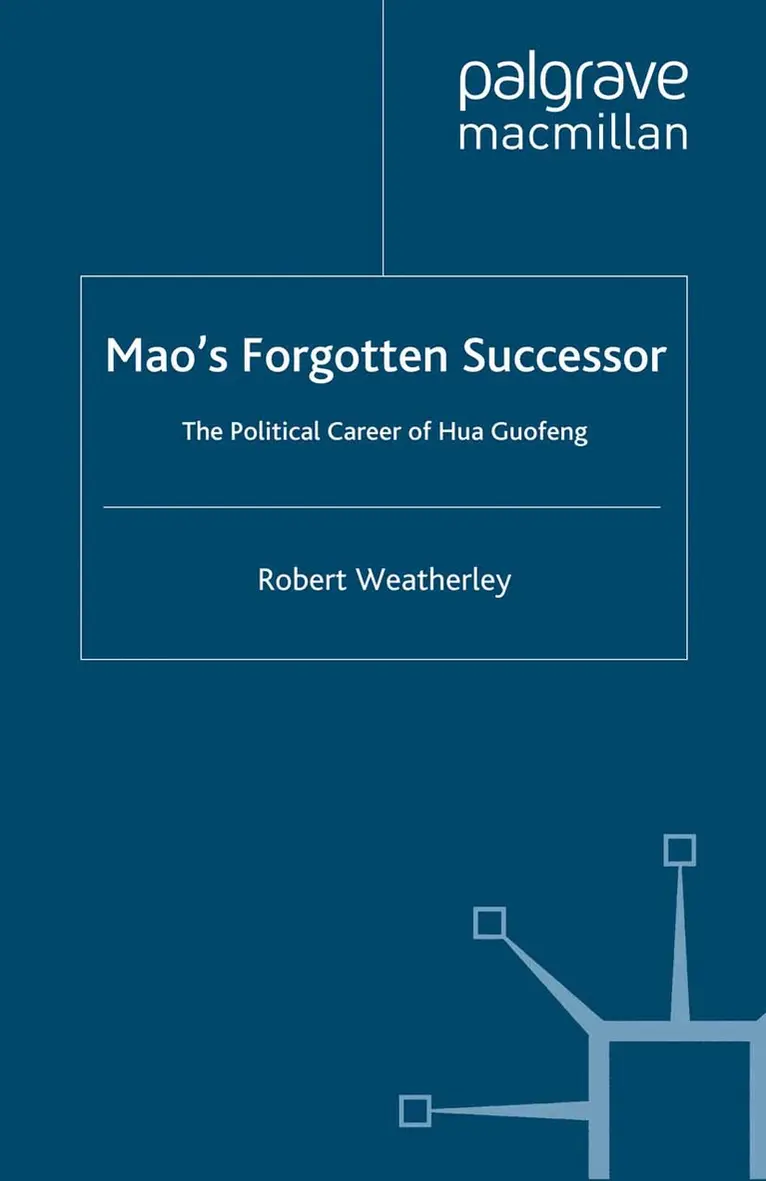
Mao's Forgotten Successor
The Political Career of Hua Guofeng
E-bok, 2010
763 kr
Lägg i varukorg
Hua Guofeng succeeded Mao in 1976, emerging almost out of nowhere following an unexceptional career in Shanxi and Hunan. In just over two years, Hua had been eclipsed by Deng Xiaoping, a more politically shrewd, progressive and charismatic figure. If Hua''s rise to power was remarkable, then this …
Mao's Forgotten Successor
The Political Career of Hua Guofeng
Inbunden, 2010
568 kr
Lägg i varukorg
Hua Guofeng succeeded Mao in 1976, emerging almost out of nowhere following an unexceptional career in Shanxi and Hunan. In just over two years, Hua had been eclipsed by Deng Xiaoping, a more politically shrewd, progressive and charismatic figure. If Hua's rise to power was remarkable, then this …
Politics in China since 1949
Legitimizing Authoritarian Rule
Inbunden, 2006
1563 kr
Lägg i varukorg
Since the victory of the 1949 revolution the incumbency of the Chinese Communist Party has been characterized by an almost relentless struggle to legitimize its monopoly on political power. During the Mao era, attempts to derive legitimacy focused primarily on mass participation in political …
Politics in China since 1949
Legitimizing Authoritarian Rule
Häftad, 2013
516 kr
Lägg i varukorg
Since the victory of the 1949 revolution the incumbency of the Chinese Communist Party has been characterized by an almost relentless struggle to legitimize its monopoly on political power. During the Mao era, attempts to derive legitimacy focused primarily on mass participation in political …
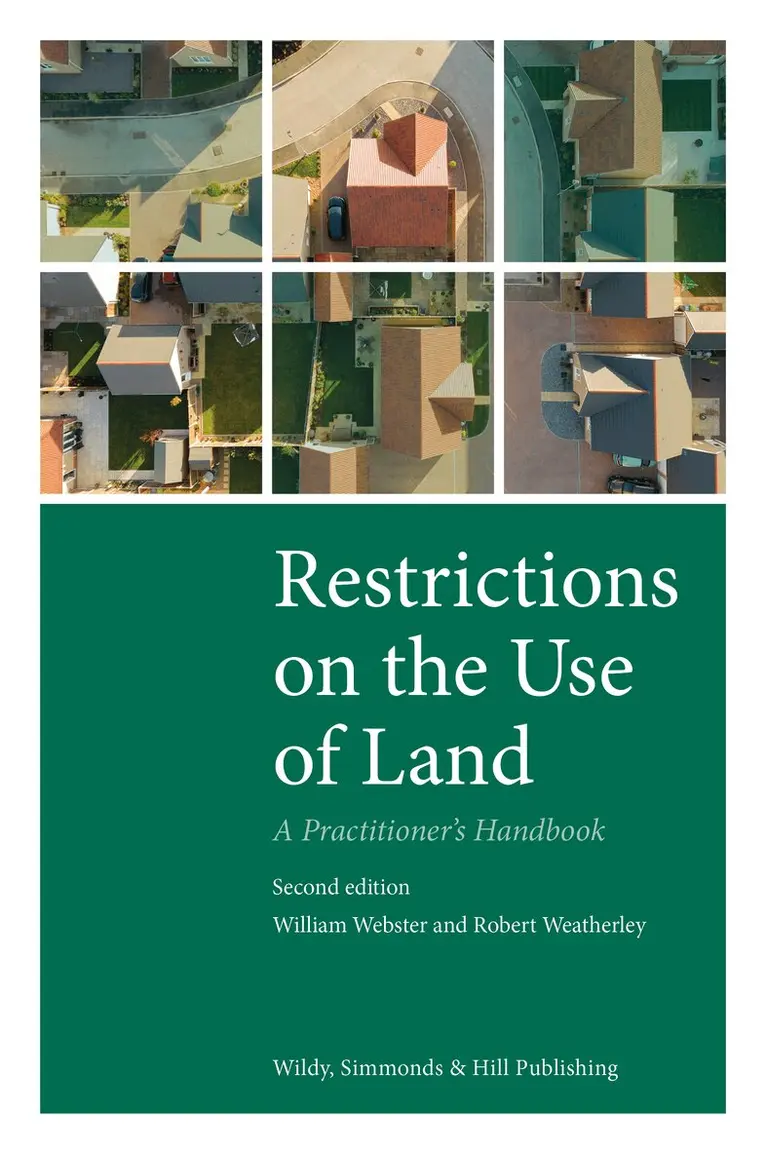
Restrictions on the Use of Land: A Practitioner's Handbook
Av William Webster, Robert Weatherley
Inbunden, 2024
2266 kr
Lägg i varukorg
The second edition of this accessible book is a single up-to-date reference work which discusses a broad range of public and private law topics which directly impact on the use and development of land. In addition to new chapters on wayleaves, planning enforcement, and trees and hedgerows, this …
Planning Law: A Practitioner's Handbook
Av William Webster, Robert Weatherley
Inbunden, 2026
1773 kr
Kommande
Planning Law: A Practitioner's Handbook is an indispensable reference work for the busy planning professional, providing answers to a whole range of problems which commonly arise in day-to-day practice. The second edition has new and expanded chapters on a number of topics, such as housing supply …
Politics in China since 1949
Legitimizing Authoritarian Rule
E-bok, 2007
607 kr
Lägg i varukorg
Since the victory of the 1949 revolution the incumbency of the Chinese Communist Party has been characterized by an almost relentless struggle to legitimize its monopoly on political power. During the Mao era, attempts to derive legitimacy focused primarily on mass participation in political …
Politics in China since 1949
Legitimizing Authoritarian Rule
E-bok, 2007
593 kr
Lägg i varukorg
Since the victory of the 1949 revolution the incumbency of the Chinese Communist Party has been characterized by an almost relentless struggle to legitimize its monopoly on political power. During the Mao era, attempts to derive legitimacy focused primarily on mass participation in political …
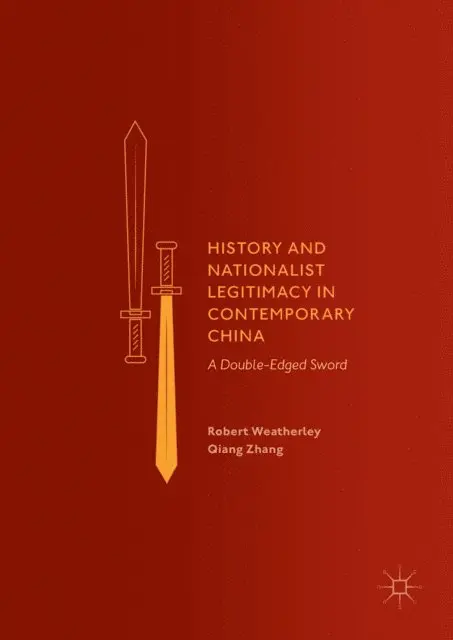
History and Nationalist Legitimacy in Contemporary China
A Double-Edged Sword
Av Robert Weatherley, Qiang Zhang
Inbunden, 2017
1241 kr
Lägg i varukorg
This book examines how the Chinese Communist Party (CCP) has attempted to bolster its nationalist legitimacy through the utilisation of Chinese history. The authors identify two different modes of nationalism - aggressive and consensual - both of which are linked to the historical memory of the …
History and Nationalist Legitimacy in Contemporary China
A Double-Edged Sword
Av Qiang Zhang, Robert Weatherley
E-bok, 2017
1723 kr
Lägg i varukorg
This book examines how the Chinese Communist Party (CCP) has attempted to bolster its nationalist legitimacy through the utilisation of Chinese history. The authors identify two different modes of nationalism - aggressive and consensual - both of which are linked to the historical memory of the …
Mao's Forgotten Successor
The Political Career of Hua Guofeng
Häftad, 2010
568 kr
Lägg i varukorg
Hua Guofeng succeeded Mao in 1976, emerging almost out of nowhere following an unexceptional career in Shanxi and Hunan. In just over two years, Hua had been eclipsed by Deng Xiaoping, a more politically shrewd, progressive and charismatic figure. If Hua's rise to power was remarkable, then this …
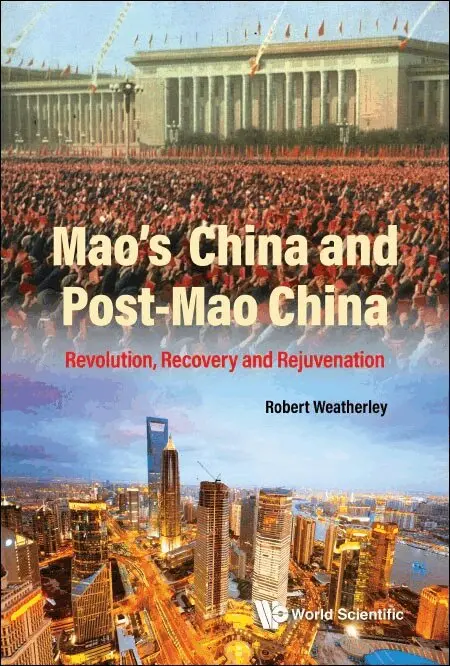
MAO'S CHINA AND POST-MAO CHINA: REVOLUTION, RECOVERY AND REJUVENATION
Inbunden, 2022
1846 kr
Lägg i varukorg
If the history of modern China was written as a book, its author would be accused of losing touch with reality. During the twentieth century, China underwent two revolutions, a number of wars, endured a radical and destabilising form of communism and then hurried quickly towards a system of open …
MAO'S CHINA AND POST-MAO CHINA: REVOLUTION, RECOVERY AND REJUVENATION
Häftad, 2022
849 kr
Lägg i varukorg
If the history of modern China was written as a book, its author would be accused of losing touch with reality. During the twentieth century, China underwent two revolutions, a number of wars, endured a radical and destabilising form of communism and then hurried quickly towards a system of open …