Roberta B. Shepherd - Böcker
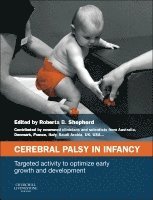
Cerebral Palsy in Infancy
targeted activity to optimize early growth and development
673 kr
Skickas inom 7-10 vardagar
Cerebral Palsy in Infancy is a thought-provoking book which introduces a new way of thinking on the development and use of interventions. Relevant to current practice, it advocates early, targeted activity that is focused on increasing muscle activation, training basic actions and minimizing (or preventing) mal-adaptive changes to muscle morphology and function. The authors present recent scientific findings in brain science, movement sciences (developmental biomechanics, motor control mechanisms, motor learning, exercise science) and muscle biology. This knowledge provides the rationale for active intervention, underpinning the need for an early referral to appropriate services. The book features methods for promoting relatively intensive physical activity in young infants without placing a burden on parents which include assistive technologies such as robotics, electronic bilateral limb trainers and baby treadmills.
Cerebral Palsy in Infancy begins by specifying the guidelines for training and exercise, outlining the rationale for such intervention. It goes on to cover the fundamentals of neuromotor plasticity and the development and negative effects of limited motor activity on brain organization and corticospinal tract development. Neuromuscular adaptations to impairments and inactivity are discussed along with the General Movement assessment that can provide early diagnosis and prognosis, facilitating very early referral from paediatric specialists to training programs. The book ends with a section featuring various methods of training with the emphasis on preventing/minimizing muscle contracture, stimulating biomechanically critical muscle activity and joint movement.
An ideal clinical reference for those working to improve the lives of infants suffering from cerebral palsy.
CONTRIBUTORS: Adel Abdullah Alhusaini (Saudi Arabia); David I. Anderson (USA); Nicolas Bayle (France); Roslyn Boyd (Australia); Giovanni Cioni (Italy); Diane L. Damiano (USA); Janet Eyre (UK); Linda Fetters (USA); Mary Galea (Australia); Andrew M Gordon (USA); Martin Gough (UK); Richard L Lieber (USA); Jens Bo Nielsen (Denmark); Micah Perez (Australia); Caroline Teulier (France).
"This book provides a comprehensive overview of the challenges of motor development and the consequent impact of poor motor function in later childhood for infants with cerebral palsy (CP)."Reviewed by: Oxford Brookes University on behalf of the British Journal of Occupational Therapy, Dec 2014
761 kr
Skickas inom 7-10 vardagar
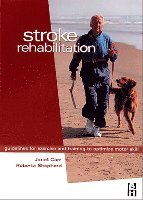
Stroke Rehabilitation
Guidelines for Exercise and Training to Optimize Motor Skill
711 kr
Skickas inom 7-10 vardagar
297 kr
Kommande
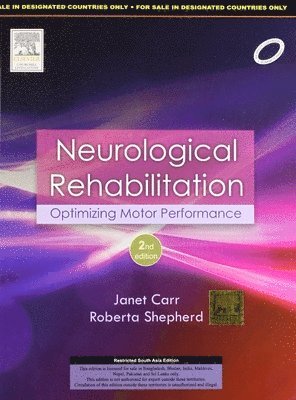
Janet Carr and Roberta Shepherd head up a new team of eminent authors for the second edition of this definitive text on neurological physiotherapy. In the first edition, the authors described a model of neurological rehabilitation for individuals with motor dysfunction based on scientific research in the areas of neuromuscular control, biomechanics, motor skill learning, and the link between cognition and action, together with developments in pathology and adaptation.
The new edition continues to advance this model while identifying and incorporating the many advances that have occurred in the last decade in the understanding and treatment of adults with neurological conditions, whether caused by accident or disease. Among these advances is the knowledge that the brain retains a plastic potential to reorganize, even in old and/or lesioned brains, and that neural plasticity can be influenced by task-related mental and physical practice in a stimulating environment. There is also an increasing body of knowledge related to the musculoskeletal system's adaptability and the need to prevent length and stiffness- related changes in muscle contractility, together with loss of aerobic fitness and endurance. There is an expanding body of clinical research that appears to support the model provided here.The training guidelines outlined in Neurological Rehabilitation are based on biomechanical constructs and motor relearning research, applied to enhance brain reorganization and muscle contractility, and encourage functional recovery of the patient. It connects science and clinical practice enabling students and practitioners to develop their knowledge and use new clinical methods based on modern scientific understanding.