Roberto Diodato - Böcker
Visar alla böcker från författaren Roberto Diodato. Handla med fri frakt och snabb leverans.
4 produkter
4 produkter
1 057 kr
Tillfälligt slut
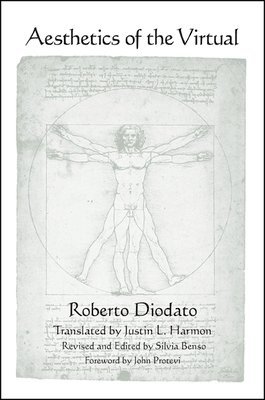
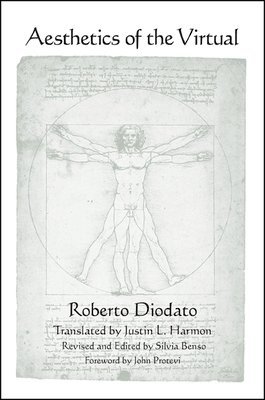
Reconfigures classic aesthetic concepts in relation to the novelty introduced by virtual bodies.Arguing that the virtual body is something new-namely, an entity that from an ontological perspective has only recently entered the world-Roberto Diodato considers the implications of this kind of body for aesthetics. Virtual bodies insert themselves into the space opened up by the famous distinction in Aristotle's Physics between natural and artificial beings-they are both. They are beings that are simultaneously events; they are images that are at once internal and external; they are ontological hybrids that exist only in the interaction between logical-computational text and human bodies endowed with technological prostheses. Pursuing this line of thought, Diodato reconfigures classic aesthetic concepts such as mimesis, representation, the relation between illusion and reality, the nature of images and imagination, and the theory of sensory knowledge.
376 kr
Tillfälligt slut
Reconfigures classic aesthetic concepts in relation to the novelty introduced by virtual bodies.Arguing that the virtual body is something new-namely, an entity that from an ontological perspective has only recently entered the world-Roberto Diodato considers the implications of this kind of body for aesthetics. Virtual bodies insert themselves into the space opened up by the famous distinction in Aristotle's Physics between natural and artificial beings-they are both. They are beings that are simultaneously events; they are images that are at once internal and external; they are ontological hybrids that exist only in the interaction between logical-computational text and human bodies endowed with technological prostheses. Pursuing this line of thought, Diodato reconfigures classic aesthetic concepts such as mimesis, representation, the relation between illusion and reality, the nature of images and imagination, and the theory of sensory knowledge.
908 kr
Skickas inom 10-15 vardagar
This book investigates the ontological state of relations in a unique way. Starting with the notion of system, it shows that the system can be understood as a relational structure, and that relations can be assessed within themselves, with no need to transform relations in elements. “Relations” are understood in contrast to “relational property”: without a relation there is no identity, therefore no existence. What allows us to do that without hypostatizing the relation, and without immediately taking it simply as a causal relation, can be better grasped, possibly, in reference to a few entities that make best display of their systemic nature, for example images, works of art, and virtual bodies.This book shows how virtual bodies are ontological hybrids representing a type of entity that has never appeared in the world before. This entity becomes a phenomenon in interactivity and evades the dichotomy between “external” and “internal”; it is neither a cognitive product of theconsciousness, nor an image of the mind. The user is well aware of experiencing anotherreality, also in the sense of a paradoxical reduplication of perceptual synthesis. The virtual body-environment is therefore simultaneously external and internal, with virtual bodies-environments to be seen as artificial windows to an intermediary world. In this intermediary world, the space itself is the result of interactivity; the world takes place in the sense or feeling of immersion experienced by the user; and the body, perceived as “other”, takes upon itself the sense of its reality, of its effectiveness, as an imaginary and pathic incision, as a production of desire and emotion, to the point that the feeling of reality conveyed by a virtual environment will rely significantly on how this environment produces emotions in the users.
908 kr
Skickas inom 10-15 vardagar
This book investigates the ontological state of relations in a unique way. Starting with the notion of system, it shows that the system can be understood as a relational structure, and that relations can be assessed within themselves, with no need to transform relations in elements. “Relations” are understood in contrast to “relational property”: without a relation there is no identity, therefore no existence. What allows us to do that without hypostatizing the relation, and without immediately taking it simply as a causal relation, can be better grasped, possibly, in reference to a few entities that make best display of their systemic nature, for example images, works of art, and virtual bodies.This book shows how virtual bodies are ontological hybrids representing a type of entity that has never appeared in the world before. This entity becomes a phenomenon in interactivity and evades the dichotomy between “external” and “internal”; it is neither a cognitive product of theconsciousness, nor an image of the mind. The user is well aware of experiencing anotherreality, also in the sense of a paradoxical reduplication of perceptual synthesis. The virtual body-environment is therefore simultaneously external and internal, with virtual bodies-environments to be seen as artificial windows to an intermediary world. In this intermediary world, the space itself is the result of interactivity; the world takes place in the sense or feeling of immersion experienced by the user; and the body, perceived as “other”, takes upon itself the sense of its reality, of its effectiveness, as an imaginary and pathic incision, as a production of desire and emotion, to the point that the feeling of reality conveyed by a virtual environment will rely significantly on how this environment produces emotions in the users.