Robin Douglass – författare
Visar alla böcker från författaren Robin Douglass. Handla med fri frakt och snabb leverans.
6 produkter
6 produkter
1 322 kr
Skickas inom 5-8 vardagar
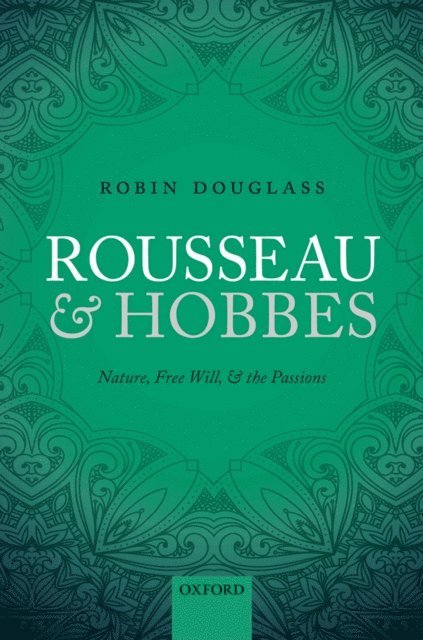
Robin Douglass presents the first comprehensive study of Jean-Jacques Rousseau's engagement with Thomas Hobbes. He reconstructs the intellectual context of this engagement to reveal the deeply polemical character of Rousseau's critique of Hobbes and to show how Rousseau sought to expose that much modern natural law and doux commerce theory was, despite its protestations to the contrary, indebted to a Hobbesian account of human nature and the origins of society. Throughout the book Douglass explores the reasons why Rousseau both followed and departed from Hobbes in different places, while resisting the temptation to present him as either a straightforwardly Hobbesian or anti-Hobbesian thinker. On the one hand, Douglass reveals the extent to which Rousseau was occupied with problems of a fundamentally Hobbesian nature and the importance, to both thinkers, of appealing to the citizens' passions in order to secure political unity. On the other hand, Douglass argues that certain ideas at the heart of Rousseau's philosophy--free will and the natural goodness of man--were set out to distance him from positions associated with Hobbes. Douglass advances an original interpretation of Rousseau's political philosophy, emerging from this encounter with Hobbesian ideas, which focuses on the interrelated themes of nature, free will, and the passions. Douglass distances his interpretation from those who have read Rousseau as a proto-Kantian and instead argues that his vision of a well-ordered republic was based on cultivating man's naturally good passions to render the life of the virtuous citizen in accordance with nature.
1 391 kr
Skickas inom 5-8 vardagar
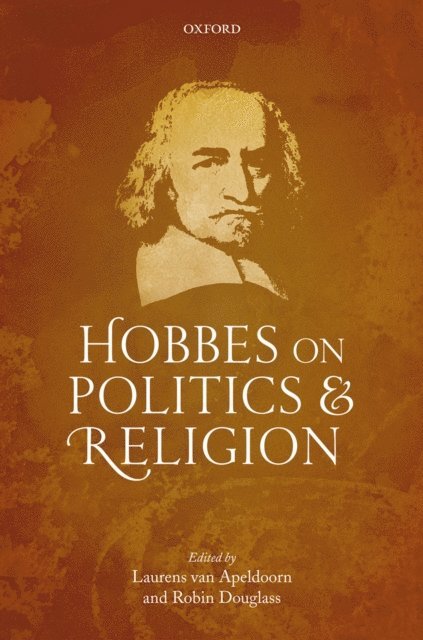
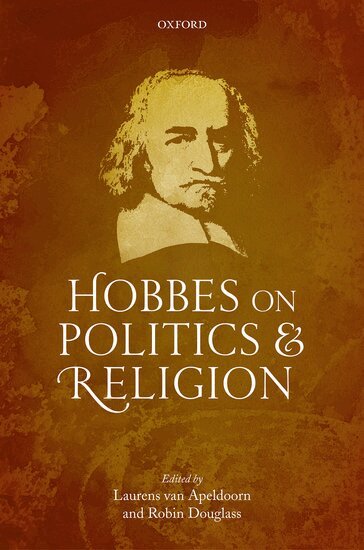
Thomas Hobbes, one of the most important figures in the history of political philosophy, is still widely regarded as a predominantly secular thinker. Yet a great deal of his political thought was motivated by the need to address problems of a distinctively religious nature. This is the first collection of essays dedicated to the complex and rich intersections between Hobbes's political and religious thought. Written by experts in the field, the volume opens up new directions for thinking about his treatment of religion as a political phenomenon and the political dimensions of his engagement with Christian doctrines and their history. The chapters investigate his strategies for showing how his provocative political positions could be accepted by different religious audiences for whom fidelity to religious texts was of crucial importance, while also considering the legacy of his ideas and examining their relevance for contemporary concerns. Some chapters do so by pursuing mainly historical inquiries about the motives and circumstances of Hobbes's writings, while others reconstruct the logic of his arguments and test their philosophical coherence. They thus offer wide-ranging and sometimes conflicting assessments of Hobbes's ideas, yet they all demonstrate how closely intertwined his political and religious preoccupations are and thereby showcase how this perspective can help us to better understand his thought.
758 kr
Skickas inom 7-10 vardagar
Why we should take Bernard Mandeville seriously as a philosopherBernard Mandeville’s The Fable of the Bees outraged its eighteenth-century audience by proclaiming that private vices lead to public prosperity. Today the work is best known as an early iteration of laissez-faire capitalism. In this book, Robin Douglass looks beyond the notoriety of Mandeville’s great work to reclaim its status as one of the most incisive philosophical studies of human nature and the origin of society in the Enlightenment era. Focusing on Mandeville’s moral, social, and political ideas, Douglass offers a revelatory account of why we should take Mandeville seriously as a philosopher.Douglass expertly reconstructs Mandeville’s theory of how self-centred individuals, who care for their reputation and social standing above all else, could live peacefully together in large societies. Pride and shame are the principal motives of human behaviour, on this account, with a large dose of hypocrisy and self-deception lying behind our moral practices. In his analysis, Douglass attends closely to the changes between different editions of the Fable; considers Mandeville’s arguments in light of objections and rival accounts from other eighteenth-century philosophers, including Shaftesbury, Hume, and Smith; and draws on more recent findings from social psychology.With this detailed and original reassessment of Mandeville’s philosophy, Douglass shows how The Fable of the Bees—by shining a light on the dark side of human nature—has the power to unsettle readers even today.
284 kr
Skickas inom 7-10 vardagar
Why we should take Bernard Mandeville seriously as a philosopherBernard Mandeville’s The Fable of the Bees outraged its eighteenth-century audience by proclaiming that private vices lead to public prosperity. Today the work is best known as an early iteration of laissez-faire capitalism. In this book, Robin Douglass looks beyond the notoriety of Mandeville’s great work to reclaim its status as one of the most incisive philosophical studies of human nature and the origin of society in the Enlightenment era. Focusing on Mandeville’s moral, social, and political ideas, Douglass offers a revelatory account of why we should take Mandeville seriously as a philosopher.Douglass expertly reconstructs Mandeville’s theory of how self-centred individuals, who care for their reputation and social standing above all else, could live peacefully together in large societies. Pride and shame are the principal motives of human behaviour, on this account, with a large dose of hypocrisy and self-deception lying behind our moral practices. In his analysis, Douglass attends closely to the changes between different editions of the Fable; considers Mandeville’s arguments in light of objections and rival accounts from other eighteenth-century philosophers, including Shaftesbury, Hume, and Smith; and draws on more recent findings from social psychology.With this detailed and original reassessment of Mandeville’s philosophy, Douglass shows how The Fable of the Bees—by shining a light on the dark side of human nature—has the power to unsettle readers even today.
1 471 kr
Skickas inom 7-10 vardagar
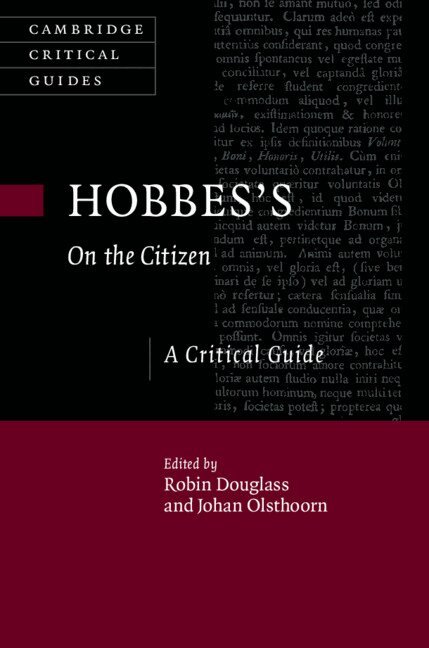
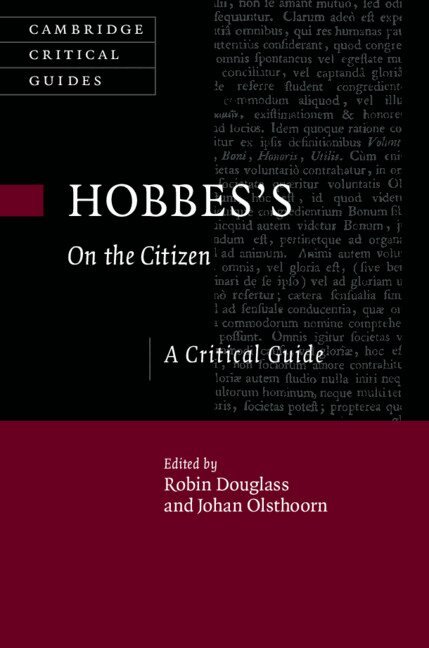
This is the first book-length study in English of Thomas Hobbes's On the Citizen. It aims to show that On the Citizen is a valuable and distinctive philosophical work in its own right, and not merely a stepping-stone toward the more famous Leviathan. The volume comprises twelve original essays, written by leading Hobbes scholars, which explore the most important themes of the text: Hobbes's accounts of human nature, moral motivation, and political obligation; his theories of property, sovereignty, and the state; and, finally, his ideas on the relation between secular and ecclesiastical authority, and the politics behind his religious ideas. Taken together, the essays bring to light many distinctive aspects of Hobbes's thought that are often concealed by the prevailing focus on Leviathan, making for a richer and more nuanced picture of his moral, legal, and political philosophy.
415 kr
Skickas inom 7-10 vardagar
This is the first book-length study in English of Thomas Hobbes's On the Citizen. It aims to show that On the Citizen is a valuable and distinctive philosophical work in its own right, and not merely a stepping-stone toward the more famous Leviathan. The volume comprises twelve original essays, written by leading Hobbes scholars, which explore the most important themes of the text: Hobbes's accounts of human nature, moral motivation, and political obligation; his theories of property, sovereignty, and the state; and, finally, his ideas on the relation between secular and ecclesiastical authority, and the politics behind his religious ideas. Taken together, the essays bring to light many distinctive aspects of Hobbes's thought that are often concealed by the prevailing focus on Leviathan, making for a richer and more nuanced picture of his moral, legal, and political philosophy.